








 Circular Economy and Profit: How Companies Really Profit from Recycling
Margin crisis in 2025, competitive virgin polymers and new industrial strategies: how recycling companies are redefining their profit model in the global circular economyAuthor: Marco ArezioDate: March 2026IntroductionOver the past decade, the circular economy has been presented as one of the main industrial responses to the environmental crisis and the growing scarcity of natural resources. Governments, European institutions and major companies have promoted material recycling as one of the key tools to reduce the environmental impact of industry and improve efficiency in resource use.However, behind this positive vision lies a more complex economic reality. The recycling sector is deeply linked to the dynamics of raw material markets and to the competitiveness of virgin materials. When the price of traditional raw materials falls, the economic advantage of recycling can rapidly decrease.The year 2025 was particularly difficult for many companies in the sector. The availability of competitively priced virgin polymers, fueled by very high petrochemical production in the United States, the Middle East and Asia, significantly reduced recyclers’ profit margins. In several segments of recycled plastics, such as polyethylene and polypropylene, the prices of virgin materials returned to levels very close to or even lower than those of recycled materials.This situation has put many companies in the sector under pressure, highlighting a fundamental issue: in order to be sustainable in the long term, recycling must also be economically profitable.Understanding how companies manage to generate profit within the circular economy means analyzing business models, recycled material markets and the industrial strategies emerging in the sector.Circular economy and industrial profitabilityRecycling is not just an environmental activity. It is a complex industrial sector involving collection, logistics, material sorting, transformation and the sale of secondary raw materials.According to the European Environment Agency, the overall economic value of the circular economy in the European Union now exceeds €700 billion in annual turnover, with millions of jobs distributed along the different industrial supply chains.Despite these dimensions, the sector remains highly sensitive to fluctuations in raw material markets. The price of oil, for example, directly affects the production cost of virgin polymers. When oil is cheap and the petrochemical industry produces large volumes of plastic, recycled materials must compete with very competitive virgin products.This means that recycling cannot rely exclusively on environmental motivations. It must develop economic models capable of generating value even in difficult market conditions.The difficult year 2025 for recycling companiesIn 2025 the European plastics recycling sector went through a particularly complex phase. Several industry associations, including Plastics Recyclers Europe, reported a significant reduction in operating margins for many companies in the sector.The main pressure factor was the drop in virgin polymer prices. Strong petrochemical production in the United States and the Middle East generated an oversupply of virgin plastic, making it harder for recycled materials to compete on price.In some cases European recyclers reported a reduction in production and a slowdown in investments. Some plants operated at reduced capacity, while others tried to diversify their markets.This situation highlighted a fundamental characteristic of the sector: recycling is a global market, strongly influenced by petrochemical production dynamics and the geopolitics of raw materials.The global market for recycled materialsDespite short-term difficulties, the recycled materials market continues to grow in the long term. According to market analyses published by McKinsey and the OECD, demand for recycled materials is expected to increase significantly in the coming decades, particularly in sectors such as:- automotive- packaging- electronics- constructionà renewable energyMany companies are introducing targets for the use of recycled materials in their production chains. Some major global packaging and consumer goods brands have announced their intention to use increasingly higher percentages of recycled plastics in their products.This growing demand represents one of the main economic opportunities for the recycling sector.Circular economy business modelsThe most innovative recycling companies are developing increasingly sophisticated business models. One of the most widespread models is vertical integration of the supply chain. Some companies manage all phases of the process directly, from waste collection to the production of recycled materials.A significant example is Veolia, one of the world’s leading groups in waste management and recycling, which integrates collection, treatment and production of secondary raw materials within a single industrial structure.Another model concerns industrial partnerships. Some petrochemical companies are investing directly in recycling to secure access to circular raw materials.An emblematic case is BASF, which has developed chemical recycling technologies to transform plastic waste into new raw materials used in polymer production.Technological innovation in recycling plantsTechnological innovation is one of the most important factors for improving recycling profitability.In recent years waste sorting plants have introduced advanced technologies such as:- optical sensors- artificial intelligence- robotic automated sorting- material analysis systems.These technologies allow the production of higher-quality recycled materials, expanding their industrial applications. In the plastics sector, for example, new depolymerization technologies are enabling complex waste to be transformed into chemical raw materials for producing new polymers.Real cases of companies profiting from recyclingDespite market difficulties, there are numerous examples of companies that have built profitable business models in the recycling sector.The Tomra Group, a global leader in material sorting technologies, has developed advanced sensor systems used in recycling plants worldwide. The company’s commercial success demonstrates how technology can become a key element in creating value within the circular economy.Another example is Umicore, specialized in recovering precious metals from batteries and electronic devices. The company has built one of the world’s most advanced recycling systems for recovering critical materials used in energy technologies.These cases demonstrate that recycling can be economically profitable when supported by technological innovation and efficient industrial models.The role of environmental policiesEnvironmental policies play a fundamental role in the development of recycled material markets.European regulations such as the Circular Economy Action Plan and the Critical Raw Materials Strategy are promoting the use of recycled materials and encouraging the development of circular supply chains.In many industrial sectors, regulations requiring minimum recycled content are creating stable demand for secondary materials. This regulatory support represents one of the key factors for ensuring the economic sustainability of the sector.The economic future of the recycling industryDespite recent difficulties, recycling remains one of the most strategic sectors for the future of the global economy. Population growth, increasing demand for resources and geopolitical tensions around raw materials are making the ability to recover materials within industrial economies increasingly important.In this context, the circular economy is not just an environmental policy but a new industrial paradigm in which intelligent resource management becomes a decisive factor of competitiveness. Companies capable of combining technological innovation, circular business models and effective industrial strategies will likely be those able to transform recycling into one of the most important industries of the 21st century.SourcesEropean Environment Agency – Circular Economy in EuropeOECD – Global Material Resources OutlookPlastics Recyclers Europe – Market AnalysisEuropean Commission – Circular Economy Action PlanTomra – Recycling Technology ReportsUmicore – Battery Recycling Technologies
SEE MORE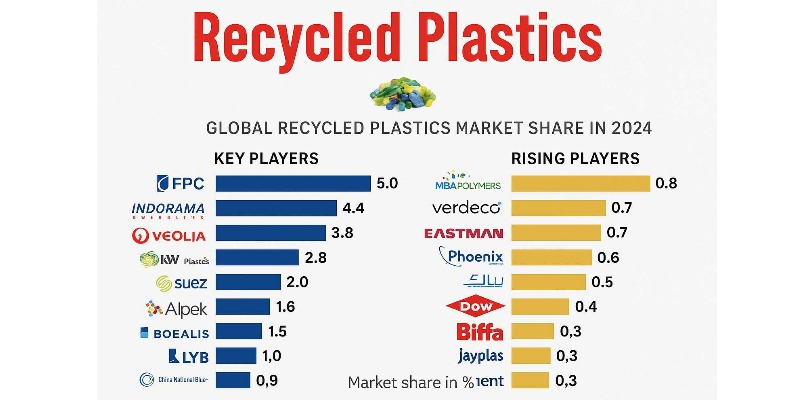 Recycled Plastic: The New Global Recycling Map for 2030
Global Leaders of 2024 and the Race Toward a More Sustainable Chemistryby Marco ArezioIn 2024, the global market for recycled plastics reached a historic turning point. It is no longer a niche sector but a strategic pillar of the global materials industry. The chart illustrates a dynamic landscape where the giants of traditional chemistry coexist with innovative startups and new players driving the green transition.Market percentages do more than show revenue shares: they sketch an industrial geography in motion, one that shifts investments, technologies, and environmental responsibilities from one continent to another.Asian Leadership: Far Eastern and Indorama, Two Faces of an EmpireAt the top of the list stands Far Eastern New Century, with a 5% share. It is the flagship of Asia in PET recycling—a Taiwanese giant that, over the past decade, has integrated collection, depolymerization, and the production of recycled fibers for textiles and packaging. Its strength lies not only in production capacity but in industrial vision: transforming billions of bottles into resources while maintaining a transparent environmental balance sheet.Close behind, with 4.4%, is Indorama Ventures, the Thai multinational present in over thirty countries. The company has redefined the concept of PET recycling—not as a secondary activity but as a fully integrated part of the global value chain. Its facilities in Europe and North America demonstrate how post-consumer plastics can become certified feedstock for new industrial cycles.The success of these two Asian companies reveals that innovation does not originate solely in Western laboratories. Today, Asia is the true engine of industrial recycling, with automated plants, digital waste traceability, and optical sorting processes capable of separating materials with over 99% precision.Europe’s Environmental Powerhouses: Veolia and SUEZ, the Infrastructure of CircularityWith a 3.8% share, Veolia Environnement remains the emblem of Europe’s blend of industry and environmental policy. Its sorting and plastic regeneration platforms are a model of public-private collaboration, feeding the growing demand for recycled materials in packaging, construction, and the automotive industry.Just behind, SUEZ (2%) continues to play a crucial role as an integrated environmental service provider. Its strength lies not in the volume of materials processed but in the quality of management and constant monitoring of supply chains. Together, Veolia and SUEZ embody Europe’s circular economy philosophy: every waste stream must find a new function, and every plant must operate within a closed-loop system.American Excellence: KW Plastics and PolyQuestAcross the Atlantic, KW Plastics (2.4%) and PolyQuest (1.5%) represent American pragmatism applied to recycling.Based in Alabama, KW Plastics is the largest recycler of HDPE and PP in the United States, specializing in the recovery of industrial containers and household bottles. Quietly but steadily, it supplies raw materials to some of the world’s most sustainable packaging producers.PolyQuest, on the other hand, focuses on enhancing PET through an engineering-driven approach aimed at performance consistency. Its motto says it all: “same performance, less impact.”In this segment of the market, the main challenge remains standardization—ensuring that recycled materials have reliable technical properties and can be used on an industrial scale without compromising quality.The New Players: Where Chemistry Meets VisionAlongside the major names, the chart highlights a new generation of companies: MBA Polymers (0.8%), Verdeco (0.7%), Eastman (0.7%), Phoenix Technologies (0.6%), SABIC, Dow, Biffa, Covestro, Jayplas, and Altium.These organizations differ in origin and size, but they share a single goal: to turn waste into value—not out of obligation, but out of industrial vision.MBA Polymers is emblematic of this evolution. Founded to recover plastics from electronic and automotive waste, it has developed advanced separation and purification technologies that yield high-performance regenerated materials.Verdeco, with plants in Italy and the United States, stands out for producing food-grade recycled PET, the result of continuous innovation toward molecular purity.Meanwhile, Eastman, a historic name in American chemistry, has taken the route of molecular recycling—breaking polymer chains into monomers identical to those derived from fossil sources. This is the frontier of chemical recycling, where plastic is literally reborn.The Chemistry of the Future: Beyond Mechanical RecyclingToday, discussing recycled plastics no longer means talking about grinding and remelting. The new frontier is molecular recovery chemistry, in which plastic is broken down into its fundamental components and rebuilt without quality loss.This approach—merging materials science with process engineering—is already industrial reality. Companies like Eastman, Borealis, and LyondellBasell are investing billions of dollars in depolymerization and controlled pyrolysis plants, aiming to reduce carbon footprints by up to 60% compared to conventional production.The difference from the past lies in scale: what once was experimental is now economically viable, thanks to regulatory incentives, extended producer responsibility policies, and rising demand from major consumer brands.Regulation, Incentives, and the Geopolitics of RecyclingEurope leads the regulatory transition, setting minimum recycled-content thresholds for packaging and bottles. The new PPWR (Packaging and Packaging Waste Regulation) mandates that by 2030 every package must contain at least 30% certified recycled plastic.Asia, in contrast, responds with infrastructure investment: China, though limiting waste imports, is building an increasingly efficient domestic recycling network; India and Thailand are emerging as manufacturing hubs for regenerated thermoplastics.In the United States, market forces drive the change—large corporations in the beverage, automotive, and cosmetics sectors are adopting voluntary sustainability goals, making recycling both a reputational and economic strategy.ESG Investment and the Language of Green FinanceThe year 2024 also marked the moment when finance fully recognized the value of recycling. ESG funds now view the regenerated plastics sector as a frontier of clean, measurable growth.Major chemical companies that once produced only virgin resins are converting their facilities into urban bio-refineries, capable of processing waste and generating high-quality secondary raw materials.This transformation is no longer peripheral—it is rewriting the very language of industry. Sustainability is no longer a marketing label but a line item on corporate balance sheets.Toward 2030: The Challenge of Quality and Global BalanceProjections suggest a 7–8% annual growth rate for the recycled plastics market through 2030. Yet the real challenge is qualitative: producing recycled materials that can fully replace virgin ones without functional limits.Added to this is a significant geopolitical issue—the concentration of recycling infrastructure in just a few regions, creating major imbalances in capacity between Europe, Asia, and Africa.For the circular economy to become truly global, international agreements will be needed to harmonize rules, certifications, and traceability systems.Conclusion: From Waste to Resource — A Change of ParadigmThe picture of 2024 reveals an industrial world that, though moving at different speeds, has decisively embraced regeneration.Plastics are no longer the symbol of pollution, but a testing ground for collective responsibility: transforming what was once waste into something durable, valuable, and sustainable.Behind every percentage in the chart lies a vision—the vision of a future where matter does not end, but begins again.© Reproduction ProhibitedChart by Pristine Market Insights
SEE MORE Behavioral Approach to Purchasing Management
The purchasing department plays a fundamental role in the company, not only from an economic point of view but also from a stability and growthFor many, the role of purchasing director seems like one of the managerial jobs simpler, especially if seen by salesmen who, perhaps, find it difficult to sell the products that the company produces or distributes due to competition, commercial dynamics, the geographical position of responsibility and the fact that in the end it is always the customer who decides. It seems that the activity of the purchasing office is simpler because, with roles reversed, it can choose the product or service which he deems most appropriate, examines the offers of suppliers, weighs their quality and price and then makes a decision. The game is done. But in reality professional management in the world of purchases does not work exactly according to appearances, because if it is true that there is no the anxiety of closing the sales order, perhaps affected by a thousand variables, there is the responsibility to make the best possible purchase, in the necessary quantities, at the most correct price at that moment, to give continuity of supply to the company, of production o marketing of products, building a pool of reliable suppliers. It is difficult to be able to talk about common rules on the best possible approach to purchasing work, as each company has a reference market and to compare work techniques in different markets, with different materials or services, is not correct or useful. There are in fact differences of strategy between the purchase of raw materials, semi-finished products, products to be marketed or services, moreover each of these categories enjoys great diversification within them with price, quality and availability dynamics that can be completely different from each other. I would rather focus on the behavioral aspect of the manager who manages purchasing operations on behalf of the company, where his approach in Supplier comparisons can make a difference to the company they work for. There are two theories of work and approach to purchases: - the one who believes that every money saved in incoming products or services is always money earned for the company, which we could therefore define “squeezing”- the one that believes it is necessary to retain both suppliers and customers, where the price is one of the components of the work but not the only one, which we will call "loyalty" Starting from the first, the manager who uses the supplier squeezing tactic, we are faced with a person who knows the power he can exercise in the negotiation phase, succeeds well in the role as an intransigent price destroyer, he can frequently change suppliers who do not meet his price requirements, and he assumes that he has sufficient business attractiveness to allow him to always fish new companies from the market when necessary. He is a person who works to reduce margins for suppliers, aims to ensure large shares of turnover that produce strong credit exposures, in order to weaken their position towards the company and imposes stringent general conditions in contracts. We can say that a very unbalanced relationship is created, critical for the supplier but, in the long run, also for the company, where the lack of mutuality in the work generates tensions, disputes, with the risk of worsening the service and the continuity of the relationship. The second approach to purchasing is the one carried out by the "loyalty" manager, who sees the qualified supplier as an important part of the company, an external colleague with whom to do the business journey together, in an attempt to create mutual satisfaction. Negotiations between company and supplier are not set up on the display of unilateral power, on tight negotiation of the price, taking all other parameters for granted. The loyalty manager is concerned that the service he is buying can be produced over time, without interruptions or continuous changes of suppliers, that there is harmony and willingness to overcome problems or errors, that a price is established that is profitable for both, that the credit management report gives security and confidence to the supplier. This approach aims to create a positive harmony in which both can manage the relationship in an elastic way, increasing interest and respect for companies, and to work towards solving problems or satisfying special requests that may arise during the working year. Machine translation. We apologize for any inaccuracies. Original article in Italian.
SEE MORE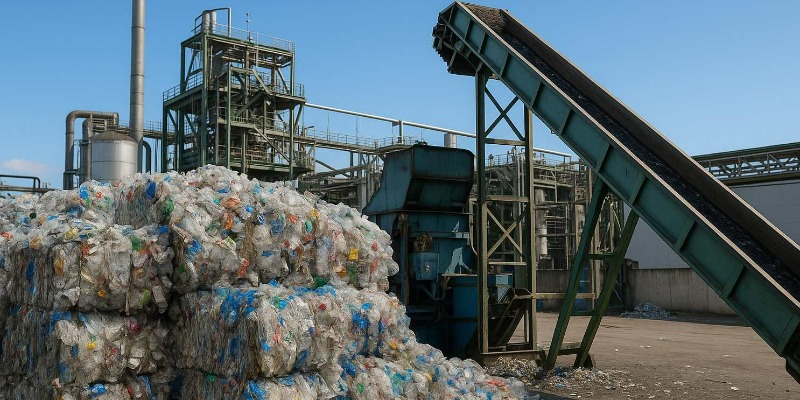 Plastic recycling in Europe: between industrial crisis and unfair competition
Plant closures, investment freezes, and cheap virgin plastic floods the market: the European recycling industry is at risk of collapse. Investigations, numbers, and political responsibilities by Marco Arezio Europe risks losing one of the pillars of its green transition: plastic recycling. The stark, stark numbers confirm this. In the first seven months of 2025, the sector has already lost as much production capacity as in the entire year of 2024. If the trend continues, a cut of nearly one million tons will be reached by December. Behind these figures lies a combination of economic dynamics, political choices, and market imbalances that call into question the very credibility of the European Green Deal. The sector is not marginal: it is worth over nine billion euros, includes 850 companies, and employs more than 30,000 people. Yet, in the heart of the Union, dozens of plants have already shut down their machinery, especially in Germany, the United Kingdom, and the Netherlands. The paradox is evident: while Brussels proclaims increasingly ambitious targets for waste reduction and the use of recycled materials, the actual supply chain is retreating, crushed by external pressure and a lack of effective protections. The prime suspect is imported virgin plastic. It arrives from non-EU markets at rock-bottom prices, often produced under much less stringent regulatory frameworks than European ones. Recycling companies thus find themselves competing with cheaper materials that don't meet the same environmental standards. The result is unfair competition that penalizes those who invest in innovation and sustainability. But it's not just a global market issue. There's also the issue of energy costs: powering recycling plants requires energy and infrastructure, which in Europe are among the highest in the world. For many operators, the budget is unsustainable, and closures become the only option. Added to this is a chronic problem: waste sorting. In too many countries, it remains uneven, quantitatively scarce, and qualitatively insufficient. Quality recycling begins with sorting at the source, and without efficient collection, the entire chain collapses. The consequences aren't just industrial. Every ton of lost capacity means more virgin plastic placed on the market, more emissions, and fewer jobs. But above all, it means jeopardizing European targets for reducing CO₂ emissions and minimum recycled content in products. A strategy that is crumbling under the weight of its own contradictions. Industry associations—from Plastics Recyclers Europe to Assorimap —have raised their voices: urgent and bold measures are needed. Their demands include: stopping the entry of non-compliant materials, mandating the use of a minimum percentage of recycled plastic, reducing energy costs for plants, and standardizing regulations across member states. Otherwise, they warn, Europe risks becoming an open market for low-cost plastic and a graveyard for recycling companies. The increasingly widespread suspicion is that political inaction is being driven by pressure from lobbies representing virgin plastic producers , who benefit from the decline in recycled content. This dynamic, if confirmed, would cast a heavy shadow over the European Union's ability to defend its environmental agenda. Without a robust recycling supply chain, the circular economy remains an empty slogan. Today, Europe is at a crossroads: protect its industrial base and accelerate circularity, or let the global market and its distortions dictate the future of plastics. The answer will determine not only the fate of a sector, but also the credibility of the continent's green policies. © Reproduction Prohibited
SEE MORE Why Is China's Economy Weakening? Let's See the Causes
A mix of political and financial factors is affecting the second world economy. We used to see the growth of Chinese GDP with values three or four times higher than those of Europe and the USA so much so as to think it was a country in its own right, where the recurring crises experienced in the West could never touch the factory of the world. We have, over the years, opened our doors to Chinese products, thinking we can do good business by buying and reselling their goods instead of produce them in the West. The most structured companies have started the massive relocation to China in order to reduce production costs and maximize contribution margins. Several years have passed before we realized that producing away from home could also have negative implications on the product, on logistics, on outsourced work, which was not always offset by higher margins on sales operations. Today, China has a slightly less bright image than in the past in the eyes of the world, a market that is slowing down and the large multinationals that are looking around, outside the Chinese borders, to find new production solutions. But what are the causes of this slowdown of the Dragon? Rossella Savojardo made an analysis of the three major causes of the weakening of the Chinese market, which are represented by political, economic and social reasons. China will avoid recession both this year (+3.5% GDP) and next (+4.5% %), with inflation that compared to Western countries will be low (2.8% in 2022 and 1.9% in 2023). But the strength of the Dragon's economy has weakened in the last period and the causes seem to be at least three according to the experts. The pandemic and the zero-Covid policy Covid-19 cases in China have marked a new increase to over 31,000 infections, a record since the beginning of the pandemic. This has again led to generalized lockdowns across the country with the closure of some important production centers as well. Jian Shi Cortesi, investment director Asia and China Equities at GAM, explains that “the Chinese government is faced with a trade-off between the deaths caused by Covid and the economic slowdown. Thanks to the success of the containment measures taken in China in the last two years, less than 0.1% of Chinese people have been infected with Covid and China has registered only a few thousand deaths (compared to 1 million recorded in the US). This, according to Shi Cortesi, probably makes the Chinese population highly vulnerable to Covid compared to countries that are achieving herd immunity. The most vulnerable segment of the Chinese population is not inclined to be vaccinated. In the future, according to the expert, there will probably not be an immediate change in the Chinese zero Covid policy. However, “restrictions are increasingly practical. Widespread lockdowns are now rarer. Instead, we are seeing more targeted closures in order to balance the Covid restrictions and the economic impact". Evergrande and the real estate crisis Not just Covid. In China, the real estate sector is also faltering, also due to the dangers deriving from non-performing debt. “Between 2010 and 2020 the real estate market in China was robust, with prices rising by 60% in the top five of the country's 70 cities. This has led to some home buyers complaining about the affordability of properties and the government has become concerned that this could lead to a real estate bubble,” Shi continues to explain, highlighting that for this reason in 2020 and 2021, some cities in China tightened the rules for buying a house in an attempt to cool down the real estate market. Meanwhile, the government has ordered banks to tighten lending criteria to heavily indebted property development companies. The combination of these measures has created some liquidity problems for high-risk real estate development companies, which, in some cases, have resulted in insolvency. "Troubled builders have halted some projects. Sentiment has turned quite negative for the sector, resulting in a tightening of financial conditions." To stabilize the real estate situation, Beijing has implemented increasingly incisive support policies, and it is precisely by looking at the latter that the Gam expert sees a probability very low that the slowdown in the real estate sector leads to systemic risks in China's financial system. “However”, he continues, “the boom years of the real estate sector are likely to be behind us”. In fact, according to some experts, annual sales of new homes are expected to drop to 1-1.2 billion sq m in the next few years, compared to 1.6 billion sq m in 2021. This will act as a brake on the growth rate of the gross domestic product of the Dragon. Is China's problem youth unemployment? The analysts of Credit Suisse shine a light on this point, who recall that when the workforce of a country is shrinking, as is currently the case in China, having a high youth unemployment rate exacerbates the resistance to GDP growth. “Young people aged between 16 and 24 have a higher marginal propensity to consume”, they explain in the first place, “ for any given level of global unemployment rate, a higher youth unemployment rate therefore has a proportionally larger negative effect on consumption growth. In the medium term, therefore, Credit Suisse believes that structurally high youth unemployment will translate into lower growth potential, given that this reduces the effective input of jobs in the economy and also exerts downward pressure on wage growth. «Based on our assessment of various factors such as rates of technological progress and labor force shrinkage, we expect per capita disposable income growth to average around to 4.2% over the next five years, a sharp decline compared to the range of 8-9% before the pandemic", underlining the Swiss bank, "such a decline in trend growth should therefore remain a headwind for the growth in consumption of families". Automatic translation. We apologize for any inaccuracies. Original article in Italian.
SEE MORE XIXth Century and the Expansion of Chemistry between Good and Bad
Chemistry in history: use of white phosphorus in the production of matches Throughout history, all forms of progress have been punctuated by victories and defeats, by deeds of technical-scientific glory and by the desire for money, in short, by the eternal struggle between those who commanded and those who suffered.The literature tells us about episodes referring to successes, resulting from the discovery of new materials and their industrialization, and negative, sometimes fatal, implications for those who worked in factories or in their vicinity. We can remember the history of the pollution of dioxin, eternit, teflon, PFSA, lead, pesticides and many others chemical discoveries which, on the one hand have made industries great, but on the other have caused damage to human health, the environment and often the death of many workers. History gives us anecdotes on how the new chemistry, during the 19th century, had created an industry greedy for money and not at all respectful of the health of those who procured these profits to entrepreneurs through their work. An article, apparently small and harmless like matches, whose diffusion was maximum in that period by virtue of the needs in the kitchen, in companies, for heating and for smokers, it was produced with chemical compounds highly harmful to human health and, despite this, its production continued for years trying to cover up the real harmful effects. Starting from 1840, when the technique of manufacturing matches was refined, the production it was done by immersing small pieces of wood in a smoky mass of white phosphorus, then letting them dry in the air. White phosphorus, raw material for incendiary heads, was composed of mineral phosphates and bone ashes which contained calcium phosphate. The resulting mixture was then treated with sulfuric acid, another product of the nascent chemical industry, thus obtaining phosphoric acid which was then treated with charcoal and transformed into phosphorus. The white phosphorus made in this way was used for the manufacture of matches, but it was highly toxic for those who handled it or breathed in the fumes. The work of preparing matches, often performed by women and children, exposed them to the fumes of white phosphorus , also because, often, they were made in narrow spaces or the rooms did not have the necessary air exchange and circulation. For many years the deaths and serious illnesses of workers in factories followed one another due to white phosphorus, despite the fact that the industrialists knew perfectly well about the toxicity of the product that served for flammable heads. A strong action among entrepreneurs, some professors and some parliamentarians, managed to block a proposed law, dated 1905, which would prevented use, forcing companies to switch to more expensive red phosphorus. But in 1924, despite the monopoly association of match manufacturers trying in every way to prolong the legislative block, there was the approval that put an end to the chemistry of death. Automatic translation. We apologize for any inaccuracies. Original article in Italian. Photo Tecnomatch
SEE MORE The Great Powers of Global Chemistry: Financial and Industrial Analysis of the Industry Leaders
A Detailed Analysis of the Ten Companies Dominating the Global Specialty Chemicals Marketby Marco ArezioOver the past twenty years, the global chemical industry has undergone a profound transformation, shifting from mass production focused on volume to a strategy based on innovation, sustainability, and product specialization. This marks the rise of specialty chemicals, a sector where scientific research, formulation customization, and energy efficiency become essential value drivers.These companies no longer limit themselves to producing basic chemical compounds. Instead, they develop high-technology solutions that enter—often invisibly yet decisively—into every industrial sector: from automotive to aerospace, from food packaging to pharmaceuticals, from construction to electronics. Every finished product—an electric car, a solar panel, a recycled textile fiber, or a cosmetic—contains a portion of innovation derived from specialty chemistry.The economic impact of this segment is immense: according to 2024 estimates, the global market for specialty chemicals surpassed €800 billion, with an annual compound growth rate of 5–6%.The leading companies—both European and American—stand out for their strategic balance between high margins, financial solidity, and environmental commitment.Within the global competitive landscape, ten names rise as the pillars of modern chemistry: BASF, Dow, Nouryon, LANXESS, Evonik, Huntsman, Clariant, Solvay, and Arkema. Each represents a distinct industrial model, yet all share a common vision—to transform chemistry into a driving force for the ecological and digital transition of the global economy.BASF SE: The Integrated Giant of Global ChemistryFounded in 1865 in Ludwigshafen, BASF SE is today the world’s largest chemical company. Its industrial model is based on the Verbund principle—an integrated network that links production, energy, and logistics in a cyclical and synergistic system.Its six divisions—Chemicals, Materials, Industrial Solutions, Surface Technologies, Nutrition, and Agriculture—cover a vast portfolio ranging from catalysts to coatings, polymers to fertilizers.With over €68 billion in revenue (2024) and 112,000 employees worldwide, BASF combines production efficiency with environmental innovation. Key projects include ChemCycling™, which transforms plastic waste into secondary raw materials, and a company-wide commitment to climate neutrality by 2050.DOW Inc: American Innovation Between Materials and CircularityBased in Michigan, Dow Inc is the largest U.S. chemical company and a global leader in polymer materials.The group operates through three main divisions: Performance Materials, Industrial Solutions, and Packaging & Building Chemicals.Its flagship products include elastomers, silicone resins, adhesives, solvents, and recycled polymers.Dow has invested heavily in sustainable chemistry, developing low-emission plastics and mono-material packaging to enhance recyclability.With over $46 billion in annual revenue, a 12% operating margin, and operations in more than 160 countries, Dow represents a modern, dynamic, and life-cycle-conscious model of American chemistry.Nouryon: Dutch Precision in Niche ChemistryHeadquartered in Amsterdam, Nouryon emerged from the spin-off of AkzoNobel’s Specialty Chemicals division.Specialized in high-value-added chemicals for the paper, detergent, polymer, and agricultural industries, Nouryon exemplifies a strategic focus on high-margin segments.Its products—peroxides, surfactants, additives, and catalysts—are essential to industrial processes in more than 80 countries.With a strong scientific orientation and a lean structure, Nouryon has consolidated its leadership in Europe and North America, maintaining solid financial performance and a clear direction toward green innovation.LANXESS AG: German Strength in Advanced MaterialsFounded in 2004 as a Bayer spin-off, LANXESS AG has established itself as a global leader in technical polymers and industrial additives.Its key sectors include automotive, construction, electronics, water treatment, and materials engineering.With revenues exceeding €13 billion, LANXESS is recognized for the quality of its elastomers, chemical intermediates, and lubricant additives.The company is at the forefront of industrial emission reduction and biopolymer development, pursuing a decarbonized and digital production model.Evonik Industries AG: The Science of New MaterialsFounded in 2007 from the RAG Group, Evonik Industries AG represents the innovative face of German chemistry.A world leader in additives, 3D-printing materials, and health and nutrition products, Evonik has oriented its strategy around research, sustainability, and green technologies.Its product range spans catalysts, smart polymers, amino acids for feed, and components for lithium batteries.With over €15 billion in 2024 revenue, Evonik combines organic growth, scientific research, and commitment to the bio-economy—embodying the new paradigm of “clean and high-performance chemistry.”Huntsman Corporation: Polyurethanes, Composites, and a Sustainable FutureFounded in 1970, Huntsman Corporation (Texas, USA) specializes in polyurethanes, resins, and advanced composite materials.It serves key sectors including construction, aerospace, energy, and technical textiles.The company has cemented its role as a global leader in thermoplastic polyurethane (TPU) and lightweight composites, investing in circular manufacturing processes.With over $8 billion in revenue, Huntsman bridges chemical innovation and industrial application, positioning itself at the intersection of material science and sustainable manufacturing.Clariant, Solvay and Arkema: Europe Between Technical Excellence and Green TransitionClariant AG (Switzerland) is synonymous with sustainable chemistry. Its catalysts, additives, and personal-care solutions derive from biomass and low-impact processes.A pioneer in cellulosic bioethanol and eco-friendly polymers, Clariant exceeded €5 billion in revenue (2024), maintaining one of the highest margins in the sector.Solvay SA (Belgium), founded in 1863, is a leader in advanced chemistry for aerospace, e-mobility, and pharmaceuticals.In 2024, Solvay completed a historic restructuring, splitting into two entities — Solvay (basic chemistry) and Syensqo (high-tech materials) — to enhance transparency and highlight its high-value technological activities.Arkema (France), established in 2004 from a Total spin-off, is now a global leader in sustainable polymers, 3D-printing resins, and lightweight composites.With over €10 billion in revenue, Arkema drives Europe’s green transformation, promoting renewable feedstocks and low-emission supply chains.Conclusion: The New Frontier of Global ChemistrySpecialty chemistry is no longer a support industry but a strategic engine of the global economy.The leading companies analyzed here embody the shift from quantitative production to a qualitative and sustainable vision: fewer volumes, more value.In a world where material innovation defines industrial competitiveness, these ten groups form the backbone of the ecological and technological transition.Their combined strength—over €250 billion in total revenue—makes chemistry not merely a science, but a decisive economic force in shaping the future.© Reproduction Prohibited
SEE MORE The new professions for sustainable economy are born
Universities are gearing up to offer master's degrees in line with the market that seeks experts in new emerging professions in the field of sustainable and circular economy The world is evolving towards an increasingly marked attention to the environment, to recycling, to reuse, to saving raw materials, to production with the lowest possible environmental impact and to a new reconsideration of nature. This will generate new professions. These are not just appeals launched by the European Community, which is pushing the accelerator towards the change of the production, distribution, energy and logistics model, promptly derided by environmental deniers such as the United States or the indifferent (apparently) such as China or 'India and the various satellite countries. It is always the market that first grasps the requests for change that come from the base, and it is always the market that organizes itself to support the epochal changes we are experiencing, also dragging with it the political class that must legislate on the matter. Industrialists have understood that they must support the will of people who viscerally feel the problem of climate change and who try to adopt virtuous behaviors with actions that are reflected in consumption. Less plastic, fewer cars with combustion engines, less use of electricity and water, less use of airplanes, less purchasing of products that come from far away and fewer products made with virgin raw materials. This change in needs on the part of the world population will have a substantial impact on consumption and, therefore, also on production processes, which is why industrialists cannot think of waiting for political inertia. This is demonstrated by the fact that even in the United States, the industrial fabric is not too impressed by the liberal policy and little attention to the environment that the Tramp administration pretends to defend, against all scientific logic, moving with initiatives that meet the needs of the population in terms of respect for the environment. For these reasons, in the next decade, new professional figures will be created who will have to govern, within companies, the production of goods and services according to a circular economy and sustainability perspective. To train experts in the sectors that will be among the most requested by the market, universities are organizing Masters, through which new technicians can be certified in disciplines relating to waste systems, the control and management of dangerous substances and company risks according to the new regulations and finally, the scope of technical training on recycled plastics. The waste system expert will have specific skills in the field of collection, transport, storage and disposal in relation to environmental and production regulations. The environmental safety expert will have specific skills in dangerous substances, workers' health in relation to their use and compliance with environmental regulations. The recycled plastics expert will have specific skills in the processing and reuse cycle of plastic waste, in the form of new raw material, giving the sales networks specific instructions on their use in the field of moulding, extrusion, blowing and thermoforming. See the new professions Il Sole 24 Ore
SEE MORE Can Branding Replace Critical Judgment? Consumer Risks
When Brand Identity Overshadows Judgmentby Marco ArezioWe live in a world increasingly dominated by powerful brands and sophisticated marketing strategies, where branding is no longer just a symbol or a logo but an entire experience built around a product or service. Every day, consumers face purchasing decisions influenced by well-crafted narratives that often outweigh the intrinsic quality of the products. In such a context, the risk that branding could replace critical judgment is real and significant, with consequences that go far beyond a simple poor choice.The strength of branding lies in its ability to create an identity for the product or service, turning it into a symbol of personal aspirations, shared values, and even social status. However, this persuasive ability can become dangerous when consumers, overwhelmed by emotions and positive associations, abandon rational evaluations. This phenomenon not only influences individual behavior but also alters the economic landscape, often rewarding appearances over substance.The Impact of Branding: More Than Just a NameBranding is the art of creating an identity that not only makes a product recognizable but elevates it to a symbol of certain values, aspirations, and lifestyles. Brands like Apple, Nike, and Coca-Cola don't just sell products; they sell status, emotions, and a sense of belonging. But what happens when this emotional connection becomes so strong that it leads us to overlook obvious flaws or better alternatives? The risk is that the brand becomes a mental shortcut, replacing rational analysis with blind trust.Psychological Mechanisms and Subtle InfluencesBranding deeply embeds itself into cognitive processes, leveraging psychological mechanisms to steer consumer decisions. It’s not just a creative exercise but a strategy that draws on behavioral sciences and consumer psychology. Through a combination of symbols, narratives, and promises, brands build a mental system of associations that operate almost subliminally, leading consumers to choose a product or service often without thorough rational evaluation.Cognitive Biases: If we perceive a brand as synonymous with quality, we tend to evaluate its products positively, even when evidence suggests otherwise.Halo Effect: A well-known brand often influences our perception of quality across all its products, regardless of their actual characteristics.Illusion of Scarcity: Creating a sense of exclusivity can push consumers into impulsive purchases, fearing they might miss out.The Risks of Dominant BrandingDominant branding represents a complex and sometimes insidious phenomenon, where the brand identity overshadows the real value of the product or service. This occurs when consumers rely solely on the brand's image without questioning the quality, ethics, or price of what they’re buying. Over time, this dynamic can erode the public's critical capacity, creating a reality where appearance matters more than substance. Exploring the risks associated with this trend is essential to understand how to protect consumers from potential abuses and encourage fairer and more transparent competition.Overpriced or Lower-Quality ProductsA strong brand can lead us to pay more for a product that, in practical terms, offers less compared to lesser-known or generic alternatives.Emotional Attachment and Lack of ObjectivityWhen branding becomes part of personal identity, consumers are less likely to recognize flaws or unethical behavior by the company.Reduction of ChoiceFocusing on a few well-known brands limits the discovery of alternatives, stifling competition and favoring only dominant companies.Irresponsible ConsumptionGreenwashing is a clear example of how branding can mislead: many companies exploit sustainability language to build an ethical image without implementing real changes.How to Protect Yourself: Strategies for Informed ConsumersTo avoid falling prey to the power of branding, it’s crucial to recognize how easily one can be influenced by its persuasive dynamics. A well-built brand doesn't just represent a product; it can profoundly shape our decision-making processes, often at the expense of rationality and awareness. Therefore, adopting a more critical and conscious approach is vital:In-Depth Research: Before purchasing, compare reviews and technical specifications from reliable sources to go beyond the brand's allure.Evaluate Ethical Practices: Investigate company policies regarding sustainability, workers' rights, and environmental impact.Question the Why: Reflect on the reason behind the purchase. Is it truly necessary, or is it an emotional response to the brand's image?Support Diversity: Supporting small producers, local brands, or innovative companies helps promote a fairer and more diverse market.ConclusionBranding can enrich the purchasing experience, but only if managed with awareness. Letting oneself be guided solely by a brand means relinquishing personal decision-making power and passively accepting what marketing wants to offer. Being informed consumers is an act of responsibility, not just towards oneself but also towards a market that needs fairness, transparency, and diversity to grow sustainably.© All Rights Reserved
SEE MORE Wiretapping in environmental crimes: when they are legitimate and what are the legal limits
Technical and Legal Guide to the Use of Wiretaps in Proceedings for Environmental Crimes: Investigative Tools, Legitimacy Requirements, Statutory Limits and Protection of Rightsby Orizio LucaIn today’s context, environmental crimes rank among the most complex and pervasive challenges faced by the judiciary and practitioners in the field of law—particularly the judicial police, environmental authorities and specialised defence counsel. Combating pollution, the illicit trafficking of waste, unlawful building activity and the criminal organisations that run illegal operations in the environmental sector calls for investigative tools that are both effective and compliant with constitutional safeguards.Among these tools, the interception of conversations and communications is crucial, yet it is subject to stringent legal constraints and constant interpretative debate.This article offers a technical, up-to-date analysis of the statutory and case-law framework governing the legitimacy of wiretaps in proceedings for environmental offences, with special attention to the legal prerequisites, key practical pitfalls, and the most recent developments introduced by Parliament and by the Court of Cassation.Regulatory Framework: Wiretaps and General RulesCode ProvisionsWiretaps are regulated by Articles 266 et seq. of the Italian Code of Criminal Procedure (Codice di Procedura Penale, c.p.p.). As a rule, tapping telephone, digital or ambient communications is permissible only when proceedings concern certain offences, including those punishable by a maximum prison term of at least five years or the felonies expressly listed in Article 266 c.p.p.Striking a balance between investigative efficiency and fundamental rights, the legislature has stipulated that interceptions may be authorised solely when they are “absolutely indispensable” for the continuation of the investigation (Art. 267 c.p.p.), by means of a reasoned order issued by the judge at the request of the Public Prosecutor.Environmental Offences and the Environmental CodeLaw 68/2015 introduced Title VI-bis of the Criminal Code, devoted to crimes against the environment (Arts. 452-bis et seq.). New offences include environmental pollution, environmental disaster, trafficking and abandonment of highly radioactive material, obstruction of inspection, and failure to remediate.Many of these crimes meet the conditions for which wiretaps are allowed: either because of their gravity (the maximum penalty exceeds five years’ imprisonment) or by express reference in Art. 266(1)(c) c.p.p., which covers offences committed “with Mafia-type methods or for the purpose of facilitating the activities of criminal associations”.Wiretaps in Proceedings for Environmental Crimes: Requirements for LegitimacyInterceptable Offences: the Penalty ThresholdThe first issue in practice is the nature of the environmental offence under investigation. Generally speaking, the felonies of environmental pollution (Art. 452-bis) and environmental disaster (Art. 452-quater), as well as organised waste trafficking (Art. 452-quaterdecies), carry maximum sentences well above the threshold set by Art. 266 c.p.p., making interceptions theoretically permissible.Not all environmental offences are “interceptable” by right, however. Lesser summary offences—e.g. unlawful management of non-hazardous waste under Art. 256(1) of Legislative Decree 152/2006—may fall outside the scope of wiretaps unless connected with more serious crimes, such as a criminal conspiracy aimed at committing environmental offences.The “Absolute Indispensability” RequirementUnder Art. 267 c.p.p., the order authorising interception must explain why the measure is absolutely indispensable—i.e., why it is impossible to obtain relevant evidence by other means (surveillance, document seizures, witness interviews, etc.).Case law repeatedly stresses that the reasoning must be precise and specific: a generic reference to investigative difficulty will not suffice; the order must demonstrate, case by case, that wiretapping is the only viable route (Court of Cassation, Criminal Section VI, judgment 49282/2017).The Judge’s Role and Statement of ReasonsThe judge for preliminary investigations (GIP) must undertake a critical review rather than merely endorsing the prosecutor’s request, assessing whether the prerequisites exist and providing reasoning that reflects the principle of proportionality and the seriousness of the alleged offence.Scope of Application: Case Studies and Jurisprudential TrendsAmbient Interceptions in Cases of Dumping and Illegal TraffickingInvestigations into organised waste trafficking (Art. 452-quaterdecies Criminal Code) often involve associative structures, territorial ramifications and complex operations. In such instances, the courts recognise the legitimacy of not only telephone and electronic taps, but also ambient interceptions (e.g. in operative sites, vehicles or offices).A recent Supreme Court ruling (Cass., Criminal Section III, 17 January 2024, no. 2157) confirmed that authorising wiretaps in organised waste-trafficking cases is fully legitimate, given the associative nature of the conduct and the difficulty of reconstructing the illicit chain by alternative means.Connections with Other Offences: Mafia-Type Association and Environmental Aggravating CircumstanceEnvironmental crimes frequently intersect with conspiracy offences (Arts. 416 and 416-bis Criminal Code) or with the involvement of Mafia-type organisations. In such cases, wiretaps are allowed for ancillary or instrumental offences, provided they are functionally linked to the association and aimed at facilitating criminal activity.The presence of the Mafia aggravating circumstance widens the scope of interceptions under Art. 13 of Decree-Law 152/1991 (“Anti-Mafia Decree”), which permits tapping even for offences outside Art. 266 c.p.p. where functional to uncovering associative activity.Statutory Limits and Protection of Fundamental RightsThe Principle of Proportionality and Privacy ProtectionBecause wiretaps restrict the right to privacy (Art. 15 Constitution), the legislature and the courts have introduced a series of safeguards:- Duration of interceptions – They may not continue beyond the time strictly necessary for the investigation and, in any event, no longer than forty days, extendable only where specifically justified.- Prohibition of disclosure – The results may be used solely in the proceedings for which they were authorised, unless they reveal offences prosecutable ex officio.- Inadmissibility of unlawful interceptions – Taps carried out without statutory prerequisites are inadmissible under Art. 271 c.p.p. and cannot be used as evidence.Defence GuaranteesThe defence is entitled to inspect requests and authorising orders, as well as the transcripts and logs of the intercepted conversations. Any defects in reasoning or lack of prerequisites may be challenged and can lead to exclusion of the material from the trial file.Regulatory Developments and Future ChallengesThe Impact of the Cartabia Reform and New TechnologiesAlthough Legislative Decree 150/2022 (Cartabia Reform) did not drastically alter wiretap rules for environmental crimes, it introduced adjustments concerning storage, access and management of intercepted data, reinforcing privacy protection—even for non-suspect persons.Moreover, evolving communication technologies (encrypted messaging apps, VoIP, IoT devices) pose new challenges, requiring ever-more sophisticated software and ongoing training for investigators, all within statutory limits.The European PerspectiveAt EU level, wiretap matters are framed by directives and regulations emphasising human-rights protection, as enshrined in the European Convention on Human Rights (ECHR) and the jurisprudence of the Strasbourg Court. That Court has repeatedly held that interception is permissible only where necessary, proportionate and subsidiary, so as to prevent abuse and violations of the right to private life.Conclusions: A Challenge Balancing Legality, Efficiency and Rights ProtectionWiretaps constitute an essential investigative tool against environmental crimes—especially where complex criminal organisations, illicit trafficking and conspiracies are involved. Yet their legitimacy hinges strictly on compliance with statutory prerequisites, detailed reasoning in the authorising order, and observance of defence rights and privacy safeguards.For practitioners—public and private alike—mastery of the statutory and case-law framework, together with continual updates on legislative reforms and court decisions, is vital. Only in this way can investigative effectiveness be reconciled with the protection of fundamental rights in a field where the stakes involve not merely legality, but collective health and the sustainability of our future.© Reproduction Prohibited
SEE MORE Enhance your company's profile in the circular economy
Explore the advantages of inserting your company profile within the rMIX recycling portal to expand your company's network and opportunities in the sustainable sectorby Marco ArezioIn the digital age, online visibility has become a critical component to the success of any business. This is especially true for the circular economy sector, where innovation and sustainability meet to create a greener future.This is why rMIX, the recycling portal, represents a unique opportunity for companies committed to recycling and sustainability: a dedicated platform, where you can publish your company profile, gaining visibility in a constantly growing sector.A Showcase for Your CompanyrMIX is not just a portal, but a real showcase dedicated to the world of the circular economy. Thanks to the possibility of publishing a detailed profile of your company, with texts, addresses, website, company references and photographs, you will be able to show the strengths and specializations of your business to an interested and specialized audience.Targeted VisibilityOne of the main advantages of rMIX is the ability to choose the location of your business profile based on the business category you belong to.Whether you specialize in recycled polymers, paper, glass, wood, WEEE, metals, recycled fabrics, industrial machinery, products made from recycled materials, technical, commercial, managerial consultancy, product distribution, job search and offering or in other sectors, your profile will always be visible, ensuring easy traceability.Flexible Subscription OptionsThe rMIX recycling portal offers various subscription options, suitable for every business need.- For those who want to quickly get in touch with possible suppliers or customers, choosing the rMIX Profilo subscription, with their company contacts visible to anyone who accesses the portal (even if they are not subscribers) is the recommended choice.- Finally, for those who wish to maximize their exposure, it is possible to opt for the rMIX On TOP subscription (in combination with rMIX Profilo), which always guarantees a privileged position within the platform.Translation into 4 languagesIn an increasingly globalized world, the ability to communicate across national borders is fundamental. rMIX knows this well and offers translation of your company profile into 4 languages, making it accessible to an international audience. This means that your company will be able to reach potential customers and partners around the world, expanding business and collaboration opportunities. The languages covered are: Italian, English, French and Spanish.Joining Forces for a Sustainable FuturePublishing your company profile on rMIX doesn't just mean gaining visibility; it also means becoming part of a community committed to promoting the circular economy and working together for a more sustainable future.By joining rMIX, you will have the opportunity to connect with other companies and industry professionals, exchange ideas, find new customers and suppliers, and actively contribute to the transition towards a greener and more responsible economy.In conclusion, rMIX represents a unique platform for companies operating in the circular economy sector. With its broad visibility, subscription flexibility and ability to reach an international audience, rMIX offers the tools needed to grow, innovate and actively contribute to building a sustainable future.Don't miss the opportunity to make your company known to the world: publish your profile on rMIX today.
SEE MORE Italy and the High Energy Price: Challenges and Opportunities for a Manufacturing Sector in Difficulty
The Cost of Energy in Italy, the Highest in Europe, Puts the Competitiveness of the Manufacturing Industry at Riskby Marco ArezioA recent analysis of average monthly electricity market prices in Europe, from January to October 2024, reveals a clear disparity between Italy and other European countries. According to the data, Italy leads the ranking with an average price of 103.7 euros/MWh, followed by Germany at 71.4 euros/MWh and the EU country average at 61.4 euros/MWh. Other nations, like Portugal, Spain, and France, record lower prices, while the Scandinavian area stands out with a particularly low cost of 36.5 euros/MWh. This significant energy cost difference places Italian industry at a disadvantage compared to European competitors, a particularly severe problem for a country with a strong manufacturing vocation like Italy.Causes of Energy Cost Disparitiesa) Energy Dependence and InfrastructureItaly has historically been a country with low energy production from domestic sources, relying heavily on imports of energy resources, especially natural gas. This dependence makes Italy vulnerable to price fluctuations on international markets and supply issues, especially in a context of growing global demand and geopolitical turbulence. Additionally, while Italian energy infrastructure has improved in recent years, it still lacks sufficient investment compared to countries like Germany and France, making energy distribution more costly and less efficient.b) Slow Energy TransitionAlthough Italy has embarked on a significant transition to renewable energy sources, such as solar and wind power, the development pace is still slower than in other European countries. This sluggishness is due to various factors, including complex and fragmented bureaucracy, which makes obtaining permits for new facilities difficult and expensive, and an electrical grid that is not always adequate to support the increase in renewable sources. In contrast, the Scandinavian region has invested heavily in renewables, thus maintaining low energy costs.c) Regulations and TaxesAnother cost factor for energy in Italy is the burden of taxes and excise duties, among the highest in Europe. These fiscal charges directly impact the final energy price, further increasing the cost for businesses and consumers. While Germany also has a significant tax burden, it has managed to compensate with a more efficient system of incentives and subsidies, which Italy still struggles to implement effectively and widely.Impacts on the Italian Manufacturing SectorHigh energy costs have a devastating impact on the competitiveness of Italy's manufacturing sector, a crucial component of the national economy. Italian companies, particularly small and medium-sized ones, are forced to contend with higher production costs than their European competitors, limiting their ability to compete on price and, in some cases, threatening their very survival. For energy-intensive sectors such as steel, chemicals, plastics, and paper, the impact of energy costs on total production costs is particularly high, with significant repercussions along the entire value chain.Additionally, Italian companies are often compelled to reduce profit margins or pass some of the costs onto end consumers, risking market share loss both domestically and internationally. This competitive disadvantage negatively impacts employment and related industries, undermining the stability of a sector that has traditionally been the heartbeat of Italy’s economy.Potential Solutions and Strategies for a Competitive Industrya) Increasing Investments in Renewable EnergyTo close the gap with other European countries, Italy must accelerate its energy transition towards renewable sources. This requires not only incentives and funding for new facilities but also a bureaucratic simplification that makes the approval process for new installations faster and less expensive. Increasing renewable production capacity, particularly in regions with high solar and wind potential, could significantly reduce foreign energy dependency and, consequently, supply costs.b) Energy Efficiency and Technological InnovationAnother key strategy for reducing energy costs is investing in energy efficiency within industries. Adopting advanced technologies for managing and monitoring consumption, such as the Internet of Things (IoT) and artificial intelligence, enables energy optimization, reducing waste and improving the sustainability of production processes. Some Italian companies are already experimenting with these approaches, but a broader and more coordinated commitment is necessary to achieve significant results.c) Support Policies and Tax ReformIt is crucial that the Italian government implements concrete support policies for energy-intensive companies, reducing the energy tax burden and introducing compensation mechanisms for the hardest-hit sectors. In this regard, it may be helpful to draw inspiration from successful models adopted by other European countries, such as Germany, where high-energy industries benefit from tax breaks and targeted subsidies. Simultaneously, an energy tax reform could lighten the load on consumers and improve the competitiveness of businesses.d) Promoting European CollaborationItaly could benefit from greater integration with the European energy market by leveraging bilateral agreements and cooperation programs for purchasing and sharing energy at lower costs. Collaborating with other European Union countries, especially those with a surplus of renewable energy, could be a temporary solution to mitigate costs and ensure greater supply stability.ConclusionItaly faces a significant challenge: ensuring a sustainable and competitive future for its manufacturing sector despite the current difficulties related to energy costs. The disparities in energy prices compared to the rest of Europe represent a substantial, albeit not insurmountable, obstacle. With a coordinated strategy involving both the public and private sectors—investing in renewables, energy efficiency, and targeted support policies—Italy can overcome this energy crisis and solidify its leadership position in European manufacturing. The journey will not be easy, but it is a necessary path to guarantee the country's competitiveness and the sustainability of its industrial development.© Reproduction Prohibited
SEE MORE Balances and Imbalances in Female Work Teams
How Relationship Dynamics, Leadership, and Communication Influence Efficiency and Cohesion in a Predominantly Female Teamby Marco ArezioIn recent years, the presence of women in the workplace has grown significantly, contributing to the diversification and enrichment of professional dynamics.Analyzing predominantly female teams raises interesting questions about the balance and imbalances that can emerge in such settings, particularly regarding the management of interpersonal relationships, leadership, communication, and collective performance.Without intending to generalize or stereotype, it is essential to examine these aspects through an analytical and contextualized lens, recognizing the specific challenges and opportunities that a predominantly female team may face.The Concept of Balance in a TeamBalance in a work team refers to a situation in which all members feel included, valued, and capable of contributing to the achievement of common goals.A balanced team is characterized by a good distribution of responsibilities, smooth communication, effective leadership, and harmonious conflict management.In a predominantly female team, it is crucial to understand how cultural and social characteristics related to gender can influence such dynamics.One of the strengths often observed in female teams is the ability to build deep interpersonal relationships based on empathy and collaboration.This type of bond can help create a more inclusive work environment, fostering the development of mutual trust.Women tend, on average, to have a communication style oriented toward cohesion and constructive dialogue, which can encourage the involvement of all team members and the development of shared decisions.Balance in Female TeamsOne of the positive aspects observed in predominantly female teams concerns emotional management and the ability to resolve conflicts empathetically.The greater inclination toward emotional sensitivity and active listening, typically attributed to women in group contexts, can facilitate peaceful and proactive problem-solving.This approach often helps prevent misunderstandings or tensions, creating a harmonious and constructive work atmosphere.Another element of balance found in female teams is a greater orientation toward consensus.This can result in more thoughtful and less impulsive decisions, thanks to the ability to carefully weigh the pros and cons of a choice. Inclusivity in decision-making processes can be a significant advantage, especially in sectors where cooperation and coordination are crucial to the group's success.Moreover, female leadership often stands out for its more horizontal and participatory style compared to a more hierarchical and authoritarian leadership model.This approach promotes the creation of cohesive teams where every member feels free to express their ideas and actively contributes to the achievement of collective goals.Possible Imbalances in a Female TeamDespite these positive aspects, predominantly female teams may also face specific challenges.One of the main issues is related to the tendency to avoid direct conflict, which can lead to suboptimal tension management.While empathy and the ability to understand others' emotions can be an advantage, they can also become a hindrance when confrontation is avoided for fear of creating disharmony.This may result in unexpressed frustrations and indirect communication, which, over time, can undermine team cohesion.Another potential imbalance concerns the excessive pursuit of consensus. While, as mentioned, participation and inclusivity are important, a decision-making process that is too prolonged and compromise-oriented can slow down the group's efficiency.In some cases, the desire to maintain a serene and collaborative environment may lead to avoiding difficult decisions or postponing critical choices.Additionally, the risk of emotional polarization may arise in female teams, where the intensity of interpersonal relationships can give rise to dynamics of alliances or closed groups within the team.If these dynamics are not carefully managed, they can lead to underground conflicts, the exclusion of some members, or the creation of unhealthy competition.Managing Imbalances: Leadership and Corporate CultureTo prevent and manage imbalances in a predominantly female team, a conscious leadership approach is crucial.Leaders, regardless of gender, must be able to recognize and address the challenges related to communication and conflict management.Promoting a culture of transparency, where constructive confrontation is encouraged, and differences are viewed as growth opportunities, can help prevent the buildup of latent tensions.Another fundamental aspect is balancing the pursuit of consensus with the need to make effective decisions. Leaders must recognize when it is time to listen and involve the entire team, but also when it is necessary to make a decision independently for the sake of the project.Finally, a good balance between personal and professional life can help maintain a serene and collaborative atmosphere within the team.Women, often burdened with both family and professional responsibilities, may find it difficult to balance these aspects of daily life.A work organization that takes these needs into account can help reduce stress and foster greater productivity and personal satisfaction.ConclusionsIn a predominantly female team, balance can be achieved through conscious management of relational dynamics and emotions.The intrinsic qualities of empathetic communication and collaboration can represent a significant advantage for the team's cohesion and success, but it is essential to be aware of the possible imbalances that may arise, particularly in terms of conflict management and decision-making processes.Leadership plays a crucial role in creating a work environment where all voices are heard, and differences are valued as a resource.Only through constant attention to managing imbalances and promoting open and transparent dialogue can a harmonious work environment be guaranteed, where each team member's potential can be fully expressed.
SEE MORE What Are the Parallelisms between ChatGPT and Human Intelligence?
Computers were considered efficient but stupid work machines, now maybe we we have to rethinkPredictive learning systems weren't born recently , indeed they have been under study for decades and applied in many forms of electronic devices. But the ChatGPT education system and the amount of data available that it can use and interact with each other, lead it to approach the human brain through some similarities of learning information and how it is used to perform some tasks.Certainly ChatGPT does not have a soul, a character, does not dream, does not love, but it simulates human behavior based on what it has learned through the network, for better or for worse.What is chatGPT and how does it approach the human brain? As Corrie Picul tells us, ChatGPT is a new technology developed by OpenAI, so extraordinarily adept at imitating the human communication that will soon conquer the world and all the jobs in it. Or at least that's what the headlines would lead the world to believe. In a conversation organized by the Carney Institute for Brain Science at Brown University, two Brown scholars from different fields of study discussed the parallels between artificial intelligence and human intelligence. ChatGPT's neuroscience discussion gave attendees a peek behind the hood of today's machine learning model. Ellie Pavlick is an assistant professor of computer science and researcher at Google AI who studies how language works and how to make computers understand the language as humans do. Thomas Serre is a professor of cognitive science, linguistics, psychology and computer science who studies the neural computations supporting visual perception, focusing on the intersection of biological vision and computer vision. Joining them as moderators were Carney Institute Director and Associate Director Diane Lipscombe and Christopher Moore respectively. Pavlick and Serre offered complementary explanations how ChatGPT works in relation to the human brain and what reveals what the technology can and cannot Do. Despite all the chatter about new technology, the model isn't that complicated and it's not even new, Pavlick said. At its most basic level, he explained, ChatGPT is a machine learning model designed to predict the next word in a sentence, the next word, and so on. This type of predictive learning model has been around for decades, said Pavlick, who specializes in natural language processing. Computer scientists have long sought to build models that exhibit this behavior and can speak to humans in natural language. To do this, a model needs access to a database of traditional computing components that allow it to "reason" overly complex ideas.The novelty is how ChatGPT is trained or developed. It has access to unfathomably large amounts of data, as Pavlick put it, "all the judgments on the Internet." "ChatGPT, per se, is not the game changer," Pavlick said. “The tipping point was that over the last five years there's been this uptick in building models that are basically the same, but they've gotten bigger. And what's happening is that as they get bigger and bigger, they perform better." Also new is the way ChatGPT and its competitors are available for free public use. To interact with a system like ChatGPT even a year ago, Pavlick said, a person would need access to a system like Brown's Compute Grid, a specialized tool available to students, faculty, and staff only with certain permissions, and would also require a fair amount of technology experience. But now anyone, with any technological ability, can play with ChatGPT's sleek and streamlined interface. Does ChatGPT really think like a human? Pavlick said that the result of training a computer system with such a large data set, gives the impression of be able to generate articles, stories, poems, dialogues, plays and more in a very realistic way. It can generate fake news reports, fake scientific breakthroughs, and produce all sorts of surprisingly effective results. The effectiveness of their results has led many people to believe that machine learning models have the ability to think like humans. But do they? ChatGPT is a type of artificial neural network, explained Serre, whose background is in neuroscience, computer science and engineering. This means that the hardware and programming are based on an interconnected group of nodes inspired by a simplification of neurons in a brain. Serre said that there are indeed a number of fascinating similarities in how the computer brain and the human brain learn new informationi and use them to perform tasks. "There is work beginning to suggest that, at least superficially, there may be some connections between the kinds of word and phrase representations that algorithms like ChatGPT use and exploit to process linguistic information, versus what the brain appears to be doing," Serre said. For example, he said, the backbone of ChatGPT is a type of cutting-edge artificial neural network called a transformation network. These networks, born from the study of natural language processing, have recently come to dominate the entire field of artificial intelligence. Transformation networks have a particular mechanism that computer scientists call "self-attention," which is related to the attentional mechanisms known to take place in the human brain. Another similarity to the human brain is a key aspect of what has allowed the technology to become so advanced, Serre said. In the past, he explained, training a computer's artificial neural networks, to learn and use language or perform the image recognition, required scientists to perform tedious and time-consuming manual tasks, such as creating databases and labeling object categories. Modern large language models, such as those used in ChatGPT, are trained without the need for this explicit human oversight. And this appears to be related to what Serre has called an influential theory of the brain known as predictive coding theory. This is the assumption that when a human hears someone speak, the brain is constantly making predictions and developing expectations about what will be said next. Although the theory was postulated decades ago, Serre said it hasn't been fully tested in neuroscience. However, he is currently leading a lot of experimental work. "I would say that the level of attention mechanisms to the central engine of these networks that are constantly making predictions about what will be said, which appears to be, at a very crass, consistent with ideas related to neuroscience,” Serre said at the event. There has been recent research relating the strategies used by large speech patterns to actual brain processes , noted, "There's still a lot we need to figure out, but there's a growing body of research in the neurosciences that suggests that what these models do [in computers], isn't entirely disconnected from the kinds of things the our brain does when we process natural language. There may also be dangers, indeed, in the same way that the human learning process is susceptible to bias or corruption, so are AI models. These systems learn by statistical association, Serre said. Whatever is dominant in the data set will take over and push other information out. "This is an area of great concern for artificial intelligence", said Serre. He cited in support of this contention, how the depiction of Caucasian men on the Internet has biased some facial recognition systems to the point where they have failed to recognize faces that do not appear to be white or male. The latest iteration of ChatCPT, Pavlick said, includes layers of reinforcement learning that act as a divider and help prevent the production of harmful or hateful content. But these are still a work in progress. "Part of the challenge is that… you can't give a rule to the model, you can't just say 'never generate this and that'," he said Pavlick. “He learns by example, and then you give him lots of examples of things and you say, 'Don't do stuff like that. Do things like this.' And therefore it will always be possible to find some little trick to make him do the bad thing. Automatic translation. We apologize for any inaccuracies. Original article in Italian. Source: Brown University
SEE MORE Sea Transport: What Should We Expect for the End of 2021?
Sea Freight: What Should We Expect by the End of 2021? The rates achieved for the transport of containers by sea continue to break record after record, with new price peaks on the Asia-Europe-America routes After the peak period of the global pandemic, the strong rebound in demand for consumer goods has thrown the system into crisis, placing strong pressure on both shippers and producers. It also seems crazy to write data on the costs of containers which, on the Asia-Europe line, reached 18,000 USD, while on the Asia-United States route even 22,000 USD , according to data reported by Freighttos. It is perhaps good to remember that before the pandemic period the costs for the same services were around 3,000 USD. Among the causes we have talked about in recent months through various articles, it can be highlighted that families, between the pandemic and post-pandemic periods, have changed their lifestyles, reducing expenses for travel and restaurants, and increasing the purchase of furniture, appliances and household items. These changes have changed the approach to spending, creating a very strong demand for goods, especially from China to Europe and the United States, with the consequent incredible rise in demand for containers for the transport of all this goods. As a result, shipping companies, taken by surprise, were unable to satisfy all of the growing demand, also due to the extraordinary weather problems during the winter in the United States and the temporary blockage of the Suez Canal. For these reasons, if we look towards the last part of the year , the situation of maritime transport costs does not give rise to hope for a decrease in the short term, as importers are stocking up for the Christmas and Thanksgiving period and are willing to support this incredible burden so as not to compromise year-end sales. The problem that import & export companies face is not only the situation of enormous financial costs, per unit sold due to logistics costs, but also the numerous continuous and prolonged delays in the delivery of orders.
SEE MORE Australia: Right to Disconnect Becomes Law
With the entry into force of the new regulation, employees can finally separate their work life from their private lifeBy Marco ArezioAugust 26, 2024, marks a milestone for workers' rights in Australia with the enforcement of a new law that establishes the right to disconnect for employees of medium and large companies.This measure, approved by the Australian parliament in February of the same year, represents a significant step toward a clear separation between work and private life, an increasingly crucial aspect in the contemporary world.A New Chapter in Workers' RightsThe law introduces a clear right for workers to not respond to emails, calls, or work messages outside of contractual hours, unless it involves issues defined as "reasonable" by the legislation.This concept of "reasonableness" becomes central to the application of the law, leaving room for interpretation that could vary depending on specific circumstances.Michele O’Neil, President of the Australian Council for Trade Unions (ACTU), described this day as "historic for employees."According to O’Neil, the new regulation will allow Australians to "spend quality time with their loved ones without being constantly interrupted by unreasonable work calls and messages." This measure not only protects the right to rest but also promotes a healthier balance between work and private life.A Law that Looks to the FuturePrime Minister Anthony Albanese emphasized that this reform was also introduced as a mental health issue."We want to ensure that, since people are not paid 24 hours a day, they should not have to work 24 hours a day," Albanese stated.His declaration reflects a growing recognition of the importance of workers' psychological well-being, which can often be compromised by constant connection to work responsibilities.The law immediately applies to companies with 15 or more employees, while small businesses with fewer than 15 employees will have until August 26, 2025, to comply with the new rules. This temporal distinction is intended to give small companies more time to adapt to the new regulatory requirements, minimizing the immediate economic impact.The International Context: A Growing MovementThe introduction of the right to disconnect in Australia is not an isolated case. Countries like France, Spain, Portugal, and Belgium have already adopted similar regulations in recent years, reflecting a global shift in the approach to work and time management.In France, for example, the right to disconnect was introduced back in 2017, with Spain following in 2018 and further updating the regulation in 2020. Portugal implemented the law in 2021, and Belgium did the same in 2022.This phenomenon indicates a growing awareness among international legislators regarding the need to protect workers from the excesses of a culture of perpetual connectivity, amplified by new technologies and remote work.Criticisms and Challenges in ImplementationDespite the positive reception from unions and many workers, the law has sparked some controversy.The Australian Industry Group, an organization representing employers' interests, has expressed concerns about the clarity and feasibility of the regulation. According to the organization, terms like "reasonable issues" can create confusion, making it difficult for employers and employees to determine when it is legitimate to make or accept calls outside of working hours.This ambiguity could, in fact, create situations of uncertainty, where employees, fearful of repercussions, might feel compelled to respond to work requests even when they have the right to refuse.To address these risks, the implementation of the law will be monitored by the Fair Work Ombudsman (FWO), the independent institution responsible for overseeing workplace relations in Australia.Application Criteria: What Does "Reasonable" Mean?The FWO has indicated that the judgment on what constitutes a "reasonable issue" will depend on specific circumstances.Factors that will be considered include the reason for the contact, the manner in which it occurs, and the degree of disruption to the employee, as well as the additional compensation provided for the requested task.Other elements that will be taken into account include the employee's availability to work during off-hours, their role and level of responsibility within the company, and their personal situation, including family or caregiving responsibilities.These criteria aim to ensure fair application of the law, balancing business needs with individual workers' rights. However, the actual interpretation and application of these rules will remain a point of focus and debate in the coming years.Conclusion: A Step Forward for Workers' Well-BeingThe introduction of the right to disconnect in Australia represents a significant advancement in the protection of workers' rights, emphasizing the importance of a proper balance between work and private life. Despite criticisms and operational challenges, the new law is seen as a necessary step toward safeguarding the mental health and overall well-being of employees.In an increasingly connected world, the legislative recognition of the right to "unplug" can be seen as a response to the changes imposed by new technologies and flexible work models.The effectiveness of this regulation, however, will depend on its proper application and the evolution of work practices in the coming years. Its adoption nonetheless marks a positive signal, indicating that workers' well-being is becoming a priority for governments worldwide.
SEE MORE The youth employment crisis in Italy: an uncertain future between low wages and precariousness
The disconnect between education and the labor market, the emigration of young talent, and existential precariousness are symptoms of a system in need of structural reformsBy Marco ArezioItaly is facing one of the most critical employment crises in its recent history, particularly evident among the youth. Economic difficulties, globalization, and rapid technological advancements are reshaping the dynamics of the labor market, with devastating effects on younger generations.Amid a growing polarization between highly skilled and well-paid jobs and precarious or underpaid ones, a vast portion of young people find themselves trapped in a cycle of economic instability that threatens to compromise the country's future.Precariousness as a Structural ConditionOne of the most evident factors in the Italian youth labor market is the high level of precariousness. The last few decades have seen an exponential increase in fixed-term contracts, involuntary part-time jobs, and occasional collaborations, which often do not provide sufficient income to sustain a decent standard of living.Many young workers face an uncertain future where the lack of contractual stability affects not only their ability to plan their professional careers but also personal decisions such as starting a family or purchasing a home.However, precariousness is not limited to contractual forms. Even those who manage to secure permanent employment often struggle with stagnant wages and limited growth prospects. In many sectors, wages for young people have remained unchanged for years despite rising living costs, creating a sense of frustration and disillusionment.The Mismatch Between Education and WorkOne of the key aspects contributing to this situation is the misalignment between the education system and the actual needs of the labor market. Italy boasts an excellent academic system in many respects, but often the skills acquired during studies do not match those required by companies. This phenomenon, known as the "mismatch" between labor demand and supply, is particularly evident in the technology and digital sectors, where the demand for qualified professionals far exceeds the supply.Moreover, Italian companies tend to invest little in internal training and skills development for their employees, making it even more difficult for young people to adapt to the evolving market needs. As a result, many young people, despite being highly qualified, find themselves forced to accept jobs below their skill level or to seek opportunities abroad.Brain Drain: A Silent HemorrhageOne of the most devastating effects of this youth employment crisis is the so-called "brain drain." Every year, thousands of young Italians, often highly skilled, decide to move abroad in search of better job opportunities. This emigration of talent, while representing an individual solution, constitutes a huge loss for Italy’s productive and innovative system.Northern European countries, the United Kingdom, the United States, and even some emerging nations offer higher salaries, more favorable working conditions, and, above all, more attractive career prospects. Faced with these opportunities, more and more young people are choosing to leave their homeland, further widening the gap between the Italian system and more dynamic economies.Social and Psychological ConsequencesEconomic and employment difficulties have not only material effects but also profoundly affect the psychological and social dimensions of young people. Uncertainty about the future, the inability to plan their lives, and the lack of job prospects create a widespread sense of distrust and alienation.Italian youth often find themselves caught between the expectations of a society that pushes them to quickly achieve professional and personal milestones and the reality of a labor market that does not provide adequate tools to do so.This dissonance contributes to the rise of what is known as "existential precariousness," a condition in which job insecurity translates into an all-encompassing precariousness, affecting relationships, family life, and personal identity. Without a clear sense of direction, young people tend to postpone crucial life choices, creating a long-term impact on birth rates and social cohesion.Labor Policies and Necessary InterventionsIn light of this complex and worrying scenario, it is evident that Italy's labor policies need to be rethought. The adoption of measures aimed at promoting job stability and incentivizing youth employment is crucial to ensure a sustainable future for the country.Firstly, the education system needs reform to foster greater integration between school and work. School-to-work programs, internships, and apprenticeships, if effectively managed, could act as a bridge between theoretical education and the practical skills required by businesses. Additionally, companies must invest more in continuous employee training to adapt workers' skills to the evolving market.Secondly, labor policies should aim to encourage youth entrepreneurship and support the creation of new businesses in emerging sectors such as the green economy and technological innovation. Offering tax incentives and support for those who choose to start a business could be an effective solution to combat youth unemployment and create new growth opportunities.Finally, strengthening social protections, such as a guaranteed minimum wage and greater protection for precarious workers, could help reduce inequalities and ensure a decent income for those in unstable employment conditions.ConclusionsThe youth employment crisis in Italy represents a complex challenge that requires structural interventions and a long-term vision. If not addressed decisively, the phenomenon risks compromising the future of new generations and exacerbating the country's social and economic inequalities. However, with targeted policies, increased investment in education and innovation, and stronger social protections, it is possible to reverse the trend and build a fairer and more sustainable labor market for everyone.
SEE MORE
