








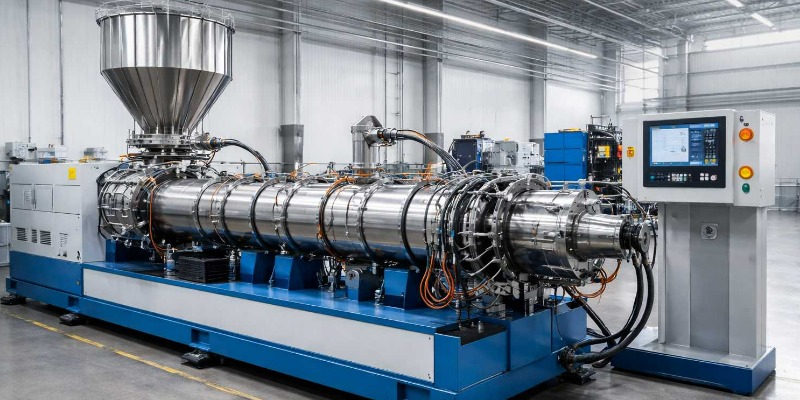
Guida tecnica alle macchine per estrusione delle materie plastiche: estrusori monovite e bivite, cilindri, filiere, degassaggio, linee a valle, segnali di usura e strategie di manutenzioneAutore: Marco Arezio. Esperto in economia circolare, riciclo dei polimeri e processi industriali delle materie plastiche. Manuale sulla Manutenzione. Capitolo 2: Macchine per Estrusione delle Materie PlasticheL’estrusione è, tra i processi di trasformazione delle materie plastiche, quello che più di ogni altro ha modellato la produzione industriale continua. Tubi per acquedotti, profili per edilizia, film per imballaggi, cavi elettrici, foglie destinate alla termoformatura, lastre, geomembrane, filamenti, fibre: una parte enorme del mondo plastico industriale nasce da una macchina che non lavora per colpi, ma per continuità. Ed è proprio questa continuità la prima chiave di lettura tecnica e manutentiva dell’estrusore. A differenza della pressa a iniezione, che per sua natura alterna fasi di plastificazione, iniezione, raffreddamento e riapertura stampo, l’estrusore è una macchina che deve mantenere il proprio equilibrio per ore o per giorni, spesso senza interruzione. Questo significa che i fenomeni di degrado non si manifestano quasi mai in modo improvviso. Più frequentemente compaiono come una lenta deriva del processo: una portata meno stabile, una temperatura del fuso che si allontana dal valore storico, un aumento dell’assorbimento elettrico, una pressione alla testa che non coincide più con la baseline, una qualità superficiale del prodotto che peggiora gradualmente. In altre parole, l’estrusore “parla” prima di rompersi, ma lo fa attraverso segnali deboli e progressivi, che solo una manutenzione predittiva ben costruita è in grado di leggere. In un impianto di estrusione, la qualità del prodotto finito non dipende soltanto dalla bontà della materia prima o dalla precisione della ricetta termica. Dipende dalla condizione reale della vite, del cilindro, della scatola ingranaggi, della testa, dei sistemi di raffreddamento, dei traini, delle pompe da vuoto e di tutti quei sottosistemi che partecipano al processo continuo. Per questo motivo, parlare di estrusori significa parlare contemporaneamente di reologia, meccanica, termica, tribologia, materiali costruttivi e organizzazione della manutenzione. 2.1 — Estrusori monovite: principio, zonatura termica e profili vite L’estrusore monovite resta, ancora oggi, la macchina più diffusa nell’industria della trasformazione plastica. La sua fortuna deriva da un equilibrio raro: semplicità costruttiva, robustezza, affidabilità, costi relativamente contenuti e una notevole adattabilità ai principali termoplastici di largo consumo. Polietilene, polipropilene, polistirene, alcuni tecnopolimeri, numerosi compound e molte formulazioni riciclate trovano nel monovite una soluzione adeguata, purché la vite sia stata progettata in modo coerente con il materiale e con il prodotto da realizzare. Il principio di funzionamento è noto ma merita di essere richiamato perché da esso discendono quasi tutte le problematiche manutentive. Il materiale in granulo o in polvere entra dalla tramoggia, viene trascinato dalla rotazione della vite all’interno del cilindro riscaldato, subisce compattazione, fusione, omogeneizzazione e infine viene spinto verso la testa di estrusione. Il processo di fusione non è dovuto soltanto al riscaldamento esterno generato dalle zone termiche del cilindro: una parte rilevante dell’energia deriva dall’attrito meccanico e dalla deformazione viscosa del polimero. Ne consegue che la vite non è un semplice organo di trasporto, ma il vero cuore energetico e reologico del sistema. Nel monovite, la continuità del flusso è l’obiettivo fondamentale. Ogni disomogeneità di temperatura, ogni variazione del grado di riempimento del canale, ogni alterazione della geometria della vite o del cilindro produce oscillazioni di pressione e di portata che si riflettono immediatamente sul manufatto estruso. La manutenzione, quindi, non deve essere pensata come una risposta al guasto, ma come una disciplina di controllo della stabilità di processo. 2.1.1 — Parametri geometrici della vite monovite La vite monovite è una geometria apparentemente semplice, ma in realtà ogni suo dettaglio influenza la capacità di trasporto, fusione, pressurizzazione e omogeneizzazione del materiale. Il primo parametro da considerare è il diametro, indicato con D, che definisce la classe dimensionale della macchina. Nei micro-estrusori da laboratorio o nelle macchine dedicate a prodotti speciali si può partire da 18 o 25 mm, mentre nelle grandi linee per tubi di grosso diametro, cavi ad alta tensione o lastre si può arrivare fino a 200 o 250 mm. Questo dato non è solo una misura geometrica: determina la taglia dei componenti, il costo della ricambistica, il peso della vite, la complessità degli smontaggi e la logistica manutentiva. Accanto al diametro, il rapporto L/D, cioè il rapporto tra lunghezza utile della vite e diametro, è probabilmente il parametro più importante per comprendere la funzione di una vite di estrusione. Nelle macchine standard il range tipico è compreso tra 24:1 e 34:1, ma nelle configurazioni ad alte prestazioni si può arrivare anche a 40:1. Un L/D elevato offre più spazio per fondere, miscelare e stabilizzare il fuso, ma estende anche la superficie interna soggetta a usura e aumenta il numero di zone termiche da controllare. In una logica manutentiva questo significa più possibilità di deriva, più punti critici, più grande attenzione alla coerenza del profilo termico lungo la macchina. Il passo della vite, spesso pari al diametro nel caso delle viti standard a passo quadro, può diventare variabile nelle geometrie speciali. Quando il passo cambia lungo la lunghezza della vite, il comportamento di trasporto e compressione del materiale si modifica in modo significativo, ma cresce anche la complessità manutentiva, perché ogni tratto diventa più sensibile all’usura locale e più difficile da valutare con criteri uniformi. Molto rilevante è poi il rapporto di compressione, generalmente compreso tra 2,0:1 e 4,5:1 in funzione del materiale. Valori elevati consentono una forte compattazione e una buona eliminazione dell’aria intrappolata, ma aumentano le sollecitazioni meccaniche nella zona di transizione. Questo è un aspetto cruciale con i materiali riciclati, specialmente se variabili nella densità apparente, nel tenore di umidità o nella presenza di contaminanti. In tali condizioni, una vite troppo “aggressiva” può produrre picchi di coppia, surriscaldamento locale e usura accelerata. La profondità del canale nella zona di dosaggio, spesso compresa tra 0,05D e 0,07D, è la zona in cui il fuso viene stabilizzato e la pressione si costruisce con maggiore efficacia. Proprio per questo è anche una delle aree dove l’usura è più critica, soprattutto su materiali abrasivi o caricati. Quando la profondità effettiva del canale cresce per consumo del filetto, la capacità di sviluppare pressione si riduce, il flusso diventa meno uniforme e il processo perde precisione. Per la stessa ragione, anche la larghezza del filetto, tipicamente compresa tra 0,08D e 0,12D, deve essere monitorata: l’usura dei fianchi compromette la tenuta tra vite e cilindro e riduce l’efficienza pressurizzante. In un programma di manutenzione ben organizzato, la misurazione geometrica della vite non può essere limitata a un generico controllo visivo. Occorre identificare le zone ad alto rischio, in particolare la transizione e il dosaggio, e misurarle con strumenti adeguati, costruendo nel tempo una cronologia dell’usura. È solo attraverso questa storicizzazione che la manutenzione passa da intuitiva a predittiva. 2.1.2 — Zonatura termica del cilindro: gestione e criticità Il cilindro di un estrusore monovite non è un corpo riscaldato in modo uniforme, ma una struttura termicamente articolata. Un estrusore da 90 mm con rapporto L/D di 30:1, ad esempio, è normalmente suddiviso in 5, 6 o 7 zone di riscaldamento indipendenti, ognuna dotata di resistenze di banda o di settore e di un proprio sensore di controllo, spesso termocoppie o PT100. Questo significa che la macchina lavora secondo un vero e proprio profilo termico longitudinale, che deve essere progettato e mantenuto con precisione. La posizione lungo la vite in cui il materiale completa la fusione, il livello energetico complessivo del fuso, la sua viscosità in uscita e la pressione generata in testa dipendono in larga parte da questo profilo. Non sorprende quindi che molte anomalie produttive attribuite frettolosamente alla qualità della materia prima derivino in realtà da una zona termica che non lavora più come dovrebbe. Una resistenza di banda in degrado raramente smette di funzionare all’improvviso. Più spesso, nella fase iniziale, impiega più tempo a portare la zona al setpoint; successivamente fatica a mantenere la temperatura sotto carico; infine va in allarme o si interrompe. Questa progressione rende la verifica periodica delle resistenze e dei sensori una delle attività preventive più redditizie nell’intero parco macchine di estrusione. Non basta leggere sul pannello che la temperatura “è a posto”: bisogna verificare lo scostamento reale tra setpoint e temperatura effettiva, la velocità di risposta, la continuità del controllo e, quando necessario, la resistenza ohmica degli elementi riscaldanti. Negli estrusori esiste inoltre una criticità meno evidente ma molto pericolosa: il surriscaldamento del fuso per eccesso di energia meccanica. A velocità di vite elevate, con polimeri viscosi o con profili termici mal ottimizzati, il calore generato dall’attrito può superare l’energia che il sistema riesce a dissipare. In questi casi non si è di fronte a una “mancanza di riscaldamento”, ma al contrario a un eccesso di energia interna. La degradazione termica può comparire a valle, in prossimità della testa, senza che il quadro termico del cilindro segnali anomalie macroscopiche. È per questo che il monitoraggio della temperatura di massa del fuso, effettuato con sonde immerse, rappresenta un presidio diagnostico di grande valore. 2.2 — Estrusori bivite: co-rotativi e contro-rotativi Se il monovite è la macchina della robustezza e della diffusione industriale, il bivite è la macchina della precisione reologica e della flessibilità di processo. La presenza di due viti coassiali alloggiate in un cilindro con profilo a doppio otto permette di gestire il materiale in modo molto più sofisticato. La miscelazione distributiva e dispersiva è superiore, i tempi di residenza sono più controllabili, la devolatilizzazione è più efficace e la modularità della configurazione delle viti consente di adattare la macchina a formulazioni molto diverse tra loro. Per questo l’estrusore bivite è la piattaforma di riferimento per la compoundazione, per la lavorazione dei materiali caricati, per la gestione di formulazioni complesse, per i tecnopolimeri, per il PVC e per numerosi processi nei quali non è sufficiente fondere il materiale, ma occorre anche disperdere additivi, rompere agglomerati, miscelare fibre o evacuare volatili. Naturalmente, a un salto di prestazioni corrisponde anche un salto di complessità meccanica e manutentiva. 2.2.1 — Bivite co-rotativo: principio, elementi di vite e applicazioni Nel bivite co-rotativo le due viti ruotano nella stessa direzione e sono interdigitate. Questa condizione genera il noto effetto di autopulizia: il materiale che tende ad aderire a una vite viene continuamente “raschiato” dall’altra. Il vantaggio è doppio. Da un lato si riducono le zone morte in cui il polimero può ristagnare e degradarsi; dall’altro si ottiene una distribuzione più uniforme dei tempi di residenza. Per materiali sensibili o per processi di compoundazione, questo aspetto è decisivo. La geometria interna delle viti non è monolitica ma modulare. Su un albero portante vengono montati elementi di trasporto, blocchi di impasto e, quando necessario, elementi a inversione. Gli elementi di trasporto fanno avanzare il materiale; i kneading blocks, costituiti da dischi sfalsati angolarmente, forniscono energia di taglio e miscelazione; gli elementi a filettatura inversa rallentano o contrastano il flusso, generando pressione e intensificando l’azione dispersiva. La sequenza di questi elementi costituisce una vera architettura di processo e rappresenta un patrimonio di know-how spesso più importante della macchina stessa. Dal punto di vista manutentivo, gli elementi di vite del bivite co-rotativo sono particolarmente vulnerabili quando si lavorano materiali caricati. Le formulazioni con fibra di vetro corta al 30%, come alcune basi in PA6, PP o PBT, possono generare nelle zone più sollecitate, soprattutto nella fusione e nel primo tratto di kneading, un’usura media compresa tra 0,05 e 0,15 mm ogni 1.000 ore di funzionamento. Quando la carica è costituita da talco al 40 o 50% su matrice polipropilenica, l’usura tende a essere sensibilmente inferiore, spesso del 30-50% rispetto ai compound con fibra di vetro. Nel caso del carbonato di calcio fine, specialmente con granulometria inferiore a 3 micrometri, il quadro è generalmente più favorevole e l’aggressività abrasiva risulta molto più contenuta. Tuttavia, il punto non è soltanto quantificare l’usura media, ma trasformarla in una pratica di controllo. Gli elementi di una bivite co-rotativa non possono essere sostituiti “a sensazione”. Serve un monitoraggio geometrico periodico, effettuato con micrometri o strumenti equivalenti nelle aree più sollecitate, per capire quando la perdita di materiale sta iniziando a modificare il comportamento di processo. Una vite consumata non peggiora soltanto la resa meccanica: altera la distribuzione delle pressioni, riduce la qualità della dispersione, modifica il profilo di energia specifica e quindi colpisce direttamente la qualità del compound. La scatola ingranaggi è il componente più critico e più costoso del bivite co-rotativo. Essa deve trasmettere coppia elevata, sostenere i carichi assiali generati dalla resistenza del fuso e farlo con grande precisione geometrica. Nelle macchine ad alte prestazioni, le forze assiali possono raggiungere valori molto elevati, dell’ordine di 50 fino a 300 kN a seconda del diametro, della configurazione delle viti, della contropressione in testa e della portata. Non sorprende che i cuscinetti reggispinta siano progettati per durate nominali comprese, in condizioni corrette, tra 20.000 e 50.000 ore operative. La manutenzione di questa scatola ingranaggi deve essere rigorosa. L’olio non va cambiato solo “a ore”, ma analizzato almeno ogni sei mesi per verificare viscosità, TAN e contenuto di particelle metalliche come ferro, cromo e rame. In molte applicazioni industriali è opportuno utilizzare lubrificanti sintetici PAO EP con classe ISO VG compresa tra 220 e 320. Il cambio dell’olio, salvo diverse indicazioni da analisi, si colloca tipicamente tra 8.000 e 12.000 ore. I cuscinetti reggispinta devono essere seguiti attraverso la temperatura dell’olio e con campagne vibrazionali almeno semestrali; la sostituzione preventiva è spesso prudente tra 20.000 e 30.000 ore, o prima se i segnali vibrazionali lo suggeriscono. Le tenute meccaniche sugli alberi vite richiedono ispezioni mensili per intercettare perdite incipienti e in molti casi vengono sostituite tra 15.000 e 20.000 ore. Anche il filtro olio in linea, spesso trascurato, è invece un presidio fondamentale: il suo elemento filtrante va sostituito in genere ogni 2.000-4.000 ore o a segnalazione di intasamento, con livelli di efficienza elevati, ad esempio β10 ≥ 200. 2.2.2 — Bivite contro-rotativo: tipologie e differenze manutentive Nel bivite contro-rotativo le due viti ruotano in direzioni opposte. Questa famiglia comprende sia versioni intermeshing, nelle quali le viti sono interdigitate e molto vicine tra loro, sia versioni non intermeshing, più rare e dedicate a impieghi specifici. La versione intermeshing è storicamente associata alla lavorazione del PVC, soprattutto per profili, finestre, tubi rigidi e formulazioni plastificate. Il grande vantaggio del contro-rotativo intermeshing è la capacità di trasporto positivo. Il materiale viene catturato e trasferito come in un meccanismo volumetrico molto efficiente, capace di sviluppare pressione già a basse velocità di rotazione. Questo spiega perché il PVC, polimero termicamente sensibile e soggetto a degradazione se trattato con eccessiva energia meccanica, trovi in questa tecnologia una soluzione ideale. Le velocità di vite sono infatti molto inferiori rispetto alle co-rotative da compoundazione: tipicamente 10-40 rpm contro 200-600 rpm. Le implicazioni manutentive sono però specifiche. Nei sistemi contro-rotativi intermeshing, i giochi tra viti e cilindro sono estremamente ridotti, nell’ordine di 0,1-0,3 mm. Ciò significa che ogni usura nella zona di interdigitazione produce effetti diretti sulla capacità di pompaggio, sulla stabilità dimensionale del prodotto e sulla temperatura di processo. Inoltre, nel caso del PVC, il degassaggio e la possibile liberazione di HCl introducono un problema di corrosione che non può essere trascurato. Cilindri, viti, teste e filiere possono richiedere acciai inossidabili, leghe al nichel o rivestimenti specifici per resistere a un ambiente chimicamente aggressivo. La manutenzione, in questi impianti, non è solo una questione di usura ma anche di chimica dei materiali costruttivi. 2.3 — Cilindro dell’estrusore: costruzione, zonatura e sistemi di raffreddamento Il cilindro dell’estrusore è spesso percepito come un semplice involucro della vite, ma in realtà è una struttura funzionale complessa, nella quale convergono riscaldamento, raffreddamento, resistenza all’usura, resistenza alla corrosione e stabilità geometrica. In un estrusore da 90 mm con rapporto L/D di 30:1, la lunghezza del cilindro arriva a circa 2.700 mm. Una lunghezza di questo tipo rende inevitabile una distribuzione longitudinale non uniforme delle sollecitazioni. Nelle zone di alimentazione prevalgono problemi di trasporto solido e attrito granulo-metallo; nelle zone di transizione si concentrano compressione, fusione e attrito viscoso; nelle zone di dosaggio si sviluppano pressione, omogeneizzazione e scorrimento di fuso ad alta temperatura. Non è quindi realistico immaginare un’usura omogenea. Al contrario, una manutenzione avanzata del cilindro richiede una mappatura dei punti critici e una correlazione continua tra stato geometrico e comportamento di processo. 2.3.1 — Sistemi di raffreddamento del cilindro Una differenza fondamentale tra l’estrusore e molte unità di plastificazione per iniezione è la presenza, nel primo, di sistemi di raffreddamento attivo distribuiti lungo il cilindro. Questo accade perché, nelle macchine di estrusione ad alta produttività, il calore generato meccanicamente può essere molto superiore a quello strettamente necessario al processo. In taluni casi può arrivare al doppio o persino al triplo del fabbisogno termico teorico del polimero. Senza un adeguato raffreddamento, il fuso si surriscalderebbe progressivamente fino a degradarsi. Negli estrusori di piccola e media dimensione la soluzione più comune è il raffreddamento ad aria forzata. Ventilatori comandati in modo indipendente convogliano aria su dissipatori alettati montati attorno al cilindro. È un sistema relativamente semplice, ma non per questo trascurabile. La manutenzione deve verificare la reale portata d’aria, la pulizia delle alette, l’assenza di accumuli di polvere o di residui polimerici e lo stato dei cuscinetti dei motorini. Un ventilatore che gira ma non raffredda a sufficienza è una causa classica di deriva termica subdola. Negli estrusori di grande diametro o ad alta produttività, il raffreddamento ad acqua diventa spesso indispensabile. In questi casi si utilizzano canali interni o camicie esterne, con tutte le problematiche associate alla qualità dell’acqua: incrostazioni calcaree, corrosione, biofilm, riduzione dello scambio termico. Il fatto che questi canali siano spesso di difficile accesso rende la prevenzione ancora più importante della correzione. Un raffreddamento inefficiente non produce subito un fermo macchina, ma può manifestarsi come viscosità anomala del fuso, variazioni cromatiche, perdita di proprietà meccaniche del prodotto e aumento dell’odore di degradazione. Il metodo più affidabile per diagnosticare questo tipo di problemi resta il monitoraggio della temperatura di massa del fuso. In molte linee, un aumento anche di soli 5 °C rispetto alla baseline, a parità di materiale e di ricetta, è già un segnale da non ignorare. 2.4 — Teste di estrusione e filiere: tipologie, usura e manutenzione Se la vite prepara il materiale e il cilindro ne governa l’energia, è la testa di estrusione che traduce quel fuso in geometria utile. La testa riceve il polimero, lo ridistribuisce e lo obbliga a passare attraverso una filiera che ne determina la forma finale. Per questo la testa è il punto in cui meccanica, fluidodinamica e qualità del manufatto si incontrano in modo più diretto. L’uniformità dello spessore, la concentricità di un tubo, la planarità di una foglia, la regolarità di un profilo o la stabilità di una bolla per film soffiato dipendono in larga misura dalla qualità geometrica e termica della testa. Una filiera perfetta, però, resta tale solo se viene pulita, controllata e mantenuta con metodo. 2.4.1 — Tipologie di teste: tubo, foglia, soffiaggio film, profilato La testa per tubo, spesso realizzata con mandrino centrale di tipo spider, crea il passaggio anulare necessario alla formazione del prodotto. Il mandrino è sostenuto da razze che dividono il flusso e lo ricompongono a valle. Proprio nelle zone di ricongiungimento si formano le linee di saldatura interne al fuso, punti delicati per la resistenza finale del tubo. Dal lato manutentivo, le razze e il mandrino sono esposti sia a usura da abrasione, soprattutto con materiali come HDPE per tubi in pressione, sia alla formazione di depositi di materiale degradato nelle spigolature interne. Per questo, in presenza di cambi colore o cambi materiale, la pulizia della testa è buona prassi ad ogni transizione, mentre l’ispezione dell’usura delle zone ad alta pressione si colloca spesso tra 2.000 e 4.000 ore operative. La testa piana, o coat-hanger die, è invece progettata per distribuire il fuso su larghezze che possono arrivare a diversi metri, garantendo una portata uniforme per unità di larghezza. Qui il canale interno viene ottimizzato sulla viscosità del polimero e sulla produttività richiesta. I labbri regolabili consentono la correzione del profilo di spessore, ma introducono a loro volta esigenze manutentive severe. La pulizia dei labbri va eseguita a ogni produzione, la verifica della loro geometria è opportuna almeno semestralmente e le viti di regolazione richiedono lubrificazione regolare, spesso mensile. Un labbro graffiato o una vite di regolazione grippata non sono piccoli difetti: diventano ore di non conformità sul prodotto finito. Nelle teste per film soffiato, soprattutto nelle configurazioni spiral mandrel, il fuso viene distribuito in modo elicoidale per eliminare le linee di saldatura e ottenere un traferro anulare il più uniforme possibile. In queste teste la pulizia periodica dei labbri è una delle attività più frequenti, spesso ogni 500-1.000 ore operative, mentre la verifica della concentricità può essere richiesta attorno alle 3.000 ore. Depositi ossidati, additivi volatilizzati e non uniformità del traferro influenzano direttamente la stabilità della bolla e lo spessore del film. Le teste per profilati, specialmente quando processano PVC caricato, sono esposte a usura del profilo interno e a depositi nelle zone di stagnazione. In questi casi un controllo profilometrico ogni 2.000-4.000 ore e una pulizia accurata a ogni cambio materiale rappresentano un livello minimo di buona pratica industriale. Ancora più sensibili sono le teste per rivestimento cavo, nelle quali la concentricità del rivestimento deve essere monitorata praticamente a ogni turno, spesso con strumenti on-line, mentre la pulizia e l’ispezione approfondita si collocano attorno alle 1.000 ore. 2.4.2 — Pulizia delle teste: metodi e procedure La pulizia delle teste di estrusione non è un’attività accessoria, ma una procedura critica che incide sulla qualità di processo, sulla durata della filiera e sul tempo di ritorno alla stabilità dopo ogni fermata o cambio prodotto. Un errore nella pulizia può lasciare segni sulle superfici interne che continueranno a generare depositi, turbolenze locali, linee di flusso anomale e difetti di spessore per molte ore di produzione. La pulizia meccanica a caldo è il metodo più diffuso perché rapido e compatibile con il ritmo industriale. La testa viene mantenuta a temperatura di processo e pulita con utensili più teneri dell’acciaio, come ottone, rame o legno duro. La ragione è semplice: un graffio sulla superficie funzionale della filiera non è un danno estetico, ma una nuova nicchia in cui il materiale tenderà ad accumularsi e degradarsi. Per questo l’uso di utensili in acciaio è da evitare, anche quando l’operatore ritiene di poterli usare “delicatamente”. L’impiego di purging compounds può ridurre sensibilmente i tempi di fermata e migliorare la rimozione di depositi ostinati, soprattutto nei passaggi da materiali scuri a chiari o da formulazioni con additivi problematici a formulazioni più sensibili al contamination carry-over. Per le pulizie approfondite, soprattutto su teste piane o filiere per film, il riferimento tecnico resta la pulizia ad ultrasuoni in solvente. Dopo lo smontaggio, le parti metalliche vengono immerse in una vasca con solvente appropriato e sottoposte a cicli ultrasonici che staccano i residui senza aggredire le superfici. È una soluzione più costosa, ma estremamente efficace su componenti di valore elevato e in tutte quelle situazioni in cui una pulizia manuale troppo energica potrebbe causare più danni che benefici. La bruciatura controllata in forno può essere utilizzata soltanto in casi specifici, su filiere in acciaio non trattato e in condizioni accuratamente controllate, tipicamente tra 350 e 450 °C e possibilmente in atmosfera protetta. È invece da escludere su componenti cromati o rivestiti con trattamenti superficiali sensibili. 2.5 — Linee di estrusione: componenti a valle e loro manutenzione Parlare di estrusione limitandosi all’estrusore è un errore concettuale. La qualità finale del prodotto dipende dall’intera linea. A valle della testa si trovano calibratori, vasche di raffreddamento, traini, avvolgitori, sistemi di taglio, banchi di accumulo e dispositivi di controllo. Se questi organi non sono allineati, puliti, regolati e mantenuti correttamente, anche il miglior estrusore non sarà in grado di produrre in specifica. 2.5.1 — Calibratori e vasche di raffreddamento Il calibratore è il primo componente che “fissa” la geometria del manufatto ancora plastico. Nei tubi, il calibratore a vuoto sfrutta una depressione per tenere la superficie esterna del tubo aderente alla forma desiderata mentre il raffreddamento ne consolida la struttura. In questa fase, le superfici interne del calibratore devono essere pulite, lisce e dimensionalmente corrette. Depositi calcarei, usura o contaminazioni riducono lo scambio termico e alterano il contatto con il tubo, con effetti diretti su ovalizzazione, rugosità e precisione dimensionale. Le vasche di raffreddamento, spesso in acciaio inox o alluminio, possono sembrare elementi secondari, ma in realtà introducono una serie di criticità: perdite dai raccordi, biofilm in assenza di controllo microbiologico, usura dei supporti guida, variazioni di livello o di portata dell’acqua. Il risultato non è solo una peggiore sicurezza ambientale o una minore efficienza energetica, ma anche un raffreddamento irregolare che si traduce in tensioni interne e instabilità geometrica del prodotto estruso. 2.5.2 — Traini (haul-off): rulli, caterpillar e sistemi a nastro Il traino determina, insieme alla portata dell’estrusore e alla geometria della filiera, lo spessore finale del prodotto. Una piccola variazione della sua velocità si riflette quasi direttamente sul risultato dimensionale: una deriva dell’1% nella velocità di traino può tradursi in una variazione dello stesso ordine nello spessore o nella sezione finale. Questo basta a spiegare perché la manutenzione del haul-off sia una questione di qualità prima ancora che di meccanica. I sistemi a caterpillar, molto diffusi per tubi e profili, richiedono controllo dello stato delle pattuglie di contatto, tensionamento corretto dei cingoli, integrità dei rulli di rinvio, lubrificazione e stato dei cuscinetti, oltre alla manutenzione periodica dei motoriduttori e dei sistemi pneumatici che regolano la pressione di contatto. Un traino con cingoli usurati o con pressione irregolare non genera soltanto slittamento: introduce variazioni intermittenti di velocità, deformazioni locali, segni superficiali e una lunga serie di difetti che possono essere erroneamente attribuiti all’estrusore. 2.6 — Degassaggio e sistemi di ventilazione forzata Il degassaggio è una delle funzioni più preziose ma anche più delicate negli estrusori industriali. Quando il polimero contiene umidità residua, monomeri, solventi o prodotti volatili di degradazione, la presenza di una zona di decompressione collegata a un sistema di vuoto permette di migliorare drasticamente la qualità del fuso e del prodotto finale. Questo è particolarmente importante nei materiali riciclati, nei compound complessi e in alcune formulazioni tecniche. La criticità principale è il vent flooding, cioè il riflusso del fuso verso lo sfiato. Quando la pressione nella zona di degassaggio supera quella atmosferica o quella generata dal sistema di vuoto, il materiale può fuoriuscire dallo sfiato, contaminare la zona superiore del cilindro, sporcare il circuito e, nei casi peggiori, danneggiare la pompa del vuoto. Non si tratta di un evento casuale. Le cause più frequenti sono un profilo termico non corretto, una geometria di vite non ottimale, una velocità di rotazione troppo elevata oppure una contropressione eccessiva generata a valle. Le pompe da vuoto più comuni in queste applicazioni sono spesso a palette rotanti ad olio. La loro manutenzione deve essere pianificata con metodo: il cambio olio si colloca normalmente tra 2.000 e 4.000 ore, ma può anticiparsi se i vapori processati tendono a condensare nel lubrificante; le palette possono richiedere sostituzione tra 8.000 e 15.000 ore, a seconda del tipo di vapori e delle condizioni reali di esercizio; il filtro in ingresso va controllato e pulito con regolarità almeno mensile; l’intero circuito deve essere verificato per tenuta, perché anche una piccola perdita compromette l’efficienza del degassaggio e altera l’equilibrio del processo. 2.7 — Diagnostica specifica per gli estrusori: segnali precoci di degrado Uno dei vantaggi più interessanti degli impianti di estrusione è la possibilità di leggere lo stato della macchina attraverso i parametri di processo, senza fermarla. In un impianto ben strumentato, corrente del motore principale, pressione alla testa, temperatura del fuso, portata, vibrazioni e temperatura dell’olio sono indicatori molto più utili di quanto spesso venga riconosciuto in fabbrica. Se la corrente assorbita dal motore aumenta progressivamente a parità di materiale e velocità di vite, si può essere di fronte a un aumento dell’attrito dovuto a usura che ha modificato i giochi, oppure a un degrado del sistema di trasmissione, inclusa la qualità dell’olio nel gearbox. Se la corrente, al contrario, diminuisce progressivamente nelle stesse condizioni, il quadro può indicare un’usura eccessiva che ha ridotto la capacità di lavoro meccanico della vite: il processo richiede meno energia, ma questo non è un bene, perché spesso significa anche minore capacità di fusione e pressurizzazione. La pressione alla testa è un altro indicatore formidabile. Un aumento progressivo a portata costante suggerisce ostruzioni, depositi in testa o in filiera, aumento della viscosità del materiale o alterazioni del profilo termico. Una diminuzione costante a velocità di vite invariata è spesso il sintomo di una vite o di un cilindro consumati, incapaci di generare la pressione che storicamente la linea era in grado di sviluppare. La temperatura del fuso è un segnale ancora più sensibile. Un incremento superiore a circa 5 °C rispetto alla baseline, senza modifiche di ricetta o di materiale, richiede attenzione immediata. Il problema può risiedere nel raffreddamento del cilindro, nella variazione della viscosità del lotto, in un attrito anomalo dovuto a usura locale o in una configurazione di processo uscita dal proprio equilibrio. Anche la variabilità della portata ha valore diagnostico. Quando la pulsazione aumenta, la causa può essere un’alimentazione granulo irregolare, una instabilità di fusione oppure, in alcune configurazioni, l’usura di componenti deputati a regolarizzare il flusso. Nei bivite, poi, il monitoraggio vibrazionale della scatola ingranaggi è essenziale. Un aumento del valore RMS o la comparsa di frequenze anomale spesso anticipano problemi su cuscinetti, ingranaggi o qualità della lubrificazione. Infine, la temperatura dell’olio nel gearbox, se cresce di oltre 10 °C rispetto al profilo storico a parità di carico, suggerisce un deterioramento dell’olio, un problema nel circuito di raffreddamento o un aumento dell’attrito interno. La manutenzione predittiva negli estrusori nasce qui: nella costruzione di baseline attendibili e nella capacità di interpretare le deviazioni prima che si trasformino in fermate. 2.8 — Panorama costruttori di estrusori: specificità manutentive Nel mercato degli estrusori esistono costruttori che hanno assunto nel tempo un ruolo di riferimento non solo per l’innovazione tecnologica, ma anche per il modo in cui supportano la manutenzione e la vita utile degli impianti. Conoscere le specializzazioni dei principali player aiuta a comprendere la logica delle macchine installate e la disponibilità reale di ricambi, supporto e documentazione. Reifenhäuser è storicamente associata a linee per film soffiato, cast film e lastre, con una forte attenzione alla qualità di distribuzione del fuso e alla completezza della documentazione tecnica. Davis-Standard ha una presenza importante nei settori coating, tubi, profili e rivestimento cavi, con una gamma che spazia dai monovite ai bivite e una tradizione di impianti completi. Battenfeld-Cincinnati è un riferimento consolidato per il PVC e per numerose linee tubi e profili, mentre Berstorff, oggi legata al gruppo KraussMaffei, mantiene una forte identità nel campo della compoundazione tecnica. Leistritz si è ritagliata un ruolo di eccellenza nei bivite co-rotativi per applicazioni ad alta precisione, comprese quelle farmaceutiche e alimentari, dove i requisiti igienici e di pulibilità sono molto stringenti. Coperion è uno dei nomi globalmente più importanti nella bivite co-rotativa ad alta portata, con disponibilità capillare di ricambi e una vasta esperienza nelle linee di compoundazione. In Italia, costruttori come Amut e Bandera sono particolarmente rilevanti per film, lastre e linee complete, con il vantaggio di una prossimità manutentiva e ricambistica che per molte PMI può fare una differenza sostanziale. La lezione da trarre non è che un marchio sia “migliore” in assoluto, ma che ogni costruttore porta con sé una filosofia di macchina, una rete di assistenza, una disponibilità documentale e una politica di ricambi che incidono direttamente sul costo totale di possesso.FontiPer la stesura di questo capitolo sono stati utilizzati riferimenti normativi, manuali tecnici specialistici sull’estrusione dei polimeri e documentazione tecnica dei principali costruttori di linee e componenti per estrusione. In particolare, per l’inquadramento reologico del comportamento dei polimeri fusi e per il collegamento tra viscosità, taglio e condizioni operative di macchina, il riferimento normativo principale è la ISO 11443:2021, oggi indicata da ISO come edizione vigente per la determinazione della fluidità dei polimeri mediante reometri capillari e slit-die. Per l’impostazione generale del capitolo, relativa a principi di funzionamento degli estrusori monovite e bivite, progettazione delle viti, fusione, trasporto, degassaggio, teste di estrusione e gestione del processo, i testi di riferimento più autorevoli restano “Understanding Extrusion” e “Polymer Extrusion” di Chris Rauwendaal, pubblicati da Hanser, insieme al volume “Extrusion: The Definitive Processing Guide and Handbook”, testo tecnico di riferimento per l’industria della trasformazione delle materie plastiche. Per l’inquadramento più ampio dei processi plastici industriali e dei rapporti tra materiali, processo e scelta impiantistica, è stato inoltre considerato il “Handbook of Plastic Processes” pubblicato da Wiley, che rappresenta una delle opere generali più utilizzate per la trattazione dei principali processi di trasformazione dei polimeri. Per la parte relativa agli estrusori bivite co-rotativi, alla modularità degli elementi di vite, alla compoundazione, alle applicazioni ad alta portata e alla logica di processo dei sistemi intermeshing, sono state considerate anche le fonti tecniche ufficiali di Coperion, che definisce l’estrusione bivite co-rotativa come propria tecnologia chiave e mette a disposizione materiali tecnici e formativi dedicati. Per i passaggi dedicati alle applicazioni specifiche dei bivite, alla configurabilità delle macchine e alle differenze applicative in ambiti tecnici e sensibili, sono state considerate anche le fonti ufficiali di Leistritz Extrusion Technology, che descrivono le proprie serie di estrusori bivite e la struttura dei relativi gearbox ad alta coppia. Per la parte sulle linee di estrusione complete, sulle applicazioni per tubi, profili, coating, film e componenti di linea, sono state utilizzate anche le fonti ufficiali di Davis-Standard, Battenfeld-Cincinnati e Reifenhäuser, utili per contestualizzare le principali architetture impiantistiche, le famiglie macchina e gli ambiti applicativi industriali dell’estrusione moderna. Per gli aspetti più generali di processo, selezione dei materiali e correlazione tra trasformazione e proprietà del prodotto, sono stati inoltre considerati testi di supporto presenti su piattaforme editoriali tecnico-scientifiche, tra cui i contenuti ScienceDirect relativi ai processi di estrusione e alla selezione materiale-processo. Infine, per i riferimenti ai fenomeni energetici e termici negli estrusori, inclusa la correlazione tra domanda energetica, stabilità termica e condizioni operative, è stata considerata anche letteratura scientifica peer-reviewed sul comportamento energetico del processo di estrusione.
SCOPRI DI PIU'
Guida sulle pressioni interne, calcolo e metodi avanzati per ottimizzare la forza di chiusura e migliorare qualità ed efficienza nello stampaggio plasticodi Marco ArezioLo stampaggio a iniezione è una tecnologia ampiamente utilizzata nell'industria manifatturiera per la produzione di componenti in plastica, apprezzata per la sua capacità di realizzare pezzi con geometrie complesse e dimensioni estremamente precise. Tra gli aspetti tecnici più critici del processo, la gestione delle forze di chiusura riveste un ruolo fondamentale. Queste forze, se correttamente gestite, permettono di assicurare una qualità costante del prodotto, ridurre i costi operativi e aumentare l'efficienza produttiva degli impianti. Il Processo di Stampaggio a Iniezione Il processo di stampaggio a iniezione segue una sequenza di operazioni ben definita. In una prima fase, il materiale plastico viene riscaldato e portato allo stato fuso. Successivamente, esso viene iniettato nello stampo tramite un apposito sistema di alimentazione, in cui avviene il riempimento della cavità. Segue una fase di mantenimento della pressione, essenziale per contrastare il naturale fenomeno di contrazione del materiale durante il raffreddamento e assicurare stabilità dimensionale. Una volta completato il raffreddamento e la solidificazione del materiale, il componente finito viene estratto dallo stampo. Durante la fase iniziale dell'iniezione, le alte pressioni che si generano all’interno dello stampo tendono a separare le due metà dello stampo stesso. Pertanto, è indispensabile applicare una forza opposta, definita forza di chiusura, per mantenere lo stampo chiuso in modo stabile durante tutto il ciclo di produzione. Concetto e Significato della Forza di Chiusura La forza di chiusura è definita come la forza applicata dalla macchina di stampaggio per tenere unite saldamente le due metà dello stampo durante il processo di iniezione. Una gestione accurata di questa forza evita l'apertura accidentale dello stampo, prevenendo difetti comuni quali bave, imprecisioni dimensionali o difetti superficiali nel prodotto finale. Pertanto, calibrare con precisione la forza di chiusura non solo garantisce affidabilità nella produzione, ma permette anche di minimizzare il consumo energetico e prolungare la vita utile degli stampi e delle macchine utilizzate. Analisi delle Pressioni Interne nello Stampo Durante l'iniezione, lo stampo è soggetto a elevate pressioni interne che dipendono da diversi parametri operativi e materiali, come il tipo di polimero impiegato, le sue proprietà reologiche, la temperatura di lavorazione, la velocità di iniezione e la geometria della cavità dello stampo stesso. Tipicamente, la pressione massima si verifica in prossimità del gate, cioè nel punto di ingresso del materiale, e diminuisce progressivamente lungo il percorso del flusso del polimero. Analizzare attentamente la distribuzione della pressione, tramite strumenti e software avanzati, permette di determinare con precisione la forza necessaria per mantenere lo stampo correttamente chiuso durante l'intera fase di stampaggio. Metodo di Calcolo della Forza di Chiusura La determinazione accurata della forza di chiusura necessaria nello stampaggio a iniezione avviene tramite una semplice relazione matematica:F = P x A x K Dove: P indica la pressione media registrata nello stampo durante la fase di iniezione; A è l'area proiettata massima del componente stampato, ovvero la superficie perpendicolare alla direzione della forza di chiusura; K rappresenta un coefficiente di sicurezza, generalmente compreso tra 1,1 e 1,5, che tiene conto di eventuali fluttuazioni della pressione durante il processo produttivo. Strategie per l'Ottimizzazione della Forza di Chiusura L'ottimizzazione della forza di chiusura è fondamentale per migliorare la qualità del prodotto finito e ridurre i costi di produzione. Tra le principali strategie adottate figurano le simulazioni numeriche avanzate (CAE), che consentono di prevedere con precisione il comportamento del polimero durante l'iniezione e ottimizzare così la progettazione dello stampo. Inoltre, tecnologie di controllo adattativo basate su sensori e sistemi intelligenti regolano dinamicamente e automaticamente la forza di chiusura durante il processo, adattandosi in tempo reale alle condizioni operative variabili. Una progettazione accurata dello stampo, focalizzata sulla riduzione dell'area proiettata e sulla scelta strategica dei punti di ingresso del materiale (gate), contribuisce ulteriormente a ridurre le pressioni interne e, di conseguenza, la forza necessaria. Risultati e Benefici dell'Ottimizzazione Studi sperimentali e applicazioni industriali confermano che una corretta ottimizzazione delle forze di chiusura porta benefici significativi, quali una riduzione dei consumi energetici, un miglioramento della qualità dimensionale ed estetica dei prodotti e una maggiore durata utile degli stampi. Inoltre, una gestione ottimizzata della forza di chiusura consente di ridurre significativamente gli interventi di manutenzione straordinaria e i tempi di fermo macchina legati alla sostituzione degli stampi, incrementando così la produttività complessiva. Conclusioni La gestione accurata delle forze di chiusura nello stampaggio a iniezione non costituisce soltanto un requisito tecnico essenziale, ma rappresenta anche un fattore strategico importante per migliorare la competitività industriale. Attraverso l'integrazione di tecnologie avanzate, simulazioni precise e una progettazione accurata degli stampi, è possibile ottenere risultati eccellenti in termini di qualità del prodotto, efficienza energetica e contenimento dei costi, dimostrando la fondamentale importanza di una corretta ottimizzazione delle forze nello stampaggio a iniezione.© Riproduzione Vietata
SCOPRI DI PIU'
Le Fonti di Inquinamento e le Iniziative per Migliorare la Qualità delle Acque, la Balneabilità e la Vita delle Specie Ittiche nel Fiume Iconico di Parigidi Marco ArezioIl fiume Senna, che attraversa Parigi e altre importanti città francesi, è da secoli un simbolo della cultura e della storia della Francia. Tuttavia, la sua attuale condizione ambientale rappresenta una preoccupazione significativa. L'inquinamento della Senna è un problema che ha radici storiche e che continua a evolversi con nuove problematiche. Questo articolo esplorerà le fonti principali di inquinamento, gli impatti ambientali e le iniziative attualmente in atto per migliorare la qualità delle acque, la balneabilità e la vita delle specie ittiche. Fonti di Inquinamento della SennaLa Senna affronta una varietà di problematiche legate all'inquinamento, derivanti da fonti urbane, agricole e industriali. Gli scarichi urbani e industriali rappresentano una delle principali cause di contaminazione del fiume. Le città lungo la Senna rilasciano spesso acque reflue non trattate o insufficientemente trattate, cariche di sostanze chimiche tossiche, metalli pesanti e nutrienti che possono provocare fenomeni di eutrofizzazione. L'agricoltura, con il deflusso di fertilizzanti e pesticidi, contribuisce ulteriormente all'inquinamento. Questi prodotti chimici, una volta raggiunto il fiume, possono stimolare la crescita eccessiva di alghe, riducendo così i livelli di ossigeno disponibili e danneggiando la fauna acquatica. Inoltre, durante eventi di pioggia intensa, le acque meteoriche raccolgono contaminanti dalle strade, dai terreni agricoli e dalle aree industriali, trasportandoli direttamente nella Senna. Questo deflusso può includere oli, microplastiche e altre sostanze inquinanti. Le attività di navigazione e portuali aggiungono un ulteriore strato di complessità. Petrolio, carburanti e altre sostanze chimiche possono entrare nel fiume attraverso perdite e incidenti, aggravando ulteriormente la situazione ambientale. Impatti Ambientali L'inquinamento della Senna ha effetti devastanti sull'ecosistema fluviale. La qualità delle acque è compromessa, rendendole inadatte alla balneazione e al consumo umano senza trattamenti intensivi. L'eccesso di nutrienti, come fosforo e azoto, causa la proliferazione di alghe che riducono i livelli di ossigeno disciolto nell'acqua. Questo fenomeno, noto come eutrofizzazione, crea zone morte dove la vita acquatica non può sopravvivere. La perdita di biodiversità è un altro grave impatto dell'inquinamento. Le specie ittiche e altri organismi acquatici sono particolarmente vulnerabili agli effetti combinati di inquinanti chimici e bassi livelli di ossigeno. Questo porta alla diminuzione delle popolazioni di pesci e alla perdita di biodiversità, con ripercussioni negative sull'intero ecosistema fluviale. Inoltre, l'inquinamento dell'acqua della Senna presenta rischi anche per la salute umana, sia attraverso il contatto diretto durante attività ricreative che attraverso il consumo di pesci contaminati. Nuovi Sistemi di Depurazione delle Acque della Senna: Innovazioni e Funzionamento Il miglioramento della qualità delle acque della Senna è diventato una priorità per le autorità francesi, soprattutto in vista delle Olimpiadi di Parigi 2024. Negli ultimi anni, sono stati costruiti e potenziati diversi sistemi di depurazione delle acque del fiume. Questi nuovi impianti utilizzano tecnologie avanzate per affrontare le sfide dell'inquinamento e garantire acque più pulite e sicure. Vediamo alcuni dei principali sistemi di depurazione recentemente implementati. Gli impianti di trattamento delle acque reflue (WWTP) sono essenziali per la gestione dell'inquinamento urbano. Tra i più recenti e avanzati impianti lungo la Senna troviamo l'impianto di Achères, uno dei più grandi in Europa. Recentemente potenziato con nuove tecnologie, questo impianto migliora l'efficienza del trattamento e riduce l'impatto ambientale. Un altro impianto chiave è quello di Valenton, situato nella regione dell'Île-de-France, che è stato dotato di nuove unità per il trattamento avanzato delle acque, inclusa la rimozione di nutrienti e metalli pesanti. La tecnologia a membrana rappresenta un'innovazione significativa nel trattamento delle acque reflue. Utilizza membrane semi-permeabili per filtrare contaminanti a livello molecolare. Il processo di osmosi inversa (RO) rimuove ioni, molecole e particelle più grandi dall'acqua, rendendola estremamente pura. È particolarmente efficace nella rimozione di sali disciolti, metalli pesanti e altre impurità. La filtrazione a membrana (MBR) combina la filtrazione a membrana con un processo biologico per trattare le acque reflue, rimuovendo efficacemente batteri, virus e altri microrganismi, migliorando la qualità dell'acqua trattata. I processi di ossidazione avanzata (AOP) sono utilizzati per distruggere contaminanti organici resistenti attraverso la generazione di radicali liberi altamente reattivi. L'ozonizzazione, ad esempio, utilizza ozono per ossidare e degradare i contaminanti organici, inclusi i composti farmaceutici e gli inquinanti emergenti. Il perossido di idrogeno, spesso combinato con ozono o raggi UV, crea radicali idrossilici estremamente efficaci nella distruzione di sostanze chimiche tossiche. La fitodepurazione sfrutta le piante e i microrganismi associati per trattare le acque reflue in modo naturale e sostenibile. Le zone umide costruite imitano le zone umide naturali utilizzando piante acquatiche per rimuovere nutrienti, metalli pesanti e altri contaminanti attraverso processi di fitodepurazione e biofiltrazione. I letti di radici flottanti offrono superfici per la crescita dei biofilm di microrganismi che decompongono i contaminanti presenti nelle acque reflue. Gli impianti WWTP trattano le acque reflue attraverso una serie di processi fisici, chimici e biologici. Il pre-trattamento rimuove materiali grossolani attraverso griglie e sedimentazione primaria. Il trattamento biologico utilizza microrganismi per decomporre la materia organica disciolta. Il trattamento avanzato rimuove nutrienti come azoto e fosforo attraverso processi chimici e biologici avanzati. Infine, la filtrazione e la disinfezione rimuovono particelle e microrganismi attraverso filtrazione a sabbia, membrane e disinfezione con UV o cloro. Impatti Positivi e Prospettive Future I nuovi sistemi di depurazione delle acque della Senna stanno già mostrando risultati promettenti. Gli avanzamenti tecnologici stanno riducendo significativamente i livelli di inquinanti, migliorando la qualità delle acque della Senna e rendendole più sicure per la balneazione e la vita acquatica. La riduzione dei nutrienti e dei contaminanti chimici favorisce il ripristino della biodiversità e la salute degli habitat fluviali, supportando le popolazioni ittiche e altre forme di vita acquatica. L'adozione di tecnologie come la fitodepurazione e i processi di ossidazione avanzata dimostra un impegno verso soluzioni sostenibili e rispettose dell'ambiente. Le autorità francesi e gli enti di ricerca continuano a investire in innovazione e ricerca per migliorare ulteriormente i sistemi di depurazione, esplorando nuove tecnologie e approcci integrati. In conclusione, i nuovi sistemi di depurazione delle acque della Senna rappresentano un passo fondamentale verso un futuro più sostenibile e pulito per questo iconico fiume. Grazie a queste innovazioni, la Senna potrà tornare a essere un simbolo di bellezza naturale e una risorsa vitale per le generazioni future.
SCOPRI DI PIU'
Scopri imprese attive nel recupero e riuso dei materiali da costruzione. Cerca fornitori per l’edilizia sostenibile grazie alla directory rMIXNel contesto della crescente attenzione verso la sostenibilità e l'economia circolare, il settore edile si trova di fronte alla necessità di adottare pratiche più responsabili.Il riutilizzo e il riciclo dei materiali da costruzione rappresentano una risposta concreta a questa sfida, contribuendo a ridurre l'impatto ambientale e a promuovere un'edilizia più sostenibile.Per facilitare l'accesso a fornitori affidabili e specializzati in materiali edili riciclati, rMIX ha sviluppato la sezione "Cerca aziende – Materiali edili riciclati". Questa directory aggiornata consente di individuare imprese attive nel recupero, trattamento e riuso di materiali da costruzione, offrendo un supporto prezioso a professionisti e aziende del settore. Un servizio pensato per la filiera sostenibile dell'edilizia La sezione "Materiali edili riciclati" di rMIX è progettata per offrire uno strumento di lavoro efficace e professionale, capace di: - Individuare aziende che si occupano di raccolta e selezione di materiali provenienti da demolizioni o scarti industriali. - Trovare fornitori per lavorazioni su materiali rigenerati: produzione di inerti riciclati, calcestruzzi certificati, piastrelle in cotto recuperato, pannelli isolanti da fibre naturali, e altro ancora. - Selezionare imprese in grado di trasformare i materiali recuperati in nuovi semilavorati o prodotti finiti per edilizia, arredo urbano, packaging, design, edilizia sostenibile. - Accedere a tutte le informazioni essenziali su ogni impresa: tipologia di lavorazioni offerte, materiali trattati, certificazioni, recapiti. Perché scegliere imprese specializzate in materiali edili riciclati? Affidarsi a operatori qualificati nel trattamento dei materiali edili rigenerati significa: - Ridurre il consumo di materia prima vergine, contribuendo alla tutela delle risorse naturali. - Valorizzare gli scarti generando nuovo valore economico, ambientale e creativo attraverso l’upcycling. - Integrare soluzioni a basso impatto ambientale nei propri progetti architettonici, industriali o artigianali. - Sostenere imprese che adottano tecniche innovative e sostenibili nella lavorazione dei materiali da costruzione. Il motore di ricerca rMIX facilita il contatto diretto con aziende trasparenti, tracciabili e operative in una logica di economia circolare. A chi si rivolge il servizio “Cerca aziende – Materiali edili riciclati”? Questa sezione del portale è pensata per una vasta gamma di professionisti e realtà produttive: - Studi di architettura e interior design che cercano forniture e lavorazioni su misura per progetti di edilizia green o arredi sostenibili. - Aziende del settore edile interessate ad ampliare l’utilizzo di materiali rigenerati nel ciclo produttivo. - Artigiani e imprese che vogliono integrare materiali riciclati nella propria offerta, ampliando la rete di subfornitori e partner tecnici. - Cooperative sociali e realtà del terzo settore attive nel riuso dei materiali per progetti di inclusione, reinserimento lavorativo o economia solidale. - Buyer, progettisti e fornitori della pubblica amministrazione impegnati in gare e appalti che richiedono materiali a ridotto impatto ambientale. - Network e consorzi locali per il recupero dei materiali da demolizione e ristrutturazione. Come funziona la ricerca? Il servizio “Cerca aziende – Materiali edili riciclati” su rMIX è intuitivo e altamente personalizzabile grazie a diversi filtri disponibili: - Per tipo di lavorazione (raccolta, selezione, rigenerazione, produzione semilavorati, ecc.) - Per tipologia di famiglie di prodotto (coperture, impermeabilizzazione, isolanti, muratura, pavimentazioni, rifiuto, rivestimenti, ecc.) - Per area geografica, per facilitare la creazione di filiere locali e ridurre le distanze logistiche. Ogni impresa presente nella directory dispone di una scheda completa che comprende: - Descrizione delle attività svolte - Tipologie di materiali trattati - Contatti diretti - Eventuali certificazioni ambientali e standard di qualità adottati I vantaggi di usare rMIX per i materiali edili riciclati Utilizzare la piattaforma rMIX per trovare fornitori nel campo dei materiali edili rigenerati significa: - Velocizzare la ricerca di partner tecnici per specifiche fasi di lavorazione - Ridurre i costi grazie all’ottimizzazione della catena di fornitura - Ampliare il proprio network con realtà già attive nella transizione ecologica - Ottenere visibilità SEO per le aziende iscritte - Accedere a contatti diretti senza intermediazioni - Sfruttare la geolocalizzazione per espandere il proprio business anche a livello internazionale (con abbonamento) Vuoi inserire la tua azienda nella sezione “Materiali edili riciclati”? Se lavori nel recupero, nella lavorazione o nella trasformazione dei materiali edili, puoi rendere la tua attività visibile alla community di rMIX. Registrandoti nella directory potrai: - Promuovere le tue lavorazioni a una rete specializzata nella sostenibilità - Personalizzare la tua scheda azienda con immagini, descrizioni dettagliate, materiali trattati e servizi disponibili. - Ricevere richieste mirate da clienti, buyer e progettisti alla ricerca di soluzioni a basso impatto ambientale. - Consolidare la propria presenza nel mercato della sostenibilità, entrando a far parte di una rete attiva e dinamica, che valorizza il recupero e la rigenerazione dei materiali da costruzione. 👉 Scopri come registrare la tua azienda nella sezione “Materiali edili riciclati” Conclusione: costruire sostenibilità attraverso i materiali riciclati La sezione “Cerca aziende – Materiali edili riciclati” del portale rMIX è molto più di un elenco: è un vero e proprio hub operativo per chi lavora in edilizia circolare. Raccoglie esperienze, tecnologie e risorse in grado di rispondere alle nuove esigenze ambientali, normative e di mercato. Attraverso un’interfaccia pensata per i professionisti e una rete in continua crescita, rMIX favorisce l’incontro tra domanda e offerta, facilita la creazione di filiere locali e promuove l’innovazione sostenibile nel settore edile. 🔗 Vai all’elenco aggiornato delle aziende – Materiali edili riciclati 🔗 Consulta le offerte e richieste attive – Materiali da costruzione riciclati Con rMIX, riciclare è costruire il futuro.
SCOPRI DI PIU'
Un team di ricercatori cinesi ha sviluppato un innovativo materiale plastico a base di bambù, resistente e riciclabile, che offre una soluzione sostenibile alla crisi dell’inquinamento da plasticadi Marco ArezioLa plastica, un materiale che ha rivoluzionato l'industria e la vita quotidiana a partire dagli anni Cinquanta, è oggi al centro di una grave crisi ambientale. Con milioni di tonnellate di rifiuti plastici che si accumulano nei mari e nei terreni, prevalentemente per colpa dell'uomo, la ricerca di materiali alternativi è diventata una priorità globale. Tra le nuove proposte per affrontare questa sfida, arriva dalla Cina una promettente innovazione: una plastica completamente biodegradabile, fatta al 100% di bambù. Questo materiale, secondo i ricercatori, ha la capacità di biodegradarsi nel suolo entro soli tre mesi, offrendo una soluzione sia ecologica che pratica. Il Ruolo Problematico della Plastica Tradizionale La plastica convenzionale, sebbene economica e incredibilmente versatile, è una delle principali cause dell'inquinamento globale. Ogni anno, milioni di tonnellate di rifiuti plastici finiscono negli oceani e nelle discariche, abbandonati dall'uomo, dove impiegano centinaia di anni a decomporsi. Le microplastiche si stanno infiltrando nei sistemi naturali, causando gravi danni alla fauna e flora marine e persino entrando nella catena alimentare umana. Le bioplastiche tradizionali, una possibile alternativa, non hanno però risolto il problema. Studi recenti dimostrano che molte di queste non sono così biodegradabili come si pensava, degradandosi solo in determinate condizioni ambientali che spesso non si trovano nei contesti di smaltimento standard. Il Bambù come Risorsa Sostenibile La Cina, uno dei principali produttori di bambù al mondo, ha individuato in questa pianta una risorsa preziosa per sviluppare nuovi materiali sostenibili. Il bambù è noto per la sua rapidità di crescita e la sua capacità di rigenerarsi senza bisogno di pesticidi o fertilizzanti. Tuttavia, creare un materiale plastico a base di bambù è stata una sfida tecnica a causa della rigidità della sua struttura cellulare. Le proprietà adesive delle cellule del bambù sono limitate, rendendo difficile la trasformazione del materiale in un sostituto diretto della plastica. Il Processo Innovativo Un gruppo di ricercatori cinesi ha recentemente sviluppato un metodo innovativo per trasformare il bambù in una plastica biodegradabile. Il processo inizia con la polverizzazione del bambù, seguita dall'uso di sostanze chimiche ecologiche per rimuovere selettivamente parte della lignina, un composto organico che contribuisce alla rigidità del materiale. Questo processo altera la struttura cristallina della cellulosa, rendendo il materiale più plastico e lavorabile. Successivamente, il materiale trattato viene pressato a caldo per formare una plastica rigida e resistente all'acqua, con proprietà simili a quelle del PVC, un tipo di plastica rigida comunemente usato in tubi e altri prodotti industriali. Ciò che rende particolarmente interessante questa innovazione è che, oltre alla sua resistenza e versatilità, la plastica di bambù è completamente biodegradabile. In condizioni ambientali naturali, si decompone nel suolo entro 90 giorni, molto più rapidamente rispetto ai materiali plastici tradizionali.Verso una Produzione Più Efficiente Una delle problematiche per rendere questo materiale economicamente competitivo con le plastiche convenzionali è ottimizzare il processo produttivo. Un'opzione promettente è l'uso della polpa di bambù, che è già priva di lignina, eliminando così uno degli step più complessi del processo. Questo potrebbe ridurre i costi e rendere il biomateriale più accessibile a livello industriale. Potenziali Applicazioni della Plastica Biodegradabile da BambùIl materiale sviluppato dai ricercatori cinesi ha dimostrato di avere una robustezza meccanica eccezionale, il che lo rende adatto a una vasta gamma di applicazioni. Potrebbe essere utilizzato nella produzione di imballaggi, utensili, giocattoli e persino componenti industriali. Inoltre, essendo riciclabile, il bambù potrebbe essere ridotto in polvere e riutilizzato per creare nuovi prodotti senza compromettere la qualità del materiale. Il settore delle costruzioni potrebbe trarre grande vantaggio dall'uso di questa plastica a base di bambù, soprattutto per sostituire materiali come il PVC, che sebbene efficiente, è altamente inquinante e difficile da smaltire. La versatilità di questo nuovo biomateriale lo rende una valida alternativa in tutti quegli ambiti in cui è richiesta una plastica rigida ma sostenibile. Il Futuro della Plastica a Base di Bambù Le implicazioni di questa scoperta sono significative. Se la plastica di bambù riuscirà a trovare un'applicazione commerciale su vasta scala, potrebbe contribuire in modo sostanziale alla riduzione dell'uso della plastica tradizionale e alla lotta contro l'inquinamento globale. Il bambù è una risorsa abbondante, facilmente rinnovabile e ampiamente disponibile in molte parti del mondo, soprattutto in Asia. La sua trasformazione in un materiale versatile e biodegradabile rappresenta un passo importante verso un'economia più circolare e sostenibile. Inoltre, l'uso di materiali biodegradabili come il bambù potrebbe ridurre la dipendenza dai combustibili fossili, attualmente utilizzati nella produzione di plastica convenzionale. Questo non solo aiuterebbe a ridurre le emissioni di gas serra, ma offrirebbe anche nuove opportunità economiche per i paesi produttori di bambù. Problematiche e Prospettive della Plastica Biodegradabile da BambùNonostante le potenzialità, ci sono ancora alcuni problemi da affrontare. La produzione su larga scala di questa plastica richiederà investimenti significativi in ricerca e sviluppo, nonché l'implementazione di nuove tecnologie di produzione. Inoltre, sarà necessario sensibilizzare le industrie e i consumatori sull'importanza di utilizzare materiali biodegradabili e sostenibili. Un altro aspetto da considerare è il ciclo di vita del prodotto: mentre la plastica di bambù è biodegradabile, sarà fondamentale garantire che venga smaltita correttamente per evitare che finisca in discariche o oceani, dove potrebbe non degradarsi altrettanto rapidamente a causa delle condizioni ambientali non ottimali. In conclusione, la plastica a base di bambù rappresenta una delle innovazioni più promettenti nel campo dei materiali sostenibili. Se sviluppata e adottata su larga scala, potrebbe offrire una soluzione concreta alla crisi globale della plastica, contribuendo a proteggere l'ambiente e a promuovere un uso più responsabile delle risorse naturali.
SCOPRI DI PIU'
