- Tokaimura, Japan 1999: the industrial context and the normalization of civil nuclear risk
- What is nuclear criticality: physical principles and danger thresholds in fuel processing plants
- September 30, 1999: the dynamics of the accident and the triggering of the uncontrolled chain reaction
- The Cherenkov effect and the first minutes of exposure: what the operators present saw and perceived
- Acute radiation syndrome: symptoms, clinical progression, and limitations of emergency medicine in Tokaimura
- Stem cell transplants and experimental therapies: the last-ditch effort to save irradiated victims
- How long did the critical situation last: the operations to stop the reaction and the risks for the rescuers
- The organizational causes of the disaster: bypassed procedures, poor training and a corporate culture of deviation
- Legal Responsibilities, Official Investigations, and Nuclear Safety Reforms in Japan After 1999
- Tokaimura as a global case study: the impact on the international nuclear regulatory system
The Tokaimura Nuclear Disaster: How a Routine Workplace Triggered Japan's Worst Civilian Nuclear Crisis
Author: Marco Arezio
Date: 11.05.2026
When Earth Presents the Bill. Chapter 8: Tokaimura Disaster 1999
The Atomic Routine: Ordinary Work and Invisible Risk
By the late 1990s, Japan was one of the countries that had most relied on nuclear energy as a cornerstone of its energy security. Lacking significant natural resources, densely populated, and highly industrialized, the country had built a system in which nuclear power was not perceived as an exception, but as an ordinary part of modern life. Power plants, processing plants, and fuel laboratories were distributed across the country according to a logic of efficiency and specialization. In this context, the word "risk" was present in technical manuals, but rarely in public discourse.
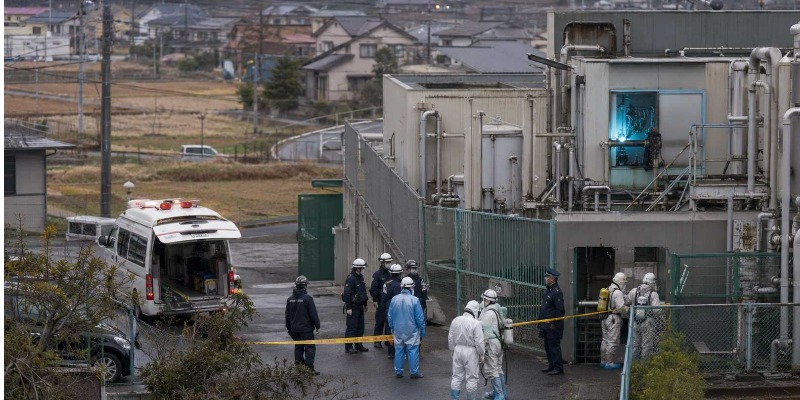
The town of Tokaimura, in Ibaraki Prefecture, didn't look like a dangerous place. It was a tidy community, with residential neighborhoods, schools, shops, and cultivated fields. Alongside daily life, however, there operated a complex of facilities related to the nuclear fuel cycle. Electricity wasn't produced here, but highly sensitive materials were processed: enriched uranium destined for reactors. It was an intermediate stage, less visible than the large power plants, but no less critical.
The plant involved in the disaster belonged to a company specializing in fuel conversion and preparation. Formally, it was a highly regulated operation, subject to rigorous procedures and frequent inspections. But as often happens in complex systems, there was a gap between the written rules and daily practice. Official procedures were detailed, but considered slow and inflexible with respect to production needs. Over time, informal practices had developed, operational shortcuts tacitly accepted because "they had always worked."
Work inside the plant was perceived as technical and precise, but not particularly dangerous. Operators weren't working in a functioning power plant; there were no active reactors or visible cooling towers. This contributed to an underestimation of the specific risk associated with nuclear criticality, a condition in which a mass of fissile material can trigger an uncontrolled chain reaction. It was a concept familiar to nuclear engineers, but little internalized at the operational level, especially in contexts where routine takes precedence over theory.
The fuel preparation process involved handling solutions containing enriched uranium. The quantities, concentrations, and geometry of the containers were crucial to maintaining the system at subcritical conditions. Official procedures set stringent limits on each step. However, to speed up the work and reduce time, operators began using containers not designed for that type of operation, manually pouring the solutions into larger tanks. This practice was prohibited, but tolerated on a daily basis.

This normalization of deviation was the heart of the problem.
Every time a procedure was bypassed without immediate consequences, the perception of risk diminished. The fact that nothing had ever happened reinforced the idea that the rules were overly cautious. In reality, those rules existed precisely to prevent rare but catastrophic events. Nuclear criticality is not a gradual risk: it is a threshold. Until it is exceeded, everything seems under control. When it is crossed, the system changes state suddenly and violently.In the case of Tokaimura, the organizational context played a decisive role. Operator training was incomplete, especially on the theoretical aspects of nuclear risk. Many viewed procedures as sequences to be followed, not as safety barriers based on physical principles. Furthermore, oversight was weak. Internal controls focused on production results rather than strict compliance with protocols. The pressure to meet deadlines, while not explicit, was constant.