- Minamata Disaster: What Happened and Why It's Important to Remember
- Chisso Corporation: The Company Behind Mercury Pollution
- Symptoms and consequences of Minamata disease on the local population
- Scientific investigations: how the origin of mercury poisoning was discovered
- The Role of the Media: The Influence of Photography and Journalism in the Minamata Crisis
- The Long Road to Justice: Trials and Compensation for Minamata Victims
- Minamata in Culture and Science: How an Environmental Tragedy Changed the World
- Minamata's lessons for the future: ethics, corporate responsibility and sustainability
The investigation into the industrial pollution that devastated Minamata in the 1950s and ’60s, revealing responsibilities, health impacts, and the lessons learned for environmental sustainability
by Marco Arezio
The Minamata disaster represents one of the darkest chapters in Japan’s industrial and environmental history, as well as one of the most striking cases of mass mercury poisoning ever recorded.
ùBetween the late 1950s and the early 1960s, the small city of Minamata, located in Kumamoto Prefecture on the island of Kyūshū, sadly became infamous due to a horrifying outbreak that affected the local population: malformations, severe neurological damage, and deaths were linked to an unprecedented industrial pollution event.
At the root of this environmental tragedy was the chemical company Chisso Corporation, which discharged mercury-containing waste into local waterways. Even today, the story of Minamata remains a case study exemplifying corporate responsibility, transparency, and the right of local communities to live in a healthy environment.
This article aims to reconstruct the facts based on historical documents and offer insights into the socio-economic and environmental consequences of industrial operations carried out without proper oversight.
It also seeks to shed light on the role of the governments of the time, the press, and those who, through independent investigations, exposed the disaster and helped create a fundamental precedent for global environmental regulation.
Origin and Historical Context: A Silent Nightmare
In the postwar years, Japan was committed to rapid industrial and infrastructural reconstruction. In that context of accelerated growth, many chemical companies found fertile ground to expand their facilities.
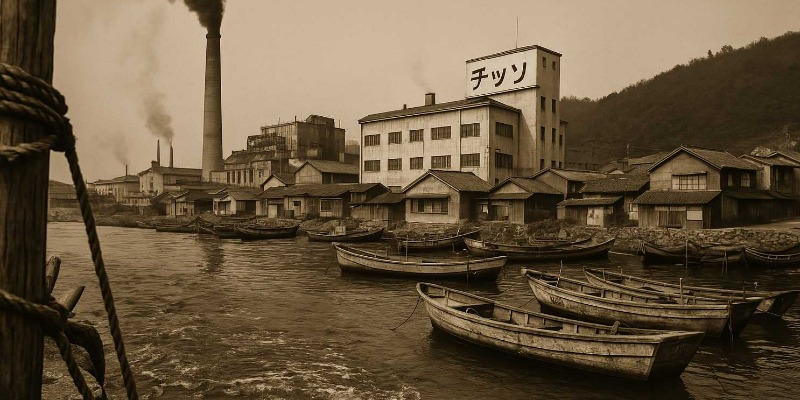
Chisso Corporation, already active in the Minamata area since the early decades of the twentieth century, produced acetaldehyde, a base substance used to process many chemical compounds. However, the production process released wastewater containing methylmercury, an organic mercury compound that is highly toxic and capable of accumulating in living organisms.
The first signs that something was amiss appeared in the late 1940s, but it was only in the early 1950s that symptoms of poisoning began to manifest clearly among the local population, which relied heavily on fishing. Fishermen and their families began noticing very serious neurological symptoms: uncontrolled tremors, difficulty coordinating movements, and hearing and vision problems. In the most extreme cases, there were instances of paralysis and coma, often leading to death.
Initially, these problems were attributed to unknown causes or unrelated diseases. Local health authorities tried to investigate but were hampered by a lack of data and limited knowledge of the effects of methylmercury. Meanwhile, protests from fishermen—who had lost their main source of livelihood—grew louder, prompting doctors and scientists to conduct more in-depth research.
The Impact on the Environment and the Population: A Gradual Realization
Independent research, conducted by university laboratories and physicians from Kumamoto Prefecture, gradually confirmed a link between mercury pollution and the symptoms observed among the inhabitants of Minamata.
Strengthening this hypothesis were the harrowing photographs taken by W. Eugene Smith, an American photographer who documented the victims’ plight. His images, especially that of a mother cradling her severely disabled daughter, became iconic representations of this tragedy and led international public opinion to view with horror the consequences of unrestricted industrial pollution.
The marine ecosystem in Minamata Bay underwent a silent yet progressive destruction. Fish and shellfish—the main food source for the local residents—accumulated methylmercury through the food chain. The first to be affected were birds and cats, which began exhibiting abnormal behaviors (nicknamed “cat dancing,” a popular term for the spasms afflicting poisoned felines). Eventually, the same devastating symptoms manifested in humans, causing a true humanitarian and health disaster.
From a demographic standpoint, the fishing community was hit hardest: dozens of families found themselves dealing with neurological illnesses and a complete loss of their ability to work. Socio-economically, the entire region suffered a stigma that tarnished the marketability of its seafood and its tourism image, creating a long-term negative impact.
Official Responses and the Role of the Media
Chisso Corporation initially denied all responsibility and attempted to downplay the problem, claiming that there was no definitive proof linking industrial discharges to the neurological damage found in the population. At the same time, local authorities and the central Japanese government were slow to officially acknowledge the source of the disaster, partly due to fears that the news would damage the country’s reputation, which was striving for modernization and international standing.
However, various groups of university researchers, volunteer doctors, and environmental associations began to apply pressure by publicizing the first scientific evidence. After an initial period of lukewarm interest, Japanese media started shining a spotlight on the case. Some national newspapers in particular featured photographic reports revealing the devastating effects of mercury on the population, sparking public outrage.
Another decisive factor was international coverage: foreign news outlets reported on the crisis, forcing Japanese authorities to address the problem to avoid diplomatic and commercial repercussions.
In 1959, some journalistic investigations brought to light documents showing that Chisso Corporation was aware of the risks associated with its operations. Nevertheless, the company continued to discharge mercury into Minamata’s waters until the mid-1960s, exacerbating the situation and expanding the scope of the disaster.The Long Process of Legal Recognition and Compensation
The crucial step toward accountability came only in the mid-1960s, when public opinion and the scientific community exerted insurmountable pressure on the institutions. In 1968, the Japanese government officially recognized that Minamata disease had been caused by mercury discharges from Chisso Corporation. This marked a turning point, but it was not achieved without intense legal battles and massive protests by victims and their families.
Affected residents—supported by lawyers and various associations—filed a series of lawsuits against Chisso Corporation and, in some cases, against the government itself, considered co-responsible for inadequate oversight and delayed intervention. The first rulings, handed down in the late 1960s and early 1970s, ordered the company to compensate Minamata victims with monetary sums, acknowledging both biological and moral harm. However, the initial amounts were modest compared to the gravity of the catastrophe.
In subsequent years, additional legal actions led to larger compensation payouts and continuous medical support for the affected families. The judicial path was long and fraught with appeals, protests, and mediations, and some final rulings only emerged decades later. The Minamata case was instrumental in transforming Japan’s environmental legislation, resulting in stricter regulations on industrial discharges and bolstering monitoring and oversight mechanisms.
Cultural Impact and Lessons Learned
The tragedy in Minamata was not just a public health and economic disaster; it became a universal symbol of the dire consequences that can arise from the absence of corporate accountability and effective public oversight. The case inspired environmental movements worldwide and fueled a global debate about the risks of uncontrolled industrialization.
Culturally, the disaster also influenced artistic and journalistic works. W. Eugene Smith’s photographs circulated around the globe, serving as a powerful instrument for raising awareness and prompting public outcry.
Documentaries, both in Japan and abroad, documented the daily lives of Minamata’s residents, highlighting the conditions faced by victims and the social isolation they frequently encountered. In the academic realm, numerous studies and research projects focused on analyzing the factors that triggered the disease and identifying the best strategies to prevent its recurrence.
Japanese universities—and later institutions in other countries—introduced specific courses centered on preventing industrial disasters and protecting the environment. Consequently, the Minamata case became source material for students of medicine, biology, environmental engineering, and law, illustrating how economic interests must necessarily be balanced by strong ethical principles and strict regulations to safeguard public health.
Conclusions: An Indelible Warning for Future Generations
Today, Minamata remains a stark warning to those engaged in sustainability and corporate social responsibility. The legacy of this tragedy translates into the awareness that pollution and industrial mismanagement not only destroy ecosystems and human lives but also have long-term economic, social, and cultural repercussions.
The delayed response of Japanese institutions and Chisso Corporation’s initial reluctance to acknowledge its culpability underscore how vital free information, independent science, and a robust regulatory framework are in imposing clear limits on industrial activities.
For university students, examining the history of Minamata means grappling with the many layers of complexity surrounding the relationships between industry, local communities, the state, and the environment.
From an academic standpoint, the case spans disciplines ranging from chemistry to medicine, law to ethics, and environmental science to development economics. Within this interdisciplinarity lies its invaluable didactic importance: a call to never neglect the humanistic and social perspective, even when focusing on narrowly scientific or technological issues.
In light of the mistakes made in Minamata Bay, the scientific and political communities have improved methods for detecting and regulating heavy metal pollution, while also promoting greater protection of local community rights.
Nonetheless, it remains critical to remember that the memory of this disaster must translate into tangible actions: history teaches us that economic interests can sometimes drive people to hide the truth, but transparency and collective commitment can bring facts to light, safeguard public health, and preserve the environment for future generations.
The Minamata disaster, laden with human suffering and ecological devastation, stands as historical proof that the management of toxic substances cannot be left to chance or vested interests.
It is a constant reminder not to let our guard down, to stay vigilant about warning signs, and to encourage genuine collaboration among businesses, institutions, and civil society. Only in this way can we hope to prevent a repeat of tragedies like Minamata and build a truly sustainable future for all humankind.
© Reproduction Prohibited