- United Nations International Awareness Week on Microplastics
- Pollution mechanisms caused by microplastics in cosmetics
- Cosmetic products with microplastics: impacts and regulations
- Ecological alternatives to microplastics in cosmetics
- How to identify the presence of microplastics in cosmetic products
What’s in your bathroom? The United Nations program to raise awareness of the health problem
Following the instructions of the United Nations, which established a week of international awareness on microplastics in cosmetics in November, urging the various states to take serious measures for these products, starting in 2020 some cosmetics will be banned in Italy, such as scarb or exfoliating creams that contain microplastics.
But what are the mechanisms that create pollution?
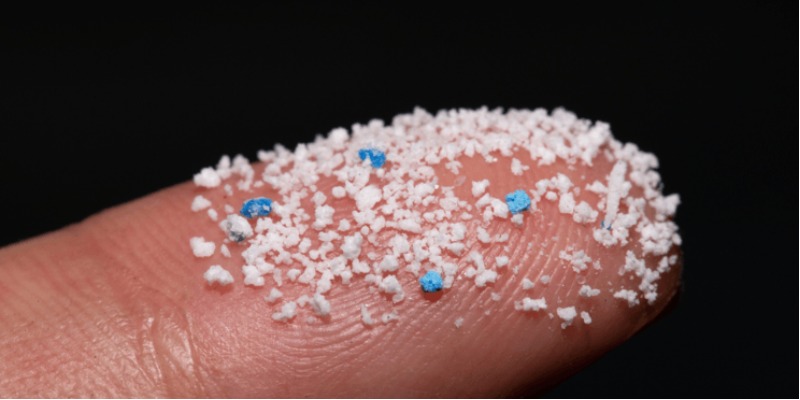
Exfoliating creams and scrubs, but also found in shampoos and even in toothpastes, use micro-parts of plastics such as PET or PP or PE or PMMA which have a slightly abrasive action on the skin, triggering the micro process exfoliation of dead skin.
Once spread on the body, through the rinsing water, these micro plastic parts are discharged into the sewer system, which however does not have the capacity to filter these small plastic residues, with a size of a few microns, as they pass through the filters.
In a 150 ml tube of exfoliating cream or similar products, according to CNR surveys , there are on average 27 grams of plastics for a total of 1 million and 600 thousand particles that are dispersed in the environment and become food for fish and crustaceans.
But is it just an environmental problem?
No, it has also become a direct problem for our health and if we want to retrace the path that these microplastics make we realize how it is possible that, from our bathroom, they easily reach our stomach. Science fiction, no reality.
As mentioned, the sewage systems that collect the rinsing water containing these plastic micro parts have not been designed to filter parts of such small dimensions, and being non-biodegradable elements, easily reach the sea.
Subsequently these microplastics enter the food chain and, of course, can be ingested by the man who eats fish .
Therefore we can consider the problem of the dispersion of microplastics in the sea in the first place as a health problem for humans and subsequently also an environmental problem.
Unfortunately few countries have banned these products, and even more important to know that in the field of cosmetics , microplastics continue to live for example in body makeup .
A positive note is the fact that, in general, the companies producing scrubs and exfoliators did not wait for governmental impositions about the abolition of microplastics in the recipes but they moved to replace these plastic parts with other biodegradable products, coming to meet them. to a general consumer need for environmental protection.
What are the abrasive additives in creams to replace microplastics?
There are many alternatives, both in the form of a finished product such as micro-granules of pumice or sugar or sea salt or waste such as nut shells, apricot seeds or other fruits, such as red raspberry.
How can I tell if a cream contains microplastics?
It is necessary to check the label affixed to the product packaging in which products such as PE must not be written, among the ingredients PP, PET or PMMA .
Automatic translation. We apologize for any inaccuracies. Original article in Italian.