




- Importance of Titanium Recovery: Opportunities and Challenges
- Composition of Blast Furnace Slag and Titanium Content
- Titanium Recovery Methods: Leaching Techniques
- Pyrometallurgical Approaches for Titanium Recovery
- Applications of Electrochemical Processes in Titanium Separation
- Case Studies: Experiences of Titanium Recovery on Industrial Scale
- Economic and Environmental Assessment of Titanium Recovery
- Innovations and Future Perspectives in Industrial Slag Recovery
Analysis of Methods for Extracting Titanium from Industrial Residues: Technologies, Challenges, and Economic Prospects for Sustainable Metal Management
By Marco Arezio
Titanium is a metal with exceptional properties such as high corrosion resistance, lightness, and mechanical strength, making it a crucial material for sectors like aerospace, biomedical, and the chemical industry.
However, it is also an expensive material, mainly due to the complexity of the extraction process and the limited availability of high-quality sources.
With the growing demand for titanium and the uncertainty surrounding the availability of raw materials, recovering titanium from industrial slag is a key strategy to reduce costs and mitigate the environmental impact of mining.
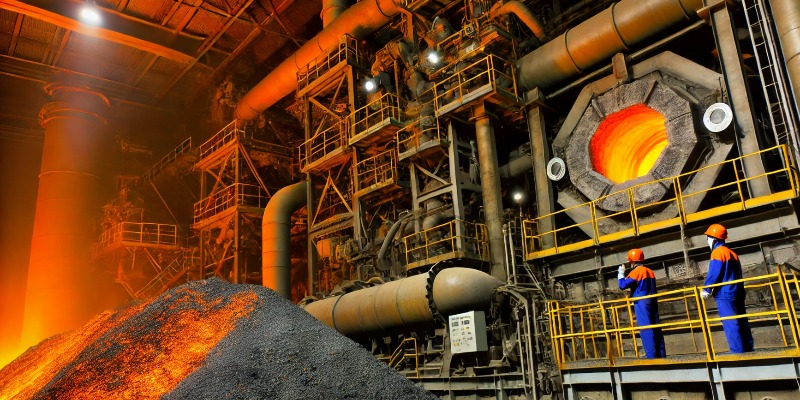
Blast furnace slags containing titanium are by-products of metallurgical production, particularly in steelmaking.
Although traditionally considered waste, these slags often contain significant percentages of titanium in the form of oxides, making them a potential source for metal recovery.
This article explores the methods currently being studied to recover titanium from these by-products, analyzing their effectiveness and both economic and environmental sustainability.
Characteristics of Blast Furnace Slag and Titanium Content
Blast furnace slag is a residue of the iron smelting process and can contain titanium mainly in the form of oxides, such as titanium dioxide (TiO₂).
This titanium generally remains trapped in the slag matrix, making direct recovery difficult. The concentration of titanium in the slag varies depending on the composition of the raw minerals and process conditions.
In many cases, titanium dioxide represents a significant fraction of the slag mass, making its recovery an attractive option.
Techniques for Titanium Recovery
There are several techniques for recovering titanium from blast furnace slag, which can be divided into three main categories:
Chemical Leaching: This method uses chemical solutions to dissolve titanium oxides, allowing selective separation of the metal. Among the most common techniques is acid leaching, often carried out with sulfuric or hydrochloric acid.
Although effective, it poses significant environmental challenges due to the use of highly corrosive substances and the management of resulting toxic residues.
Thermal Reduction and Pyrometallurgy: This technique involves reducing titanium oxides at high temperatures, usually using carbon as a reducing agent.
Pyrometallurgy requires a large amount of energy, making it essential to optimize process parameters to reduce energy costs and maximize recovery efficiency.
Electrochemical Processes: Electrochemical processes exploit the reactivity differences between the components of the slag to separate titanium. Although these methods are promising, they are still under development and require further studies to become an economically feasible solution on an industrial scale.
Case Studies and Practical Applications
Recent studies have demonstrated the feasibility of recovering titanium using a combination of chemical leaching and thermal reduction.
These studies have shown that, by combining such techniques, it is possible to achieve sufficiently high titanium yields to economically justify the process.
In major steel-producing countries, pyrometallurgical techniques are often adopted to improve blast furnace efficiency and maximize the recovery of metallic by-products.
Challenges and Opportunities for Sustainability
Recovering titanium from blast furnace slag offers significant advantages but also presents important challenges:
Operational and Equipment Costs: Recovery techniques often require specialized machinery and infrastructure with high investment and maintenance costs. Additionally, energy consumption, particularly in pyrometallurgical processes, represents a significant component of operational costs.
Environmental Impact: The use of chemicals and the energy needed for high temperatures result in considerable environmental impacts. Therefore, it is essential to develop solutions to minimize emissions and properly treat residues.
Circular Economy: Recovering titanium from slag is a sustainable alternative to conventional extraction, as it helps reduce industrial waste and decreases the pressure on natural titanium resources.
Future Prospects and Innovations
Technological innovations are crucial to improving the efficiency and sustainability of titanium recovery processes.
For example, the use of nanoparticles to enhance selectivity in leaching processes or the optimization of operational parameters in pyrometallurgical techniques could increase titanium yields and reduce energy consumption.
Another area of interest is the use of renewable energy sources to power high-temperature processes, thereby reducing the carbon footprint.
Moreover, collaboration between industry and research centers is essential to accelerate the adoption of new technologies and promote circular economy practices in the metallurgical sector.
The integration of different techniques, such as combining thermal reduction and electrochemical separation, could represent a significant step forward in valorizing slag as a resource.
Conclusions
Recovering titanium from blast furnace slag represents a viable opportunity to make the titanium industry more sustainable and aligned with circular economy principles.
Despite technical and economic challenges, advances in chemical leaching, thermal reduction, and electrochemical processes can improve recovery efficiency and reduce dependence on natural resources.
Investments in research and development, along with policies that incentivize the recovery of raw materials from industrial waste, will be crucial to making titanium recovery a stable and widespread practice in the circular economy.
© All Rights Reserved