




- Lean Duplex Steels: Sustainable Innovation and Duplex Microstructure
- Multi-Pass Cold Rolling: An Essential Process for Recycled Materials
- Plastic Deformation and Improvement of Properties of Recycled Steels
- Microstructure of Duplex Steels: Impacts of Cold Forming
- Corrosion Resistance in Lean Duplex Stainless Steels
- Sustainable Applications of Lean Duplex Steels in the Circular Economy
- Optimization of Deformation Processes for Recycled Materials
- Future Prospects for Recycled Steels in Green Sectors
How Cold Multi-Pass Rolling Enhances the Properties of Recycled Materials for the Circular Economy
By Marco Arezio
Lean duplex stainless steels represent an advanced category of materials that combine a duplex microstructure, consisting of ferritic and austenitic phases, with a reduced content of costly alloying elements such as nickel and molybdenum. This optimized composition offers a balance between high mechanical performance, excellent corrosion resistance, and reduced costs. Thanks to their recycled nature, which significantly reduces environmental impact, these steels are central to the transition toward a circular economy. This article examines the effects of cold plastic deformation, introduced through multi-pass rolling, on the microstructural characteristics and corrosion resistance of a lean duplex stainless steel.
Cold Multi-Pass Rolling: A Key Process
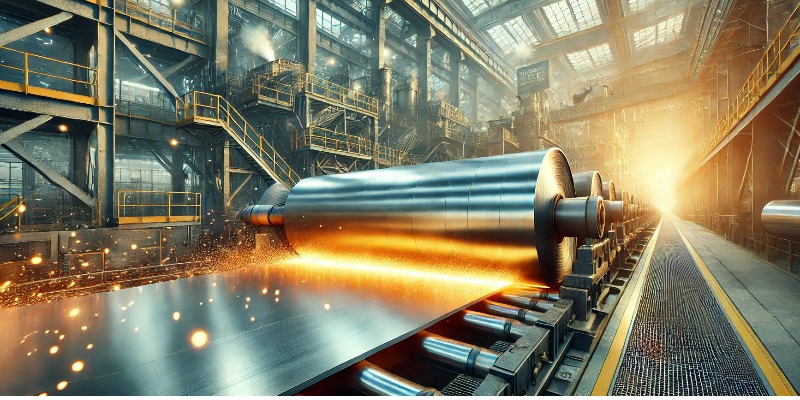
Cold rolling is an advanced industrial technique that significantly modifies the mechanical, physical, and chemical properties of metals through a controlled plastic deformation process. During this operation, the material is subjected to repeated passes between high-pressure rollers, causing microstructural refinement and an increase in dislocation density, which in turn improve the material's hardness, mechanical strength, and deformation capability. This process not only enhances the material's performance but also directly impacts its corrosion resistance and thermal stability, making it particularly useful for applications in hostile environments.
Impact on Recycled Materials
The lean duplex steel used is composed of over 90% recycled materials, aligning with best practices for environmental sustainability. This approach reduces carbon footprints and enhances the material's lifecycle value.
Microstructural Changes: A Detailed Overview
Cold plastic deformation is a mechanical process involving the application of stresses exceeding the elastic limit of a material at a temperature below its recrystallization threshold. This results in permanent changes to the material's shape and microstructure without significantly altering its chemical composition. In the case of steel, this process leads to grain refinement and an increase in dislocation density, improving its mechanical properties and strength. Furthermore, these structural changes manifest in three main effects:
Grain Size Reduction:
Rolling induces grain refinement, increasing dislocation density and enhancing the material's hardness.
Phase Transformation:
During the process, variations are observed in the proportions of ferritic and austenitic phases typical of duplex steels.
These transformations affect both mechanical strength and corrosion resistance.Preferred Orientation:
Cold deformation tends to orient crystals along specific directions, improving certain anisotropic properties of the material.
Corrosion Resistance: A Critical Factor
Corrosion resistance is a defining characteristic of stainless steels, essential for ensuring durability and safety in aggressive environments such as marine, industrial, or chloride-rich settings. However, the cold rolling process significantly affects this property, introducing both advantages and potential challenges. For example, microstructural grain refinement promotes the formation of a more stable and uniform passive layer, increasing general corrosion resistance. At the same time, residual stresses and structural heterogeneities created during the process can weaken the material, increasing its susceptibility to localized corrosion such as pitting.
Enhanced Passivity:
Grain size reduction and increased dislocation density can promote the formation of a more uniform passive layer, improving general corrosion resistance.
Localized Vulnerability:
On the other hand, residual stresses and microstructural heterogeneities may increase susceptibility to pitting corrosion, particularly in chloride-rich environments.
Balancing Performance and Sustainability
When carefully controlled, cold plastic deformation can enhance certain microstructural and mechanical characteristics of lean duplex stainless steel. However, it is crucial to optimize process parameters to minimize adverse effects on corrosion resistance. The recycled nature of the material adds sustainable value, making these steels ideal for applications in the green industry.
Future Prospects: Optimization and New Applications
Future research could focus on optimizing cold deformation processes to further improve the properties of recycled materials, maximizing their mechanical and chemical potential. Additionally, post-rolling heat treatments could be explored to reduce residual stresses, increasing the durability of finished products. The use of lean duplex stainless steels, primarily derived from recycled materials, shows promising applications in sectors such as renewable energy and sustainable construction, where durability and environmental impact reduction are top priorities for the circular economy.
© Reproduction Prohibited