- Introduction to Copper Plating of Metals
- The Historical Origins of Copper Plating
- Reasons and Benefits of Copper Plating
- Corrosion Protection: The Role of Copper
- Electrical Conductivity and Other Functional Benefits
- The Main Copper Plating Techniques
- The Evolution of Copper Plating: From Ancient to Modern Techniques
- Industrial Applications of Copper Plating Today
A Journey Through the History, Motivations, and Techniques of a Fundamental Process in Metallurgy
by Marco Arezio
Copper plating of metals is an ancient and technically complex practice that has undergone centuries of evolution and refinement.
This process involves applying a layer of copper onto a metallic surface through various methods, with the goal of improving the physical and chemical properties of the base metal.
In this article, we will explore the history of copper plating, the motivations behind its use, and the different techniques employed to achieve it.
History of Copper Plating of Metals
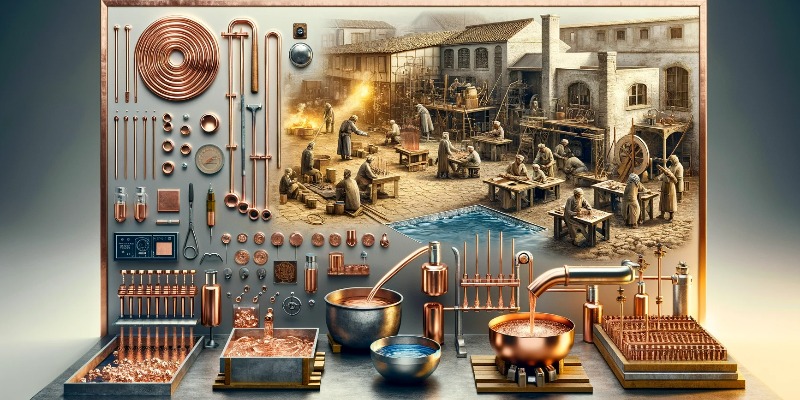
Copper plating is a technique rooted in antiquity. In ancient civilizations, such as the Egyptian one, rudimentary methods were used to plate metal objects with copper to enhance their aesthetic appearance and corrosion resistance.
During the Renaissance, with the development of alchemy and metallurgy, copper plating techniques were further refined, contributing to the production of highly artistic and functional objects.
In the 19th century, with the advent of industrialization, copper plating found large-scale application in industry. Advances in chemistry and electrochemistry led to the development of more efficient and controlled methods, such as electrolytic deposition, which became the standard for industrial copper plating.
Copper plating became essential in industries such as automotive, electronics, and construction, thanks to its protective and decorative properties.
Why Copper Plating of Metals Is Performed
There are multiple reasons for performing copper plating on metals, which can be summarized in the following key points:
Corrosion Protection: One of the primary purposes of copper plating is to protect metals from corrosion. Copper is particularly resistant to atmospheric and chemical agents, forming a protective barrier that extends the lifespan of metal objects.
Improved Electrical Conductivity: Copper is an excellent conductor of electricity. Copper plating on electrical and electronic components enhances their conductivity, reducing resistance and improving energy efficiency.
Adhesion for Subsequent Coating Layers: Copper plating is often used as an intermediate layer to promote the adhesion of additional coatings, such as nickel or chrome. This is especially important in decorative and protective finishes.
Enhanced Mechanical Properties: Copper plating can improve the mechanical properties of the base metal, such as wear resistance and surface hardness, making components more durable.
Aesthetic Appearance: Copper has an aesthetic appeal appreciated in many fields, from architecture to furniture, and jewelry. Copper plating provides a bright and attractive finish to metal objects.
How Copper Plating of Metals Is Performed
There are several techniques for performing copper plating on metals, each with its own advantages and limitations. The most common methods are electrolytic copper plating, chemical copper plating, and spray copper plating.
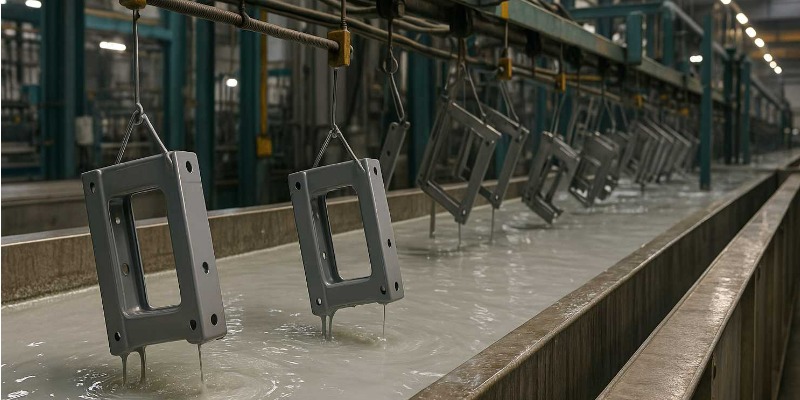
Electrolytic Copper Plating: This is the most widespread method and involves the use of an electrolytic solution containing copper salts. The object to be plated is immersed in the solution and connected to an electrical circuit that induces the deposition of copper ions onto the metal surface. This process is highly controllable and allows for the production of copper layers of uniform and desired thickness.
Chemical Copper Plating: Also known as chemical plating, it does not require the use of electrical current. It is based on chemical reactions that induce the deposition of copper onto the metal surface immersed in a solution containing reducing agents and copper salts. It is particularly useful for plating complex and irregular surfaces.
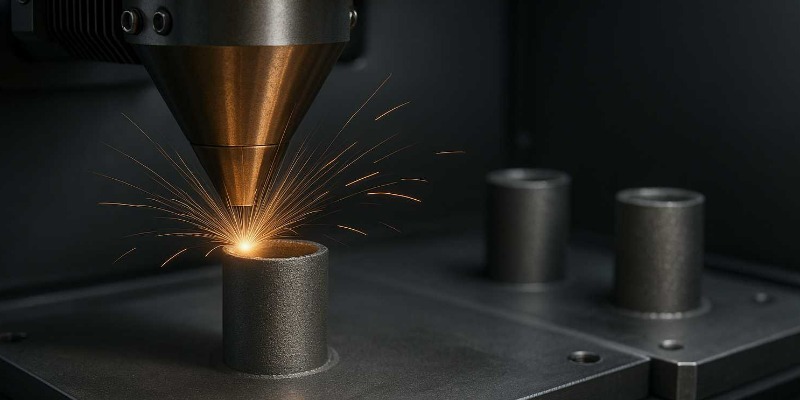
Spray Copper Plating: This method uses a jet of molten copper sprayed onto the surface of the metal to be coated. It is less common compared to electrolytic and chemical methods but is used in specific applications where a thick and durable coating is required.
Final Considerations
Copper plating of metals represents one of the most versatile and important techniques in the field of metallurgy and surface treatments. Its ability to enhance the mechanical, chemical, and aesthetic properties of metals makes it indispensable in numerous industrial and artisanal sectors.
From its ancient origins to modern applications, copper plating has proven to be a practice in continuous evolution, adapting to new technological and environmental needs.
With the advancement of technologies and the growing focus on sustainability, it is likely that copper plating processes will continue to improve, incorporating increasingly eco-friendly and efficient methods.
In this context, the importance of copper plating on metals will only grow, confirming its fundamental role in protecting and enhancing metallic materials.