- Introduction to Spatial Ocean Pollution
- Point Nemo: The Cemetery of Spaces
- The History of the Mir Space Station
- The Case of the Chinese Tiangong-1 Space Station
- Deorbiting and Atmospheric Reentry techniques
- Environmental Impact of Space Wrecks
- Proposed Solutions for the Management of Space Waste
- Conclusions and Future Perspectives
Point Nemo as a Space Cemetery and the Environmental Implications of Space Missions on Our Planet
by Marco Arezio
When we think of ocean pollution, our minds immediately go to plastic, chemicals, and industrial waste.
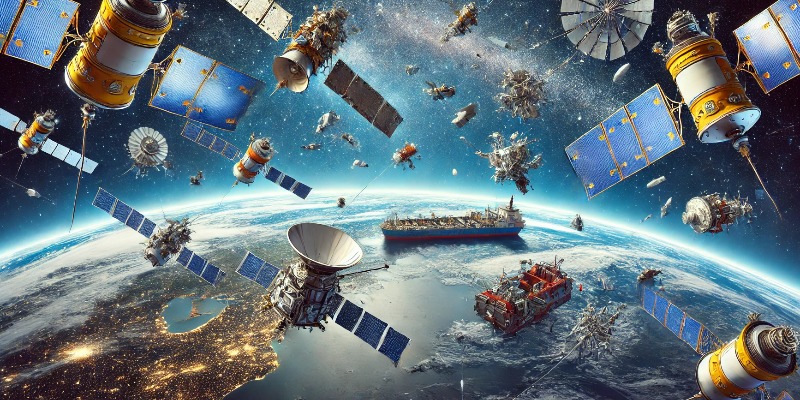
However, a lesser-known but equally concerning form of pollution is that caused by space debris.
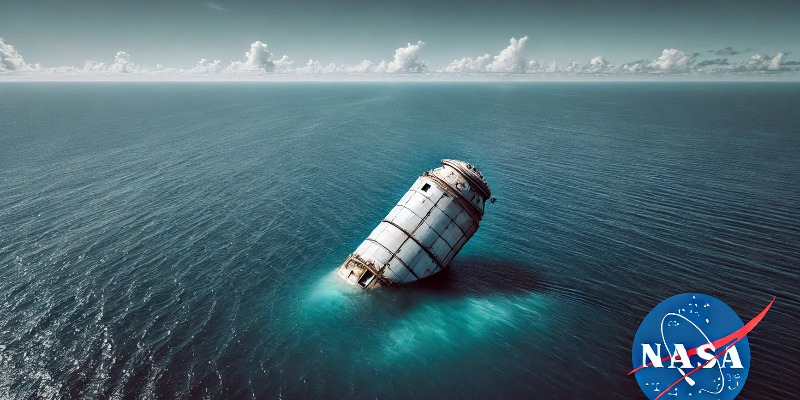
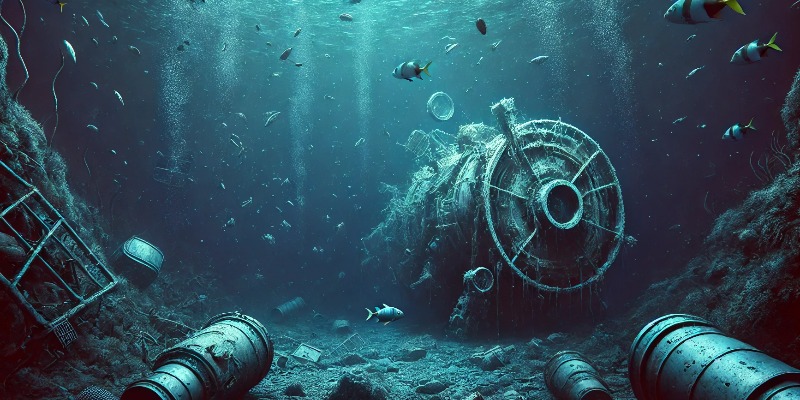
One of the most emblematic places of this phenomenon is Point Nemo, in the heart of the Pacific Ocean, where at least 263 space wrecks lie, including the famous Soviet space station Mir.
Point Nemo: The Space Cemetery of the Pacific
Point Nemo, officially known as the Oceanic Pole of Inaccessibility, is a remote point in the Pacific Ocean, located about 2,688 kilometers from the nearest land.
This location, discovered by Croatian-Canadian engineer Hrvoje Lukatela in 1992 using a calculation program, was chosen for its inaccessibility, which minimizes risk to people and maritime activities.
In recent decades, several spacecraft have been intentionally deorbited towards Point Nemo to avoid risks associated with their uncontrolled disintegration in the atmosphere.
One of the most notable cases is that of the Soviet space station Mir. Launched in 1986, Mir operated for 15 years as an orbital research laboratory. In March 2001, it was decommissioned and made to re-enter the Earth's atmosphere in a controlled manner, with its fragments dispersing in the Pacific near Point Nemo.
Another significant example is the Chinese space station Tiangong-1, operational since 2011. After losing contact with Earth in 2016, Tiangong-1 re-entered the atmosphere on April 2, 2018, in an uncontrolled manner, with its remnants crashing into the Pacific Ocean.
In 1999, the Russian spacecraft Progress M-34 was deliberately made to re-enter the atmosphere and directed towards Point Nemo. These examples highlight how the South Pacific has become a kind of graveyard for space debris.
Technical Aspects of Deorbiting
The process of deorbiting spacecraft is complex and requires detailed planning to ensure safe re-entry.
Once a spacecraft has completed its mission, its engines are activated to lower its orbit, thus beginning its descent towards Earth.
During re-entry, the spacecraft travels through the Earth's atmosphere, where most of its materials disintegrate due to friction and heat. However, the remnants that survive re-entry end up in remote areas like Point Nemo.
Environmental Impacts and Solutions
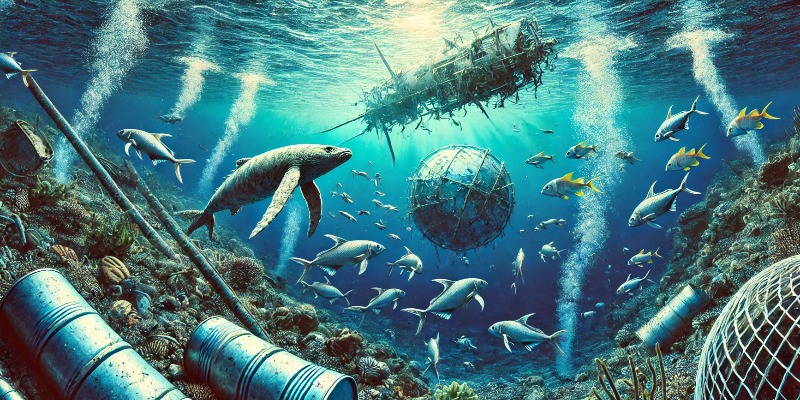
The pollution caused by space debris has significant environmental implications. Spacecraft contain hazardous materials such as hydrazine, lead, cadmium, and other heavy metals, which can contaminate water and marine soil.
Additionally, large metal structures can cause physical damage to marine ecosystems, although in some cases they can become habitats for certain species.
To mitigate these impacts, innovative solutions and international cooperation are needed. It is crucial to develop deorbiting techniques that ensure complete disintegration of spacecraft during re-entry.
Moreover, investing in technologies for recovering space debris from the ocean could represent a solution, although it is still technically and economically challenging. Finally, the creation of international regulations for the management of space waste is essential to promote sustainable handling of these materials.
Conclusions
Ocean pollution caused by space debris is an emerging challenge that requires global attention. Point Nemo is an emblematic case of how space exploration can have significant impacts on our planet.
With a growing number of space missions, it is essential to develop sustainable strategies for managing space waste, thus protecting the balance of marine ecosystems and ensuring a cleaner future for our oceans.