- Chemical Innovations for the Improvement of Recycled Plastics
- Antioxidant Additives to Increase the Durability of Regenerated Polymers
- UV and Thermal Stabilizers: Solutions for Recycled Plastics
- Impact Modifiers: Improving the Mechanical Strength of Recycled Plastics
- Compatibilizers for the Optimization of Recycled Polymer Alloys
- Nanocomposites and Advanced Additives in Recycled Plastics
- Reducing Plastic Degradation: New Approaches with Chemical Additives
- Future Perspectives for Sustainable Additives in Regenerated Plastics
Research and Development of Additives to Enhance the Strength and Mechanical Performance of Recycled Plastics within the Circular Economy
by Marco Arezio
In the context of the circular economy, the efficient management of resources and the recycling of materials represent a strategic challenge to reduce environmental impact and promote the sustainable use of raw materials.
Plastics, being widely used materials due to their versatile properties, are at the center of this debate. However, one of the main obstacles to their recycling is the degradation of mechanical and chemical properties during regeneration processes.
Recycled plastics often show reduced strength and durability compared to virgin materials, limiting their applications in more demanding sectors.
Faced with this issue, scientific and technological research has focused on identifying and developing new chemical additives capable of improving the quality and performance of recycled plastics, making them competitive in terms of durability, strength, and safety in use.
The objective of this article is to explore recent research and innovations in chemical additives that can be used to improve the properties of recycled plastics, with particular attention to the mechanisms of action and the benefits they bring in terms of strength and durability.
These additives, which include stabilizers, antioxidants, and impact modifiers, play a crucial role in counteracting thermal and oxidative degradation phenomena, thus enhancing the final performance of recycled plastic products.
Plastic Degradation During Recycling: Issues and Challenges
Plastic degradation during recycling is a well-documented problem in scientific literature. This process is mainly caused by oxidation and depolymerization mechanisms that occur during exposure to heat, light, and chemical agents during the recycling process.
These mechanisms lead to the breakdown of polymer chains, which in turn causes a loss of mechanical properties such as tensile strength, elasticity, and impact resistance.
Thermoplastic polymers, such as polyethylene (PE), polypropylene (PP), and polyethylene terephthalate (PET), are particularly sensitive to these degradation processes.
Oxidative degradation, in particular, occurs when free radicals generated by heat or ultraviolet (UV) radiation react with atmospheric oxygen, leading to the formation of oxidation products that weaken the polymer chains.
Without adequate intervention, recycled plastics show a significant reduction in mechanical performance and strength over time, limiting their suitability for critical applications.
Additives for Stabilizing Recycled Plastics
To counteract the effects of degradation during the recycling process, research has developed a series of additives designed to protect polymers from adverse conditions. Stabilizing additives can be classified into different categories based on their mechanism of action:
Antioxidants: These compounds are designed to prevent or slow the oxidation of the polymer during thermal processing. Primary antioxidants, such as substituted phenols (e.g., butylated hydroxytoluene or BHT), act by neutralizing free radicals before they can react with the polymer.
Secondary antioxidants, such as phosphites, are effective in decomposing peroxides that form during polymer oxidation.
The combined use of primary and secondary antioxidants offers synergistic protection, significantly improving the thermal and oxidative resistance of recycled plastics.
UV Stabilizers: Since exposure to UV rays can accelerate plastic degradation, UV stabilizers are essential for improving the durability of recycled products used in outdoor environments.
These additives work by absorbing UV radiation or dissipating excess energy as heat.
Some of the most common UV stabilizers include benzotriazoles and benzophenones.Thermal Stabilizers: These additives protect polymers during high-temperature processing, preventing the thermal degradation of polymer chains. Common thermal stabilizers include tin-based compounds, calcium-zinc stabilizers, and metal stearates.
Impact Modifiers to Improve Mechanical Strength
Recycled plastics, especially after repeated processing cycles, tend to lose part of their mechanical strength.
Impact modifiers are additives designed to improve the toughness of regenerated polymers, increasing their ability to resist fracture under stress. These additives include elastomeric copolymers and plasticizers that integrate into the polymer matrix, enhancing flexibility and the ability to dissipate impact energy.
A common example of an impact modifier is styrenic block copolymers (SBCs), which are widely used to improve the impact resistance of recycled plastics such as polypropylene and polystyrene.
Other materials, such as ethylene-vinyl acetate (EVA) copolymers, are used to enhance the impact resistance of flexible plastics and packaging.
Compatibilizers for Recycled Polymer Blends
Recycled plastics often result from the mixing of different types of polymers, which may be incompatible at the molecular level, causing phase separation and a reduction in mechanical properties.
Compatibilizers are additives used to promote adhesion between different polymers, improving internal cohesion and the stability of the blend.
Among the most effective compatibilizers are functionalized block copolymers, such as styrene-ethylene-butadiene-styrene (SEBS), which improve adhesion between polar and non-polar polymers.
Another approach is the use of grafting agents, which chemically bond different polymer chains, creating a more homogeneous and resistant structure.
Innovative Research on Additives for Recycled Plastics
New research directions focus on designing more sustainable and specific additives for recycled plastics to minimize environmental impact and further improve the mechanical and thermal performance of regenerated materials.
The most recent developments include the use of additives based on biomass or renewable sources, such as natural antioxidants extracted from plants or natural fibers as compatibilizers.
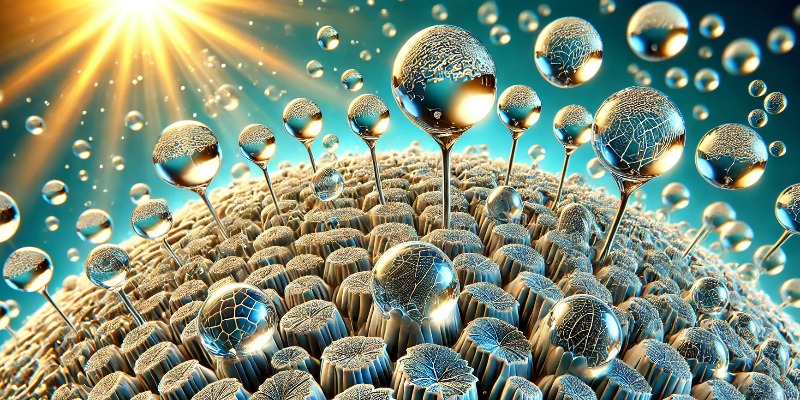
An innovative study has explored the use of nanomaterials, such as clay nanoparticles or graphene, to improve the barrier properties and mechanical strength of recycled plastics.
These nanocomposites form a network structure within the polymer matrix, improving heat resistance, gas impermeability, and dimensional stability, with potential applications in high-performance sectors such as automotive and food packaging.
Conclusions
Enhancing the performance of recycled plastics through the use of chemical additives represents a fundamental strategy for increasing the sustainability of production chains and boosting the acceptance of regenerated materials in high-value industrial sectors.
Additives such as antioxidants, UV stabilizers, impact modifiers, and compatibilizers not only extend the lifespan of recycled materials but also help reduce the need for virgin raw materials, aligning with the goals of the circular economy.
Ongoing innovation in the design of more efficient and sustainable additives is crucial to addressing the environmental and technical challenges of plastic recycling while ensuring competitive performance for the most demanding applications.