- What makes Durabio a revolutionary and sustainable plastic
- The history and innovation behind Durabio, the bio-based plastic
- Durabio: An Isosorbide-Derived Polymer for a Sustainable Future
- The advanced technical properties of Durabio and its advantages
- Industrial applications of Durabio: from automotive to consumer electronics
- Why Durabio is the ideal choice for luxury packaging and optical components
- Durabio and sustainability: a bio-based plastic to reduce environmental impact
- The future of Durabio: perspectives and challenges of the bio-based polymer
Durabio: An Innovative Polymer for a Sustainable Revolution in Plastic Materials
By Marco Arezio
In the landscape of technological and sustainable innovations, Durabio stands out as a revolutionary material. Created by Mitsubishi Chemical, this bio-based polymer is a concrete response to the growing demand for solutions that combine high technical performance with a lower environmental impact. Derived from isosorbide, a compound obtained from renewable resources such as corn, Durabio positions itself as an alternative to traditional polycarbonates and polymethyl methacrylates, improving many of their key properties.
The Genesis of Durabio: A Story of Innovation
Durabio's origins trace back to the early 2000s, a time when the chemical industry began focusing increasingly on sustainable materials. Mitsubishi Chemical, anticipating market needs, initiated a research project to create a plastic that was not only high-performing but also capable of reducing dependency on petroleum-based derivatives.
After years of studies on the polymerization of isosorbide, a monomer derived from glucose processing, Durabio made its debut, immediately demonstrating its potential to redefine the plastic materials sector.
This new bio-based material was developed to address two fundamental needs: reducing environmental impact while offering high-level technical properties. Unlike traditional plastics, Durabio utilizes plant-based resources, eliminating the controversial bisphenol A (BPA) from its composition and significantly reducing carbon emissions during production.
A Unique Chemical Structure
The key to Durabio's success lies in its chemical composition. At its core is isosorbide, a cyclic diol extracted from renewable resources such as corn. This monomer gives the material a rigid and highly transparent structure, characteristics that make it unique.
The polymerization of isosorbide occurs through highly innovative processes, resulting in a final product with an optimal balance of rigidity, flexibility, and transparency. Durabio's hybrid structure combines the best properties of polycarbonates and PMMA, often surpassing their performance. It not only offers superior transparency but also demonstrates greater resistance to scratches and environmental factors.
Superior Performance and Versatility
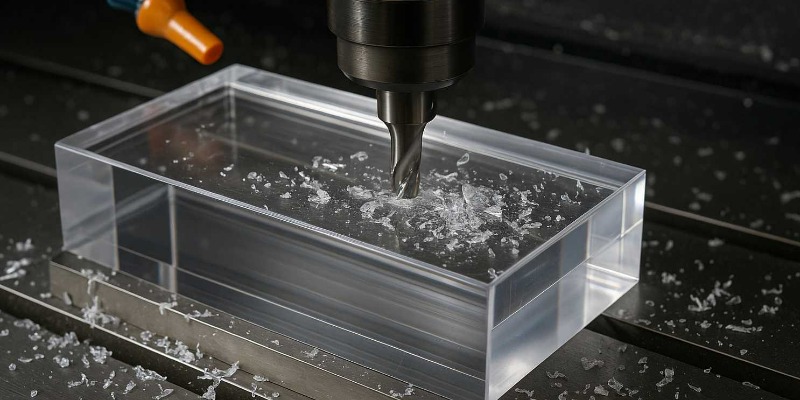
Durabio stands out for a series of features that make it extremely versatile. Its transparency is comparable to glass, making it ideal for applications requiring high optical quality, such as lenses or displays. Additionally, its surface hardness ensures scratch resistance without the need for additional coatings, reducing production costs and enhancing overall sustainability.
Mechanical strength is another strong point: Durabio offers impact resistance suitable for demanding industrial applications while maintaining the lightness characteristic of modern plastics. Chemical stability and resistance to high temperatures complete the profile of a material capable of meeting the challenges of a wide range of sectors.
Applications Across Industrial Sectors
Thanks to its properties, Durabio has found applications in various fields, becoming an indispensable material for many industries.
Automotive
Durabio is widely used in the automotive industry, where it is employed for dashboards, decorative panels, and device masks. Its combination of aesthetics, scratch resistance, and transparency makes it perfect for enhancing both the functionality and aesthetic appeal of modern vehicles. Additionally, its use contributes to reducing the overall weight of vehicles, improving energy efficiency.
Consumer Electronics
In the electronics sector, Durabio has established itself as a material of choice for displays, device enclosures, and protective covers. Its ability to maintain transparency and resist wear makes it an ideal component for smartphones, tablets, and laptops.
Luxury Packaging
Durabio’s aesthetic and mechanical properties make it particularly appreciated in high-end packaging, such as cosmetic containers or premium food packaging. Using Durabio ensures a glossy finish and a sophisticated appearance that enhances the value of the contained products.
Optical Sector
The combination of transparency and chemical stability makes it perfect for lenses and optical components, where precision and durability are essential.
Sustainability and Future Prospects
Durabio represents a step forward toward a more circular economy thanks to its renewable origin. However, it is important to note that while bio-based, Durabio is not biodegradable. The end-of-life management of this material requires specific recycling infrastructure, a sector still under development.
In terms of emissions, the use of renewable raw materials significantly reduces the environmental impact compared to traditional plastics. The greater durability of products made with Durabio also helps reduce the need for frequent replacements, promoting more sustainable resource management.
Future prospects include expanding Durabio's applications, with potential developments in the medical and aerospace sectors, and optimizing production processes to make it even more competitive.
Conclusion
Durabio is not just a polymer but a true revolution in plastic materials. With its unique combination of sustainability, technical performance, and versatility, it sets an example of how the industry can evolve toward a greener future without compromising quality. Through this innovation, Mitsubishi Chemical has shown that it is possible to unite technology and respect for the environment, laying the foundation for a new generation of plastics.
© Reproduction Prohibited