- Hydrophobic and Super-Hydrophobic Polymers: Definition and Operating Principles
- Technologies and Innovations in Polymeric Coatings
- Thin Film Deposition
- Surface Nano-structuring
- Low Surface Energy Polymers
- Applications of Hydrophobic and Super-Hydrophobic Coatings
- Applications in the Textile, Construction and Automotive Sectors
- Problems and Future Perspectives
The latest discoveries and technologies in hydrophobic polymers capable of making surfaces waterproof and self-cleaning, with applications in various industrial sectors
by Marco Arezio
In recent years, research on polymeric materials has made great strides, with particular attention to hydrophobic and superhydrophobic polymers.
These materials, thanks to their unique properties of waterproofing and self-cleaning capabilities, are finding increasingly widespread applications in sectors such as the textile and aerospace industries.
In this article, we will analyze the characteristics of these polymers, their working principle, the technologies used to develop them, and potential industrial applications.
Hydrophobic and Superhydrophobic Polymers: Definition and Operating Principles
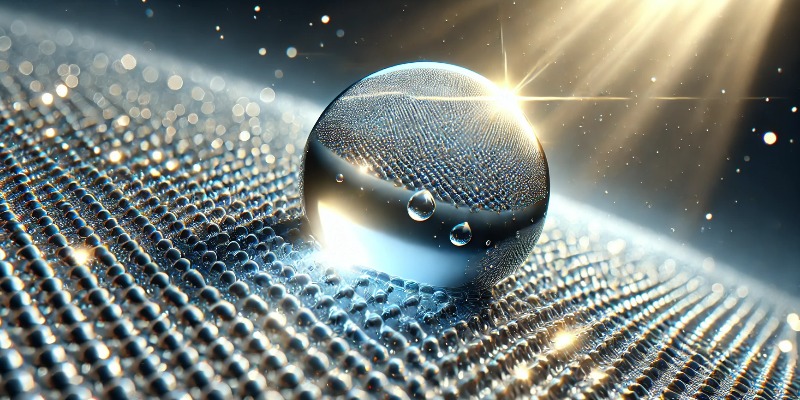
Hydrophobic polymers are materials that repel water due to their particular chemical structure. This property is manifested when water molecules, instead of adhering to the material's surface, form spherical droplets that slide off.
The effectiveness of this repulsion is measured by the contact angle between the water droplet and the surface: an angle greater than 90° is indicative of a hydrophobic material. This phenomenon is particularly important for applications where it is essential to keep surfaces dry and clean, reducing moisture formation and the adhesion of unwanted particles.
Superhydrophobic polymers push this ability even further. These materials have contact angles greater than 150°, meaning that water is not only repelled but practically "bounces" off the surface.
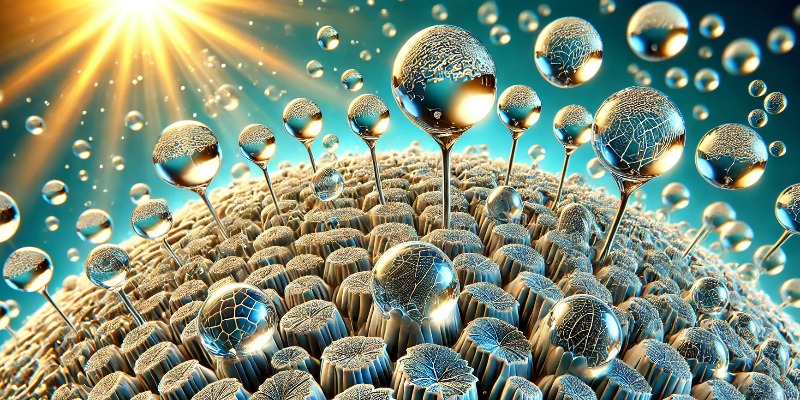
This phenomenon, often inspired by nature (for example, the lotus effect), results from the combination of surface microstructures and specific chemical characteristics.
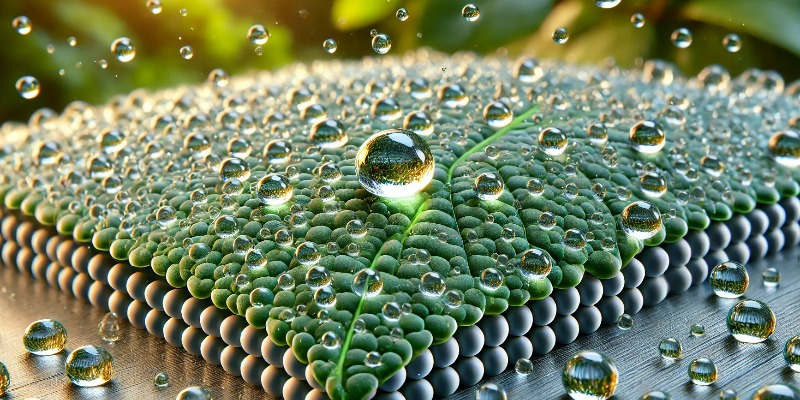
The lotus effect can be observed in nature on the leaves of the lotus plant, which, thanks to a combination of roughness and waxy composition, manage to keep the surface dry and free from impurities.
This principle has been emulated in the design of superhydrophobic polymeric materials for various applications.
Technologies and Innovations in Polymeric Coatings
The production of hydrophobic and superhydrophobic coatings utilizes several advanced techniques, including:
Thin Film Deposition: This technique allows the application of a thin layer of polymer on a surface. Fluorinated polymers, such as polytetrafluoroethylene (PTFE), are commonly used due to their excellent hydrophobic properties.
Using physical vapor deposition (PVD) and chemical vapor deposition (CVD) methods, it is possible to obtain uniform thin layers that offer high water resistance. The use of these thin films allows control over the thickness and composition of the coating, achieving high-performance surfaces in terms of hydrophobicity and durability.
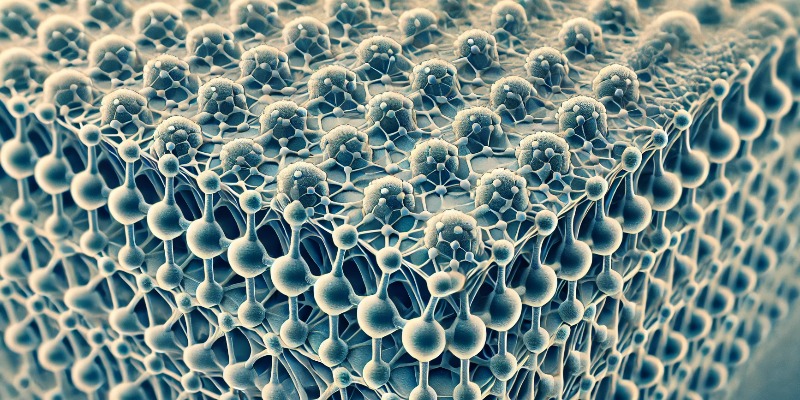
Surface Nanostructuring: Creating roughness at the nanometric level is crucial to achieving high superhydrophobicity. Nanostructures trap air between the surface and the water droplet, reducing contact and enhancing the hydrophobic effect.
Techniques such as laser etching and electrospinning are frequently used to create this surface structure. Laser etching allows for the creation of specific micro and nano-patterns that mimic natural surfaces, while electrospinning can be used to produce very fine fibers that increase surface roughness.
These nanostructuring methods are often combined to maximize the superhydrophobic effect and ensure greater coating stability.
Low Surface Energy Polymers: The chemistry of polymers plays a fundamental role in hydrophobicity. Polymers such as polydimethylsiloxane (PDMS) have low surface energy, which facilitates the formation of water droplets that easily slide off the treated surface.
This type of polymer is often combined with nanostructuring techniques to achieve a more effective superhydrophobic effect. The low surface energy reduces the tendency of water to spread over the surface, which is particularly useful in applications where contact with liquids must be limited.
Applications of Hydrophobic and Superhydrophobic Coatings
The applications of hydrophobic and superhydrophobic polymeric coatings are becoming more widespread, thanks to their waterproofing and self-cleaning properties. These coatings not only improve the aesthetic appearance of surfaces but also offer significant functional benefits:
Textile Industry: Fabrics treated with superhydrophobic coatings repel liquids and dirt, making them ideal for technical and sportswear.
These fabrics not only keep the user dry but also reduce the need for frequent washing, with a positive impact on the environment. For example, waterproof jackets and trekking pants with superhydrophobic coatings can maintain their performance in extreme weather conditions, improving user comfort and reducing fabric wear.
This technology also has significant implications in the medical sector, where hydrophobic textile materials can help prevent contamination and improve safety.
Construction Sector: Coating construction materials such as concrete and glass with hydrophobic coatings helps protect surfaces from moisture and degradation.
Building facades treated with these materials maintain a clean appearance over time, reducing maintenance costs. Additionally, these coatings can prevent the formation of mold and lichen, extending the durability of structures.
Construction materials treated with superhydrophobic coatings can also improve frost resistance, preventing damage caused by water penetrating cracks and expanding during freezing. In this way, greater durability of buildings in environments subject to adverse weather conditions is guaranteed.
Automotive and Aerospace: In the automotive industry, hydrophobic coatings are used to improve windshield visibility and reduce the accumulation of mud and dirt.
In the aerospace sector, these coatings are essential for reducing the risk of ice formation on the exterior surfaces of aircraft, improving efficiency and safety.
The use of superhydrophobic coatings on drones and unmanned aerial vehicles is being tested to reduce the weight caused by water accumulation and improve operational capabilities in adverse weather conditions.
Engine components and wing surfaces can also benefit from these coatings, improving aerodynamics and reducing the need for frequent maintenance.
Electronic Devices: Superhydrophobic coatings are also used to protect circuits and electronic components from water and moisture, ensuring greater device durability and reliability, especially in harsh environments.
This is particularly relevant for wearable electronic devices and sensors exposed to the elements, which need moisture protection to function correctly.
For example, sensors used in precision agriculture or IoT devices placed outdoors can greatly benefit from this technology, improving their robustness and reducing the need for frequent replacements.
Challenges and Future Prospects
Despite significant technological advances, the production of durable superhydrophobic coatings still presents some challenges.
The main challenge is long-term stability: many coatings lose their hydrophobic effectiveness due to mechanical wear or exposure to harsh environmental conditions. This loss of effectiveness limits the longevity and applicability of the coatings in many industrial contexts.
Current research focuses on methods to improve the mechanical resistance and durability of these coatings.
One of the most promising strategies is to use composite materials and combine polymers with inorganic nanoparticles. Nanoparticles can improve abrasion resistance and thermal stability, making the coating more durable even under intensive use conditions.
Furthermore, nature-inspired research, drawing from phenomena such as butterfly wings or fish skin, is leading to the development of new surfaces that combine self-cleaning, anti-freezing, and antibacterial properties.
These multifunctional surfaces could pave the way for a new generation of intelligent coatings capable of adapting to environmental conditions and providing tailored protection.
Another promising research direction involves using eco-friendly materials for the production of hydrophobic coatings. Growing attention to the environment drives researchers to develop polymers and synthesis methods that are less harmful to the ecosystem while maintaining desired performance.
This could lead to sustainable solutions that reduce environmental impact without compromising material performance.
Conclusions
Hydrophobic and superhydrophobic polymers represent an innovation of great interest in the field of advanced materials. The ability to make surfaces waterproof and self-cleaning opens up new possibilities in numerous industrial sectors, from textile production to the aerospace industry.
Despite challenges related to coating durability and resistance, future prospects are promising, thanks to the continuous evolution of technologies and an increasingly bio-inspired approach.
The combination of innovative solutions to improve durability and environmental sustainability will help make these coatings increasingly accessible and versatile, promoting their large-scale adoption.
The adoption of hydrophobic and superhydrophobic materials in industrial settings could also revolutionize surface maintenance, reducing the need for periodic interventions and improving operational efficiency.
With the continuous progress of nanostructuring techniques and the integration of new materials, we expect these coatings to become increasingly sophisticated, offering not only hydrophobic properties but also chemical resistance, UV protection, and self-repair capabilities. This wide range of functionalities will transform how we conceive surfaces, making them increasingly adaptable and high-performing.
© Reproduction Prohibited
Sources
Barthlott, W., & Neinhuis, C. (1997). Purity of the sacred lotus, or escape from contamination in biological surfaces. Planta, 202(1), 1-8.
Marmur, A. (2004). The lotus effect: Superhydrophobicity and metastability. Langmuir, 20(9), 3517-3519.
Gao, L., & McCarthy, T. J. (2006). Contact angle hysteresis explained. Langmuir, 22(14), 6234-6237.
Nosonovsky, M., & Bhushan, B. (2007). Hierarchical roughness and wetting of engineering surfaces. Microsystem Technologies, 13(3-4), 357-364.
Zhang, X., Shi, F., Niu, J., Jiang, Y., & Wang, Z. (2008). Superhydrophobic surfaces: From structural control to functional application. Journal of Materials Chemistry, 18(6), 621-633.