






- Importance of Energy Efficiency in Plastic Processing
- Consumption Analysis in Extrusion and Blowing Plants
- Technologies for Efficient Drives and Motors
- Energy Optimization of Heating Systems
- Efficiency Strategies in Cooling Systems
- Reduction of consumption in auxiliary systems (air, vacuum)
- Process Parameters Optimization
- Recovery and Reuse of Waste Heat
Advanced Techniques and Technologies to Reduce Operating Costs and Environmental Impact in Plastic Processing Plants
by Marco Arezio
The plastic processing industry, a fundamental pillar of numerous manufacturing sectors, relies heavily on energy-intensive processes such as extrusion and blow molding.
In an increasingly competitive global economic context, characterized by growing sensitivity towards environmental issues, the optimization of energy consumption is no longer merely an opportunity for savings, but becomes a strategic imperative to guarantee the economic and environmental sustainability of production plants.
Analyzing and intervening on energy flows is essential to mitigate significant operating costs and reduce the ecological footprint associated with these processes.
The Energy Requirement: A Critical Overview
To fully understand the potential for efficiency, it is fundamental to outline the typical energy consumption landscape of an extrusion or blow molding plant.
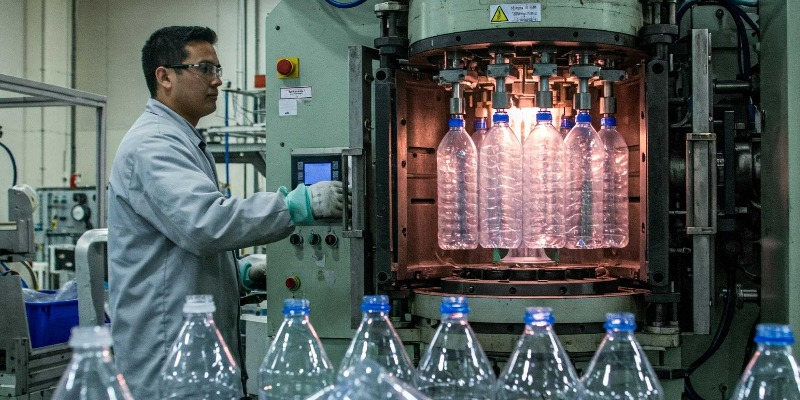
The main areas where energy is used and, consequently, potentially dispersed, are multiple and interconnected. At the center are the electric motor drives that power the extruder screws, hydraulic pumps, transport systems, and other mechanical components vital to the process. These motors often represent the predominant share of total consumption.
Another critical area is heating. Thermal energy is indispensable to bring the polymer raw material to the optimal processing temperature, maintaining precise thermal conditions along the extruder barrel, in the extrusion dies, molds, and accumulators. This thermal input is typically guaranteed by electric resistances, whose management significantly affects overall efficiency.
Parallel to heating, cooling plays a not insignificant energetic role. It is necessary to dissipate the heat generated by the process to solidify the extruded or blown material, control the temperature of the molds, cool the oil of the hydraulic systems, and keep the electronic equipment operational. These cooling processes, often based on water or air circulation, involve energy expenditure for the operation of pumps, fans, and chillers.
Finally, the auxiliary systems that support the plant's operations cannot be overlooked. Air compressors (indispensable in the blow molding process and for other pneumatic functions), vacuum pumps, material feeding and transport systems further contribute to the overall energy load. In machines that employ hydraulic systems, the efficiency of pumps and valves has a direct impact on consumption, especially if not adequately sized and controlled.
Precisely identifying and quantifying the energy absorbed by each of these areas through targeted energy audits and the implementation of real-time consumption monitoring systems constitutes the essential starting point for outlining an effective efficiency strategy.
A Holistic Approach to Efficiency: Key Techniques and Technologies
Energy optimization in extrusion and blow molding plants requires a multifaceted approach, integrating the adoption of advanced technologies with the implementation of best operating practices.
The core of efficiency often lies in optimizing drives and motors. Replacing obsolete or low-efficiency electric motors with units complying with the highest standards (IE3, IE4 classes and beyond) inherently guarantees lower power absorption thanks to minimized internal losses. However, the most significant impact is achieved with the integration of Variable Speed Drives (VSDs).
These devices allow for precise modulation of motor speed based on the actual load and the real needs of the process. This is particularly advantageous for main drives such as extruder screws or hydraulic pumps, which often operate at partial load. By avoiding excessive fixed-speed operation, VSDs enable substantial energy savings, proportional to the speed reduction required by the process.
As for heating systems, technological evolution offers decidedly more efficient solutions than in the past. The use of ceramic band heaters or, even better, induction heaters, allows for a more direct and efficient heat transfer to the extruder barrel or molds, drastically reducing thermal dispersion.
Induction heaters, in particular, by heating the barrel through induced currents, offer much more reactive and precise thermal control, minimizing heating and stabilization times and dispersion. As a complement, adequate thermal insulation of barrels, dies, and molds is indispensable.
The use of custom-designed insulating covers, made with high-performance materials, can significantly reduce heat losses to the surrounding environment, decreasing the energy needed to maintain processing temperatures.
Cooling systems also present significant margins for efficiency improvement. A more granular and localized control of cooling fluids, regulating flows and temperatures only where and when strictly necessary, avoids energy waste.
Advanced control systems can monitor temperatures in real-time and dynamically adapt the cooling intensity. The adoption of adiabatic or closed-loop cooling systems can also lead to water and energy savings. Closed-loop systems, in particular, minimize the need for water replenishment and the associated treatment costs, reducing the energy used for its movement and refrigeration.
Considering auxiliary systems, the efficiency of air compressors in blow molding is crucial. Investing in high-efficiency air compressors, optimizing operating pressure, and implementing rigorous maintenance programs to identify and repair leaks in the distribution network are high-return actions.
Furthermore, the heat generated by compressors can be recovered and reused for other purposes, such as heating water or environments, transforming an energy loss into a resource. Similarly, vacuum pumps, if present, should be selected for their efficiency and managed to operate only when needed.
Process optimization itself offers further opportunities for savings. An extruder screw design optimized for the specific polymer and final product maximizes the mechanical work imparted to the material, reducing dependence on external electrical thermal input for plasticization.
The implementation of advanced control systems based on predictive or adaptive algorithms allows for dynamic management of process parameters (temperatures, screw speed, pressures) to achieve the desired quality with minimum energy expenditure. Reducing production waste and optimizing startup and changeover procedures minimizes downtime and the amount of wasted material and energy.
Finally, waste heat recovery represents a powerful strategy to valorize otherwise dissipated energy. Residual heat from the extruder barrel, hydraulic systems, or air compressors can be effectively captured through dedicated heat exchangers and reused to preheat incoming raw material, for process water heating, or even for building heating. This not only reduces the need for primary energy but also contributes to greater integration and circularity of energy flows within the plant.
Implementation and Multiple Advantages
Embarking on a path towards greater energy efficiency requires thorough analysis and careful planning. A phased approach, starting with interventions with the quickest return on investment (such as VSD installation or thermal insulation), can facilitate the initiation of the process, gradually extending to more complex actions.
The benefits deriving from an increase in energy efficiency are multiple and extend beyond simple cost reduction:
- Reduced operating costs: The most immediate and tangible benefit is the significant decrease in energy expenses, which positively impacts profit margins.
- Increased competitiveness: Lower production costs allow companies to position themselves more aggressively in the market.
- Improved sustainability: Reduced energy consumption leads to lower greenhouse gas emissions and a smaller environmental footprint, responding to growing regulatory and social expectations.
- Increased productivity: Processes optimized for efficiency also tend to be more stable and performant, reducing machine downtime and increasing overall production capacity.
- Longer equipment life: More controlled operation and optimally managed temperatures reduce thermal and mechanical stress on components, extending their lifespan and reducing maintenance costs.
Concluding Remarks
In conclusion, energy efficiency in extrusion and blow molding plants is no longer an optional goal but an essential component of modern and responsible industrial management.
Through a deep understanding of consumption patterns, the targeted adoption of cutting-edge technologies such as VSDs, high-efficiency motors, advanced heating systems, effective thermal insulation, and the implementation of process optimization and heat recovery strategies, companies can achieve significant savings, improve their sustainability, and strengthen their position in the global market.
Investing in energy efficiency means not only cutting costs but also building a more resilient and sustainable future for the plastic industry. Continuous analysis, technological innovation, and commitment to continuous improvement are the fundamental levers to unlock the full potential of efficiency in this vital sector.
© Reproduction Forbidden