- Recycled plastic film: technical evolution of flexible packaging
- Recycled polymers for films and bags: LDPE, LLDPE, HDPE and PP
- Quality and variability of recycled granules in flexible packaging
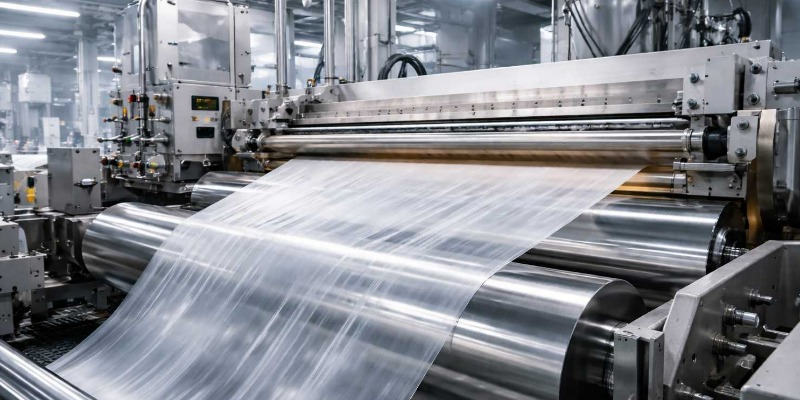
- Extrusion of recycled plastic film: blown film and cast film
- Production recipes and formulations for recycled films and bags
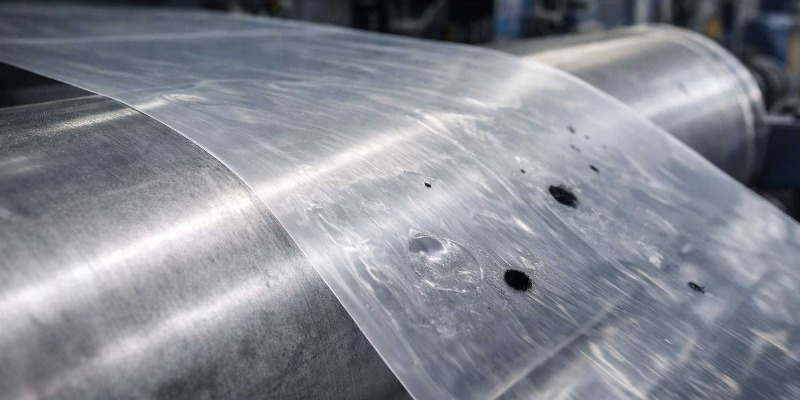
- Defects of recycled plastic film and process solutions
- Recycled flexible packaging: European regulations, PCR and MOCA
- Industrial applications and market for flexible packaging made from recycled plastic
Professional guide to films, bags, recycled polymers, production processes, and European regulations
In recent years, the flexible packaging sector has undergone a profound transformation, the true extent of which is often underestimated. The structural introduction of recycled polymers into plastic films was not simply a product line update or a formal adjustment to market demands, but a technical and industrial shift that directly impacted the processes, skills, and responsibilities of the entire supply chain. This is the context in which the manual "Recycled Plastic Film – Inside the World of Bags and Regenerated Packaging" was born, a text designed for those who work daily with the material, machinery, and real-world constraints of industrial production.
This manual isn't intended to abstractly describe recycling, nor to simplify a reality that, by its very nature, is complex. It stems from a concrete observation: today, producing recycled plastic film and bags requires more advanced skills than in the past, a greater ability to interpret the material, and an integrated vision that encompasses polymers, process, quality, regulations, and end-use applications. Recycled material isn't an "alternative" raw material to virgin material, but a material with its own logic, which must be understood and governed.
The technical publishing landscape lacked a text that systematically addressed the entire recycled plastic flexible packaging supply chain, beyond focusing on isolated aspects. This manual fills this gap by offering a coherent path that guides the reader from understanding the industrial and regulatory context to final applications, through an in-depth analysis of recycled polymers, processing technologies, and the most common operational issues.
One of the book's distinctive features is its decidedly industrial approach. It is neither an academic text nor an introductory guide for beginners, but a working tool for industry professionals. Each chapter is designed to answer concrete questions: why does recycled film become unstable when blown, why does a seal fail despite seemingly correct parameters, why does material variability so significantly impact the performance of the finished bag? The answers are never simplified, but are traced back to precise, understandable, and replicable technical causes.
The manual provides a detailed overview of the main recycled polymers used in flexible packaging—LDPE, LLDPE, HDPE, and PP —analyzing their origins, actual properties, and implications for processing. It goes beyond simply describing the material "in theory," but explores its extrusion behavior, the critical issues related to waste history, the impact of residual additives, and the management of batch-to-batch variability. This approach allows the reader to develop a material-reading skill that goes beyond technical data sheets.
Considerable space is devoted to plastic film processing technologies, with an in-depth analysis of blown and flat extrusion, dosing and mixing systems, filtration, and deodorization. These chapters are designed for those who work on production lines and must make daily decisions under non-ideal conditions, typical of recycled materials. The book does not offer "universal recipes," but provides conceptual tools for interpreting process behavior and making informed decisions.
Another core value of the manual is the focus on film and bag design as a functional system. Single- and multi-layer structures, production recipes, common defects, and film characterization methods are treated as interconnected elements. The bag is not viewed as a simple product, but as the point where all upstream decisions converge: material, process, additives, and operating conditions. This approach is particularly useful for those working on technically demanding applications or those subject to stringent regulatory requirements.
The manual also pays specific attention to the regulatory context, with chapters addressing the circular economy, European directives, recycled content targets (PCR), and MOCA regulations for food contact. These topics are not treated as a simple list of requirements, but as factors that directly influence technical and production choices. Understanding the regulatory framework means avoiding design errors and building truly sustainable and compliant industrial solutions.
From a market perspective, the book offers a clear understanding of the international dynamics of flexible recycled plastic packaging . Market and application analysis allows us to place technical choices within a real economic context, avoiding ideological or purely communicative approaches. Recycled materials are returned to their industrial dimension: a strategic resource, but not without limitations, requiring expertise and method.
This manual is designed to be used over time. It's not a one-time read, but a practical reference to consult when process issues, design concerns, or internal training needs arise. It's a useful tool for production managers, process technicians, quality managers, recyclers, compounders, and technical sales representatives who must communicate with increasingly demanding and informed customers.
Purchasing this manual means equipping yourself with a technical roadmap to navigate a rapidly changing industry. In a context where recycling is becoming a structural requirement rather than an option, the competitive advantage will not be based solely on the availability of material, but on the ability to transform it reliably and consistently. This book was created with precisely this goal: to transform the complexity of flexible recycled plastic packaging into operational knowledge.
The manual "Recycled Plastic Film – Inside the world of bags and regenerated packaging" is available on Amazon and is designed for those who want to go beyond simplifications and work with recycled materials with expertise, method, and industrial vision.