




- What is polyacrylamide and what are its chemical characteristics?
- Industrial production process of polyacrylamide
- Polyacrylamide and functional polymers: applications and advantages
- Use of polyacrylamide in the paper industry
- Role of polyacrylamide in modern textile industry
- Innovations in polyacrylamide modification for industrial uses
- Challenges and prospects in polyacrylamide recycling
- Sustainability and environmental regulation of polyacrylamide
From Chemical Synthesis to Industrial Applications and Sustainability Challenges: A Journey into Polyacrylamide between Innovation and Circularity
by Marco Arezio
Polyacrylamide is one of the most versatile and widely studied synthetic polymers of recent decades.
Produced from acrylamide, this substance has found widespread use in strategic sectors such as advanced polymer industry, paper manufacturing, and textiles. Its industrial history is closely linked to the search for increasingly high-performance materials, capable of meeting the demands of modern production without neglecting environmental issues related to sustainability and recycling.
In this article, we will explore what polyacrylamide is, how it is produced, its most important applications in the polymer, paper, and textile sectors, and we will address the current challenges of its recycling from a circular economy perspective.
What is Polyacrylamide?
Polyacrylamide (PAM) is a water-soluble synthetic polymer obtained by the polymerization of acrylamide (CH₂=CHCONH₂), an organic compound derived from petrochemical processes. Its basic structure consists of a long chain of repetitive acrylamide units, with the possibility of modifying its chemical composition through copolymerization or variations in the lateral functional groups. This allows for a wide range of products, each with specific properties such as ionic charge, molecular weight, and water absorption capacity.
One of the key features of polyacrylamide is its functional versatility: it can be produced in anionic, cationic, or neutral forms, depending on the intended application. This makes PAM extremely useful as an industrial additive, rheology modifier, flocculant, or binder.
How is Polyacrylamide Produced
The production of polyacrylamide begins with the synthesis of acrylamide, which can be obtained through catalytic hydration of acrylonitrile or through more sustainable enzymatic processes developed in recent years. The polymerization of acrylamide is then carried out in aqueous solution, using radical initiators (such as ammonium persulfate), and can be controlled to obtain different molecular weights and degrees of branching.
The main production phases include:
- Synthesis of acrylamide – via catalytic hydration of acrylonitrile, a process traditionally conducted on a large scale in the petrochemical industry.
- Radical polymerization – acrylamide is subjected to polymerization in solution, suspension, or emulsion, in the presence of initiators, to produce long, linear, or cross-linked polymer chains.
- Chemical modification (copolymerization or functionalization) – PAM can be modified during or after synthesis by adding ionic groups, functional molecules, or cross-linking agents to tailor its properties (for example, to increase affinity for specific ions or adjust viscosity).
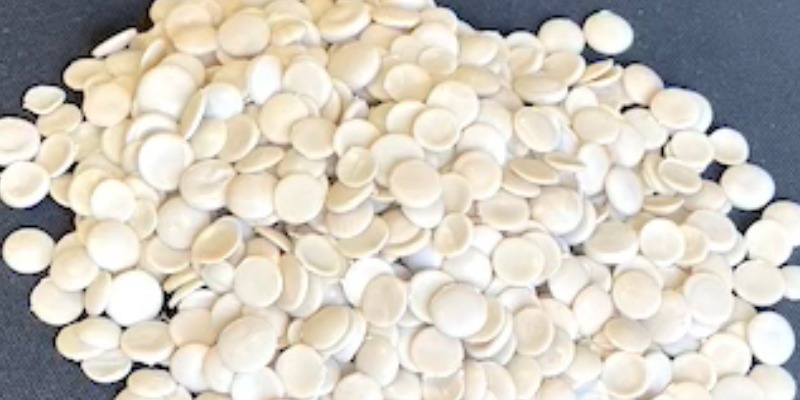
- Formulation of the final product – polyacrylamide is dried or packaged as a powder, beads, or concentrated solution.
Continuous improvements in production processes aim to reduce the presence of residual acrylamide monomer, a toxic and potentially carcinogenic substance, thereby increasing the safety and sustainability profiles of finished products, especially for applications involving contact with food or people.
Applications of Polyacrylamide in Polymers, Paper, and Textiles
Polymer Sector
In the world of polymers, polyacrylamide is used both as a raw material for the production of advanced copolymers and as a functional additive. For example, copolymerization with other monomers (such as acrylic acid, acrylonitrile, diallyldimethylammonium chloride) allows for the creation of polymers with specific properties: greater hydrophilicity, surface charge, chemical reactivity, or thermal resistance.
These copolymers are used in various applications, including:
- Superabsorbent hydrogels (e.g., medical and hygiene sector): thanks to PAM’s ability to absorb large quantities of water and swell without dissolving.
- Rheological additives and viscosity control agents: in paints, adhesives, drilling fluids, and personal care products.
- Supports for chemical synthesis: as cross-linkers in resins or matrices for the separation of biomolecules in biochemical and biotechnology laboratories (polyacrylamide gel electrophoresis).
Paper Industry
In the paper industry, polyacrylamide is one of the most widely used additives to improve productivity and paper quality. It is employed as:
- Retention agent: promotes the retention of fine fibers and fillers, reducing losses and increasing the yield of raw materials.
- Drainage agent: accelerates water removal during sheet formation, optimizing production times and reducing energy consumption.
- Mechanical properties enhancer: cationic polyacrylamide binds to cellulose fibers, increasing both the dry and wet strength of paper, as well as improving surface quality and printability.
The use of PAM has enabled paper mills to become more efficient, lower operational costs, and reduce environmental impact by decreasing water consumption and the emission of residual sludge.
Textile Sector
In the textile sector, polyacrylamide is mainly used as a thickener and binder in printing pastes and as an auxiliary in the treatment of wastewater generated by dyeing and finishing processes.
The main functions include:
- Thickener for printing pastes: improves the precision and definition of designs on fabric due to its ability to increase the viscosity of pastes without interfering with dyes.
- Binder for fibers and pigments: promotes the adhesion of pigments or additives to fibers during printing or surface treatment stages.
- Flocculant in purification treatments: allows for the effective removal of pollutants and suspended particles in wastewater, facilitating water recycling in textile processes.
The result is improved final textile product quality, reduced consumption of raw materials, and greater sustainability of the production cycle.
Recycling and Sustainability of Polyacrylamide
The issue of polyacrylamide recycling is complex and the subject of ongoing scientific research. As a highly stable and poorly biodegradable synthetic polymer, PAM does not easily lend itself to traditional mechanical or chemical recycling methods as do other more common polymers (such as PET). Nevertheless, studies are underway to find innovative solutions that minimize its environmental impact.
The main strategies currently being examined are:
- Recovery and reuse in industrial processes: in the paper and textile industries, sludges and residues containing PAM are partially recovered and reused as additives in other stages of the production process or as conditioners for sludge dewatering.
- Advanced degradation: research is focusing on catalytic degradation technologies, advanced oxidation (UV, ozone, hydrogen peroxide), and biological methods using engineered microorganisms capable of attacking the polymer chain, although on an industrial scale these processes are still limited.
- Development of biodegradable polyacrylamides: some companies are investing in the synthesis of copolymers with biodegradable segments or biopolymers that can replicate PAM’s functions but offer greater end-of-life sustainability.
From a regulatory standpoint, the management of waste containing polyacrylamide is governed at European and national levels, with particular attention to minimizing residual monomer content and implementing safe recovery and disposal systems.
Conclusions
Polyacrylamide is a key element in polymer chemistry and modern industrial applications, especially in the fields of functional polymers, paper, and textiles. Its ability to optimize production processes, enhance material properties, and facilitate water treatment makes it a valuable ally for sustainable production.
However, challenges related to recycling and environmental sustainability require close attention to the development of new solutions to close the life cycle of these polymers and reduce the environmental impact of industrial processes.
© All Rights Reserved