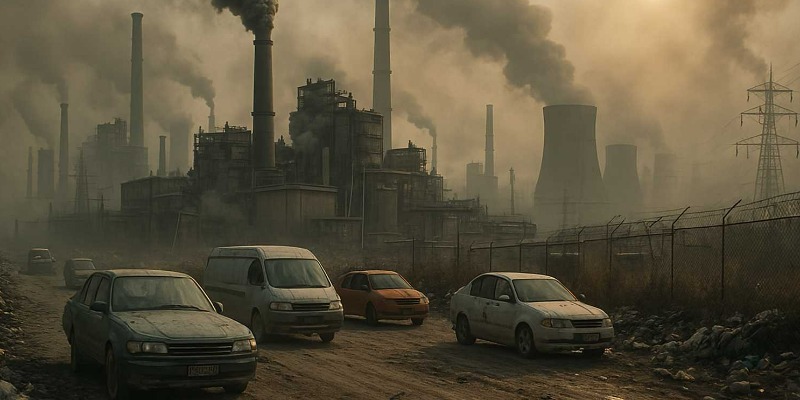
- Rainwater: An Increasingly Contaminated Resource
- The Main Pollutants in Rainwater
- PFAS and Other Toxic Substances: A Global Threat
- The Effects of Rainwater Pollution on Human Health
- Impacts on Animals and Aquatic Ecosystems
- Acid Rain and Its Impact on Vegetation
- Most Affected Countries and Less Polluted Areas: A Risk Map
- Solutions to Reduce Pollution and Protect Water Resources
Dangerous chemicals, such as PFAS, contaminate rainwater worldwide, threatening ecosystems, animals, and human health
By Marco Arezio
Rainwater, a fundamental resource in Earth's hydrological cycle, has experienced increasing pollution in recent decades due to the presence of persistent chemical substances.
This phenomenon is not limited to industrialized areas but extends globally, including remote regions like Antarctica and Tibet.
The pollutants found in rainwater are raising concerns, not only for the environment but also for human and animal health.
Let’s take a closer look at these substances, their impacts on ecosystems, and the potential solutions to mitigate the problem.
Main pollutants in rainwater
Among the pollutants detected in rainwater at concerning levels are PFAS (perfluoroalkyl substances), a group of highly persistent chemical compounds resistant to environmental degradation.
PFAS are used in a wide range of industrial and consumer applications, such as firefighting foams, waterproof coatings, and chemicals for textiles and food packaging.
Other common pollutants in rainwater include:
Sulfur dioxide (SO2) and nitrogen oxides (NOx): These compounds, primarily derived from fossil fuel combustion, react with moisture in the atmosphere to form acids, leading to acid rain that alters the pH of water and soil.
Heavy metals: Substances like mercury, lead, and cadmium are released into the atmosphere from industrial and mining activities. These metals can accumulate in water bodies, posing a risk to the food chain.
Volatile organic compounds (VOCs): Produced by industrial solvents and vehicle emissions, these compounds can contribute to air pollution and contaminate water sources.
Particulate matter: Fine particles (PM10 and PM2.5) carried by the air can bind to rainwater, bringing along a range of chemicals and metals.
Impacts on ecosystems and human health
The consequences of rainwater pollution are widespread and complex, directly affecting human, animal, and plant health.
On humans
Long-term exposure to PFAS and other toxic chemicals through contaminated drinking water can lead to severe health problems.
Studies suggest that PFAS are linked to diseases such as cancer, liver disorders, immune system disruptions, and hormonal imbalances. Additionally, heavy metals and VOCs can damage the nervous system and kidneys, as well as cause respiratory issues.
On animals
Rainwater contamination can have devastating effects on aquatic and terrestrial wildlife.
Animals exposed to PFAS may experience reproductive alterations, decreased fertility, and increased risk of disease. Furthermore, the accumulation of heavy metals in water bodies can disrupt the food chain, endangering top predators.
On plants
Acid rain, primarily caused by sulfur dioxide and nitrogen oxides, can alter soil pH, reducing the availability of essential nutrients for plants.
This can lead to reduced plant growth and the death of sensitive species, with severe consequences for forest and agricultural ecosystems.
Countries with more and fewer rainwater pollutants
The distribution of rainwater pollutants varies significantly from region to region.
Industrialized and densely populated areas tend to have the highest levels of contamination, while remote and less developed regions show lower concentrations.Areas with high pollution levels: Countries like the United States, China, and India, characterized by intense industrial activity and high fossil fuel use, show elevated concentrations of PFAS, heavy metals, and other chemicals in rainwater. European cities with heavy urban traffic and industrialization are also significantly affected.
Areas with lower pollution levels: Remote regions such as Antarctica, the Arctic, and the mountainous areas of Tibet and the Andes have traditionally shown low levels of contamination. However, even in these regions, traces of substances like PFAS have been detected, demonstrating the global spread of these chemical pollutants.
Solutions to address the problem
Reducing rainwater pollution requires a multidimensional approach involving stringent environmental policies, technological innovations, and increased public awareness.
Regulation and control of chemical substances: Many countries have begun limiting the use of toxic substances like PFAS, but global commitment is needed to gradually phase out the use of these compounds. Additionally, it is crucial to improve monitoring systems to identify and reduce pollution sources.
Filtration technologies: The development of advanced technologies for rainwater purification, such as activated carbon filters and reverse osmosis membranes, can help remove many of the toxic substances before the water is used for drinking purposes.
Environmental restoration: Remediation of contaminated soils and water bodies, along with reforestation, can help reduce the long-term impact of pollutants. The use of phytoremediation plants capable of absorbing heavy metals offers an ecological solution for ecosystem restoration.
Protecting groundwater: prevention and management
The protection of groundwater, the main source of freshwater for human consumption, is an absolute priority. Groundwater contamination, often irreversible, poses a threat to millions of people.
Land management: Sustainable land management practices, such as limiting the use of chemical pesticides and fertilizers in agriculture and promoting natural soil conservation solutions, are essential.
Protection of recharge areas: Areas where rainwater recharges groundwater supplies must be protected from industrial, agricultural, and urban activities that could introduce pollutants. This may include the creation of buffer zones and regulation of land use near aquifers.
Education and awareness: Informing the public and key stakeholders about the importance of protecting groundwater is essential to promote responsible behaviors at both individual and collective levels.
Conclusion
Rainwater pollution represents a complex and widespread challenge that requires global and integrated solutions.
Collaboration between governments, businesses, and citizens is essential to protect water resources and ensure a sustainable future for generations to come.