- What is Love Canal: from the origins to the failed project
- How Love Canal Became a Chemical Dump
- The first signs of contamination and health alarm
- Citizens' struggle and the decisive role of Lois Gibbs
- Love Canal Evacuation: Government Decisions
- The Birth of Superfund and the Legislative Response
- Long-term consequences for health and environment
- Love Canal Today: Legacy and Lessons for the Future
Title: The Story of Love Canal, the Residential Neighborhood in Niagara Falls Contaminated by Chemical Waste in the 1970s
by Marco Arezio
By the late 1970s, one of the most disturbing environmental disasters of the century emerged in the United States: Love Canal, a quiet residential neighborhood in Niagara Falls, New York, became a symbol of environmental catastrophe caused by industrial chemical waste.
The public investigation into the contamination marked a turning point in U.S. legislation on hazardous waste management and shed light on the long-term impacts of industrial pollution on communities.
This article examines the history of Love Canal, the responsible parties, the consequences for public health, and the fundamental role the case played in shaping modern environmental policies.
Origins: From Industrial Dream to Disaster
Love Canal was named after William T. Love, a visionary entrepreneur who, in the late 19th century, planned to build a navigable canal linking the Niagara River to Lake Ontario. The ambitious but poorly managed project was abandoned after a few years, leaving behind a large, unfinished excavation. In the 1940s and 1950s, what remained of this industrial dream was repurposed as a chemical waste dump by the Hooker Chemical Company (later acquired by Occidental Petroleum).
Over the course of a decade, the company buried over 21,000 tons of toxic substances, sealing them with a thick clay barrier. In 1953, the land was sold to the local school board for one dollar. The site was considered "safe" until the 1970s, when the first signs of contamination became apparent.
Warning Signs: Compromised Health and a Poisoned Environment
In the early 1970s, residents of Love Canal began noticing nauseating odors, oily residues surfacing from the ground, and unexplained environmental changes: dying trees, sick pets, and children with skin rashes and respiratory issues. Soon, residents reported a sharp increase in miscarriages, birth defects, and cancers.
Lois Gibbs, a mother of two and neighborhood resident, became the face of the public protest. She collected early evidence, engaged the media, and organized the community to demand government action. Thanks to her tireless efforts, it was discovered that underground barrels of chemical waste were contaminating groundwater and homes above.
Government Intervention and Evacuation
In 1978, under growing public pressure and overwhelming evidence of a health crisis, New York Governor Hugh Carey declared a state of emergency. Shortly thereafter, President Jimmy Carter signed an executive order that led to the evacuation of over 800 families. Love Canal was officially recognized as a toxic waste disaster zone.
Evacuation and remediation operations took years and cost hundreds of millions of dollars. The disaster led to the creation of the Superfund in 1980—a federal program designed to finance the cleanup of contaminated sites and hold polluting companies accountable.
The Legacy of Love Canal: Consequences and Lessons Learned
Love Canal marked a turning point in American environmental awareness. For the first time, an entire community realized it had unknowingly been exposed to industrial toxic waste, and the public learned the dangers of lacking transparency in waste management.
Key outcomes of the case include:
- The passage of the Comprehensive Environmental Response, Compensation, and Liability Act (CERCLA) in 1980
- The creation of thousands of grassroots citizen committees across the country
- A surge in epidemiological studies on long-term exposure to industrial pollutants
- The inclusion of environmental justice in the U.S. political agenda
Love Canal Today: Memory and Warning
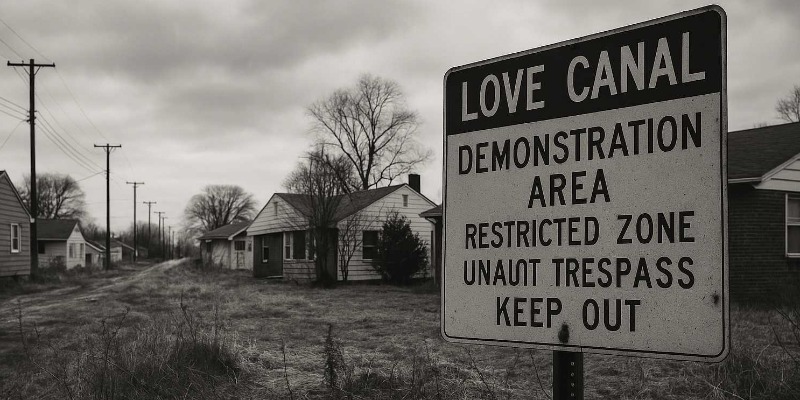
Today, part of the Love Canal area has been remediated and renamed Black Creek Village, but access remains partially restricted. The site continues to stand as a symbol of a past that cannot be forgotten. The victims of the contamination have never received full compensation, and many health impacts are still under study.
The case remains a focus in academic, legal, and environmental research, serving as a paradigm of how irresponsible industrial waste management can endanger human life and the ecosystem.
Conclusion
The Love Canal environmental disaster reminds us that pollution is not an abstract issue, but a real threat that can infiltrate our homes, harm our families, and endanger our future. The case catalyzed significant legislative and cultural shifts, paving the way for greater corporate accountability and citizen engagement.
Even today, Love Canal is a powerful warning about the urgency of environmental transparency, prevention, and sustainability—not only in the U.S., but worldwide.
© Reproduction Prohibited