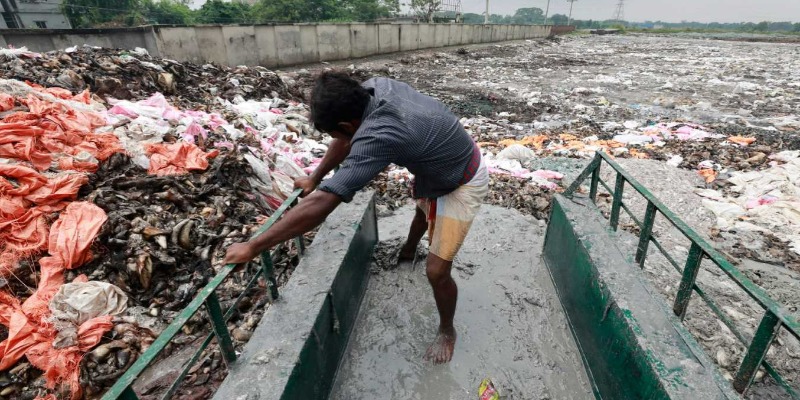







- Reducing Methane Emissions in Landfills to Combat Climate Change
- The Impact of Landfill Methane on Climate
- Techniques for Reducing Methane Emissions
- Biogas Capture and Utilization
- Composting and Anaerobic Digestion
- Landfill Covers and Physical Barriers
- How Biological Covers Work
- Challenges and Opportunities for Reducing Emissions
- International Cooperation and Supporting Policies
- An Integrated Approach to Reducing Methane Emissions
Advanced Techniques to Reduce Methane Emissions from Landfills, Including Biogas Capture, Composting, and Biological Covers
by Marco Arezio
Methane (CH4) is a potent greenhouse gas with a global warming potential over 25 times greater than that of carbon dioxide (CO2) over a 100-year period.
Landfills are one of the major anthropogenic sources of methane worldwide, as the gas is released during the anaerobic decomposition of organic matter.
Reducing methane emissions from landfills is therefore essential to combat climate change and curb global warming.
This article delves into the available strategies for reducing methane emissions in landfills, the importance of such measures, and the challenges involved in implementing effective policies.
The Impact of Landfill Methane on Climate
Methane produced from landfills, as mentioned, is a by-product of the anaerobic decomposition process of organic matter.
Solid waste, primarily food waste and green waste, represents a constant source of methane as it decomposes.
According to estimates from the Environmental Protection Agency (EPA), landfills are responsible for about 15% of global anthropogenic methane emissions.
Methane emissions not only significantly contribute to climate change but are also associated with human health risks, such as the formation of ground-level ozone, a harmful pollutant.
In recent years, various scientific publications have highlighted the urgency of adopting measures to reduce methane emissions from landfills.
A study published in Nature Climate Change emphasized that reducing methane emissions from landfills is one of the most effective and least expensive interventions to slow global warming in the short term (Jackson et al., 2021).
Another study published in Environmental Science & Technology found that methane emissions can be drastically reduced through the implementation of gas capture and combustion technologies (Rochelle et al., 2022).
In addition to climate change impacts, methane emissions from landfills affect air quality and contribute to the formation of tropospheric ozone, a powerful pollutant that can negatively affect human health, causing respiratory and cardiovascular issues.
For these reasons, reducing methane emissions from landfills is a critical component of global strategies to improve air quality and protect public health.
Techniques for Reducing Methane Emissions
Various strategies exist to reduce methane emissions from landfills, including both technological interventions and waste management policies. The main options are explored below:
Biogas Capture and Utilization: Biogas capture technologies are among the most effective solutions for reducing methane emissions from landfills. The collected biogas can be used as a renewable energy source to produce electricity or heat.
A study published in Renewable Energy in 2023 found that biogas utilization is one of the most sustainable practices for converting methane into useful fuel, thus reducing net emissions (Smith et al., 2023).
Captured biogas can be directly used to power cogeneration plants, which simultaneously produce electricity and heat, improving the overall energy efficiency of the process.
Furthermore, biogas production from landfills can help replace fossil fuels, further reducing global greenhouse gas emissions. This approach exemplifies circular economy principles, where waste is turned into valuable resources, promoting environmental and economic sustainability.
Composting and Anaerobic Digestion: One strategy to reduce methane formation is to prevent organic waste from ending up in landfills. Composting and anaerobic digestion are alternatives that allow for the sustainable treatment of the organic fraction of waste.
Composting significantly reduces methane production, as the process occurs under aerobic conditions, favoring organic matter breakdown without methane production. The compost produced can be used as a soil amendment, improving the quality and fertility of agricultural land.
On the other hand, anaerobic digestion enables biogas production in controlled environments where methane is captured and used for energy generation.
This process is particularly suitable for high-moisture organic waste, such as food scraps. Anaerobic digestion not only reduces methane emissions but also produces digestate, a by-product that can be used as a natural fertilizer.
Landfill Covers and Physical Barriers: Advanced landfill covers can reduce methane diffusion into the atmosphere.
Specifically, biological covers offer a promising solution for methane emission reduction.
Biological covers are layers of material rich in methanotrophic microorganisms—bacteria capable of consuming methane and converting it into carbon dioxide through an oxidation process.
These microorganisms typically live in environments with sufficient oxygen availability, and their role is crucial for breaking down the methane formed within the landfill.
Biological covers can be made of materials such as compost, soil, or other organic substrates that promote the growth of methanotrophic bacteria.
When methane passes through the biological cover layer, it is oxidized into CO2, which has a much smaller impact on global warming compared to methane.
This biological oxidation process is particularly effective when the cover is designed to optimize the contact between the emitted methane and the microorganisms present.
A study published in 2024 in the Journal of Environmental Management demonstrated that using biological covers can reduce methane emissions by up to 50% compared to traditional covers, making this technology a crucial component of mitigation strategies.
Biological covers not only reduce greenhouse gas emissions but can also improve soil quality and contribute to carbon sequestration.
The effectiveness of biological covers depends on an equilibrium between methane production and the activity of oxidizing microorganisms.
The substrate used must have good permeability to allow the diffusion of oxygen and methane, thus promoting the activity of methanotrophic bacteria. Furthermore, maintaining adequate moisture in the substrate is essential for creating optimal conditions for the microorganisms.
Several studies have shown that adding specific nutrients to the substrate can enhance the activity of methanotrophic bacteria, further improving the efficiency of the oxidation process.
Biological covers represent a low-cost solution compared to active biogas capture technologies and can be applied on a large scale, even in existing landfills lacking biogas capture infrastructure.
However, the effectiveness of biological covers depends on various factors, including climatic conditions, the type of waste, and the characteristics of the substrate used. Therefore, it is essential to carefully design and manage these covers to maximize their methane mitigation potential.
Challenges and Opportunities for Emission Reduction
Despite existing technologies, reducing methane emissions from landfills presents several challenges. One of the main difficulties is the high cost of implementing biogas capture and treatment systems, especially in developing countries.
Moreover, the lack of adequate infrastructure and economic incentives can limit the widespread adoption of these solutions.
The issues related to reducing methane emissions also include the need to improve upstream waste management by reducing the amount of organic waste sent to landfills.
Separate collection and treatment of organic waste are essential to minimize methane production. However, in many areas of the world, waste collection and treatment are still insufficiently developed, limiting the effectiveness of mitigation strategies.
However, there are also significant opportunities. The growing attention toward climate change has led to increased investments in green technologies, including waste management systems.
Supportive policies, such as carbon credits and incentives for renewable energy production, can facilitate the adoption of methane capture technologies.
According to a report by the Global Methane Initiative (2023), countries that have implemented incentive policies have seen a significant reduction in methane emissions from landfills.
Additionally, international cooperation and the sharing of best practices among countries can accelerate the adoption of methane reduction technologies.
International organizations and global initiatives, such as the Global Methane Pledge, are working to raise awareness among governments and the private sector about the importance of reducing methane emissions, providing technical and financial support to implement effective solutions.
Conclusions
Reducing methane emissions from landfills represents a crucial opportunity to tackle climate change.
The adoption of biogas capture technologies, the promotion of composting and anaerobic digestion, as well as the use of advanced covers such as biological covers, can significantly reduce the climate impact of landfills.
Challenges remain considerable, but with appropriate policies and international commitment, significant progress can be made in reducing methane emissions, with immediate benefits for the climate and human health.
In conclusion, the fight against methane emissions requires an integrated approach that combines technological innovation, supportive policies, and improved waste management.
Only through coordinated and large-scale action will it be possible to effectively reduce methane emissions and contribute to mitigating climate change.
Collaboration among governments, industries, and local communities will be essential to achieving these goals and ensuring a more sustainable future for all.
© Reproduction Prohibited