






Recycled Polyamide: the second life of an iconic material
There is a material that has marked an era, that has survived wars, industrial revolutions, fashion catwalks and factory warehouses: polyamide, known to most as Nylon. Introduced to the market by DuPont de Nemours in the 1930s, this synthetic fibre has become a symbol of modernity, lightness and resistance. And yet, like all the great inventions of the last century, today it finds itself at the centre of a new challenge: that of sustainability .
It is precisely in this context that recycled polyamide takes shape and value, a material that is no longer born from oil, like its virgin progenitor, but from the intelligent recovery of industrial waste. It is a silent but significant transformation, which reflects the direction in which the materials industry is moving: not only producing, but regenerating, recovering value, closing the circle.
From waste to resource: where recycled polyamide is born
Recycled materials, if treated well, have a lot to say. And polyamide is no exception. Every day, in the mechanical, automotive, furniture sectors, and in all those supply chains where technical plastics are protagonists, waste is generated that – until a few years ago – was considered a problem to be disposed of. Today, thanks to increasingly refined technologies and a growing sensitivity towards the environment, those same wastes represent the origin of a new production cycle.
Defective pieces of a mold, sheets cut out of size, disused parts of a car dashboard or an ergonomic chair: all of this can become secondary raw material . But it is not a simple act of shredding: it is a complex process, almost artisanal in the care it requires.
Each scrap is selected, catalogued, divided by colour, chemical type, reinforcement content (such as glass or natural fibres). Only in this way can we guarantee that the material obtained – the recycled PA granule – has reliable and repeatable technical qualities.
A technical, but also cultural process
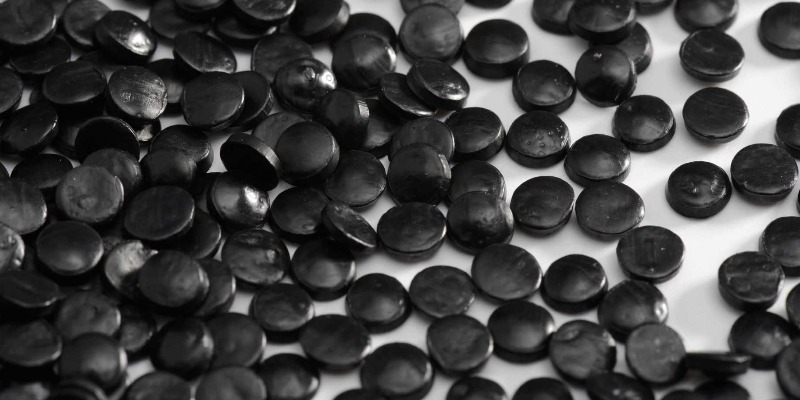
The transition from waste to recycled granule is technically fascinating. After selection, the material is ground to a homogeneous granulometry, then melted and filtered through very fine sieves – up to 100 microns – to eliminate any impurities. The final product is a plastic granule that can be used in the most common industrial processing technologies: molding, extrusion, thermoforming.
But behind this process there is also a cultural change. Recycling polyamide means overcoming the prejudice towards “second choice” materials and starting to see value where before there was only waste. In many applications, in fact, recycled PA offers performances comparable to those of virgin material: mechanical resistance, thermal stability, excellent workability. It all depends on how well the process was conducted, the quality of the recovery and the competence of those who transform it.
Versatility and performance: the potential of regenerated Nylon
If there is one quality that has always made polyamide a protagonist of the industrial panorama, it is its versatility. The material adapts to many uses: it can be soft or rigid, thin as a veil or thick as a sheet, transparent or opaque, technical or aesthetic. The recycled version retains many of these characteristics and, in some cases, can even be improved thanks to the use of additives, compatibilizers or reinforcing fibers.
In the automotive sector, for example, recycled nylon is used to produce technical components that must resist heat and mechanical stress: engine mounts, electronic housings, internal parts that must combine aesthetics and functionality.
Even in the world of furniture, recycled PA finds space in load-bearing structures, modular elements, surfaces that require robustness but also a certain formal elegance.
Then there is a rapidly expanding sector, that of technical clothing , where some companies have started to produce yarns based on recycled polyamide to produce sports or outdoor garments, with increasing attention to traceability and low environmental impact.
Recycling is not a compromise, but an opportunity
Recycling is often associated with an inevitable decrease in quality, a compromise between performance and sustainability. But this is a myth that recycled PA helps to dispel. Thanks to the evolution of regeneration technologies, it is possible to obtain highly reliable materials, even for demanding applications.
Furthermore, the advantage is not only environmental, but also economic. The recycled granule has a lower cost than virgin resin, and is therefore competitive for all those companies that must produce in large volumes while maintaining high quality standards. It is a concrete way to reconcile ethics and profitability, innovation and responsibility.
The future is in intelligent circularity
Looking ahead, recycled polyamide is a candidate to be one of the key materials in the construction of a truly circular industrial supply chain. Because it does not simply replace virgin plastic, but contributes to rethinking the relationship between material and product, between production and consumption.
Making materials more long-lasting, more regenerable, more adaptable means building a new grammar of sustainability. A grammar made not of sacrifices, but of design intelligence, of conscious recovery, of innovation applied to the life cycle of things.
And so, that Nylon born in the thirties with the dream of revolutionizing the world, still does it today. No longer just for its technical performance, but because it is capable of being reborn, transformed and re-entered into play every time with a new meaning.
The packages are in 25 kg bags or BB.