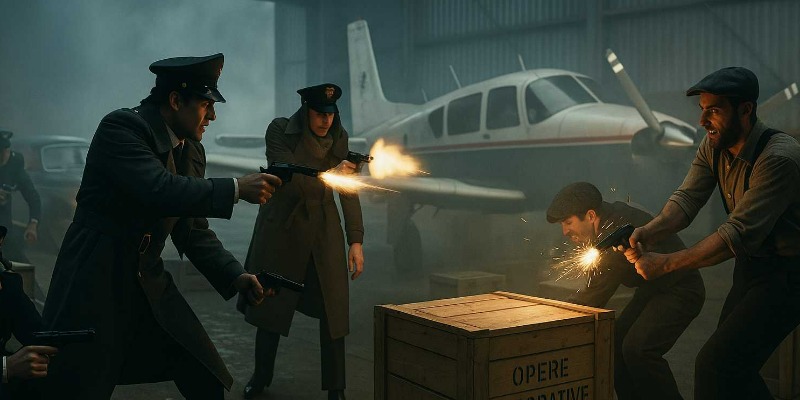
In the heart of a snow-covered valley, Foppolo maintains a seemingly solid balance, maintained by the power networks of a few families and the business dealings that unfold beneath the surface. When Marina Ravelli returns to seek answers about a past many hoped would remain buried, her presence stirs suspicions, memories, and fears that were thought to be dormant.
A determined journalist joins the search, digging through maps, receipts, and dusty archives, and what emerges threatens to connect names, accounts, and old authorizations that are likely flawed. In a room behind the kitchen of the Baita Vecchia, influential men silently discuss how to stop those who are about to uncover too much: cold reasoning, subtle threats, and intimidation tactics. The atmosphere is that of a moral winter—sharper than the wind—and the valley seems to hold its breath, ready to reveal its memory. Between blackmail, old connections, and the will to find the truth of two stubborn individuals, the story unfolds slowly and relentlessly, with the mountain watching and preserving secrets that cry out for vengeance or redemption.
The Enigma of the Abandoned House of Foppolo – Chapter 6.1: The Ice That Never Melts
Stories. The Enigma of the Abandoned House of Foppolo – Chapter 6.1: The Ice That Never Melts
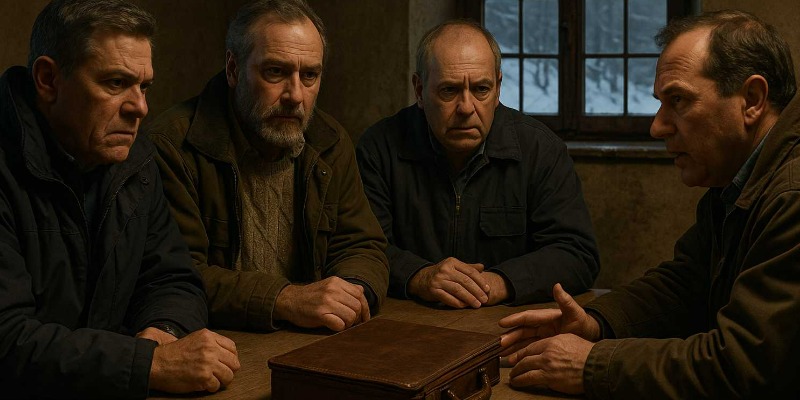
In the belly of the valley, beneath the golden crust of a clear day, something rotten stirred. The snow, so white and motionless, seemed to hide everything — the suspicions, the fears… and the bodies. Yet, in a small room behind the kitchens of the restaurant La Baita Vecchia in Foppolo, the frost had long ceased to be a meteorological matter: it had become a moral climate, a dense air made of glances and unspoken words. They had agreed to meet there, without official invitations. No agenda, no minutes. Only men who knew each other too well, for too many years.
Luigi Mainetti, owner of the ski lifts, was the first to arrive. Work trousers, technical jacket, cheeks reddened by the cold, and eyes harder than ice. He sat at the head of the table, as always, without asking permission. He was the one who managed the infrastructure that kept Foppolo alive — and everyone knew it.

Shortly after came Giacomo Lorenzi, an old-school hotelier.
Not one, but two hotels: Fiocco di Neve and Pizzo Vescovo, inherited and expanded with an aggressive strategy that had made him the king of bookings. His step was brisk, his breath smelled of cigar smoke. He removed his gloves slowly, as though each finger carried tension to be released....