The Secret of the Plaza Como Hotel in Menaggio
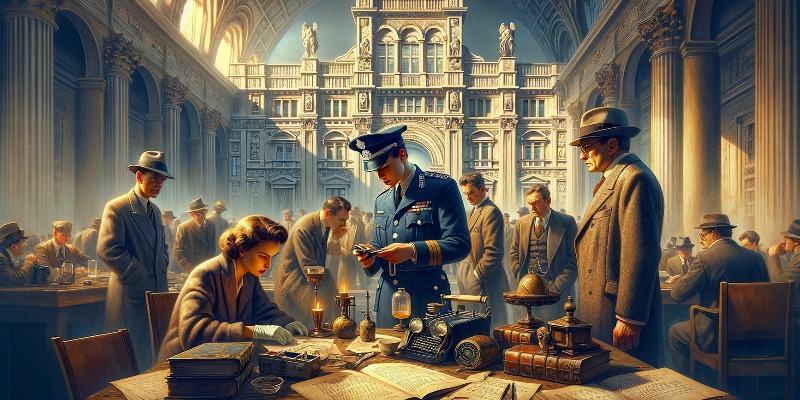
April 1960. On the mysterious shores of Lake Como, in the heart of Menaggio, the refined Plaza Como hides within its walls silence, intrigue and new worries. A rainy night upsets the hotel's routine: the owner, Enrico Bianchi, suddenly disappears from his home, leaving behind only enigmatic clues and a climate of suspicion that spreads among staff and guests.
Marshal Gatti's investigations crash against a wall of silence and half-truths, while dark Swiss and Milanese figures populate the nights of the lake, between deserted corridors and paths immersed in fog. It is the arrival of Commissioner Lucia Marini, a woman of strength and sharp intellect, that shakes the apparent quiet of Menaggio. Suspicions, insidious alliances, old grudges and a plot of corruption woven between Italy and Switzerland intertwine in a race against time, where nothing is as it seems and the truth is hidden in the shadows of water and memory. A tight investigation, period settings and continuous suspense give life to a noir that envelops and enchants until the last page.
Period Noir Micro-Novel: The Kidnapping of the Menaggio Hotelier and Inspector Lucia Marini’s Unrelenting Investigation
by Marco Arezio
April 1960. Lake Como lay as if drugged beneath the weight of a cold, rain-soaked night. Menaggio—little Art-Nouveau jewel touched by decay—was deserted, its streets slick, lamps trembling, the mingled scents of wet earth and wisteria clouding the air. On the waterfront the Plaza Como lorded over the square, its neon sign glowing above a cream-colored façade whose balconies overflowed with red geraniums. Inside, staff moved noiselessly among the last bar patrons, while outside only the slap of waves and the hiss of rain broke the stillness.
Enrico Bianchi, the hotel’s owner—esteemed and feared in equal measure—had spent the evening with two businessmen up from Milan. He had smiled, shaken hands, dealt out promises, and then climbed wearily to his private apartment on the third floor. After locking the door he checked his diary once more and exhaled sharply. The threats that had dogged him for weeks were back: “Stay out of business that isn’t yours,” the last anonymous note warned. It was hardly the first. For months new figures had circulated around the Plaza Como: close-mouthed Swiss, Milanese men who kept their coats on even in spring, blonde women far too elegant to be tourists.
But something was different that night. Pouring himself a cognac while gazing at the yellow glow of the square below, he heard a rustle behind him. “Who’s there?” No answer. A dull thud, a pungent smell, the room spinning. Strong hands, a cloth pressed to his mouth, breath shortening—then darkness.
It was the housekeeper, Teresa, who raised the alarm next morning. Bed untouched, clothes strewn about, the cognac glass still half-full, the window flung open onto the terrace. Muddy footprints on the carpet; on the night-table a foreign cigarette, a gilt button torn from an elegant overcoat, and a handkerchief monogrammed “E.B.”—as though someone had wanted to sign the scene. From the terrace the mud trail led to the rear garden, where a rusted gate opened onto a hidden path.
Marshal Andrea Gatti, a veteran carabiniere, took charge at once. He forbade contact with the press, sealed the town, ordered lake craft checked, staff questioned. Teresa, shaken, recalled a blonde woman descending at two a.m. and a tall man in a dark raincoat who had asked for wine just before closing. Night-porter Luigi swore he had seen a dark car with Ticino plates parked by the pier.
Gatti lingered in the bar, probing the patrons. None spoke, until the old barman nodded toward him: “Marshal, there was a fellow not from here. Paid in Swiss francs and left without finishing his drink.”
Everything pointed to the borderlands where lake meets Val d’Intelvi, a region whose genteel surface hid a nocturnal world of smuggling, gossip and revenge.
After twenty-four hours with no ransom demand, Gatti rang Commissioner Bellini in Como, who called in Milan’s finest: Inspector Lucia Marini, famed for her resolve and her gift for reading people like open pages. She arrived in Menaggio that afternoon beneath a fine drizzle, a curious crowd pressed against the hotel entrance. Dark hair drawn into a flawless chignon, beige trench-coat, eyes razor-calm—her mere presence restored order.
“I want no rumors, no heroes,” she told Gatti at once. “I want the truth—and quickly.”
She scoured every corner of the Plaza Como, from roof terrace to cellar archive. She reviewed guest lists, staff rosters, kitchen orders. One room stood in disarray: Ingrid Vogel, a German guest, had left at dawn but stored a suitcase. On the floor was ash from the same expensive cigarettes found in Bianchi’s suite. At reception a key to the rear storeroom was missing.
Pausing on the terrace, Lucia watched the lake change color with the wind. She felt someone’s gaze: a thin man with a chin scar stared from the pier. “That’s no tourist,” she murmured. In such cases, she knew, details made the difference. And this was only the beginning of one of the most intricate investigations of her career.
Night settled heavy over Menaggio. Lamplight glimmered on wet asphalt. In her temporary lodgings Lucia sat surrounded by photographs, notes and a detailed map. Her deputy, Marco Corsi, bright and young, arrived from the station: “We traced the German woman. She passed through Porlezza toward Switzerland—but the suitcase is still here.”
Inside its false bottom Lucia found a German letter, Swiss phone numbers, and a map whose footpaths between Val d’Intelvi and the frontier were boldly marked. Who exactly was Ingrid Vogel?
Meanwhile Marshal Gatti had grilled Luigi until the porter cracked: an unknown man had threatened him—“Talk and you’ll end up like Bianchi.” On kidnapping night Luigi had opened the rear door to a man “with a Milan accent.”
“Milano, Switzerland, Val d’Intelvi… it all knots here,” Lucia mused. She ordered surveillance on the textiles rep traveling with Vogel and telephone records for the past forty-eight hours.
Fog rolled thick from the lake, cloaking cars and figures. An old fisherman told Lucia he had seen a boat with two silhouettes heading for the opposite shore that night, toward the valley. Following the lead, they found fresh footprints and an abandoned shack littered with food scraps and a bottle of Ticinese grappa.
Back in Milan, Commissioner Bellini dug through Bianchi’s past: old debts, an unfinished fraud trial, a vanished former partner—Franco Pellini, fallen businessman and underworld hanger-on. A slender thread joined it all.

Lucia gathered the team in a dim hotel room. “There’s a mole among the staff—and someone directing matters from outside. I suspect the hotel has been a hub for traffic between Italy and Switzerland.”
Deputy Corsi proposed a trap: “Wait for the ransom demand, then shadow them.” Lucia agreed but ordered wires tapped and silent patrols on key routes.
Next day the call came. A harsh, distorted voice: “Five million. Tomorrow night, Pigra cable-car. One man alone with the bag.”
Lucia had counterfeit cash prepared and paths from Menaggio to Val d’Intelvi watched.
While her men worked, Marshal Gatti received an anonymous note: “Don’t look for Teresa—she’ll disappear too.” The housekeeper was gone. Another piece in the game. Tension soared; Lucia knew she was in a maze whose corridors might all be dead ends.
Before dawn she walked alone along the waterfront, fog swallowing even her thoughts. She stared into the motionless water, lamp reflections shimmering, menace brooding in the mountains. This is more than a kidnapping, she realized. It’s about control of every route moving contraband from lake to border.
She understood human nature—greed, revenge, fear—and knew every alliance hides a traitor willing to sell all to save his own skin.
She decided that on ransom night she herself would command the play.
The night descended damp and close. Townsfolk barred their doors; only shadows drifted through ancient alleys like old fears carried on the wind. Lucia had spent hours bent over a Val d’Intelvi map, every path marked in red, each hideout noted from days of stakeouts and silent interrogations.
Outside, the rain had ceased; the air smelt of wet leaves and moss. She stepped onto the Plaza Como terrace for a single moment alone. From the third floor she surveyed the moonlit lake and the few lanterns of anchored boats. A lone gull’s rasping cry felt like an omen.
The plan was set: make the kidnappers think the police had relaxed and the ransom would be delivered as demanded. In truth Lucia would carry the faux money herself—a worn leather case stuffed with paper bundles—shadowed at a distance by Corsi and chosen agent Rinaldi hidden in the brush.
At nine precisely Lucia descended the marble staircase, jaw tight, eyes fixed. Dark trousers, grey wool sweater, pale trench; only the holstered pistol testified to the danger ahead. In the car park the grey Fiat 1100 idled with Corsi at the wheel. “Ready, Inspector?” he asked, voice taut. Lucia nodded, set the case on the back seat, and climbed in. Rinaldi sat behind, fingers white around his sidearm.
The road to Pigra was a slick ribbon climbing through switchbacks and cliffs. At night it seemed longer, deadlier. Mud and gravel sprayed beneath the Fiat’s wheels; a startled roe deer darted across. No lights, no houses—only the engine’s hum and the trio’s held breath.
They stopped near the disused cable-car station, rusting for years. Lucia alighted, case in hand, scanning. Wind rattled corrugated iron; an iron door clanged eerily. No one.
“Maximum alert,” Corsi whispered into the radio. “Target in position.”
Two figures emerged from the pines: a tall broad-shouldered man, face muffled in a dark scarf; the second, slighter, seemingly a woman with hair tucked beneath a wool cap. The man strode forward: “The case. Leave it and step back five meters.”
Lucia complied, hands visible, breath controlled, trying to catch an accent behind the scarf—Swiss? Lombard?
The woman rummaged through the case. A hush hung heavy. Then a torch flared on the path. A signal—or a threat? The man grew edgy. “Where’s the real money? Don’t play with us, Inspector.”
Lucia kept her voice level. “I’m not playing. I want Enrico Bianchi alive.”
A beat of hesitation; the man’s face hardened. “That’s no longer up to us.”
Suddenly three sharp shots split the night behind Lucia. Someone firing from the brush. The woman crouched, the man drew a pistol, Lucia dove behind a fallen trunk; the case skittered among the stones. The radio crackled: “Heads up! They’re moving toward the north hut, taking the upper trail!”
Corsi and Rinaldi burst from cover. One kidnapper yelled, “Run! It’s a trap!” Pandemonium. The kidnappers—four, maybe five—scattered into the dark. Lucia chased the woman, agile among the boulders, tackled her: Ingrid Vogel—the cool, calculating brain. “Talk, Ingrid—where’s Bianchi?”
Ingrid’s eyes blazed. “Too late. You went after the wrong target.”
Elsewhere Corsi grappled with the burly man, disarming him after a brutal scuffle and snapping on cuffs. His wallet spilled forged Swiss papers and a photo of Pellini with a gray-haired hawk-eyed stranger.
Meanwhile Gatti’s carabinieri sealed every valley exit—but a dark car slipped through, heading for the frontier with at least two people and a third bound and gagged in the back. Bianchi was being driven toward Switzerland.
“We’re losing them!” Rinaldi shouted.
“No! Block Lanzo customs, every patrol on the highway to Lugano!” Lucia ordered.
Ingrid was whisked back to the Plaza Como for a grueling interrogation. Lucia pressed: “Who do you work for? Who helped you? Who paid you?”
Silence—until Lucia threatened extradition to Germany. Ingrid cracked: “We never meant to kill anyone. Just scare Bianchi, force him to sell his hotel share to Pellini. But he fought back. The man holding him now is dangerous. He takes no orders from me.”
Lucia, Corsi and Gatti huddled over a board of names, photos, timelines. The picture was finally complete: Pellini had assembled a gang of Milanese criminals and Swiss ex-cons, using Ingrid as cover and local accomplices—Luigi among them, who had unlocked the door that fatal night and was now missing.
With dawn pinking the peaks, Lucia decided: “We’ll intercept them at the border. They’ll feel safe there. We’ll wait on the only pass they truly know—the old quarry road above Lanzo.”
She mustered every man and drove into the fading night, her thoughts fixed on Bianchi still in the kidnappers’ grasp. One last glance at the lake’s glassy surface told her the endgame was near. No one would sleep until reckoning came.
The night of 14–15 April would imprint itself on Menaggio as an echo of dread and hope. Police resources were spent: plain-clothes officers, camouflaged carabinieri, mixed patrols at every exit and customs post. In a cramped office of the Plaza Como, Inspector Marini monitored every radio wave.

A dark Fiat 600 driven by Franco Pellini, his Milan accomplice and the hostage, sped toward Lanzo—the easiest crossing.
Bianchi lay on the back seat, wrists tied, face etched with terror, mouth gagged by a scarf. Occasionally Pellini grinned back: “It’ll all be over soon, Enrico. Just stay calm—unless your friends chase us too hard.”Lucia and her unit were already on the Lanzo road—Marini, Corsi, Gatti and three picked men, armed, determined. Orders were strict: no gunfire unless vital; Bianchi’s life came first. “If someone bolts into the woods, let him go—no one touches Bianchi,” Lucia repeated.
Black night, no moon. On the old quarry road only an owl’s call and Lucia’s nervous finger-tapping broke the hush. At three sharp a whisper came: “Vehicle approaching, Swiss plates, three occupants.”
Tension taut as wire. Lucia arrayed her men on the verges, guns ready. The Fiat 600 slowed at the torchlight, realized the trap. Pellini yelled, “Turn! Turn!” Too late: a police jeep blocked retreat.
The accomplice fired blind into the shadows; a brief firefight crackled. Lucia lunged to the rear door, yanked Bianchi free and dragged him to safety. A bullet nicked the windshield. Corsi and Gatti wrestled Pellini and the shooter down, cuffed them.
“It’s over,” Lucia told Bianchi, helping him sit on the roadside. The man wept, voiceless with shock. “You’re safe now, Enrico. It’s done.”
At the hotel news spread in a flash. Guests, staff, even the camped-out reporters gathered before dawn to await Bianchi’s return. When the police Fiat rolled into town spontaneous applause and tears erupted. Housekeeper Teresa fell to her knees in thanks. Porter Luigi was arrested on the spot: he had opened the door that night for a debt-wiping bribe.
Interrogated anew, Ingrid broke completely: “We thought everything planned to perfection, but fear betrayed us. Pellini wanted revenge, but he misjudged your resolve.”
The press swarmed: “Hotelier Freed in Menaggio,” “Border Gang Captured,” “Police Smash Lake Racket” blared next-day headlines.
Yet Marini’s work was not finished. She spent the day drafting reports, taking confessions, thanking her men. Evening found her alone on the lakeshore, exhausted yet content.
The waters lay calm once more, night smelling of jasmine and tobacco. Lucia watched the mountains gilded by first light and felt justice, for once, had prevailed. But she knew every tale, even the darkest, leaves a shadow. In bars and villas people would speak for years of that night and the Milanese woman who brought the Plaza Como and its master home.
Lucia Marini climbed into her Fiat, tuned the radio to an old waltz, and headed south. At the border between light and shadow, lake and mountain, the inspector left behind a solved case—and another chapter in her legend.
© All rights reserved