This second part explores recycling as a lens capable of redefining not only material, but also our way of perceiving time, memory, and identity. Through the journey of discarded objects, a new sensibility emerges, intertwining past and future, tradition and innovation, demonstrating how each material carries with it multiple lives and a layered history.
The reflection expands to the political and cultural dimensions of waste, revealing what remains invisible in a throwaway society. The art of recycling thus becomes a place where ethics and aesthetics meet, transforming the observer's gaze. These pages shape an idea of responsible beauty, capable of recognizing value in the worn and the fragile. A beauty that does not consume, but regenerates—and that invites us to rethink ourselves.
How the philosophy of reuse transforms our perception of time, identity, and collective responsibility
Essay. New Matter. Chapter 21, Part 2. Recycling as a New Perspective on Time, Beauty, and the World
The philosophy of recycling, therefore, is not an abstract theory, but a way of inhabiting the world. It is a lens through which to explore the relationship between the individual and the collective, between the local and the global, between past and future. It is an invitation to recognize value where we didn't think it existed, to see the extraordinary in the ordinary, to understand that the fate of things is not written once and for all. The rebirth of objects thus becomes a form of presence: a call to be more attentive, more available, more capable of listening.
And above all, it reminds us that matter—like human beings—is never completely defined. It lives, changes, adapts, resists. And in its resilience, we find a powerful image of our own.

If there's one aspect that more than any other reveals the depth of recycling as a contemporary philosophy, it's its ability to transform our perception of time.
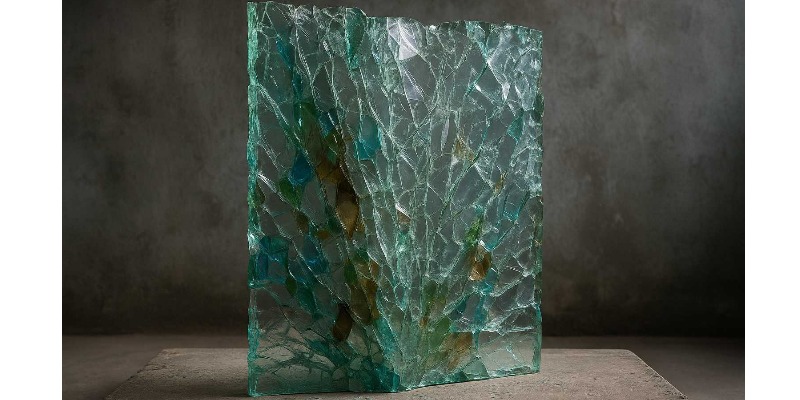
We live immersed in a fragmented, broken, and accelerated temporality. The objects we purchase have an increasingly short lifespan; what we own today is designed to lose meaning tomorrow. We're surrounded by a temporality that eludes us, and in which duration is no longer a value. Recycling, however, works in the opposite direction: it restores a longer life to material, sometimes unpredictable, rarely linear, often circular. It's an act that mends time, that rebuilds continuity where the culture of waste creates disruption.Every recycled object carries with it at least two lives: the one it has lived and the one it will live. Many carry three, four, ten. Their identity is layered, as if they were small cultural geology. A piece of wood salvaged from a construction site may have lived for decades as flooring, then been abandoned, and finally find a new life as a sculpture. These stratifications aren't decorative: they are proof that matter never stands still. Recycling teaches us that even what we consider "old" is, in reality, in the midst of its history. The linear perception of time—birth, use, end—changes into a cyclical, open-ended perception, where each phase potentially contains the beginning of the next....