- The Foliage Train: a journey through the colors of autumn
- From Domodossola to Locarno: an itinerary between two worlds
- The Vigezzina-Centovalli Railway: the story of an Alpine masterpiece
- Emotions and views along the tracks
- How to organize your trip: practical advice and special tickets
- The unmissable stops: what to see along the way
- When to go: the best months for foliage
- A model of sustainable tourism between Italy and Switzerland
The Foliage Train, 52 kilometers of thrills through the forests of Piedmont and the Canton of Ticino, amid golden landscapes, Alpine valleys, and small villages suspended in time
by Marco Arezio
There's a time of year, suspended between the warm farewell of summer and the first breath of winter, when the mountains of Piedmont and Ticino light up with a gentle fire: it's foliage season, when the leaves change color and nature dresses in gold, copper, and ruby.
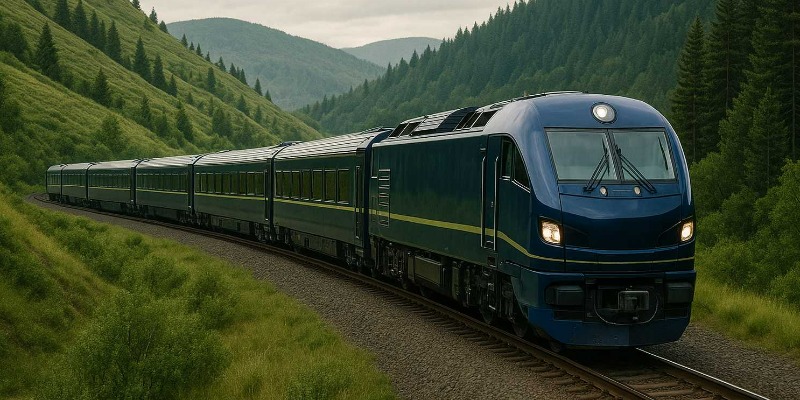
It is in this setting that the Trenino del Foliage comes to life, a panoramic railway line that connects Domodossola to Locarno, crossing valleys, woods and small villages that seem to have come out of an Impressionist painting.
As soon as you climb aboard, the first sensation is that of a return to slowness: time stops running and becomes part of the landscape. The sounds of the journey are ancient—the steady breathing of the locomotive, the rustle of wheels on the tracks, the distant tolling of a village bell.
Light filters through the trees and casts ever-shifting shadows on the train's windows. The scent of the forest, mingled with that of rain and damp earth, accompanies every kilometer. It's a journey of the senses and memory, an invitation to look, breathe, and listen.
The route between Italy and Switzerland: a natural mosaic
The Vigezzina-Centovalli Railway stretches for 52 kilometers between Italy and Switzerland, connecting two worlds distinct yet united by the same Alpine soul.
The train departs from Domodossola, a charming 19th-century town surrounded by rugged mountains and a historic center of cobbled alleys and flower-filled balconies. From here, the train climbs toward the Vigezzo Valley, the "Valley of Painters," so named for the unique light that has inspired artists such as Carlo Fornara and Giovanni Battista Ciolina, as well as poets and travelers throughout the ages.
After a few minutes' journey, the landscape opens up: beech and chestnut groves alternate with meadows and small streams reflecting the sky. Each station has a name that sounds like a promise: Masera, Druogno, Santa Maria Maggiore, Malesco, Re.
At Re, the train slows and reveals the Sanctuary of the Madonna del Sangue, an imposing basilica nestled in the greenery, its domes reflected in the nearby streams. From here, past the Swiss border, the most spectacular section begins: the Centovalli, a gorge of bridges and cliffs, where the train traverses suspended viaducts and tunnels carved into the rock.
The final stretch, gentle and bright, leads to Locarno, where the mountains open onto the blue of Lake Maggiore. It's an arrival that feels like a caress, as if nature, after displaying its strength, were relaxing in the serene reflection of the water.

The history of the Vigezzina-Centovalli Railway
Built in the early 20th century and inaugurated in 1923, the railway was born from a dream of connection and freedom.
The goal was to unite the mountain populations divided by the Italian-Swiss border, facilitating trade and cultural exchange.It was a daring undertaking for the time: 83 bridges and 31 tunnels, built with cutting-edge techniques to overcome ravines, waterways and dizzying gradients.
During the Second World War, the railway suffered damage and interruptions, but was passionately rebuilt by the inhabitants of the valleys, who considered it a symbol of rebirth.
Today the Vigezzina-Centovalli is an internationally recognized jewel: Lonely Planet has listed it among the ten most beautiful railway lines in the world, while the New York Times has defined it as “a poem of tracks through woods and valleys.”
Emotions along the tracks
Each passenger experiences the Foliage Train in their own way.
Some are mesmerized by the sight of the window, capturing every nuance of the woods; others take advantage of the stops to stroll through the villages and taste typical products like Vigezzo cheeses or rye bread.
Still others snap photographs at every turn, unable to resist the beauty that changes minute by minute.
The train becomes a small community on the move: glances meet, conversations become whispered, and often a smile is enough to share the amazement.
Every stretch of track is a window onto Alpine life, stone houses, ancient stables, and bridges that seem suspended in time. The foliage here isn't just a natural spectacle, but a truly emotional experience, capable of reawakening a sense of slow travel, one experienced with the heart before the camera.
Practical tips for enjoying the experience
The entire journey takes about two hours each way and can be done in a single day or experienced as a multi-stage itinerary.
Special Foliage tickets allow you to hop on and off as you please, allowing you to explore the villages along the route. It's recommended to book online on the official Vigezzina-Centovalli Railway website, especially on autumn weekends when trains are most crowded.
Panoramic carriages are the ideal choice for those who want to admire the views in all their splendor: the large windows, comfortable seats, and silent atmosphere make the journey a meditative experience.
It is advisable to bring a camera or binoculars, as there are many unique vantage points overlooking valleys and waterfalls.
During stops, you can hike along marked trails near the stations, visit local museums, enjoy traditional specialties, or simply stroll through the village streets.
What to see along the way
Domodossola: starting point with its medieval center, the arcades, the market and the Sacred Mount Calvary, a UNESCO heritage site.
Santa Maria Maggiore: cultural heart of the valley, home to the Chimney Sweep Museum and woodworking workshops.
Malesco: gateway to the Val Grande National Park, perfect for nature excursions.
Re: the sanctuary of the Madonna del Sangue, imposing and fascinating, is worth a visit and a stop for the view of the mountains.
Intragna and Verscio: Swiss stone villages with medieval towers, cobbled squares and small inns.
Locarno: an elegant resort on Lake Maggiore, famous for its mild climate, gardens, and bright lakeside promenade.

When to leave
The ideal time to experience the Trenino del Foliage is between early October and mid-November, when the woods of Val Vigezzo and Centovalli explode with color and the autumn sunlight makes everything more vivid.
However, each season offers a different perspective:
- In spring, nature is reborn and the slopes are covered with flowers and rhododendrons.
- In summer, greenery dominates and streams create cool oases along the way.
- In winter, the snow transforms the train into a little fairytale journey through the white mountains.
A slow, sustainable and poetic journey
The Foliage Train is not just a tourist attraction: it is a manifesto of sustainable tourism.
Traveling by rail reduces environmental impact, supports local economies, and invites a new form of discovery: slow, respectful, and immersive.
It's an invitation to slow down, to rediscover the Italy and Switzerland of small villages, of silence, of lights that change with the seasons.
An unforgettable experience, because it leaves you with the feeling of having touched—at least for a few hours—the living heart of nature.
© Reproduction Prohibited