- Post-industrial PVC collection: technical characteristics and operational advantages
- Scrap PVC profiles, pipes, and sheets: opportunities and limitations in recycling
- Post-industrial PVC: traceability of origin and hidden process risks
- Separation between rigid and plasticized PVC: impacts on the quality of recycled material
- Post-consumer PVC collection: complexity, variability and loss of control
- PVC from electrical cables and flooring: formulation and technological criticalities
- Post-consumer PVC packaging: flow fragmentation and recoverability
- Complex and multi-material waste containing PVC: technical limits of recycling
- PVC Recoverability in Composite Systems: When Recycling Is Not Sustainable
- Industrial reading of PVC flows: economic value, operational risk and strategy
From post-industrial collection to post-consumer and complex waste: technical criteria, critical issues, and industrial strategies in PVC recycling
Recycled PVC – Technical Manual - Chapter 4: Origin and quality of rigid and plasticized PVC waste: a technical and industrial reading of the flows
Post-industrial collection: profiles, pipes, leaves, sheets
From a technical and operational standpoint, post-industrial collection represents the most "legible" and potentially most reliable form of PVC waste procurement for recycling. These flows are generated directly within the production processes, before the material is released onto the market and subjected to long use cycles. This origin gives post-industrial waste a series of characteristics that make it particularly attractive to recyclers, but which nevertheless require careful and thorough evaluation.
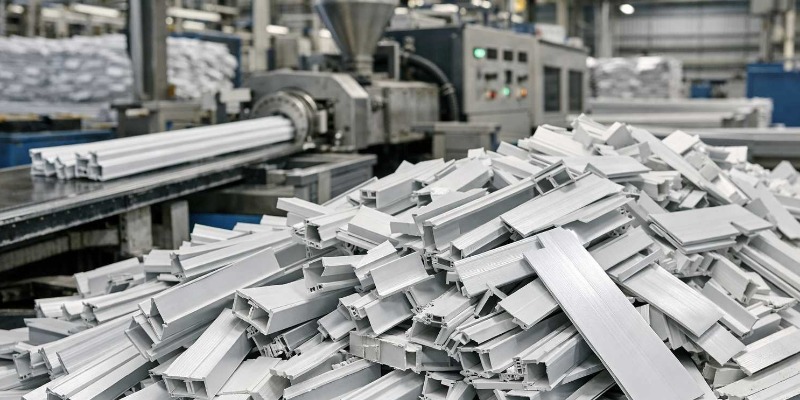
Post-industrial rigid and soft PVC waste mainly comes from extrusion, calendering, and molding processes . Profile trimmings, pipe offcuts, line start-ups, out-of-spec sheets, and defective sheets make up the bulk of these flows. At first glance, they appear homogeneous, clean, and easily manageable, especially when compared to post-consumer flows. However, this very apparent simplicity can lead to underestimating their critical aspects.
One of the main advantages of post-industrial collection is traceability. In most cases, it is possible to precisely trace the original formulation, the type of production process, and the operating conditions to which the material was subjected. This knowledge represents enormous technical value, as it allows for more accurate predictions of the material's behavior during regeneration. However, traceability should not be confused with the absence of problems: even post-industrial waste can exhibit significant alterations, especially if it results from suboptimal processing cycles.
In the case of rigid PVC profiles , post-industrial waste often consists of materials with a high content of functional additives, such as thermal stabilizers and impact modifiers. These materials, if properly selected, can yield high-quality recyclates. However, it is important to consider that non-specified profiles may have undergone higher-than-normal thermal or mechanical stress, especially in the case of problematic line start-ups or incorrect extruder adjustments. This can result in a reduction in residual thermal stability, which must be assessed before reintroducing them into the production cycle.

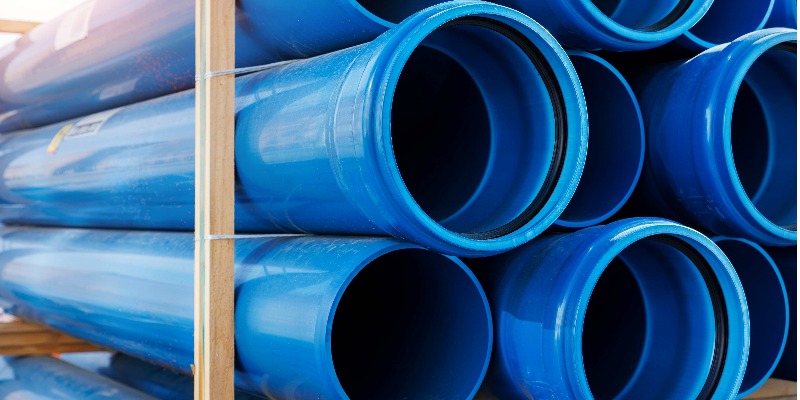
Rigid PVC pipe scraps have similar characteristics, but with some unique features.
Pipes are often formulated to ensure mechanical strength and durability over time, with specific additives that influence the material's behavior. Production scraps, while homogeneous in terms of formulation, may include portions of material that have undergone longer thermal cycles or uneven cooling. Even in this case, the apparent flow quality should not override a thorough technical analysis.PVC sheets and plates represent another important category of post-industrial waste. These materials, often destined for calendering or further processing, have large surfaces and variable thicknesses. The waste resulting from these production processes includes trimmed edges, non-compliant plates, and materials rejected due to surface defects. From a recycling perspective, these flows can be very interesting, but they also present a greater risk of surface contamination, such as dust, release agent residues, or environmental impurities.