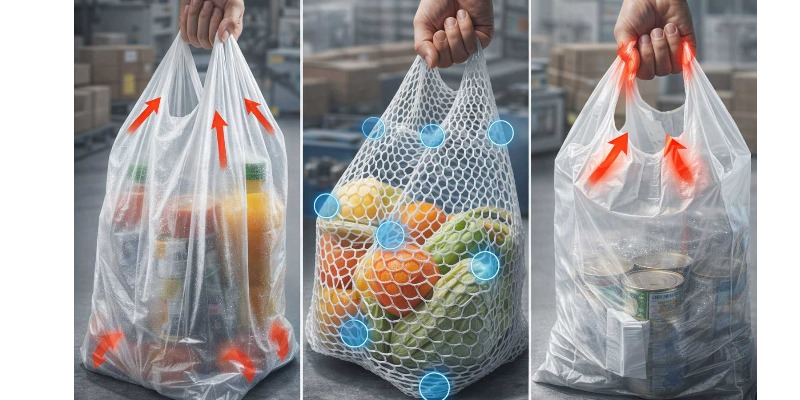
- Recycled film shopping bags: function, perception, and structural requirements
- Mechanical stresses and actual shopping behavior of the shopper
- Knitted bags: structural advantages and application limitations in recycled materials
- Bean-handle shopper: concentration of tensions and design strategies
- Waste bags made from recycled polymers: functional reliability and conditions of use
- HDPE and LDPE bags: performance differences and material selection criteria
- Multisac and combined structures: managing variability in recycled films
- Bags for e-commerce: logistics resistance, closures and automation
- Aesthetic, communicative and regulatory aspects of recycled flexible packaging
- Industrial bags and film big bags: operational safety and conservative design
Shopping bags, mesh bags, waste bags, e-commerce bags, and industrial bags: technical requirements, performance, and reliability
Shopper, knitted bags and bean handle
The bag represents the most widespread and symbolic application of plastic film, not only in terms of the volumes produced but also for the role it plays at the interface between industry, distribution, and the end consumer. In the context of recycled polymers, the shopping bag takes on an even more significant significance, as it concentrates in a seemingly simple object a series of technical, regulatory, functional, and visual requirements that make this application one of the most complex to manage industrially.
Unlike other technical films, shopping bags are subjected to a variety of stresses: static and dynamic loads, repeated handling, direct contact with the user, stringent regulatory requirements, and significant exposure to visual and tactile perception. When made from recycled material, the shopping bag becomes a test of the manufacturer's technical maturity and the industrial credibility of the recycled material itself.
The shopper as a functional and symbolic product
From an industrial perspective, a shopping bag is not just a container, but an object designed to perform a repeated function in often unpredictable conditions. The load is unevenly distributed, traction is concentrated on the handles, stresses increase during movement, and temperature variations can affect the material's behavior. In recycled polymers, these factors amplify the critical issues related to film variability.
Added to this is a symbolic dimension. The shopping bag is one of the most visible plastic objects in everyday life and, consequently, one of the most exposed to social judgment. A bag that breaks easily or appears visually poor compromises not only the perception of the product, but also that of recycled material in general. For this reason, designing a recycled shopping bag requires a particularly delicate balance between technical performance, cost, and aesthetic acceptability.

Traditional shoppers: structural requirements
Traditional plastic film shopping bags are generally made of LDPE or LDPE/LLDPE blends, with relatively thin thicknesses but high tear and tensile strength requirements.
When using recycled materials, designing this type of bag requires particular attention to the directionality of the mechanical properties....