- Childhood and Education by Rachel Carson
- Scientific Career and First Works
- The Publication of "Silent Spring" and its Repercussions
- The Challenges and Oppositions Faced
- The Lasting Impact and Legacy of Rachel Carson
- Lessons and Messages for the Future of the Environment
The Marine Biologist Who Exposed the Dangers of Pesticides with "Silent Spring" and Inspired a Global Movement for Sustainability
by Marco Arezio
Rachel Carson (1907-1964) is a central figure in the history of the environmental movement. A marine biologist and author of "Silent Spring" (1962), her work revealed the dangers of indiscriminate pesticide use, profoundly influencing environmental policies and public consciousness.
Her life and professional and civil commitment exemplify how science can become a powerful tool for social change.
Rachel Carson's Life
Rachel Louise Carson was born on May 27, 1907, in Springdale, Pennsylvania. From a young age, Carson showed a deep interest in nature and writing. She studied biology at the Pennsylvania College for Women (now Chatham University) and earned a master's degree in zoology from Johns Hopkins University in 1932.
After graduation, Carson began working for the U.S. Bureau of Fisheries (later the U.S. Fish and Wildlife Service), where she dedicated herself to writing and editing scientific publications. Her talent for scientific communication became clearly evident during this phase of her career.
Professional Commitment and "Silent Spring"
Carson published several books on marine biology, including "Under the Sea-Wind" (1941), "The Sea Around Us" (1951), and "The Edge of the Sea" (1955). These books not only illustrated the beauty and complexity of the marine world but were also accessible to the general public, raising awareness of the importance of ocean conservation.
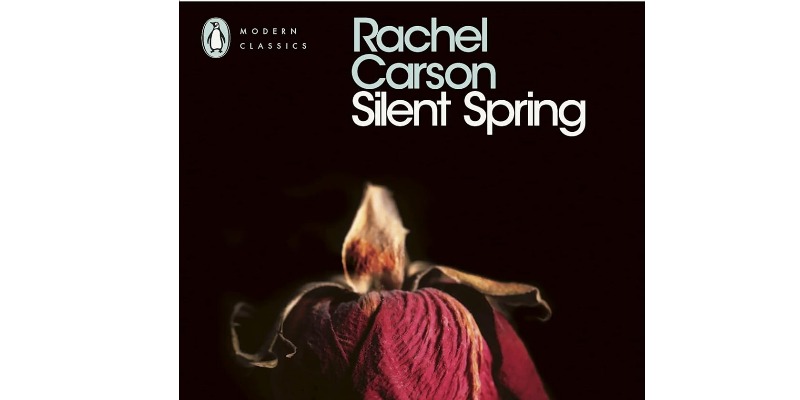
Carson's most influential work, however, was "Silent Spring." Published in 1962, this book denounced the indiscriminate use of chemical pesticides such as DDT, highlighting their detrimental effects on the environment and human health. Carson documented how these chemical compounds persisted in the environment, accumulating in the food chain and causing harm to wildlife and ecosystems.
The publication of "Silent Spring" elicited a wide response.
Although Carson faced strong opposition from the chemical industry, her work stimulated public debate on pesticide use and led to greater regulation of chemical substances in the United States. This book is often credited as the catalyst that sparked the modern environmental movement.Civil Commitment and Carson's Lessons
Rachel Carson was not only a scientist and author but also a fervent environmental activist. Her ability to communicate complex scientific issues clearly and engagingly enabled many to understand the urgency of environmental protection. Carson firmly believed in human responsibility towards nature and the need for a sustainable approach to development.
Carson's central message is the necessity of living in harmony with nature. She emphasized the interconnectedness of all forms of life and the importance of considering the long-term consequences of human actions on the environment. Her work teaches us that technological and industrial progress must be balanced with the conservation of natural resources and the protection of ecosystem health.
Rachel Carson's Legacy
Rachel Carson died on April 14, 1964, but her legacy continues to influence the environmental movement. Her work led to the creation of numerous environmental laws and inspired generations of scientists, activists, and citizens to care for the planet. DDT was banned in the United States in 1972, and Carson's work was instrumental in advancing this and other crucial regulations.
In an era when environmental issues are more urgent than ever, Rachel Carson's example remains relevant. Her ability to see beyond the present and envision a sustainable future invites us to reflect on our actions and commit to a healthier and more balanced world.
Rachel Carson taught us that science can be a powerful force for good when used wisely and with deep respect for nature. Her life and work are a constant reminder to defend our environment for future generations.