- What is POM acetal resin
- What are the main characteristics of POM acetal resin
- Use of POM acetal resin
- How to recycle POM (Polyoxymethylene)
Acetal resin or paraformaldehyde (POM) is a recycled polymer with excellent technical characteristics
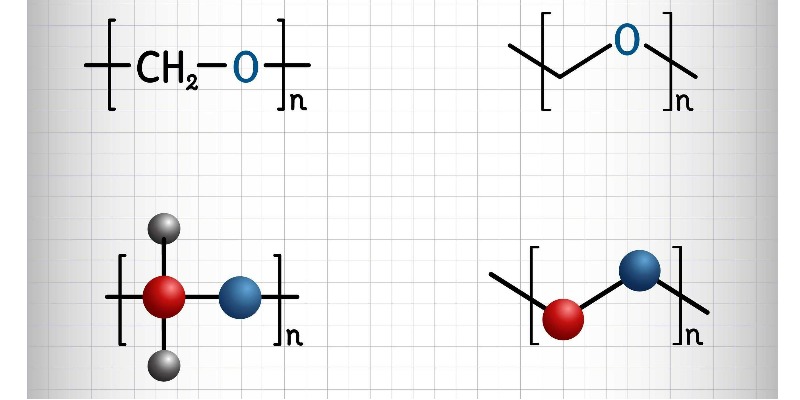
The POM, commonly called alcetal resin, is a semi-crystalline polymer that is formed during the omo ( POM – H) or copolymerization (POM – R) of formaldehyde.
The POM homopolymer, (CH2O)n, is among the stiffest raw materials, even in the absence of reinforcing elements, and has excellent dimensional stability.
Polyoxymethylene or POM, is made up of a methylene bridge and an oxygen atom, which give the polymer high resistance and a low production cost compared to other polymers with similar mechanical characteristics.
The main features of the POM are:
• Good resistance to abrasion
• Good resistance to high temperatures (up to 150° and constant up to 110°)
• High surface hardness
• Low coefficient of friction
• Good electrical and dielectric insulation
• Low permeability to organic substances, gases and vapors
• Low resistant to strong acids (PH4)
• Low resistance to oxidizing agents
• Low resistance to UV rays if not additived
• Low hygroscopicity
• Not weldable at high frequency
Processing of POM (Polyoxymethylene)
The polymer can normally be treated with the usual processing systems of other thermoplastic materials, however the Injection molding is a widely used POM processing system.
High molecular weight polymeric recipes normally lead to processing with extrusion systems, while slightly crosslinked ones are more suitable for blow molding.
A precaution during the molding phases is to preheat the molds to a temperature between 60 and 130 °C, in this case the shrinkage reduces by 3 to 1% with decreasing mold temperature, and post-shrinkage increases proportionately.
Fields of application of POM (Polyoxymethylene)
By virtue of its performance characteristics in regarding toughness and hardness, products made with the POM polymer are suitable to the replacement of metal parts of technical use, such as levers, bearings, screws, gears, coils, pipe fittings, machine tool parts and pump components.
Compound and blend with POM (Polyoxymethylene)
The polymer lends itself to technical blends that can increase its strength and durability, in fact it is possible to add glass fiber, glass or mineral fillers.
It is also possible to create blends between POM and PUR elastomers, these blends allow to increase toughness but, at the same time, decrease stiffness and strength, normally adding about 50% PUR elastomers.
It is also possible to increase the dry frictional or sliding behavior by adding fillers of MoS2, PFT, PE or oils of silicone.
On the other hand, aluminum or bronze powder can be added to the POM to increase heat stability and electrical conductivity.
How to recycle POM (Polyoxymethylene)
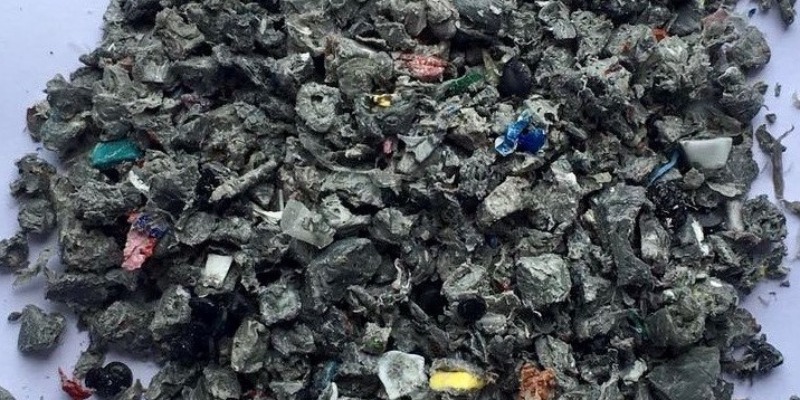
POM waste can be of an industrial or post-consumer type, however they are both valid products that can be recycled and used in technical blends.
Industrial waste, which enjoys greater cleanliness at the outset, are generally pre-selected and subsequently ground, to then be used mixed with post-consumer ground or with virgin POM.
This always depends on the type of transformation of the polymer that must be done and on the type of final product, both in terms of physical - mechanical characteristics and aesthetic appearance .
Post-consumer waste needs greater attention during the recycling phase, in fact it may be necessary, after selection, a careful evaluation on the possible passage in a magnetic mill, to remove any metal parts, and a washing to separate the POM from non-metallic elements.
Machine translation. We apologize for any inaccuracies. Original article in Italian