- What is polyamide and how is nylon 6 produced?
- The role of benzene in the synthesis of caprolactam
- How to obtain cyclohexanone: industrial processes and alternatives
- The reaction between cyclohexanone and hydroxylamine to produce the oxime
- Production of caprolactam by Beckmann rearrangement
- Environmental impact of polyamide chemical precursors
- N₂O emissions and by-product management in the caprolactam supply chain
- Towards a sustainable production of polyamide: technologies and perspectives
Discover How Polyamides Are Produced from Caprolactam, the Chemical Components Involved, the Environmental Risks of Industrial Processing, and the Technologies for a More Sustainable Future
by Marco Arezio
When we think of nylon—the well-known synthetic polyamide—we often associate it with textiles, strong ropes, precision gears, or lightweight, durable automotive components. Yet, we rarely pause to consider the intricate sequence of chemical reactions that makes its existence possible.
Behind every strand of nylon lies an industrial chain built on aromatic compounds, controlled oxidations, acidic reactions, and a significant load of byproducts that raise serious concerns about sustainability.
One of the key stages in this chain is the production of caprolactam, the cyclic monomer from which polyamide 6 (PA6) is formed, through a ring-opening polymerization reaction. Understanding the components required for its synthesis and the environmental implications of the process is not merely academic—it’s a necessary step to assess how the polyamide industry can evolve toward a more sustainable model.
From Aromatic Molecules to Cyclic Monomers: A Complex Transformation
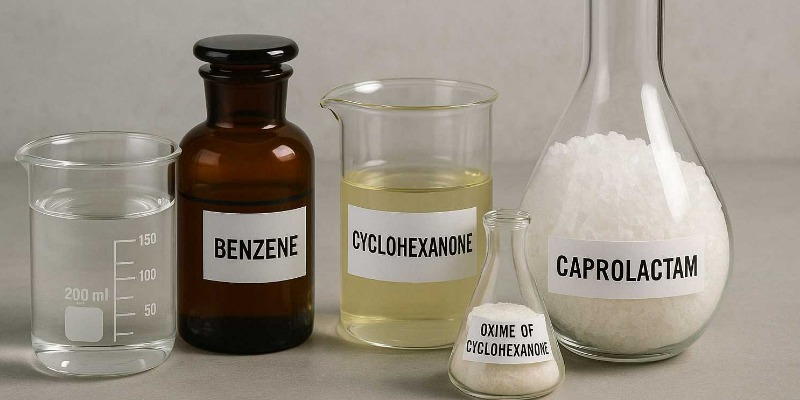
It all starts with benzene, one of the simplest and most stable molecules in aromatic organic chemistry. Primarily derived from petroleum fractional distillation, benzene serves as a feedstock for numerous processes in the heavy chemical industry.
In the case of polyamide production, benzene is hydrogenated to form cyclohexane. This transformation takes place under high pressure and temperature in the presence of metal catalysts such as nickel or platinum, marking one of the earliest shifts from aromatic to aliphatic chemistry required for monomer synthesis.
Cyclohexane is then oxidized to produce cyclohexanone, a cyclic ketone that plays a central role in the chain. This oxidation can occur either directly from cyclohexane with oxygen and metal catalysts or from phenol via selective reduction. The result is often a mixture containing cyclohexanol, known as KA-oil (ketone-alcohol oil). Cyclohexanone is separated from this mixture and purified, ready for the next transformation.
Here enters a particularly reactive molecule: hydroxylamine, which reacts with cyclohexanone to form cyclohexanone oxime. Though chemically unstable, this compound is essential to the Beckmann rearrangement, a cornerstone of organic chemistry. In a strongly acidic environment—usually with sulfuric acid—the oxime is converted into ε-caprolactam, the cyclic monomer destined to become nylon.
At room temperature, caprolactam appears as a white, crystalline solid, soluble in water. Compared to other precursors in the chain, it is relatively safe to handle. However, its production presents several critical issues.
One of the most significant side effects of the Beckmann reaction is the generation of ammonium sulfate, a saline byproduct produced in nearly equal mass to the caprolactam itself. Although it can be used as a fertilizer, its disposal or reuse poses both logistical and ecological challenges.
The Environmental Footprint of Chemical Precursors
The synthesis of caprolactam is far from harmless.
Producing precursors such as benzene and hydroxylamine involves handling hazardous substances, performing energy-intensive reactions, and often generating polluting byproducts.Benzene, for instance, is a confirmed human carcinogen and requires strict safety protocols for its use. Hydroxylamine is unstable, highly reactive, and potentially explosive under certain conditions. Cyclohexanone, while less hazardous, is volatile and can contribute to atmospheric pollution in the form of volatile organic compounds (VOCs).
One of the most concerning aspects is the emission of nitrous oxide (N₂O), a secondary byproduct that can emerge during various stages of the industrial process—particularly in the production of ammonia and nitrates used for hydroxylamine synthesis.
N₂O is a greenhouse gas approximately 273 times more potent than CO₂, and it contributes directly to ozone layer depletion. In outdated facilities, producing just one ton of caprolactam can result in up to 9 kg of N₂O emissions.
Toward a Sustainable Production: Challenges and Prospects
In recent years, the chemical industry has made strides in reducing the environmental impact of caprolactam and its precursors. Some plants have installed catalytic abatement systems for nitrous oxide, cutting emissions by up to 98%. Others are experimenting with renewable feedstocks for cyclohexanone production, using biomass or sugars to reduce dependence on fossil fuels.
In the realm of green chemistry, efforts are growing to develop bio-based caprolactam, using fermentation processes and intermediate synthesis from bio-derived adipic acid. However, these methods currently face scalability and competitiveness issues compared to well-established petrochemical routes.
Another area of focus is the valorization of byproducts, especially ammonium sulfate, which can be used in fertilizer production. Yet from a systemic sustainability perspective, downstream reuse is not enough—upstream reduction in byproduct formation is essential, requiring a rethink of the entire production architecture.
Conclusion
The production of polyamide 6 is a clear example of how a seemingly simple and ubiquitous molecule can hide a deeply complex chemical and ecological reality. From aromatics like benzene to reactive compounds like hydroxylamine, each step of the production chain involves technical decisions with significant environmental implications.
To make the future of polyamides—and of engineered plastics more broadly—truly sustainable, it is not enough to focus on recycling the final product. Action must begin at the molecular level: rethinking monomer chemistry, choosing safer and less polluting precursors, and embracing technologies that minimize waste and emissions.
The shift toward greener chemistry begins here—with a clear understanding of the molecules that shape our modern world.
© All Rights Reserved