



rMIX: Il Portale del Riciclo nell'Economia Circolare - Italiano rMIX: Il Portale del Riciclo nell'Economia Circolare - Inglese rMIX: Il Portale del Riciclo nell'Economia Circolare - Francese rMIX: Il Portale del Riciclo nell'Economia Circolare - Spagnolo

PP/PE RECYCLED GRANULES BY POST CONSUMPTION: AN ALMOST PERFECT WEDDING

Technical Information
rMIX: Il Portale del Riciclo nell'Economia Circolare - pp/pe recycled granules by post consumption: an almost perfect wedding
Summary

- The combination of PP and PE (PO) in post-consumer plastic waste

- Qualitative evolution of PP/PE over the years

- The importance of using PP/PE compounds

- How to intervene in PP/PE recipes to increase fluidity

- How to intervene in PP/PE recipes to increase cold flexibility

- How to intervene in PP/PE recipes to increase rigidity

- How to intervene in PP/PE recipes to obtain better colours

- Where the PP/PE polymer can be used

It seems like post-consumer polypropylene and polyethylene cannot coexist, but this is not always the case


Sometimes even the most different copies, with distant attitudes and characteristics, with opposite character temperatures, with different tenacity and weaknesses, find a balance in their union. PP/PE also seems to have found this balance.

In the field of polymers that derive from separate waste collection, there are families that are composed of two or more different polymers, such as the union between polyethylene and polypropylene.

Apparently they seem like two worlds very distant from each other which, due to the need for consumption of plastic waste, has led to the new compound being given a position in the polymer market.

The raw material that constitutes this union , deriving from the input of separate waste collection, is normally already mixed, and is made up of rigid parts and flexible parts of domestic plastic waste.

Over the years this "natural" mix has changed a lot, as it has been necessary to extract an increasingly large portion of non-component plastics, such as polypropylene, high and low density polyethylene, from the waste bales. In fact, much focus has been placed on the extraction of the polypropylene fraction to allocate it to an independent market.

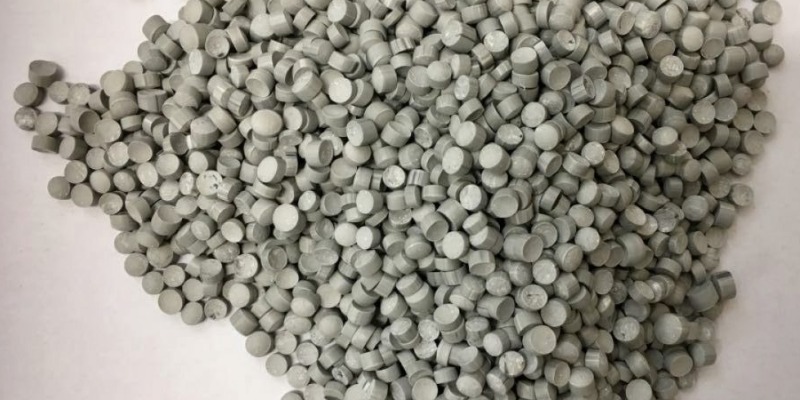
What is today defined as PO or PP/PE is the resulting part of the selection processes of plastic waste resulting from separate collection, and is made up of approximately 30-40% polypropylene and the remaining part is predominantly LDPE.

Compared to about ten years ago, today's PO base, or PP/PE , is certainly less performing, as the behavior of polypropylene on the low density polyethylene component is difficult to manage, both in the molding phase and in the aesthetic result of the final products.

If we start from the consideration suggested by the circular economy, according to which we must find, in any case, a place for reuse for plastic waste, even this poor mix of PP/PE, with a little good will, can be used in many sectors.

The polypropylene contained in the mix essentially brings with it the characteristics of rigidity and fluidity, while the LDPE brings with it flexibility and melting at low temperatures. The antagonism of their characteristics will have consequences in the molding phase and in the quality of the product if nothing is done during the production of the granule.

To create a correct family of PP/PE suitable for many applications, which takes into account the different fluidities required by the market, correct temperatures both in the granule extrusion phase and in the molding phase, good resistance in terms of modulus and IZOD, compatibly with the low quality product we are talking about, it sometimes becomes necessary to modify the granule recipes:


  • The first intervention that should be done is to work on the balance between PP and LDPE, through a quota of HDPE which mitigates the problem of the difference in melting temperature of the two original materials.
    This improves printability but also the reduction of possible streaks on the surfaces of the products.


  • If it is desired to increase the fluidity of the compound to be obtained, the PP component can be increased, as the contribution of the post-consumer LDPE and HDPE fractions, in terms of MFI, will remain limited. The increase in the percentage of PP within the recipe must however be monitored, as it leads to an increase in the glassiness of the final product and reduces its resistance to cold.


  • If you want to increase cold flexibility you can play on the LDPE/HDPE component, considering the right percentages based on the aesthetic requests, the degree of flexibility and the thicknesses of the products to be made.


  • If you want to color the product, usually with dark shades, it is always advisable to add some Masterbach, for regenerated polymers, during the granule extrusion phase. This is because dispersing the dye in an extruder with a long screw brings better aesthetic efficiencies. In this case we must consider that the share of LDPE , which is the one most at risk for a possible degradation phenomenon under the effect of processing temperatures, should remain as low as possible to avoid aesthetic damage to the colors of the product. As regards the use of masterbach , given that these products can also be at risk of degradation during granule extrusion or during moulding, it is good practice to ensure which maximum temperatures they can withstand without altering.


  • If you want to increase the rigidity of the products you can use mineral fillers, be they calcium carbonate or talc, which can give greater strength to the products from the point of view of compressive strength. However, you must be careful about the bending behavior, as PP/PE already has a low bending resistance value and the addition of excessive percentages of mineral fillers worsens its flexibility.


The use of this family of PP/PE compounds has found widespread acceptance on the market for the production of non-aesthetic and low-cost products. The main sectors of use are:


  • Construction with the creation of spacers for reinforcing bars, non-vehicular water channels, iron cover protection, buckets, plastic crawl spaces, vehicular grassy gratings, modular underground drainage tanks and other products.


  • Logistics with the production of pallets, transport crates, pallet scaffolding, bin caps and other products.


  • Agriculture with horticultural hooks, pots, disposable fruit and vegetable boxes, cultivation poles and other products.


  • Garden furniture with the production of plastic rattan sofas and armchairs, small furniture, economical outdoor chairs and other products.


  • The cleaning industry with support for broom bristles, small buckets, dustpans and other products.

Category: news - technical - plastic - recycling - polymers - post consumer - granules - PP/PE

SHARE

CONTACT US

Copyright © 2026 - Privacy Policy - Cookie Policy | Tailor made by plastica riciclata da post consumoeWeb

plastica riciclata da post consumo