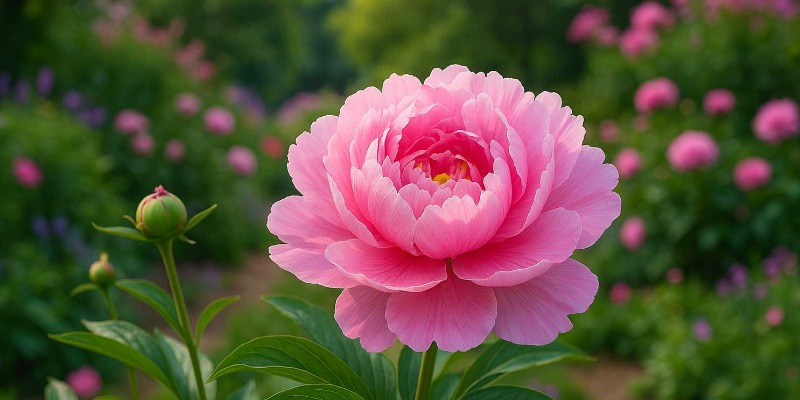
- Peony: a thousand-year history and timeless charm
- Herbaceous, tree and Itoh peonies: differences and choices
- Perfect planting: depth, pH and drainage
- Peony fertilization: organic, doses and calendar
- Watering peonies: how much water and when to give it
- Pruning herbaceous and shrubby plants: techniques and supports
- Peony Diseases: Natural Prevention and Remedies
- Peonies in the garden: combinations, cut flowers and design
From Imperial China to European Gardens: Everything You Need to Know About Growing, Fertilizing, Pruning, and Caring for Peonies
Among the most anticipated flowers of late spring, the peony combines elegance, fragrance, and surprising longevity: herbaceous clumps and shrubs can live for over half a century in the same spot, with little care and a favorable environmental balance (fewer transplants, fewer inputs). History places it as the "queen of flowers" in Chinese gardens of the Tang Dynasty; it arrived in Europe between the 17th and 18th centuries, conquering botanical gardens and aristocratic borders. Today, we find three main groups: herbaceous peonies (e.g., P. lactiflora), tree peonies (P. suffruticosa and related species), and intersectional hybrids (Itoh), which combine vigor and spectacular flowering.
Botanical characteristics and growth cycle
Peonies are hardy perennials. Herbaceous plants emerge in spring from tuberous roots—the "bulbs" are actually rhizotubers—reaching 60–100 cm; in autumn, the above-ground part dries up. Tree peonies retain a woody structure, reaching 1–1.5 m. Flowering—from late April to June, depending on climate and variety—offers single, semi-double, or double corollas, in a palette ranging from white to coral to purple, with yellow varieties in hybrids. Many are scented. The deeply divided foliage turns copper or red in autumn, adding to its ornamental value. Chilling conditions stimulate the development of shoots and buds, so cold winters are a good ally.
Planting: depth, soil, exposure
The golden rule for peonies is: plant well once and then don't move it. Choose a sunny location (at least 6 hours of direct light; in very hot areas, benefit from light shade in the afternoon) and shelter from the wind.
Soil: Deep, well-drained, fertile, with a slightly acid-neutral pH (6.5–7.5). Heavy soils should be lightened with silica sand and well-rotted compost, or a raised bed should be created to prevent waterlogging.
Planting depth (herbaceous plants): The root buds (the pink "eyes") should be 3–5 cm below ground level in temperate regions; deeper roots reduce or even eliminate flowering. For shrubby plants, the graft bud should be 6–10 cm below ground level, to encourage the development of their own roots over time.
Spacing: 80–100 cm between vigorous herbaceous plants; 1.2–1.5 m between shrubby plants. Ideal time: autumn, when the soil is still warm and the plant can root without stress.

Fertilization: organic matter, balance and timing
Peonies prefer humus-rich soil but not excessive nitrogen.
In late winter, apply well-rotted compost or aged cow manure (2–3 kg/head, incorporated superficially and mulched). Before flowering (March–April), a balanced, slow-release fertilizer (e.g., 8-10-10 or 10-10-10) supports buds and stems. After flowering, a light addition richer in potassium helps rhizome maturation and lignification. Avoid heavy nitrogen fertilizers (they encourage leaf spotting and disease at the expense of flowers). Organic mulch (composted leaves, well-rotted wood chips) conserves moisture and slowly nourishes the soil.Irrigation: deep, sparse, without stagnation
Peonies prefer deep but infrequent watering: the goal is to wet the root system and then let the surface layer dry. In spring, keep the soil consistently moist (not soaking wet); in summer, water only during prolonged dry spells. Micro-irrigation or a low-pressure nozzle directed at the soil is best; avoid wetting the foliage to reduce fungal growth. In winter, except during unusual droughts, watering is unnecessary. Adequate mulching limits evaporation and stabilizes soil temperature.
Pruning and Support: The Minimal Touch That Makes the Difference
Herbaceous plants should be cut back to ground level when the foliage turns yellow (late autumn): this reduces disease inoculation and tidies up the border. Shrub plants require only light pruning to remove dead or misaligned branches, respecting the fact that they flower on the previous year's wood; drastic cuts compromise the following spring.
After flowering, remove the faded flowers above the first vigorous leaf: the plant does not waste energy in seeds. Varieties with very double flowers may require discreet staking or circle support, especially in windy locations or very fertile soils.
Diseases and pests: prevent with air and drainage
The physiology of the peony is robust, but some adversities are recurrent:
Botrytis (gray mold) on shoots and buds in humid springs: prevent with ventilation, proper spacing, and removal of affected debris. At the first symptoms, apply copper within legal limits or products permitted in organic farming.
Root rot (e.g. Phytophthora): avoidable with impeccable drainage; do not leave the root collar soaked.
Leaf spots (various fungal species): generally cosmetic; limits excess nitrogen and water splashes on the foliage.
Late-season powdery mildew: rarely serious, more frequent in hot, humid summers; improves with airy exposure.
Aphids and thrips on tender buds: treat with soft soap or light mineral oils; ants are not harmful to the plant, they are merely attracted by the sugary secretions.
Autumnal cleaning of dry parts and not excessive mulching under the collar greatly reduce the incidence of diseases.
Propagation and transplantation: patience and the right timing
Peonies don't like to be disturbed. If you need to divide a herbaceous plant (for rejuvenation or propagation), do it in the fall: dig up with a pitchfork, divide with a clean blade into portions with 3–5 eyes and abundant roots; replant immediately, maintaining the correct depth. Tree peonies are propagated by grafting or semi-woody cuttings (more complex). Sowing is slow and doesn't guarantee varietal fidelity: it's a hobbyist's idea.
Position in the garden: light, backgrounds and bedding companions
For maximum blooms, offer full sun; in hot climates, bright partial shade in the afternoon is fine. Peonies are magnificent in mixed borders with bearded irises, bright geraniums (true geraniums), ornamental salvias, alliums, and antique roses; the contrast between the peony's full corollas and the light spikes of grasses (e.g., Stipa tenuissima) creates contemporary compositions. As solitary plants in front of a dark hedge (e.g., yew or pruned cherry laurel), the light tones stand out. Potted plants are possible only for some herbaceous plants, but require large containers, well-draining substrate, and careful watering.
Cut flowers and vase life
Peonies are excellent cut flowers. To maximize their lifespan, cut the "marshmallow" buds (soft to the touch but already colored) in the morning, immerse them immediately in cool water, and refrigerate them for a few hours before arranging. In a vase, change the water frequently and cut a centimeter of stem every 2–3 days. Semi-single-flowered varieties often offer the best shelf life.
Common mistakes to avoid
- Incorrect planting depth (too deep = little or no flowering).
- Excessive waterlogging: causes rot and failure.
- Excess nitrogen: lots of foliage, few flowers, and more fungi.
- Drastic pruning of shrubby trees: goodbye to buds.
- Repeated transplants: the fleshy roots suffer, flowering stops for years.
- Peony and sustainability: few inputs, many seasons
A perennial and stable plant, the peony adapts to low-impact management: organic fertilizers, local mulching, careful irrigation, and no disposable plastics for invasive supports. Its decades-long lifespan and seasonal flowering concentrated in just a few weeks make the peony a symbol of slow life in the garden: waiting, simple care, and a memorable reward.