- Night jasmine: origins and history of Cestrum nocturnum
- Growing nightshade jasmine in the garden
- How to grow nightshade jasmine in a pot
- Night Jasmine Diseases and Natural Remedies
- The fragrant flowers of Cestrum nocturnum
- Watering and fertilizing night-blooming jasmine
- Pruning night-blooming jasmine: when and how to do it
- Why plant nightshade jasmine in your garden?
Discover the history, cultivation and secrets of Cestrum nocturnum, the plant with the most intense and fascinating nocturnal flowers
by Marco Arezio
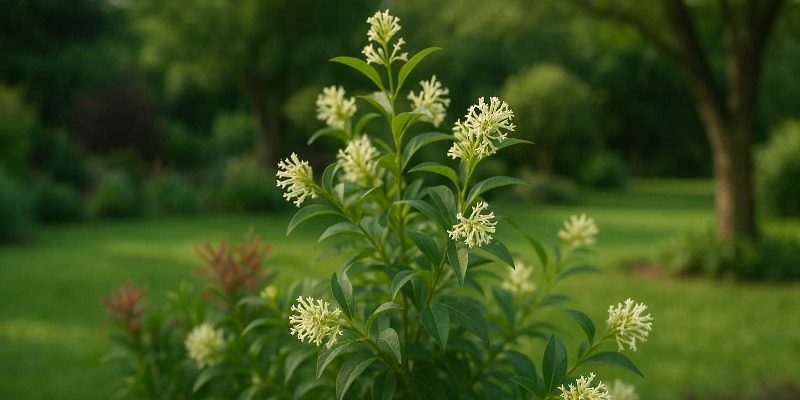
Night jasmine, scientifically known as Cestrum nocturnum, is not a true jasmine, but a plant in the Solanaceae family. It is native to tropical and subtropical regions of Central and South America, where it grows lushly in gardens and on the edges of forests, filling nights with its intense, almost hypnotic scent.
Its peculiarity, which has enchanted gardeners and plant lovers for centuries, is its night-time flowering: small, discreet, tubular flowers that, while not showy, release an overwhelming aroma at sunset. It is precisely for this characteristic that the plant has entered the popular imagination, linked to memories of summer evenings and symbols of mystery and sensuality.
A plant with a fascinating history
Cestrum nocturnum arrived in Europe between the 17th and 18th centuries, when botanical explorations brought many tropical species to the Old Continent. It was already cultivated in aristocratic gardens as an exotic curiosity, not so much for its appearance—since the flowers are small and pale—as for the strength of its scent. This nocturnal aroma became a symbol of mysterious elegance, often associated with poetic and romantic uses. Even today, in Mediterranean countries, the plant is prized in private gardens and on balconies, capable of transforming a simple summer evening into a unique sensory experience.

How to grow nightshade jasmine in the garden
Night-blooming jasmine loves mild, warm climates, similar to those of its native subtropical zones.
In Mediterranean gardens, it grows easily if placed in a sunny spot for most of the day, but with light shade during the hottest hours. It's an evergreen plant in warmer climates, but in areas with harsh winters, it tends to lose some of its leaves and is susceptible to frost. For this reason, it's important to choose a sheltered spot, perhaps near a wall that retains heat, or to provide winter coverings with non-woven fabric.The ideal soil is well-drained, fertile, and slightly acidic. Soil that is too compact or clayey risks retaining too much water, resulting in root damage. In gardens, it's advisable to enrich the planting hole with well-rotted compost and sand to ensure both nutrition and drainage.
Potted cultivation: elegance even on the balcony
Night-blooming jasmine adapts very well to pot cultivation, making it perfect for those who want to enjoy its scent on terraces and balconies. It's essential to choose large containers, at least 40 cm in diameter, with a good drainage layer at the bottom (expanded clay or gravel). The plant grows quickly and requires repotting every 2-3 years, preferably in spring, replacing part of the soil with fresh soil enriched with compost.
The balcony should be bright, but not exposed to direct sunlight during the midday hours. During the winter months, if temperatures drop below 5°C, it's advisable to move the pot to a cold greenhouse or a sheltered area, such as a covered veranda.
Diseases and natural remedies
Cestrum nocturnum can be subject to some typical parasite attacks of ornamental plants. Among the most common are aphids and scale insects, which nestle among the branches and young leaves. An effective natural remedy is the use of potassium-based soap, diluted in water and sprayed directly on the affected areas. A maceration of nettle or garlic can also help strengthen the plant's natural defenses.
Another problem can be root rot, caused by waterlogging. To prevent it, it's essential to ensure good soil drainage and water only when the substrate is dry on the surface. Yellow, soft leaves are a warning sign that requires immediate watering.
The magic of scented flowers
The most striking feature of night-blooming jasmine is undoubtedly its nocturnal blooming. The small, tubular flowers open at sunset and remain active until morning, releasing a sweet, intense scent that can be detected from afar. It's a fragrance that many describe as almost hypnotic, capable of evoking memories and profound sensations. This quality makes Cestrum nocturnum a plant to place near pergolas, terraces, or spaces where people spend the evening, so you can fully enjoy its magic.

Watering and fertilizing
Night-blooming jasmine requires regular watering during spring and summer, when it is growing and flowering. It's important to keep the soil moist but not soggy, avoiding waterlogging, which is harmful. In winter, watering should be significantly reduced, especially if the plant is in a protected environment.
As for fertilization, it's recommended to use a liquid fertilizer for flowering plants every 15 days, from April to September. Alternatively, you can enrich the soil with natural organic fertilizers, such as compost or worm castings, which stimulate healthy growth and more abundant blooms.
Pruning: when and how to intervene
Cestrum nocturnum grows quickly and tends to form a messy canopy. Pruning is therefore necessary not only to maintain a harmonious shape but also to encourage new blooms. The ideal time is late winter or early spring, before the vegetative growth begins. Remove dead, weak, or crossed branches, and shorten the main branches by about a third of their length. After summer flowering, a light containment pruning can be performed to prevent the plant from becoming excessively bulky.
Why plant a night-blooming jasmine?
Growing a Cestrum nocturnum isn't just an ornamental plant; it's also adding a touch of emotion and sensory beauty to your garden or balcony. It's a plant that speaks to the heart, capable of transforming summer nights into unforgettable experiences. Its enveloping scent conveys a sense of well-being and creates evocative atmospheres, while its relatively simple cultivation is within everyone's reach. Treating yourself or someone you love with a night-blooming jasmine means choosing to experience nature intensely, allowing yourself to be captivated by its nocturnal charm.
© Reproduction Prohibited