




- Importance of biodiversity in the garden
- Create natural shelters for beneficial insects
- Trees, shrubs and hedges as habitats for birds
- Small mammals and reptiles: how to welcome them safely
- Water as a vital resource for wildlife
- Native plants and seasonal blooms to attract biodiversity
- Avoid pesticides and practices harmful to the ecosystem
- A sustainable garden as a heritage for the future
A guide to transforming green spaces into living, sustainable ecosystems
by Marco Arezio
We often tend to think of the garden as a simple aesthetic space, an extension of the home where order and symmetry predominate. But nature doesn't function by following straight lines or geometric rules. Its strength lies in variety, in the diversity of forms and functions that together create balance.
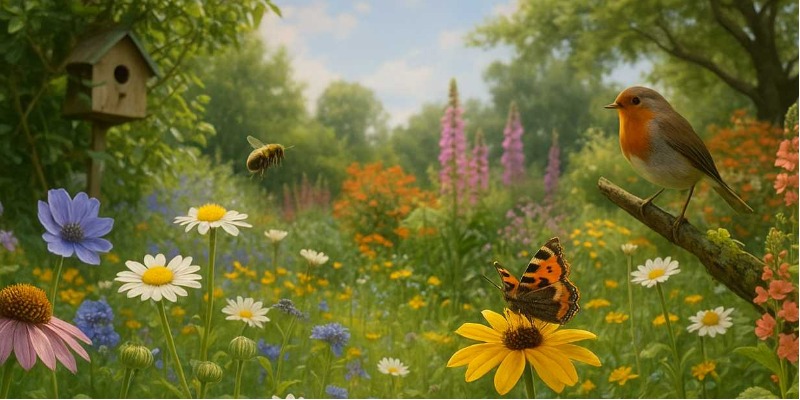
Bringing biodiversity into your garden means opening the door to a multitude of creatures that, despite their tiny size, contribute significantly to the health of the surrounding environment. Bees, butterflies, birds, small mammals, and amphibians aren't occasional visitors: they're an integral part of a life cycle that allows your garden to thrive.
Creating shelters for these species is not only an ecological gesture, but also a way to restore the garden to its true identity: that of a self-regenerating micro-ecosystem. Every natural element inserted—a hedge, a fallen tree trunk, a patch of tall grass—becomes part of a larger, invisible yet crucial network.
Insect Shelters: Silent Allies
Insects are the invisible protagonists of biodiversity. Without them, the food chain would collapse. Bees and bumblebees pollinate plants, ladybugs and lacewings fight aphids, butterflies and moths enrich biological diversity. To help them, suitable shelters are needed: an "insect hotel" built with natural materials like bamboo, sticks, and bark is an excellent place to start. You don't need to buy one: you can easily make it at home by placing wooden boxes filled with straws or hollowed-out logs in a corner of the garden.
Another useful tip is to leave "unkempt" areas, small spaces where the grass isn't cut frequently. This simple gesture allows many insects to find shelter and nourishment. Even a pile of wood, a dry stone wall, or piles of dry leaves become valuable habitats, capable of hosting ants, spiders, and other small allies essential to the natural balance.
Trees, shrubs and hedges: the homes of birds
Birds are among the garden's most welcome guests. Their song marks the rhythm of the seasons, and their presence is synonymous with a healthy environment. To attract and retain them, you need to provide them with food and shelter. Hedges of hawthorn, dogwood, or elderberry are perfect because they provide edible berries and dense branches for nesting.
Installing nesting boxes is another way to support local species. The shape and size of the openings should be calibrated based on the type of bird you intend to house: small holes for tits and sparrows, larger openings for starlings and woodpeckers. It's essential to place the boxes in quiet, safe locations, away from predators such as cats or mustelids.
A garden that welcomes birds also becomes more ecologically balanced: many species, in fact, feed on insects that are harmful to plants and help maintain the health of the entire ecosystem.
Welcome small mammals, amphibians and reptiles
Let's not forget the less showy but equally valuable little inhabitants: hedgehogs, voles, frogs, toads, and lizards.
They require little attention: a pile of leaves or dry branches left in a corner, small burrows built with stones or wooden planks, a passage under fences that allows free movement between neighboring gardens.These animals, in addition to enriching the natural landscape, play an important role. Hedgehogs, for example, feed on insects and snails, naturally limiting infestations. Amphibians help contain mosquitoes, while lizards help keep small insect populations under control. Welcoming them therefore reduces the need for chemical treatments and promotes a healthier biological balance.
Water as the beating heart of the garden
If there's one element that brings life more than any other, it's water. Even a small body of water, a fountain, or a simple basin can become a haven for birds, insects, and amphibians. Water should never be lacking, especially in the warmer seasons.
An artificial pond, even a modest one, creates a surprising microhabitat: dragonflies, frogs, newts, and a multitude of other organisms spontaneously colonize it. It's important, however, to ensure there are shallow areas to allow animals to drink safely and escape easily. Adding native aquatic plants helps keep the water clean and oxygenated, increasing its attractiveness to local wildlife.
Sustainable gardening: a legacy for the future
Creating a biodiversity garden doesn't mean neglecting the space, but learning to manage it differently, more respectful of natural rhythms. Avoiding pesticides and chemical fertilizers is rule number one: every toxic substance added to the soil compromises the lives of insects, amphibians, and small mammals. It's better to favor natural fertilizers, homemade compost, and aromatic plants that, in addition to scenting the air, keep certain pests at bay.
Another fundamental principle is choosing native plants. These are the ones best adapted to the local climate and soil, require less maintenance, and immediately become a resource for the insects and animals that already live in the area. Alternating spring, summer, and fall blooms ensures a continuous supply of food for pollinators and birds.
Finally, biodiversity in the garden also has an educational value. Every gesture—building a birdhouse, leaving a patch of wild grass, observing the first dragonflies around a small pond—becomes an opportunity to teach young people the importance of respecting nature. In this way, the garden is not only a refuge for wildlife, but a cultural and ecological heritage to be passed down.
Conclusion
Biodiversity in the garden doesn't arise by chance: it's the result of conscious choices and small daily actions. Every corner can become a refuge, every plant can provide nourishment, every drop of water can restore life. Supporting insects, birds, and small animals not only makes the garden richer and more vibrant, but also contributes, in our own small way, to a great global movement for environmental protection. This is the gift we can give to the future: a garden that belongs not only to us, but to all the creatures that inhabit it.