- Origin and types of impurities in recycled glass
- How impurities affect the quality of recycled glass
- Physical impurities: ceramics, metals and solid residues
- Chemical impurities and incompatibility between different types of glass
- Industrial and economic consequences of impurities in glass
- Innovative technologies for the detection of impurities in recycled glass
- Removal and treatment processes of impurities in recycling plants
- Future challenges and strategies for the management of impurities in the glass sector
Analysis of the Main Impurities Found in Recycled Glass, Their Effects on Material Performance, and Technical Solutions Adopted by Recycling Plants to Ensure High-Quality Products
In glass recycling, the presence of impurities represents both a technical and managerial challenge that can heavily affect not only the quality of the final material but also the efficiency of the entire production chain. As the market for recycled glass expands, the demand for increasingly pure material, suitable for industrial requirements, continues to grow. To meet these expectations, industry operators are called upon not only to optimize selection and treatment processes but also to fully understand how impurities influence the various production phases and the technical properties of remelted glass.
Sources of Impurities in Recycled Glass
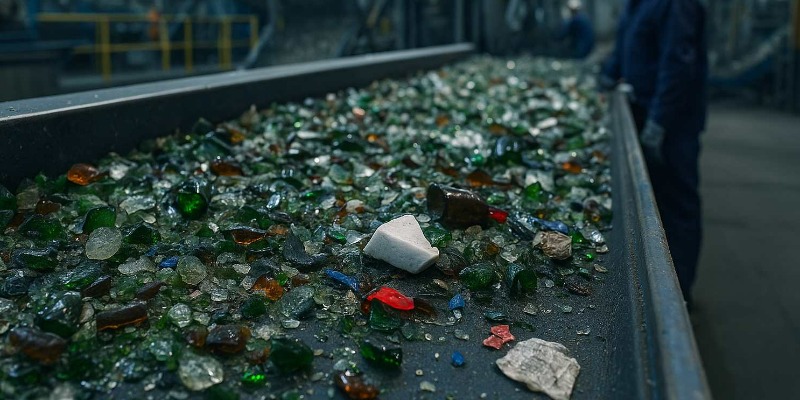
Impurities can originate from different stages of the supply chain: mistakes in separate collection, lack of environmental education, limitations of sorting technologies, and issues related to transport and storage. The most frequent contaminants include: ceramic materials, porcelain, stones, metals (both ferrous and non-ferrous), plastics, paper, organic matter, and incompatible types of glass (borosilicates, crystal, optical glass). Each of these impurities, if not properly managed, can trigger chain reactions that compromise both the quality and marketability of recycled glass.
Effects of Impurities on the Quality of Recycled Glass
Physical Effects: Fragility, Defects, and Structural Risks
From a physical perspective, impurities are real "time bombs" inside the vitrified mass. Take ceramics as an example: they have much higher melting points compared to packaging glass (over 1200–1300°C versus the 1500°C of common glass), so they remain solid during melting and form hard inclusions. These inclusions, even when microscopic, generate internal stresses that can lead to spontaneous breakages in finished products. A typical example is a bottle that shatters "by itself" on the shelf or during transport, causing severe economic and image consequences for the manufacturer.
Another frequent case is the presence of metals, especially fragments of steel or aluminum caps and lids. If not effectively removed, these can scratch, damage, or clog melting channels and also remain trapped in the vitrified mass as visible defects (black spots, streaks, or small cavities). The greatest risk, however, is damage to the mixer blades or even the furnaces, leading to costly production stoppages.
Plastics and organic residues, on the other hand, decompose during melting, generating gases and foams. This phenomenon leads to bubble formation within the glass, compromising both transparency and mechanical strength. In the most severe cases, it may be necessary to remelt or discard entire production batches.
Chemical Effects: Alteration of Composition and Functional Parameters
Chemically, impurities may be less visible to the naked eye but are no less harmful. A concrete example is the presence of borosilicate glass (for example, from laboratory containers or kitchenware) in streams destined for the production of glass packaging for food. Even small percentages of this material, known for its high thermal and chemical resistance, alter the balance between the main components (silica, sodium, calcium) of the vitrified mass.
The result is an unexpected change in physical properties (such as melting point) and optical characteristics (color, transparency, brilliance). This can lead to products that do not conform to customer specifications, especially in the food and pharmaceutical sectors, where standards are particularly strict.
The introduction of lead glass (such as that used in crystal) brings toxic and undesirable elements into the batch, making the material unsuitable for the production of bottles or jars intended for food contact. Lead can also catalyze secondary reactions in the furnaces and contaminate subsequent productions, sometimes requiring the plant to be stopped and decontaminated.
Other elements, such as metallic oxides from incompatible colored glass, can cause color variations that are difficult to control. In transparent products, even minimal quantities of coloring impurities lead to color shifts, loss of transparency, and accelerated material aging.
Functional Effects and Industrial Implications
On an industrial level, the presence of impurities has effects that go far beyond mere aesthetics. A batch of recycled glass contaminated by ceramics or stones can compromise production quality for weeks, forcing a slowdown of the line, increased quality controls, or even product recalls from the market. Operators are aware that a "zero tolerance" policy towards certain impurities is necessary to maintain relationships with the most demanding clients, such as multinational beverage and food companies.
Impurities also impact processing parameters: fusibility, viscosity, and forming behavior can change even with small compositional variations. This results in higher energy costs, increased furnace wear, the need for frequent process adjustments, and an overall decrease in production efficiency.
Finally, the economic impact should not be underestimated:
- Impurities increase the amount of waste to be disposed of, reducing the overall recycling yield.
- Maintenance and replacement costs for worn parts rise significantly.
- The presence of defects in finished products exposes operators to complaints, disputes, and loss of customer trust.
Case Studies and Industry Data
According to data from the European recycling sector, each ton of recycled glass contaminated by just 2–3% ceramics can generate defects in 15–20% of the bottles produced from that batch, with estimated economic consequences in the tens of thousands of euros for each compromised production cycle. Some Italian plants have documented that the introduction of a second optical sorting phase reduced the presence of ceramic inclusions by 70%, drastically lowering complaints from end customers.
In the most serious cases, suppliers risk being excluded from international glass supply chains, which impose increasingly strict standards for both safety reasons and growing attention to environmental and food regulations.
Technologies for Detecting and Removing Impurities
The fight against impurities involves a combination of mechanical sorting, advanced optical separation, magnetic and electrostatic systems, washing processes, and, increasingly, the integration of artificial intelligence into quality control systems. Research is bringing solutions to the market that can detect impurities even smaller than a millimeter, ensuring recycled glass output with purity levels compatible with even the most sensitive applications.
New Challenges and Future Prospects in Impurity Management
Innovation is not limited to selection technologies but extends to supply chain practices, batch traceability, and awareness campaigns aimed at citizens. Looking ahead, collaboration among all actors in the glass cycle – from consumers to treatment plants to the transforming industry – will become increasingly crucial in reducing impurity presence and fully unlocking the potential of recycled glass.
Conclusion
Managing impurities in recycled glass is not just a technical matter but a real strategic factor for business competitiveness and the sustainability of the sector. Deepening the understanding of the causes and effects of contamination enables operators to invest in targeted solutions and guarantee a final product that meets market expectations, minimizing waste and maximizing the environmental and economic benefits of glass recycling.
© Reproduction Prohibited