- Introduction to corrosion protection with environmentally friendly silane-based polymer coatings
- Chemical structure and functionality of silanes
- Polymeric coating formulations
- Adhesion and protection mechanisms
- Corrosion resistance test
- Environmental performance analysis
- Emerging industrial applications
- Future technological developments
Sustainable Innovation to Prevent Metal Corrosion in Extreme Environments
by Marco Arezio
Protecting metallic surfaces from corrosion represents one of the most significant challenges in the industrial sector, with major economic and environmental implications. Corrosion not only undermines the efficiency and safety of structures but also leads to high costs for maintenance and replacement. In this context, silane-based polymer coatings are emerging as an innovative and sustainable solution to extend the service life of metals exposed to harsh environmental conditions.
This article aims to analyze in detail the protective properties, efficiency, practical applications, and positive environmental impact of these coatings.
Features of Silane-Based Coatings
Silane compounds are organosilicon substances characterized by functional groups that enable strong chemical adhesion to metallic surfaces while ensuring optimized reactivity with polymeric materials. This unique combination makes them particularly suitable for creating protective barriers against oxygen, moisture, and aggressive chemical agents. Thanks to their versatility, silanes facilitate adhesion between metallic substrates and organic layers, significantly enhancing coating performance.
Another distinctive feature of silane-based coatings is their eco-friendly approach. Compared to traditional coatings, their application involves reduced emissions of volatile organic compounds (VOCs), minimizing the environmental impact during production and use. Furthermore, the optimization of chemical formulations has improved the mechanical and thermal properties of these coatings, enhancing their resistance and durability over time.
Protective Mechanism
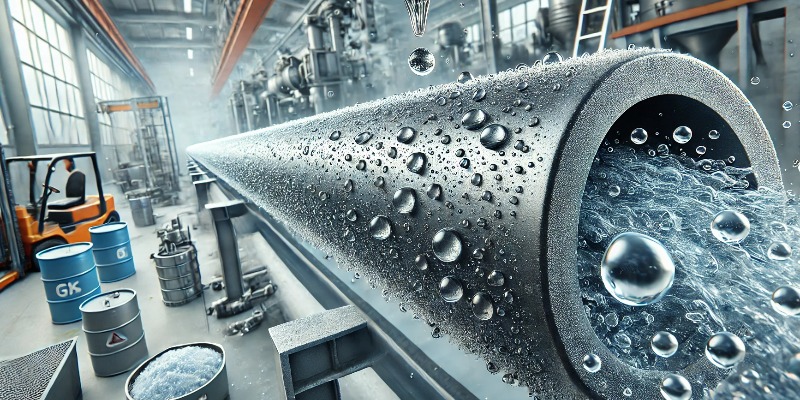
The protective mechanism of silane-based coatings relies on forming a three-dimensional network that firmly anchors to the metallic surface through covalent and hydrogen bonds. This network acts as a dual barrier: physical, preventing direct contact between the metal and corrosive agents, and chemical, trapping reactive molecules within the coating’s structure.
The density of the network and the chemical composition of the coating are critical factors for its effectiveness. Experimental studies have demonstrated that coatings with high network density offer superior protection, maintaining adhesive properties even after prolonged exposure to extreme environmental conditions.
Performance in Extreme Conditions
To evaluate the efficiency of silane-based coatings, rigorous tests were conducted on treated metallic surfaces, exposing them to salt spray, high humidity, and extreme thermal cycles.
The results of these experiments highlighted a drastic reduction in the corrosion rate compared to untreated surfaces. Even after hundreds of hours of exposure, the protective properties of the coating remained almost unchanged, ensuring excellent preservation of metallic surfaces.The adaptability of these coatings is another key element. Thanks to the ability to customize formulations, optimal performance can be achieved even in highly demanding applications, such as those typical of the aerospace or offshore sectors.
Industrial Applications and Environmental Benefits
The adoption of silane-based coatings is rapidly growing across various industrial sectors, including automotive, maritime, and appliance manufacturing. In each of these areas, the coatings provide a unique combination of chemical resistance, mechanical durability, and ease of application, making them a superior choice compared to traditional coatings.
From an environmental perspective, the benefits are equally significant. Silane-based coatings are free of toxic solvents and help reduce the frequency of maintenance interventions, thereby decreasing resource usage and waste generation. Furthermore, due to their compatibility with metal recycling processes, these coatings fit perfectly into a circular economy strategy, contributing to a lower overall environmental impact.
Future Innovations and Prospects
The evolution of silane-based coatings is just beginning. Future developments may focus on further optimizing formulations to meet the specific needs of highly technological sectors such as biomedical or renewable energy. Additionally, integrating advanced monitoring technologies could enable predictive corrosion management, further improving the efficiency and sustainability of the solutions adopted.
At the same time, research continues to explore new chemical combinations that could expand the range of applications for silane-based coatings, making them even more versatile and high-performing.
Conclusions
Silane-based polymer coatings represent a breakthrough in metal protection, offering an effective and eco-friendly alternative to traditional methods. Their ability to combine high performance with a reduced environmental impact makes them an ideal choice for numerous industrial applications. With ongoing research advancements and the implementation of new technologies, their role in the industry is set to grow, contributing to a more sustainable and innovative future.
© All rights reserved