- Why Counterfeiting at International Trade Fairs is a Threat to Business
- The Regulatory Framework for Brand Protection at the Fair
- Preparing the Documentation: The First Step to Defending Your Rights
- How to Spot Counterfeit Goods at a Show
- Practical Procedures for Obtaining the Seizure of Counterfeit Products
- The Intervention of the Authorities and the Role of the Trade Fair Organizers
- Legal Developments and Consequences after the Seizure of the Goods
- Prevention Strategies and Operational Advice for Entrepreneurs
How to Act Promptly to Obtain the Seizure of Counterfeit Products during Trade Fairs and International Events
by Marco Arezio
Participating in an international trade fair is a crucial moment for many companies: an opportunity to present new products, establish business contacts, and strengthen their brand reputation on a global level. However, these same events also represent fertile ground for counterfeiting, with exhibitors presenting copied products, brand imitations, and unauthorized goods that threaten the investments and reputations of legitimate businesses.
For this reason, knowing the procedures and strategies to promptly obtain the seizure of counterfeit goods at a trade fair or during international exhibitions becomes an essential requirement for every entrepreneur who is serious about protecting their rights.
The Legal Context: Protecting Your Trademark at Trade Fairs
In the context of international trade fairs, the protection of industrial property rights is governed both by national regulations and by international conventions, such as the Paris Convention and the TRIPS Agreements (Trade-Related Aspects of Intellectual Property Rights). Furthermore, the European Union has adopted specific regulations to facilitate the intervention of customs and judicial authorities in the event of violations of intellectual property rights during public events.
Indeed, trade fairs are considered public and open venues, where the mere exhibition of goods may already constitute a violation of trademark, patent, design, or copyright rights, even without an actual sale. This principle has been confirmed by numerous rulings in Italy and other European countries, recognizing the right of the owner to request immediate precautionary measures, including the seizure of the exhibited goods.
How to Prepare: Fundamental Prerequisites for Protection
Before participating in a trade fair, the entrepreneur must ensure they have clear and up-to-date documentation regarding their industrial property rights (certificates of registration for trademarks, patents, designs, documentation relating to original products, photos, catalogs, etc.). This material will be essential to demonstrate, in the event of a dispute, the ownership and validity of their rights, facilitating the work of the authorities responsible for the seizure.
It is also important to monitor the exhibitor catalog and, where possible, carry out preventive checks on participating companies, in order to identify potential counterfeiting risks in advance.
The Procedure to Obtain Seizure at a Trade Fair
If, during the event, a stand displaying suspected counterfeit goods is identified, the entrepreneur or their legal counsel must act swiftly. Here are the main steps of the procedure, explained in practical terms:
1. Collection of Evidence
The first action to take is the collection of evidence. It is essential to document the presence of counterfeit goods through detailed photographs of the stands, products, and any brochures, as well as to note the details of the exhibitor (name, booth number, company name, contact information). Often, the trade fair organizers themselves provide surveillance services or, in any case, may be involved as witnesses.
2. Immediate Intervention of the Authorities
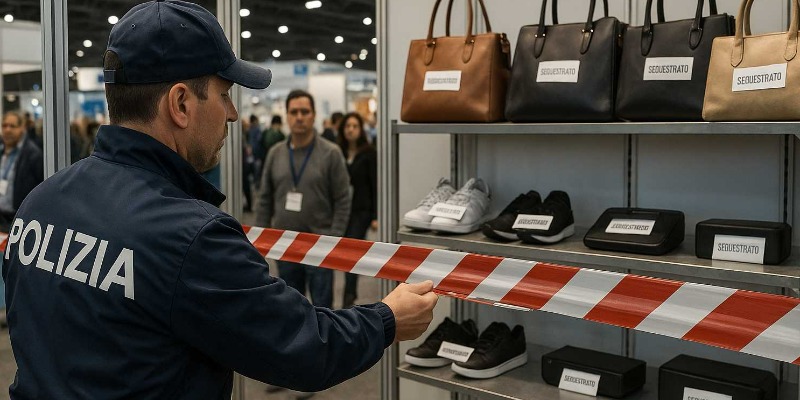
You must promptly contact the judicial police present at the fair or, if absent, call the law enforcement authorities (Carabinieri, Guardia di Finanza, Local Police). In many countries and at major Italian and European trade fairs, specific law enforcement units are present precisely to address emergency situations related to counterfeiting.
3. Seizure Request: Petition to the Public Prosecutor
To obtain the seizure, it is necessary to file a complaint with the territorially competent Public Prosecutor's Office (usually the one where the fair is held). The complaint can also be filed through a trusted legal counsel and must contain:
- The details of the owner of the infringed right
- The description of the alleged violation and the counterfeit products
- Documentation supporting the ownership and validity of the rights
- The evidence collected during the trade fair
If the Public Prosecutor finds the request well-founded, they may urgently order the seizure of the goods and promotional materials exhibited, delegating law enforcement to carry out the measure immediately.
4. Precautionary Measures in Civil Proceedings
In addition to criminal proceedings, it is possible to take civil action by requesting the issuance of an urgent measure (ex art. 700 Italian Code of Civil Procedure), aimed at the seizure of goods and an injunction against their exhibition. This route can be particularly effective if quick and effective protection is desired, preventing the goods from being removed before the intervention of the authorities.
5. Cooperation with Trade Fair Authorities
It is good practice to also involve the fair's organizing company, informing the legal officer of the event about the presence of suspicious goods. In many cases, the fair regulations already include clauses that allow for the immediate removal of exhibitors responsible for violations of industrial property, thus facilitating the authorities’ work.
Timing and Critical Aspects of the Procedure
Speed of intervention is essential: at trade fairs, counterfeit products can be removed within hours. For this reason, it is crucial to act immediately, without hesitation, and rely on a legal expert in industrial property law, preferably one already present on-site or with specific experience in emergency procedures.
It is important to emphasize that the procedure may encounter obstacles, especially if the exhibitors are foreign or if the fair takes place in countries with less stringent legislation on intellectual property. In these cases, it can be useful to make use of international networks of lawyers or trade associations that offer assistance on a global scale.
What Happens after the Seizure: Judicial Developments and Subsequent Protection
After the seizure, the goods remain in the authorities’ custody until the dispute is resolved. The entrepreneur may become a civil party in any criminal proceedings or initiate a civil action to obtain compensation for damages and the destruction of the counterfeit products.
It is also advisable to remain vigilant even after the fair, monitoring for further episodes of counterfeiting online and offline.
- Practical Advice for Entrepreneurs: Effective Prevention and Protection
- Register your industrial property rights in the countries where you participate in trade fairs
- Prepare clear and up-to-date documentation to bring to the fair
- Train staff on procedures to follow in case of suspected counterfeiting
- Always have the contact information of an intellectual property legal expert available for urgent interventions
- Take out specific insurance policies for trademark protection and management of international disputes
Conclusions: Defending the Value of Innovation
The seizure of counterfeit goods at trade fairs is not only an entrepreneur’s right but a necessary choice to defend innovation, work, and the company’s reputation. Acting promptly sends a strong message, protecting not only oneself but also the entire market from unfair practices that damage fair competition.
Investing in prevention, information, and legal assistance is the key to participating in international exhibitions with the confidence to assert your rights, safeguarding every day the value built with commitment and passion.
© All Rights Reserved
Sources
Italian Patent and Trademark Office (UIBM) – Ministry of Enterprises and Made in Italy
World Intellectual Property Organization (WIPO)
European Observatory on Infringements of Intellectual Property Rights (EUIPO Observatory)
Guardia di Finanza – Anti-Counterfeiting Activities