- Environmental cleanup regulations: obligations and responsibilities
- When failure to carry out environmental cleanup becomes a crime of omission
- The role of the Public Administration in environmental remediation
- Criminal offences for failure to clean up: what the law provides
- Liability of entrepreneurs in case of contaminated sites
- How to prevent criminal risks in corporate environmental cleanups
- Failure to clean up and administrative liability of the entity according to Legislative Decree 231/2001
- Best practices and compliance strategies for businesses and legal departments
Failure to clean up the environment and criminal liability: what entrepreneurs and corporate legal departments need to know about obligations, risks and the role of the Public Administration
by Marco Arezio
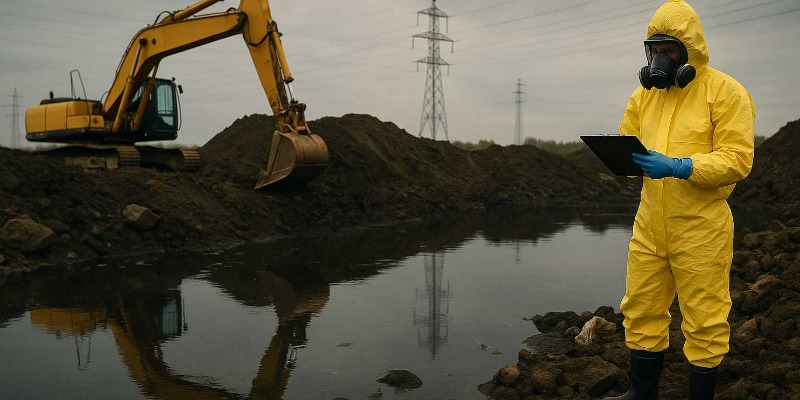
When it comes to environmental remediation, the stakes are not only environmental protection, but also involve important aspects of legal liability, with potential criminal repercussions for both private operators and representatives of the Public Administration. The issue of failed environmental remediation, or the failure to implement remediation interventions on contaminated sites, is now more central than ever in Italian environmental law and in the activity of corporate legal offices.
The crucial question is: can failure to clean up constitute the crime of omission? And in which cases can the parties involved be held accountable?
The regulatory framework of reference
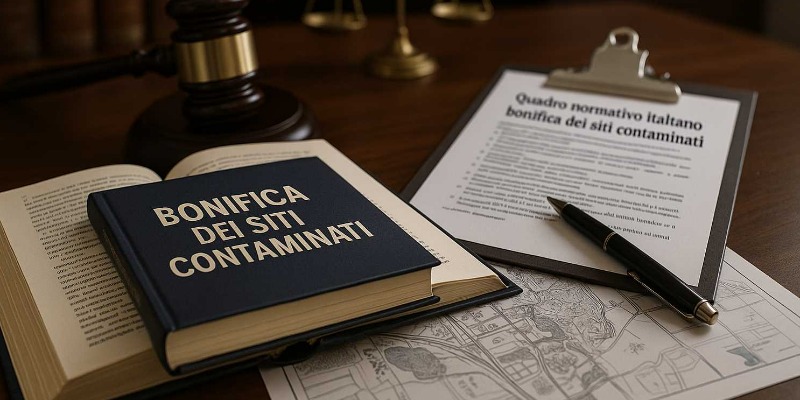
The regulation of environmental remediation in Italy is based on Legislative Decree 152/2006 (so-called "Consolidated Environmental Act"), which establishes obligations and procedures for the management of contaminated sites. In particular, Part IV, Title V of the decree establishes the principles of responsibility, the methods of intervention and the role of private and public administrations. The key principle is "the polluter pays", according to which the person responsible for the pollution is required to implement the operations of safety, remediation and environmental restoration.
However, the legislation is not limited to a civil or administrative profile. In the presence of omissions, i.e. failure to perform remediation obligations, a criminal offence may be identified: this is the focus of recent jurisprudential developments.
When failure to clean up constitutes a crime of omission
The Consolidated Environmental Act provides for administrative sanctions and, in certain cases, criminal sanctions for those who do not comply with remediation obligations. In particular, the following may occur:
- The crime under art. 452-terdecies of the Criminal Code (introduced by Law 68/2015): punishes “anyone who fails to carry out the remediation, restoration or emergency safety measures on contaminated sites”, if prescribed by the competent Authority. The penalty provided for is imprisonment from one to four years.
- The crime of omission of official duties (art. 328 of the Criminal Code) in the event of negligent or wilful inertia of the Public Administration in demanding compliance or in implementing substitute powers.
For a criminal offence to be committed, some essential elements must occur:
- Legal obligation to act: there must be a specific regulatory or administrative obligation (for example, an ordinance or a prescriptive provision).
- Omission: the obligated party does not carry out the remediation or safety activities.
- Danger or damage event: failure to clean up must result in a concrete danger or worsening of the environmental risk situation.
Case law (Cass. Pen., Sez. III, sentence no. 18454/2022) has specified that inertia alone, in the presence of a formally imposed clean-up obligation, is sufficient to integrate the criminal offence, even if the dangerous situation already existed previously.
The role of the Public Administration
It is not only the private sector that must answer for the lack of clean-up.
The Public Administration plays a supervisory and impulse role in the clean-up procedures. In case of inertia, it can answer both in administrative proceedings and, in the most serious cases, in criminal proceedings.Substitute powers: If the private individual does not comply, the public body has the duty to activate the substitute powers, having the remediation works carried out ex officio and subsequently recovering the costs from those responsible.
Criminal liability of officials: In the event of failure to initiate proceedings, officials may be held liable for the crime of failure to perform official duties (art. 328 of the Criminal Code), especially where the delay or failure to implement has aggravated the risk to public health or the environment.
Private operators: obligations and compliance strategies
For entrepreneurs and companies, failure to clean up represents a risk not only from an administrative and reputational perspective, but also from a criminal one. Here are some fundamental aspects that corporate legal departments should keep under constant control:
- Monitor the status of the sites: Mapping and constant monitoring of company sites, with attention to possible pollution, is the first prevention measure.
- Timely response to prescriptions: In the presence of ordinances or prescriptive measures, it is essential to immediately start the remediation procedures, involving experts and specialized companies.
- Transparent communication with the PA: Documentation of the activities carried out and collaboration with public bodies are useful elements both in the preventive phase and in the event of litigation.
- Evaluation of “historical” responsibilities: Companies often take over the management of already contaminated sites: it is therefore crucial to reconstruct the “chain of responsibilities” and, where possible, obtain releases or transactions with the previous owners/responsible parties.
Administrative liability of the entity (Legislative Decree 231/2001)
In addition to personal liability, it should be remembered that failure to clean up may also expose the company to the sanctions provided for by Legislative Decree 231/2001 on the administrative liability of entities, if the crime was committed in the interest or to the advantage of the company. It is therefore essential to adopt effective 231 Organizational Models that include environmental management procedures and emergency response plans.
Conclusions: prevention, control and best practices
In a context where environmental awareness is constantly growing and the regulatory framework is becoming more stringent, companies and their legal departments must adopt a proactive approach to managing remediation. This involves not only fulfilling regulatory obligations, but also building a solid corporate culture of environmental compliance. Failure to remediate can lead to serious consequences: the best protection consists of prevention, transparency and the adoption of certified environmental management practices.
An investment in control, training and shared responsibility is today the best antidote against criminal, administrative and reputational risks arising from superficial or omission management of environmental remediation.
© Reproduction prohibited