- Civil liability for defective packaging and compensation for damages
- Defective packaging and risk of injury to the consumer
- Criminal liability for injuries caused by unsafe packaging
- European legislation and Consumer Code on defective packaging
- Legal prevention through quality and compliance checks
- Defective food packaging: case law and precedents
- Corporate risk management and liability for defective packaging
- Legal opinion on civil and criminal liability for defective packaging
When a packaging defect becomes a legal risk and how to prevent it
In today's world, packaging is no longer a mere product accessory, but a fundamental element that directly impacts safety, regulatory compliance, and consumer perception. Packaging performs complex functions: protecting the contents, ensuring their hygienic integrity, communicating information to the customer, preventing contamination, and enabling proper storage and transportation.
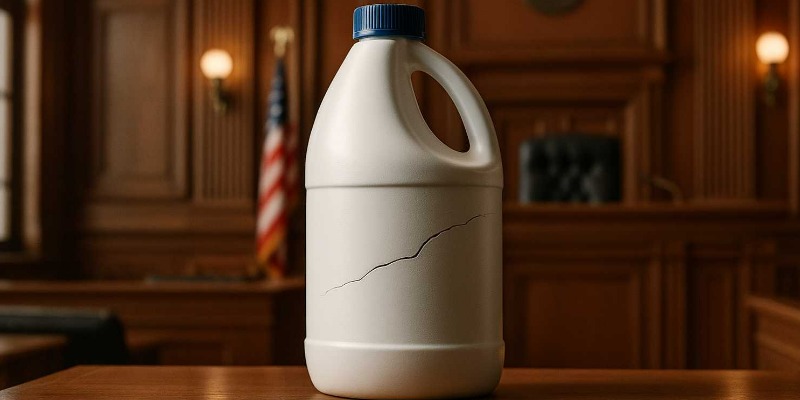
However, when packaging is defective, its function becomes a threat. A poorly sealed cap on a detergent container can cause burns, non-compliant cling film can release toxic substances, and fragile cardboard can collapse, causing logistics incidents. The transition from a technical error to a legal consequence is immediate: a legal risk arises that involves the civil and criminal liability of those who market the product.
Defective packaging: nature of the defect and consequent liability
The concept of "defect" is not trivial. Packaging is considered defective when it does not offer the safety one might legitimately expect, taking into account:
- the presentation of the product, including labelling and instructions
- normal and reasonably foreseeable use by the consumer
- the moment in which the good was put into circulation
Packaging that does not withstand the minimum expected stresses, that breaks easily or that uses materials unsuitable for contact with food constitutes a defect under European legislation.
The types of damages are varied: they range from physical injuries (cuts, bruises, poisoning from leaked substances) to damage to health (intoxication, allergic reactions, infections), up to financial and existential damages, such as loss of working capacity or moral suffering related to a domestic accident.
Civil liability: the cornerstone of the Consumer Code
The civil law framework is based on Directive 85/374/EEC, implemented in Italy by Presidential Decree 224/1988 and incorporated into Articles 114-127 of the Consumer Code. This is a strict liability regime: it is not necessary to prove the manufacturer's fault, but only the defect, the damage, and the causal link.
This approach, inspired by the principle of protecting the weaker party, shifts the business risk to the manufacturer. If the consumer suffers harm from defective packaging, they can obtain full compensation: medical expenses, lost earnings, and physical and moral harm.
In addition to the manufacturer, importers and distributors may also be held liable. The legislator thus intended to avoid "free zones" in the commercial chain, where consumers would be left unprotected. Civil liability thus takes on a widespread and shared nature, aimed at ensuring safety at every stage of the economic cycle.
Criminal liability: when a defect becomes a crime
While civil liability focuses on financial compensation, criminal liability has punitive and preventive purposes. In Italy, the Criminal Code provides for the application of the provisions on negligent personal injury (Article 590 of the Criminal Code) and manslaughter (Article 589 of the Criminal Code) in cases where defective packaging causes serious consequences for the safety of persons.
Negligent conduct may arise from:
- negligence: failure to check the materials used;
- imprudence: placing packaging on the market despite knowing its limitations;
- inexperience: inadequate technical choice, such as the use of substances unsuitable for food contact.
Criminal liability may also extend to the entity, pursuant to Legislative Decree 231/2001, when the breach arises from organizational deficiencies within the company. In this case, in addition to the liability of the individual, the company risks significant fines and disqualification measures such as exclusion from public procurement or suspension of operations.
Technical standards and preventive compliance
Prevention is the first line of legal defense for businesses. Some key regulatory frameworks are:
- Reg. (EC) 1935/2004: materials and objects in contact with food must ensure that they do not release hazardous substances.
- Reg. (EU) 10/2011: specific for plastics, sets migration and composition limits.
- ISO standards: ISO 22000 (food safety) and ISO 9001 (quality) offer organizational standards that reduce risks and serve as defenses in court.
Compliance is not limited to formal compliance with regulations, but includes periodic laboratory checks, supply chain audits, traceability systems, and rapid recall procedures.
Case law: significant precedents
Italian and European case law has addressed numerous cases of injuries caused by defective packaging.
- Cass. Civ., Sez. III, no. 11816/2015: the manufacturer's liability was recognized for an exploded glass bottle that caused physical injury to the consumer.
- Criminal Court of Cassation, Section IV, no. 163/2010: The conviction for negligent injury against a manufacturer who had placed unsuitable food packaging on the market, resulting in the poisoning of several individuals, was upheld.
These rulings confirm the jurisprudence's orientation in favor of broad consumer protection and a broad interpretation of producer liability.
Corporate risk management: beyond the law
From a business perspective, the legal risk associated with packaging cannot be reduced to a mere formal requirement. An incident involving defective packaging not only results in civil and criminal litigation, but also in often irreparable reputational damage.
Risk management must include:
- documented quality control systems
- material strength and safety tests
- continuous training of staff
- transparent communication strategies towards the consumer
In court, being able to demonstrate that all preventive measures have been taken is often crucial in limiting liability.
Pro veritate opinion: integrated legal analysis
Question: whether and how the manufacturer, importer, or distributor can be held civilly and criminally liable for injuries caused by defective packaging.
In law, civil liability is divided into two levels:
- Contractual: pursuant to art. 129 of the Consumer Code, the seller is obligated to deliver compliant goods. Defective packaging constitutes a lack of conformity, resulting in compensation for damages
- Non-contractual liability due to defect, without the need to prove fault. The burden of proof falls on the injured party only for defect, damage, and causal link
From a criminal perspective, the application of Articles 589 and 590 of the Criminal Code leads to the criminalization of any negligent conduct that causes injury or death directly related to a packaging defect. The fault may arise from negligence, imprudence, or inexperience.
Liability also extends to entities pursuant to Legislative Decree 231/2001 if the damage results from organizational deficiencies. The applicable disqualification sanctions (disqualification from operating, exclusion from tenders, publication of the ruling) have serious and long-lasting effects.
Regarding causality, case law requires proof that the defect was the direct and effective cause of the injury. Otherwise, liability cannot be established. However, by virtue of the principle of consumer protection, judges tend to broaden the notion of foreseeability of damage.
In conclusion, packaging manufacturers cannot consider the packaging a mere accessory to the product. It is an integral part of product safety and, as such, must meet high standards. Technical prevention, regulatory compliance, and the adoption of appropriate organizational models are not only a legal obligation but also a fundamental defense in the event of litigation.
© Reproduction Prohibited
Regulatory and jurisprudential sources
- Directive 85/374/EEC on liability for defective products
- Presidential Decree 224/1988 (implementation of the directive)
- Consumer Code (Legislative Decree 206/2005, Articles 114-129)
- Regulation (EC) 1935/2004 on materials intended to come into contact with food
- Reg. (EU) 10/2011 on plastic materials for food
- Criminal Code, articles 589 and 590
- Legislative Decree 231/2001 on the administrative liability of entities
- Cass. Civ., Sec. III, n. 11816/2015
- Cass. Pen., Sec. IV, n. 163/2010