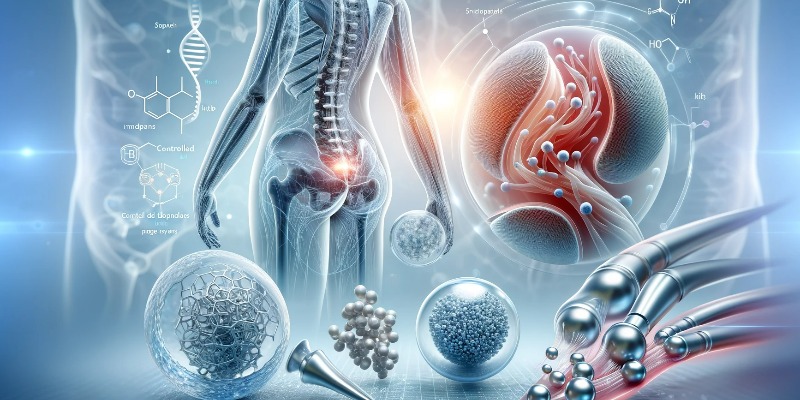
- Biocompatible Polymers: Innovations and Applications in Medicine
- New Polymeric Materials for Safe and Effective Medical Implants
- Controlled Drug Release Systems: The Role of Polymers
- Synthetic and Natural Polymers: A Comparison for Biomedical Applications
- Biocompatible Implants: Future Perspectives in Surgery and Orthopedics
- Shape Memory Polymers: Revolution in Medical Technologies
- Hydrogels and Nanoparticles: Advanced Technologies for Drug Delivery
- Degradable Polymers: The New Frontier in Regenerative Medicine
- Stimulus-Responsive: Smart Polymers for Targeted Therapies
- Biocompatibility and Controlled Degradation in New Medical Implants
Advanced Polymer Materials for Medical Implants and Controlled Drug Release Technologies, Capable of Enhancing Safety and Therapeutic Efficacy
by Marco Arezio
Biocompatible polymers represent an area of great interest in medical research due to their unique and versatile characteristics, which make them ideal for numerous applications in healthcare.
From medical implants to controlled drug release systems, these materials are revolutionizing biomedical engineering.
The development of new polymers with specific properties can significantly improve the efficacy, safety, and durability of therapeutic solutions.
In this article, we will explore the major advancements in the research of biocompatible polymers and their future applications, with a particular focus on biocompatible implants and controlled drug release systems.
Biocompatible Polymers: Definition and Characteristics
A biocompatible polymer is a material capable of interacting with body tissues and fluids without causing adverse reactions such as inflammation, toxicity, or immune rejection.
Biocompatibility, therefore, refers not only to the absence of negative effects but also to the material’s ability to integrate and function properly within the human body.
The main parameters for evaluating biocompatibility include cytotoxicity, hemocompatibility, and controlled degradation.
In practice, biocompatible polymers must be:
Non-toxic: They should not release substances that can damage tissues or interfere with physiological functions.
Degradable: Some polymers need to be designed to degrade predictably and safely, particularly in cases where the material is used for temporary implants or drug delivery systems.
Stable: They must maintain their mechanical and chemical properties for the entire duration required for their function.
Modifiable: The properties of the polymer (rigidity, porosity, resistance to deformation, etc.) must be adaptable depending on specific medical applications.
Types of Biocompatible Polymers
Biocompatible polymers can be of natural or synthetic origin, each with advantages and disadvantages depending on the intended applications.
Natural Polymers
Natural polymers, such as collagen, chitin, cellulose, and hyaluronic acid, are often preferred for applications where perfect integration with biological tissues is required. These materials tend to degrade naturally and do not provoke significant immune responses. However, their variability and production challenges on a large scale often pose a problem.
A notable example is chitosan, a derivative of chitin, used for applications such as wound healing and as a carrier for drug delivery. Its biocompatibility, combined with excellent tissue adhesion capabilities, makes it ideal for these applications.
Synthetic Polymers
Synthetic polymers, such as polyethylene glycol (PEG), poly(lactic-co-glycolic acid) (PLGA), and polyethylene, are easier to produce and manipulate in terms of mechanical properties. These materials allow for greater precision in the creation of custom-made medical devices, such as orthopedic implants or drug delivery systems.
An important aspect is that the degradation of some synthetic polymers can be designed in a controlled manner, enabling timed drug delivery or the degradation of an implant once its function is completed.
Biocompatible Implants: New Materials and Technologies
Biocompatible medical implants are rapidly evolving due to the introduction of new polymers capable of better interacting with human tissues.
This progress significantly impacts many medical disciplines, particularly orthopedics, dentistry, and cardiovascular surgery.One of the most promising materials for implants is PLGA, a copolymer that combines lactic acid and glycolic acid.
PLGA has the ability to degrade gradually into non-toxic products (lactic acid and glycolic acid), which are metabolized and removed from the body. This characteristic makes it particularly useful for temporary implants, such as stents or bone fixation systems, which do not require surgical removal once their function is completed.
Another interesting development involves shape-memory polymers, such as modified polyethylene terephthalate, which can change shape in response to external stimuli (temperature, light, etc.). These polymers are used to create implants that can adapt to different anatomical conditions, reducing the need for multiple surgical interventions.
Controlled Drug Release Systems: The Role of Polymers
Controlled drug release is another field where biocompatible polymers are making a significant impact.
Degradable polymers, such as PLGA and PEG, are widely used for the formulation of microspheres, nanoparticles, and gels that allow for prolonged and controlled release of the active ingredient.
This is particularly useful in therapies where maintaining a constant concentration of the drug in the body is crucial, such as in cancer treatment or chronic diseases.
Microspheres and Nanoparticles
Polymeric microspheres and nanoparticles are used to encapsulate drugs, protecting them from rapid metabolism and allowing for their gradual release. PLGA particles, for example, are employed for the release of anti-cancer drugs, antibiotics, and hormones, as the polymer degradation rate can be regulated by varying the ratio of lactic to glycolic acid.
Biocompatible Hydrogels
Hydrogels, three-dimensional polymer networks capable of retaining large amounts of water, are used as supports for drug delivery or as scaffolds for tissue regeneration. Thanks to their porous structure and biocompatibility, hydrogels are ideal for applications such as ophthalmic drug delivery or skin regeneration in burn patients.
Stimuli-Responsive Polymers
One of the most advanced areas in polymer research for drug delivery is that of stimuli-responsive polymers, capable of releasing drugs in response to changes in the biological environment, such as pH, temperature, or the presence of specific enzymes. This approach can enhance therapeutic efficacy by reducing side effects, as the drug is released only when and where needed.
Future Perspectives
Research on biocompatible polymers for medical applications is constantly evolving, with new materials and technologies promising to further improve the performance of implants and controlled release systems.
Future directions include the use of smart polymers capable of responding to external stimuli, the development of biocompatible materials with antibacterial properties, and the combination of polymers with nanotechnologies for more precise drug targeting.
In conclusion, biocompatible polymers are transforming modern medicine, offering innovative solutions to improve patients' quality of life.
From new materials for implants to advanced controlled drug release systems, these advancements represent a promising frontier for the future of science and medicine.