








 Post-Consumer LDPE Handbook. Chapter 4: Contamination in Post-Consumer LDPE Film. Types of Impurities, Incompatible Polymers, Effects on Extrusion and Recycled Film Quality
Technical analysis of physical, chemical, and polymeric contamination in post-consumer LDPE film: paper, sand, organic residues, inks, glues, labels, PVC, EVA, PP, PET, and multilayer Post-Consumer LDPE Handbook. Chapter 4: Contamination in Post-Consumer LDPE Film. Types of Impurities, Incompatible Polymers, Effects on Extrusion and Recycled Film Quality Author: Marco Arezio . Expert in the circular economy, polymer recycling, and industrial plastics supply chains. Founder of the rMIX platform, dedicated to the valorization of recycled materials and services for the circular economy. In the mechanical recycling of post-consumer LDPE film, contamination is not an anomaly, but a structural condition of the input material. Understanding the nature, origin, and industrial impact of impurities is essential for those involved in sorting, washing, densifying, extruding, and final processing of the recycled polymer. This chapter analyzes the main forms of contamination affecting post-consumer film and evaluates their concrete effects on process stability, granule quality, and the material's convertibility into new technical or commercial films. The goal is not merely descriptive, but operational: to offer an industrial interpretation of the problem, useful to technicians, recyclers, compounders, converters, and quality managers. Types of physical and chemical contaminants In the recycling of post-consumer LDPE film, contamination is one of the most critical and determining factors for the final quality of the recycled material. Unlike virgin or post-industrial material, post-consumer film is the result of a real, often uncontrolled, use cycle that exposes the polymer to a variety of external agents. Contamination is not a marginal or accidental phenomenon, but a structural element of the post-consumer flow, which must be understood, classified, and managed systematically. Analyzing the types of physical and chemical contaminants therefore lays the foundation for a realistic assessment of the possibilities and limitations of LDPE film recycling. Physical contaminants are generally the most immediately perceptible and visible. They include solid foreign materials that mix with the film during use, collection, and handling. Paper, cardboard, sand, dust, mineral residues, glass or metal fragments are typical examples of physical contamination. In the context of post-consumer film, these contaminants are particularly insidious because they tend to adhere to the surface of the material or remain trapped between the layers of compressed film. The flexibility and lightness of LDPE favor the accumulation of impurities, making complete separation difficult in subsequent phases. Among physical contaminants, organic matter occupies a prominent position. Food residues, grease, moisture, plant residues, and microorganisms are common, especially in domestic and agricultural waste streams. These contaminants not only degrade the material's appearance and odor, but also trigger chemical and biological degradation processes that can compromise the polymer's stability. The presence of organic matter also increases the demand for washing and drying, directly impacting operating costs and recycling yields. Alongside physical contaminants, chemical contaminants represent a more complex and less readily identifiable category. They include substances that interact with the polymer at the molecular level or are carried over into the recycling process as difficult-to-separate residues. Printing inks, glues, adhesives, and labels are among the main sources of chemical contamination in post-consumer film. These elements are an integral part of the original product and cannot strictly be considered extraneous, but they become problematic when the material is remelted and reprocessed. The inks used to print films may contain pigments, solvents, and additives that, during the recycling process, migrate into the polymer or degrade, altering its color and properties. Glues and adhesives, often formulated to ensure permanent adhesion, can melt at different temperatures than LDPE, creating inclusions or charred residues that compromise the quality of the recycled pellet. Labels, especially if made from materials other than the base polymer, represent a further source of incompatibility and material variability. A particularly critical category of contamination is represented by incompatible polymers. Post-consumer LDPE film may contain varying amounts of other polymers, either intentionally introduced during the product's design phase or accidentally during collection. PVC, EVA, PP, PET, and multilayer materials are the main sources of polymer contamination. Even in small percentages, these materials can significantly affect the behavior of the recycled polymer. PVC, for example, is extremely problematic for LDPE recycling, as it releases corrosive compounds and degrades at lower temperatures than polyethylene processing temperatures. EVA, despite being chemically more similar, alters the rheological and mechanical properties of the material, making the melt behavior less predictable. PP and PET, if present in the form of fragments or residues, can cause surface defects and structural discontinuities in the final product. Finally, multilayer materials represent structural contamination, as they combine different layers designed not to be separated. Another type of contamination involves agricultural and environmental residues. Films from agriculture are frequently contaminated with soil, sand, fertilizers, pesticides, and plant residues. These contaminants not only increase the content of solid impurities, but can also introduce chemicals that accelerate polymer degradation or interfere with processing. Films dispersed in the environment and subsequently recovered also often exhibit a high degree of surface degradation and complex contamination that is difficult to completely eliminate. From an industrial perspective, it is essential to understand that the different types of contaminants do not act in isolation, but interact with each other and with the polymer during the recycling process. The simultaneous presence of physical and chemical contaminants amplifies the negative effects, reducing process stability and the quality of the final material. Contamination management therefore cannot be entrusted to a single technological step, but must be integrated throughout the entire supply chain, from collection to processing.... BUY THE MANUAL FAQ What are the most common contaminants in post-consumer LDPE film? The most common are paper, sand, soil, organic residues, metals, inks, glues, labels and incompatible polymers such as PVC, PP, PET, EVA and multilayer structures. Why is PVC so dangerous when recycled from LDPE? Because it degrades at lower temperatures than polyethylene is processed, releasing corrosive compounds and generating serious defects in the recycled material. Can printing inks compromise recycled film? Yes. They can alter the color, promote degradation, and generate aesthetic and structural defects in the film obtained from recycled material. Is agricultural film more difficult to recycle than domestic film? In many cases, yes, because they contain soil, moisture, plant residues, fertilizers, and degradation from environmental exposure, often resulting in lower yields and higher treatment costs. Do contaminations only affect the aesthetics of the recycled film? No. In addition to the visual appearance, they affect viscosity, bubble stability, sealability, mechanical strength, process continuity, and maintenance costs.
SEE MORE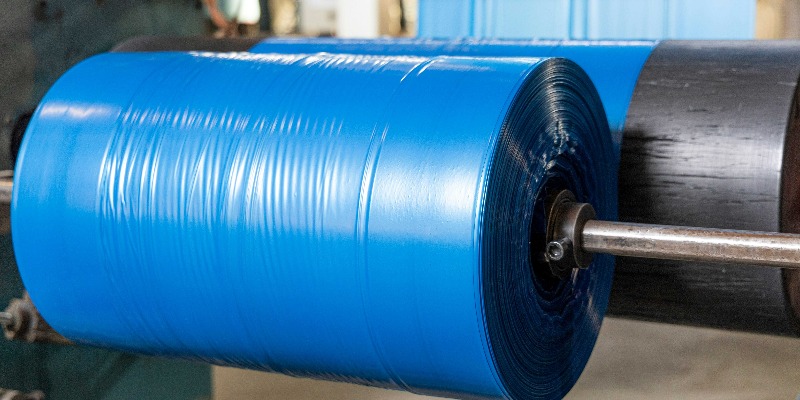 Post-Consumer LDPE Handbook. Chapter 5: Technologies, Plants, and Processes in the Post-Consumer LDPE Film Processing Chain
From pre-selection to pelletization: how to truly build the quality of low-density polyethylene (LDPE) PCR Author: Marco Arezio . Expert in the circular economy, polymer recycling, and industrial plastics processes. Founder of the rMIX platform, dedicated to the valorization of recycled materials and the development of sustainable supply chains. Date: April 7, 2026 Reading time: 18 minutes Post-Consumer LDPE Handbook. Chapter 5: Technologies, Plants, and Processes in the Post-Consumer LDPE Film Processing ChainIn post-consumer LDPE film recycling, there is no miracle machine that can transform a light, dirty, variable, and often unstable flow into an industrial-quality PCR pellet. Instead, final quality depends on the consistency of the entire line: from pre-sorting to pellet cutting, each phase prepares the next, influences its efficiency, and amplifies its strengths or weaknesses. It is this systemic vision that distinguishes a merely operational plant from a truly competitive supply chain. Available industrial and technical evidence confirms that for flexible films, the quality of sorting, washing management, extrusion stability, and the ability to filter and pelletize without transferring the variability of the incoming waste downstream are crucial. Why the plant engineering chapter decides the value of recycled material When discussing LDPE film, the focus often shifts to collection, contamination, packaging compatibility, and the granule market. These are all key issues, but the industrial truth is different: the economic value of PCR is determined in the gray area where the waste stops being a chaotic flow and begins to become a processable material. This is where equipment, controls, residence times, pressures, residual moisture, shear, filtration, and rheological stability come into play. Flexible film is more difficult to manage than rigid plastics because it combines very low bulk density, a strong tendency to overlap, unstable aerodynamic behavior, and often high surface contamination. Furthermore, a significant portion of its critical issues are invisible to the naked eye: they manifest themselves later in the process, in the form of melt instability, pressure fluctuations, poor pelletization, odors, inclusions, and loss of mechanical performance. For this reason, the technological aspect of the supply chain is not an ancillary aspect of LDPE film recycling, but its true industrial testbed. Pre-selection lines: the point at which chaos is made tractable Pre-selection is the stage at which post-consumer film, still heterogeneous and inhomogeneous, is made compatible with continuous industrial processing. It doesn't serve to obtain an absolutely clean material, but rather to reduce the entropy of the flow. Conveyors, screens, and fractionators aren't just peripheral equipment: they determine whether subsequent technologies will operate under controllable conditions or in constant compensation. The conveyor belt, in the case of flexible films, is much more than a means of transfer. It regulates the distribution of the material, influences its orientation on the sorting table, and decides whether the next stage will present a relatively readable single-layer bed or an overlapping and unstable mass. In light flexible fractions, excessively high speeds increase overlap, impair optical recognition, and encourage unwanted dragging; excessively slow speeds, on the other hand, reduce productivity and increase fixed costs per ton processed. Furthermore, film sieves cannot be considered with the same logic as rigid waste. Film is deformable, foldable, and sensitive to mesh and inclination. RecyClass has clearly demonstrated how, for flexible packaging, size and shape have a major impact, especially during the sieving phase preceding material separation and NIR sorting. Furthermore, very small formats tend to end up more easily in the residual fraction, resulting in a loss of industrial recoverability. This is a crucial point because it demonstrates that optical sorting doesn't correct poor pretreatment: it inherits it. Ballistic and pneumatic separators complete the picture, exploiting differences in apparent weight, shape, and aerodynamic response. In LDPE film, they are primarily used to remove heavy or hazardous fractions for downstream machinery: metals, glass, aggregates, and hard objects. However, lightweight film has a much less predictable response to air than rigid containers, so parameters such as airflow, inclination, and path geometry must be set with great care. A well-designed pre-sorting system doesn't just make a good impression during a plant visit: it improves quality, yield, and operational continuity in the phases that really matter. Optical sorting and NIR sensors: high precision, but only on an already rationalized flow Optical sorting based on NIR technology represents the first real qualitative leap in the supply chain, shifting the separation criteria from coarse mechanics to spectral discrimination of materials. However, unlike rigid plastics, this technology is never plug-and-play. It requires a material that is already stretched, legible, with minimal overlap, and with controlled surface variability. Industrial tests and industry guidelines show that, in flexible flows, sorting problems often begin before NIR, namely during screening and presentation of the material to the sensor. If the film arrives overlapping, crumpled, or with heavily soiled surfaces, spectral recognition becomes unreliable. Furthermore, conventional NIR technologies have known limitations with certain types of materials, such as technical blacks, which require complementary systems. TOMRA, for example, explicitly points out that laser detection precisely overcomes the limitations of NIR for black plastics. In LDPE film recycling, therefore, optical sorting works better as a technology for selectively excluding incompatible fractions than as an absolute purity tool. Its most useful task is not to "certify" perfect LDPE, but to reduce the likelihood of polymer components or objects remaining in the flow that are incompatible with subsequent extrusion. Thin multilayers, laminated films, and materials with strong surface heterogeneity remain a delicate issue, because the signal can be dominated by the outer layer and not accurately represent the compatibility of the entire structure. For this reason, NIR should be interpreted as a quality multiplier for the supply chain: if there's order upstream, the sensor reinforces it; if there's chaos upstream, the machine transforms it into false rejects, false positives, and costs.... BUY THE MANUALImage under license © Reproduction Prohibited
SEE MORE Post-Consumer LDPE Recycling: Origin, Recipients and Industrial Vision of the Technical Manual
Why was this manual on LDPE recycling written, who is it aimed at and what technical-industrial approach does it propose? Origin, recipients and purpose of this technical manual on LDPE recycling This manual was written because, in the plastics industry, and particularly in the world of LDPE recycling , there exists a cultural and technical void that has become increasingly evident in recent years. Not a complete information void, but a lack of structured understanding, of connections between the various levels of the supply chain, and of a technical narrative consistent with industrial reality. LDPE recycling is mentioned everywhere: in regulatory documents, sustainability plans, corporate presentations, and marketing claims. But it's rarely explained for what it truly is: a complex, imperfect industrial process that can only be managed through skill, method, and experience. This text was born from the need to bring LDPE recycling back to its proper place: industry. Not environmental rhetoric, simplified communication, or unconstrained technological optimism. But an industry characterized by irregular flows, process parameters, variable yields, and trade-offs between quality, cost, and production continuity. The manual was written because recycling is too often presented as a concept, while those who work with the material every day know that recycling is, above all, a practice. In recent years, post-consumer LDPE has become one of the most discussed and, at the same time, most misunderstood materials in the entire plastics supply chain. On the one hand, it is burdened with high expectations: CO₂ reduction, replacement of virgin materials, closing the loop, demonstrable sustainability. On the other hand, it is used without a true understanding of its limitations, generating production problems, process instability, and disappointment in final applications. This manual was created precisely to bridge this gap between expectations and reality, offering a technical, honest, and systemic analysis of the material and the processes that transform it. It was written because LDPE recycling is no longer an ancillary, residual, or experimental activity. It has become a structural function of many industrial supply chains. Today, producers of film, bags, or flexible packaging cannot ignore the issue of recycled materials, just as recyclers can no longer simply "make granules" without considering the applications, performance, and economic sustainability of their product. In this new context, continuing to treat recycling as an appendage of the production system means exposing oneself to increasingly greater technical and strategic risks. This manual was also written because the sector suffers from a fragmented language. The same words—quality, PCR, sustainability, suitability, performance—take on different meanings depending on whether they are used by a recycler, a processor, a marketing manager, or a regulatory decision maker. This ambiguity generates misunderstandings, conflicts, and misaligned expectations. One of the implicit objectives of this text is to reconstruct a shared technical lexicon that allows the various players in the supply chain to engage in concrete dialogue. The manual was written for those who work with post-consumer LDPE, but also for those who make decisions regarding it without necessarily touching it firsthand. It is aimed at plant managers who must choose which flows to accept and how to treat them; at process technicians who must operate washing, extrusion, and filtration lines under non-ideal conditions; at quality managers who must transform a variable material into a defensible specification; and at processors who incorporate PCR into their recipes and must ensure production continuity. It is also aimed at managers, consultants, salespeople, designers, and strategic figures who must evaluate investments, define procurement policies, or build credible sustainability strategies. This manual is not intended for those seeking simple answers to complex problems. It is intended for those who accept the idea that LDPE recycling is a system with physical, chemical, and economic constraints, and that only by understanding these constraints can lasting results be achieved. It does not promise universal solutions, because they do not exist. It does not propose recipes that apply to every context, because every flow, every plant, and every application has its own characteristics. Instead, it offers interpretation criteria, interpretative keys, and process logics that allow one to navigate the complexity. Reading this manual means understanding why post-consumer LDPE isn't "just LDPE." It means understanding why two seemingly similar pellets can behave completely differently during extrusion. It means recognizing that the quality of recycled material doesn't start in the lab, but much earlier: in collection, sorting, and in the choices made upstream in the supply chain. It means accepting that sustainability isn't an automatic attribute of recycled material, but the result of efficient processes, high yields, and consistent applications. This text was also written to counter a distorted narrative that recycling is an intrinsically virtuous activity, regardless of how it is implemented. In reality, poorly designed, inefficient, or technically inadequate recycling can generate more waste, consumption, and frustration than the conscious use of virgin material. The manual addresses this issue fearlessly, demonstrating that true sustainability stems from industrial expertise, not mere intention. The manual is also aimed at those who need to evaluate recycling from an economic perspective. One of the most widespread misconceptions is that recycled material is, by definition, more cost-effective. In reality, the cost of PCR depends on multiple factors: flow quality, plant efficiency, yield, energy costs, waste, and process stability. This text provides a clear overview of the economics of LDPE recycling, showing when and why it can be profitable, and when it becomes a source of structural losses. Another reason to read this manual is that it restores technical dignity to the recycler's work . For too long, recycling has been perceived as a second-rate activity compared to the production of virgin polymers. In reality, managing post-consumer flows often requires superior skills, because it means working with imperfect, variable, and historically charged materials. This text addresses recycling for what it has become: an applied materials engineering discipline, where operational experience is as important as theory. The manual was also written for those involved in regulations, certifications, and sustainability communications. Reading it, it becomes clear that no certification can replace a technical understanding of the process. Rules only make sense when applied to the reality of plants and applications. This text helps us understand regulations not as a set of abstract obligations, but as a system of constraints that interact directly with industrial decisions. Why read this manual , then? Because it helps you avoid costly mistakes. Because it allows you to distinguish between structural and contingent problems. Because it helps you understand when a limitation is technical and when it is organizational. Because it offers a comprehensive view rarely found in fragmented specialist texts. But above all, because it restores LDPE recycling to its true dimension: not as a life-saving solution, but as a powerful industrial tool, if used wisely. This manual doesn't ask the reader to believe in recycling. It asks them to understand it. It doesn't ask for ideological adherence, but rather technical attention. It doesn't promise simplicity, but clarity. And in an industry where complexity is often disguised as slogans, clarity is already a competitive advantage. Those who read this text will not have an idealized vision of LDPE recycling, but a solid, concrete, and usable one. They will understand why certain materials work and others don't. They will understand why some supply chains are sustainable while others are only apparently so. Above all, they will know that the future of recycling belongs not to those who best describe it, but to those who design, manage, and improve it every day, methodically and responsibly. That's why this manual was written. And that's why it's worth reading.
SEE MORE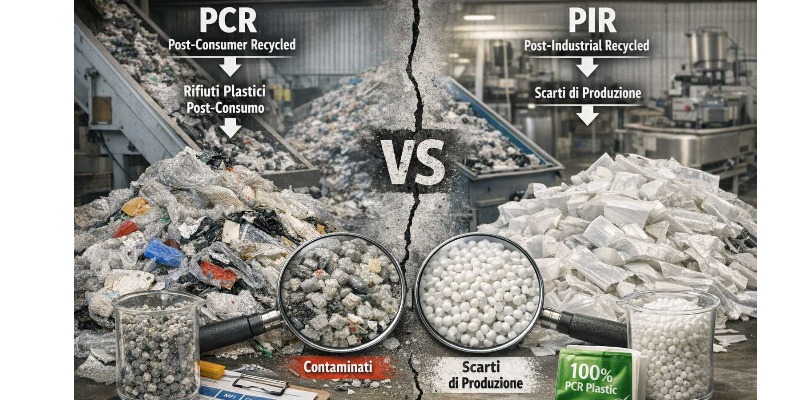 Post-Consumer LDPE Handbook. Chapter 2: Technical Value, Market Perception, and Marketing Strategies in PCR
Industrial analysis of Post-Consumer Recycled (PCR) in LDPE: technical definitions, real limits, greenwashing, economic viability and opportunities in plastic films Post-Consumer LDPE Handbook. Chapter 2: Technical Value, Market Perception, and Marketing Strategies in PCR PCR: technical and commercial definitions The acronym PCR, or Post-Consumer Recycled, is now widely used—and often inappropriately—in the plastics industry, in environmental communications, and in product marketing. To properly understand the technical and economic value of post-consumer recycled LDPE, it's essential to begin with a rigorous definition of what PCR actually means, clearly distinguishing between the technical-industrial meaning and the commercial use of the term. Technically speaking, a PCR material is a regenerated polymer obtained from plastic waste that has completed its lifecycle at the end user. In the case of LDPE, this means films, bags, wraps, and flexible packaging that have been placed on the market, used in domestic, commercial, or industrial settings, disposed of as waste, and subsequently intercepted by a separate collection or sorting system. The key characteristic of PCR is therefore the material's origin: not a controlled production waste, but a real, heterogeneous, contaminated, and degrading waste. This distinction is crucial because it clearly separates PCR from PIR (Post-Industrial Recycled), often incorrectly equated with post-consumer recycled material . PIR derives from production scraps, line start-ups, trims, and waste within or outside the industrial supply chain, which never reaches the end user. From a polymer quality perspective, PIR generally has much more stable and predictable characteristics than PCR, with extremely low contamination levels and a known thermal history. Confusing PCR and PIR completely distorts the technical evaluation of the material and generates unrealistic expectations about its performance. Still in the technical field, PCR is not a single category, but a collection of materials with profoundly different qualities. A PCR LDPE pellet can derive from lightweight household films, relatively clean commercial packaging, or highly contaminated mixed flows. It may have undergone advanced sorting processes or minimal treatments. It may contain varying amounts of other polymers, organic residues, mineral fillers, inks, and unknown additives. Consequently, speaking of "PCR LDPE" without further technical specifications has little industrial significance. Alongside the technical definition, a commercial definition of PCR has gradually emerged, often broader and less rigorous. In marketing jargon, the term PCR is used generically to indicate recycled content, without clarifying the material's true origin, the actual percentage of post-consumer material, or how it is calculated. In many cases, products containing a minimal fraction of post-consumer material are presented as "made from PCR," creating a communication short circuit between the declared environmental value and the actual industrial impact. From a commercial perspective, PCR has become a key differentiator for products. Brand owners, large retailers, and end users are increasingly demanding recycled content materials, driven both by regulatory requirements and environmental positioning strategies. In this context, the term PCR takes on a symbolic meaning that transcends its actual technical significance. Supply chain operators run the risk of being subjected to vague or contradictory demands: high PCR content, performance equivalent to virgin, lower costs, and zero defects. BUY THE MANUAL
SEE MORE General Introduction to LDPE Recycling: Industrial, Regulatory, and Technical Context. Chapter 1
The role of LDPE in modern industry, the value of post-consumer plastics, the differences between virgin and recycled plastics, and the regulatory framework for plastic film recycling Technical Manual. General Introduction to LDPE Recycling: Industrial, Regulatory, and Technical Context. Chapter 1 The role of LDPE in modern industry Low-density polyethylene, commonly referred to by its acronym LDPE (Low Density Polyethylene), was one of the cornerstones of the industrial development of plastics during the twentieth century and continues to play a key role in the modern polymeric materials industry. Its popularity is not due to a single distinctive property, but rather to a particularly favorable balance between mechanical performance, ease of processing, application adaptability, and the economic sustainability of production processes. From a chemical-structural standpoint, LDPE is characterized by a highly branched macromolecular chain, with an irregular distribution of long and short branches that hinder the orderly packing of the polymer chains. This molecular configuration results in a low degree of crystallinity, a density typically between 0.915 and 0.935 g/cm³, and markedly ductile mechanical behavior. The industrial implications of this structure are manifold . LDPE exhibits high flexibility, good resistance to tear propagation, pronounced elastoplastic behavior, and considerable tolerance to cyclic deformation. These characteristics make it particularly suitable for the production of thin, flexible products, where the ability to absorb mechanical stress without brittle fracture is an essential requirement. It is no coincidence that LDPE's main application area has historically been linked to film production: films for food and industrial packaging, bags and pouches, stretch and shrink films, agricultural films for mulching and crop covering, protective coatings and waterproofing membranes. From a technological standpoint, LDPE has contributed significantly to the standardization and diffusion of blown and flat extrusion processes . Its relatively wide processing window, combined with good thermal stability at typical processing temperatures, allows for continuous and reliable production even on older systems. This has had a significant impact on the material's global penetration, allowing a large number of converters, even small and medium-sized ones, to access plastic film production with limited investment. In many industrial contexts, LDPE has been and still is the reference polymer for high-volume, low-margin applications, where process reliability is often more important than maximizing mechanical performance. Another factor that has consolidated LDPE's role in modern industry is its compatibility with a wide range of formulations and blends. The ability to blend it with LLDPE, MDPE, or, in some applications, with recycled polyethylene fractions, allows for the tuning of properties such as stiffness, puncture resistance, transparency, and welding behavior. Added to this is the widespread use of functional additives—antioxidants, slip agents, antiblocking agents, UV stabilizers—which further expand the material's range of applications. This formulation flexibility has made LDPE a technological platform rather than a simple polymer, capable of adapting to a wide range of markets, from consumer packaging to low-complexity technical applications. From an economic and systemic perspective, LDPE has for decades served as a "bridge" material between the need for sufficient performance and cost containment throughout the entire supply chain. The relatively low cost of the virgin raw material, combined with the high productivity of processing plants, has favored the growth of markets based on large volumes and very short product life cycles. This industrial model, while ensuring efficiency and accessibility, has also generated a growing flow of end-of-life plastic waste, largely consisting of LDPE products in the form of post-consumer film. BUY THE MANUAL Promote your company on rMIX manuals and give copies to your customers.
SEE MORE Post-Consumer LDPE Handbook. Chapter 3: LDPE Film Collection. Systems, Standards, and Requirements for Efficient Recycling
Collection channels, input types, supply chain losses and the role of consortia in the life cycle of low-density polyethylene film Post-Consumer LDPE Handbook. Chapter 3: LDPE Film Collection. Systems, Standards, and Requirements for Efficient Recycling by Marco Arezio . March, 2026 Collection channels: domestic, commercial, agricultural The collection of LDPE film represents one of the most delicate and crucial steps in the entire recycling chain. Unlike other plastic fractions characterized by rigid and easily identifiable structures, LDPE film comes in extremely heterogeneous forms, with thin thicknesses, unstable geometries, and contamination levels that strongly depend on the context of use. For this reason, the analysis of collection channels cannot be limited to an organizational description, but must consider the actual operating conditions in which waste is generated, disposed of, and intercepted. The three main collection channels for LDPE film—domestic, commercial, and agricultural —have profoundly different characteristics, which directly impact the quality of the collected material and its actual recyclability. The domestic channel is the most widespread and, at the same time, the most complex to manage. LDPE films from households are primarily derived from lightweight packaging: shopping bags, cling film, packaged product wrappers, freezer bags, and secondary packaging. These products have a very short life cycle, often used in environments that promote contamination with organic residues, moisture, and grease. From a collection perspective, domestic disposal is strongly influenced by end-user behavior, the clarity of the instructions provided, and the effectiveness of environmental communication systems. The inherent variability of the domestic channel often results in inconsistent quality of collected material. Films can be mixed with other plastic materials, foreign fractions, or non-plastic waste, increasing the downstream sorting burden. Furthermore, the lightness and flexibility of the films make this fraction particularly susceptible to losses during collection and transportation. Dispersion, adhesion to other waste, and difficulty in interception are frequent phenomena, reducing the overall efficiency of the system. Despite these critical issues, the domestic channel remains strategic for the volumes potentially intercepted and represents one of the main levers for increasing LDPE recycling rates. The commercial channel presents significantly different characteristics . LDPE films from commercial and logistics activities include stretch films for palletizing, protective packaging, large bags, and films used to protect goods. Compared to the domestic channel, this flow is generally more homogeneous in terms of type and less contaminated by organic residues. The conditions of use are in fact more controlled, and the material is often removed before direct contact with products intended for final consumption. From a collection perspective, the commercial channel offers significant opportunities in terms of quality and quantity. Volumes generated by individual production points can be substantial and regular, allowing for dedicated collection and more efficient management. However, the quality of the flow depends critically on the companies' internal organization and the presence of clear waste separation procedures. Without adequate staff training or dedicated collection systems, even commercial film can suffer significant contamination, reducing its value as a secondary raw material. Another factor to consider in the commercial channel is the variability associated with the sector of origin. Films from large-scale distribution, industrial logistics, or retail can exhibit significant differences in terms of thickness, composition, and presence of additives. This heterogeneity requires in-depth knowledge of the flows and a classification capacity that isn't always present upstream in the supply chain. Effective collection of commercial film therefore requires active collaboration between waste producers, logistics operators, and recyclers. The agricultural sector is a unique entity, characterized by specific technical and operational characteristics that clearly distinguish it from other streams . LDPE films used in agriculture include mulch films, greenhouse and tunnel films, silage films, and protective covers. These materials are designed to withstand harsh environmental conditions, such as prolonged exposure to sunlight, temperature variations, and mechanical stress. Consequently, when disposed of at the end of their useful life, the material often shows obvious signs of degradation and high levels of contamination. From a collection perspective, the agricultural sector is strongly influenced by operational practices adopted in the field. Films are frequently removed from the soil along with soil residues, vegetation, and moisture, significantly increasing the burden of impurities. Furthermore, collection is often seasonal and concentrated in limited periods of the year, resulting in peak flows that place pressure on treatment infrastructures. The geographical distance between waste generation sites and recycling plants represents a further critical issue, impacting logistics costs and the economic sustainability of recovery. Despite these challenges, the agricultural sector is becoming increasingly important within the overall LDPE recycling landscape. Potential volumes are high and, if properly managed, can feed dedicated recycling chains. However, valorizing this flow requires specific collection systems, adequate economic incentives, and strong involvement of agricultural operators. Without structured coordination, there is a risk that a significant portion of these materials will be lost or subjected to less sustainable management practices. In conclusion, the three LDPE film collection channels—domestic, commercial, and agricultural—present profoundly different characteristics that require differentiated approaches. There is no single effective collection model, but rather a variety of solutions tailored to the waste generation contexts. A thorough understanding of the specific dynamics of each channel is essential for designing efficient collection systems and ensuring material flows suitable for recycling. Only by recognizing and managing this complexity can we improve the quality of collected LDPE and strengthen the entire plastic film recycling supply chain.... BUY THE MANUAL Legislation and Regulation European Union - Regulation (EU) 2022/1616 on recycled plastic materials and articles intended to come into contact with food — Official Journal of the European Union, 15 September 2022 - Directive (EU) 2019/904 on the reduction of the impact of certain plastic products on the environment (Single Use Plastics Directive) — European Parliament and Council, 5 June 2019 - Directive (EU) 2018/851 amending Directive 2008/98/EC on waste — Plastic recycling targets for 2025–2030 - Regulation (EU) 2023/2055 — Updates on end-of-waste criteria for recycled plastics Italy - Legislative Decree 152/2006 — Consolidated Environmental Law, Part IV (Waste Management) - Ministerial Decree of 7 October 2020 — Minimum Environmental Criteria (CAM) for packaging Technical Standards - UNI EN 15347:2007 — Plastics. Recycled plastics. Characterization of plastic waste - UNI EN 15343:2007 — Plastics. Recycled plastics. Traceability and conformity assessment of plastics recycling and recycled content - ISO 17088:2021 — Specifications for compostable plastics (reference for distinction from bio-based LDPE) - CEN/TR 15353 — Plastics. Recycled plastics. Guide for the development of standards for recycled plastics Industry Reports and Publications - COREPLA (National Consortium for the Collection, Recycling, and Recovery of Plastic Packaging) — Annual Sustainability Report, 2021–2023 editions. Available at: www.corepla.it - COREPLA — The COREPLA system: data and performance of the plastic packaging supply chain, 2023 - PlasticsEurope — Plastics — the Facts 2023. An analysis of European plastics production, demand and waste data. Available at: www.plasticseurope.org - EPRO (European Association of Plastics Recycling and Recovery Organisations) — Annual Report 2022. Available on: www.epro.eu - Ellen MacArthur Foundation — The New Plastics Economy: Rethinking the future of plastics, 2016. Available at: www.ellenmacarthurfoundation.org - CIPA (Italian Packaging Center) — Studies on the flexible packaging supply chain in Italy, 2022 Scientific Literature - Ragaert, K., Delva, L., Van Geem, K. (2017). Mechanical and chemical recycling of solid plastic waste. Waste Management, 69, 24–58. DOI: 10.1016/j.wasman.2017.07.044 - Al-Salem, S. M., Lettieri, P., Baeyens, J. (2009). Recycling and recovery routes of plastic solid waste (PSW): A review. Waste Management, 29(10), 2625–2643. DOI: 10.1016/j.wasman.2009.06.004 - Eriksen, M.K., Christiansen, J.D., Daugaard, A.E., Astrup, T.F. (2019). Closing the loop for PET, PE and PP waste from households: Influence of material properties and product design for plastic recycling. Waste Management, 96, 75–85. DOI: 10.1016/j.wasman.2019.07.005 - Hahladakis, J.N., Velis, C.A., Weber, R., Iacovidou, E., Purnell, P. (2018). An overview of chemical additives present in plastics: Migration, release, fate and environmental impact during their use and after their end-of-life. Journal of Hazardous Materials, 344, 179–199. DOI: 10.1016/j.jhazmat.2017.10.014
SEE MORE
