








 Rediscovering Human Values in a World Dominated by Price
How Modern Society Can Rediscover the Value of Dignity, Empathy, and Sustainability in an Era Obsessed with Materialismby Marco ArezioIn today's society, where the economy and the market seem to dominate every aspect of life, a concerning trend emerges: the ability to assign a price to everything, without truly understanding the real value of things, especially when it comes to human values.This disconnection is not only economic but also deeply ethical and social, leading to a gradual devaluation of what is truly important in life.The Price of Materialism and the Loss of Human ValuesWe live in an era where personal and professional success is often measured in terms of wealth and material possessions. The price of an object or service becomes the main criterion of judgment, overshadowing what truly matters: human values.Compassion, honesty, integrity, and empathy are just a few of the values at risk of being sidelined in a culture obsessed with profit and competition.The danger of this mentality is clear: it leads us to judge people based on their ability to produce or consume, rather than their humanity and their positive contributions to society. What cannot be measured or monetized tends to be overlooked or even ignored.The Value of Human Relationships: Beyond PriceHuman relationships, the sense of community, and the interconnectedness between individuals are fundamental to collective well-being.However, these aspects of life are priceless and, therefore, are often undervalued in a society that prioritizes utility and tangible outcomes.The value of a sincere friendship, a united family, or an act of kindness cannot be expressed in economic terms, but they represent an immeasurable wealth that enriches life and gives it meaning.Human Values and Sustainability: An Unbreakable BondAnother crucial aspect is the connection between human values and sustainability. Respect for the environment, social justice, and equity are not just abstract ideals, but fundamental principles that should guide our daily actions and collective choices.However, when price becomes the sole criterion for decision-making, these priorities are sidelined, with disastrous consequences for our society and the planet.Rediscovering human values also means recognizing the importance of an economy that is not solely profit-driven, but that takes into account collective well-being and the protection of our environment.It means promoting a system where people are valued for who they are and their contributions to the common good, rather than for what they own.The Urgent Need to Reconnect with Human ValuesIn a world that seems increasingly cold and calculated, it is essential to return to the values that make us human. This requires a collective effort to rethink our priorities, to put people and their stories at the center, and to value what cannot be bought or sold.Human values, such as dignity, love, and solidarity, must regain their place at the core of our lives, guiding individual and collective choices toward a more just and sustainable future.A New Scale of ValuesRecognizing the importance of human values in a world seemingly obsessed with price is a fundamental challenge of our time.It is an invitation to reflect on what truly matters in life and to build a society where people, not prices, are at the center. Only by rediscovering and practicing these values can we hope to create a more just, empathetic, and ultimately, more humane world.© All rights reserved
SEE MORE Slow Life: Don't Let Looking Back Make You Regret
Spending your time obsessively achieving only your goals makes you lose the meaning of lifeI had life ahead of me, time was nothing, an abstract entity that I watched on my watch to mark my frenetic existence made up of commitments, opportunities and goals. After school I was ready to measure myself, before others, and what better occasion could there be than entering the world of work. I immediately became acquainted with the cultural hierarchy, the snobbery of labels and the long line of professional steps in front of me that attracted me, like bees to honey. I had subconsciously decided that there was nothing that could distract me from pursuing that ascent, a ladder built more in my mind than in real life. Elbowing, pushing, using all my emotional resources, I dedicated a part of my early years as a worker to starting to walk my own path, climbing up different ladders in based on the business opportunities I was relentlessly looking for. Then the commitment of my days dedicated to work was no longer sufficient to continue climbing the steps, and I soon realized that I had to get a degree to being able to take a leap forward which at that moment was precluded to me. So I became a working student, working by day and studying by night, consuming five years of my life between business and studying, banishing my love life to an ephemeral and fragile existence, made up of postponed occasions, hurried acquaintances and temporary consumption. I reached my degree, without realizing that time was passing and that my isolation had increased, closed in on myself, reaching out towards the search for a new scale to go back. I looked back but only saw what interested me, trying to focus on the gap I had put between my previous life and the one I could live now. My partner on the threshold of 30 began talking about the family, about the pleasure it would give us to have children, planning and a normal life, made up of affection and sharing, to finally build something together. Yes, he often underlined the word together, because we had very few projects in common, even in bed things didn't go so well, because I didn't want to stop the brain, I could not let go, always busy thinking what to do more intelligent and constructive in the company than my colleagues. Time passed and in the face of his precise requests about what I wanted to do when I grew up, each time an ever-growing furrow opened up between us, of solitudes as a couple, of different interests and faded memories of our union. The natural time to have children also passed and, in the end, he too passed, after prompting him to seek another path for his life, given that mine was increasingly busy achieving goals that only I could see. He walked away, looking back more than once, but I wasn't looking at him anymore, actually hadn't looked at him for quite a few years, so I didn't catch his last gesture of truce. One day, life presents me with the death of my mother, premature, sudden, for which I was not prepared and, for the first time, I did not have the usual prompt response, the usual efficiency of a manager who solves everything, because on this occasion, nothing could be resolved anymore. The loss of such a direct affection has opened up a sense of unease in me, a constant reminder of why I had neglected it, with fleeting visits, with the cell phone always in hand during my meetings at her home, always ready to answer a few work emails, as if this nagging sense of commitment made me think that I could appear to her as someone who has arrived, accomplished and therefore could be proud of me. How many appointments missed, how many birthdays missed, how many promises made and not fulfilled have crowned our relationship, how many times have I told her: now I don't have time, tomorrow, maybe. A few years after its loss, 55 years later, in my empty house, with the signs of a descending working parable, I began, slowly and without wanting to looking back, scrolling through my life, looking for the pride of what I had done and what I could represent for all the people I had met, directed and, perhaps a little shaped to admire me. I only found sadness, regret, loneliness and missed opportunities, what I had been running for all my life did not have the value I would have expected, with every mountain climbed I realized, late, that there were others, and then others, until you fell exhausted from fatigue. Nobody picks you up, nobody helps you, others stronger than you overtake you, they trample you and you fall disastrously to the ground, in the storm of the times, consumed by steep walls of life. There is no possibility of going down to the base camp to refresh yourself, to regain strength, to go back to fighting, because the descent is more arduous than the climb and you now lack the energy to walk. I stay alone, lying on the frozen snow, with others claiming my climbed steps, laughing satisfied as I close my eyes and abandon myself to oblivion. Automatic translation. We apologize for any inaccuracies. Original article in Italian.
SEE MORE Slow Life: Friend
 You hear it, friend, the metallic sound of the guitar that traces the notes of our life? Do you remember, my friend, what was around the sensual rhythm of this song when we were together? Each stroke on the rope is like reopening a drawer full of never-dormant emotions, which colored our days full of vitality with intense tones. Listen, my friend, this drum beat that rhythmically marked the beating of our heart, when we had the stubborn hope of elevating ourselves to other dimensions, outside the common experiences, to enjoy a happiness that was ours alone? Do you remember this flute that accompanied us on the walls of the mountains, the hiss of the wind that for us was one with our breath, as if it crossed our body and we were part of the wonderful environment, which we wanted to enjoy to the fullest? Each passage of the piano rekindled in me the secret conviction that we were happy up there, where everything seemed clearer, where you could not cheat, where our personal values were expressed like a spring bloom, where we didn't need much and where what little we had was nothing more than a modest means to reach our heart. My friend, we were on the wall to measure ourselves with our life, our expectations, our satisfactions, strong in ourselves, strong in the belief that the world was ending there among those vertical rocks, those smooth cracks, those overhangs that would have made most people disgusted and that gave us the feeling of belonging to them, at every step, at every grip, at every hammer blow, at every rattle of carabiner, with every rustle of the rope. We were no longer ourselves, we were the moving part of that wonderful stone cry, which was guarding every breath of life that approached heaven. My friend, music runs like sweet medicine for our mind, I remember you absorbed and enraptured by the hardness of the way you climbed, emanating a sort of endorphin that he placed at the center of a world of our own, made of nothing but full of a happiness full of emotions, adrenaline, simplicity and mental innocence. The violin cradles my head bringing me back to the summit, in an evening of unreal silence, where only a few faint breath of wind caressed our hair and our eyes could to deeply enjoy the end of our struggle, extreme, with our mind, consumed on the wall. The sunset paralyzed us for the warm spectrum of colors that gently enveloped the mountain in front of us, impressing itself in our eyes as if we were mirrors of the immense beauty of which we had the privilege of enjoying. The pianola is now moving away and with it the music of our life diminishes, in my head in a fraction of a second I realize an instant of balance, the images of then and those of today that overlap quickly without being able to find a desired location, turn, move, close then far, front and back, never managing to stop and reposition themselves clearly. The music is over, my friend, I blink and we're gone. Automatic translation. We apologize for any inaccuracies. Original article in Italian.
SEE MORE Slowness of change: the silent evolution that transforms us
Like the Imperceptible Flow of Time Guides Us Toward New Versions of Ourselves, Often Without Us RealizingBy Marco ArezioChange is a constant in our existence, but it often catches us unprepared, wrapped in a calm that conceals its gradual approach.Our lives flow at a slow pace, like the seasons that follow each other almost imperceptibly: only in retrospect do we recognize the transition, once we find ourselves already immersed in the new reality.This continuous and subtle movement seems to belong to the very nature of existence, which leads us toward change without us being fully aware of it.Transitions, especially the internal ones, often happen without apparent signals. It’s as if the deepest processes silently activate behind the veil of everyday life, only revealing themselves at the right moment, transforming our world.It’s a process that requires patience and openness to the unknown, as change arrives with its own timing, which does not follow our desires or expectations. Thus, change intertwines with time, almost mocking our obsession with control and planning.This slowness, however, is not an obstacle but an opportunity: it allows us to adapt, to unconsciously prepare the ground to welcome the new.Every change, no matter how small, requires an effort of adaptation, a flexibility that humans learn by cultivating their capacity for resilience.The slowness of change, therefore, becomes an invitation to take care of ourselves, to cultivate our awareness, so that we can embrace the new with serenity.Rarely do we realize the exact moment when a transformation takes place. It often happens that we wake up one day and discover that we have changed, as if the new had sprouted during our sleep, beneath the surface.This leads us to reflect on how important it is not to take anything for granted, not even ourselves. Every day brings with it a slight variation, a detail which, when combined with others, paints a different picture than the one before.Change is an intimate and mysterious journey, which requires the ability to let go, to accept that not everything can be anticipated or immediately understood.Sometimes, it is precisely our resistance to change that leaves us unprepared, causing us to perceive the new as a rupture rather than as a natural evolution.Embracing change means recognizing that our path is never linear, but made up of continuous adjustments, small transformations that lead us toward a perpetually new version of ourselves.In this constant becoming, the important thing is to remember that every change, no matter how small or seemingly insignificant, is a step toward greater awareness and maturity. Transformation is inevitable, but it can become a valuable ally if we are willing to listen to its rhythms and let ourselves be guided by its wisdom.© Reproduction Prohibited
SEE MORE Slow Life: Excessive Self Control and what is Around You
A continuous expenditure of mental and physical energy that prostrates you without bringing you significant benefits Let things break, stop trying to keep them glued together. Let people get mad. Let them criticize you, their reaction is not your problem. Let it all fall apart, and don't worry about it later. Where will I go? What will I do? No one has ever been lost on the way, no one has ever been without shelter. What is destined to go will go away anyway. What will remain, will remain anyway. Too much effort is never a good sign, too much effort is a sign of conflict with the Universe. Relations Works Case Friends and great loves. Give everything to the Earth and Heaven, water when you can, pray and dance but then let what it needs to bloom and let the dry leaves come off on their own. What goes away always leaves room for something new: they are universal laws. And never think that there is nothing more beautiful for you, only that you have to stop holding on to what must be let go. Only when your journey is over will the possibilities run out, but until then, let it all fall apart, let it go. [Claudia Crispolti] Automatic translation. We apologize for any inaccuracies. Original article in Italian.
SEE MORE Between the Light and the Storm: The Silence That Precedes the Soul
A reflection on the fragile boundary between calm and chaos, on the language of the sea and the clouds, and on the hidden meaning of waiting in human lifeby Marco ArezioThere is a moment, in the heart of every day, when the world seems to stop.It is not sunset, nor dawn. It is something rarer, more secret. It is the moment when the light fractures, when the sky holds its breath and the sea stretches out, restless, like living skin.The image before us tells precisely of that instant.A beach that asks for no witnesses, a dense horizon heavy with storm, and a ray of sun that, despite everything, finds the strength to slip through the clouds.There is no distinct sound, yet one can feel the breath of the wind, the muted pulse of waves breaking on the sand.And in that suspension, where nothing yet happens but everything is about to, life reveals its truest face: fragile, yet immensely alive.The Secret Language of the WavesThe sea, in that instant, is not just water.It is memory, emotion, boundary.Every wave bending toward the shore seems to carry a thought, a memory, an ancient fear.It is as if the ocean spoke a language only silence can understand — a language made of imperceptible movements, reflections, and waiting.In the turquoise shades that precede the dark, one reads the sea’s attempt to defend its calm. But beneath that shimmering surface, invisible currents move — eddies that recall our deepest thoughts, the ones we show to no one.Every human being knows this sea.It is within us, in the most secret part of the soul, where calm and storm, nostalgia and hope, coexist.Waiting as a Form of ListeningThe photograph shows no people, yet it speaks of presence.It’s as if the beach itself were alive, a silent witness to the passing of time.The absence of human figures deepens the sense of intimacy, as though nature were inviting us to slow down, to look with different eyes.We live in an age that measures everything in moments, that demands full light or fears the dark, but no longer knows the grace of waiting.And yet it is precisely in waiting that we learn to see.Waiting for the rain, like waiting for life, is an act of trust: we cannot decide when it will come, nor how long it will last, but we can learn to receive it.Waiting is the purest form of listening.It is the moment when we stop trying to understand and begin simply to feel.The Light That EnduresBetween the clouds, a slit of light opens like a gentle wound.It is not a triumphant light, but a presence that insists — humble, stubborn.It is the same light that dwells in the eyes of those who have suffered and still believe, the light that crosses the cracks of the soul and refuses to fade.The storm may darken the sky, but it cannot erase the possibility of light.In every cloud, even the densest, there is a point where the sun manages to filter through. And that point, that luminous fragment, is what keeps the world alive.Perhaps true strength is not in defying the storm, but in learning to remain alight within it.Resilience is not resisting the wind: it is bending without breaking, being traversed without losing one’s essence.Where Fear Ends, Beauty BeginsThere is a strange beauty in skies that threaten rain.It is an imperfect, restless, living beauty.It needs no approval, because it knows that life is never only blue or gray — it is the shade between the two.Looking at this horizon, we understand that fear is not an enemy to fight, but a threshold to cross.It is the same threshold that separates us from ourselves, forcing us to look inward and recognize how small we are before immensity, and yet how great we can be in guarding a fragment of light.Every storm tests us, but brings with it a lesson: beauty is not the absence of chaos, it is harmony within disorder.It is the moment when we stop opposing the world and begin to breathe it in.The Hidden Balance of ThingsWhen the wind subsides and the rain has washed the dust from the air, the sea becomes clear again.But it will not be the same — nor will we.Every storm leaves a mark — a lighter line of sand, a shell carried ashore, a new thought.The image becomes a parable: it teaches us that nothing lasts forever, but everything has meaning in its passage.The sky changes face, yet its essence remains.So does our life: an alternation of clouds and clearings, of losses and renewals, of silences that become prayers.In the end, true serenity is not the absence of the storm.It is learning to stand on the shore, to look at the horizon and recognize that the light, even when hidden, has never really left us.Epilogue: The Calm That FollowsWhen everything has passed, when the sun once again stretches across the water, the slow sound of the sea will remain — like an ancient heartbeat.Perhaps we will not remember the storm, but the fullness that came after.And then we will understand that such calm, so fragile and precious, is nothing but the peace of those who have crossed the chaos without ever ceasing to believe in the light.© Reproduction Prohibited
SEE MORE Microplastics and embryonic development: Dutch study reveals devastating effects on the nervous system
A Quarter of Chicken Embryos Exposed to Microplastic Fragments Show Severe MalformationsMicroplastics—tiny plastic particles resulting from the degradation of larger plastic items—have become ubiquitous in our environment. They are found in the air, water, soil, and even in our food. Their presence has long been regarded as harmful to both human health and ecosystems, but the precise understanding of their biological effects is still developing.A recent study by biologist Meiru Wang from the University of Leiden in the Netherlands has raised significant concerns about the impact of microplastics on embryos.Meiru Wang's StudyWang focused his research on the effects of microplastics on chicken embryos. By injecting polystyrene microfragments into fertilized eggs, he was able to directly observe the consequences of such exposure. The results, published in the scientific journal Environment International, were alarming.Deformities and Developmental AbnormalitiesOne-quarter of the embryos examined showed significant abnormalities in the development of critical organs such as the eyes, brain, skull, spine, and heart. Wang’s observations suggest that microplastics interfere with the development of the neural tube—the embryonic structure that gives rise to the central and peripheral nervous systems.The embryo malformations were documented in detail, demonstrating how the presence of microplastics can induce widespread morphological alterations. This finding is especially troubling given that the neural tube is one of the first structures to form during embryonic development, and its correct formation is essential for the organism’s future health.Mechanisms of Microplastic ToxicityThe exact mechanisms by which microplastics cause these alterations are not yet fully understood. However, it is hypothesized that these particles may act as carriers of toxic chemicals, interfere with cellular signaling, or inflict mechanical damage directly on developing cells. Microplastics may also influence gene expression, disrupting normal developmental pathways.Implications for Human HealthAlthough the study was conducted on chicken embryos, the implications for human health cannot be ignored. Human embryos share many developmental processes with those of birds, making it plausible that human exposure to microplastics could have similar effects. The widespread presence of microplastics in the environment means that human exposure is virtually unavoidable, and understanding the potential risks is crucial to public health.The Need for Immediate ActionWang's findings underscore the urgent need for measures to reduce microplastic pollution. Environmental policies should focus not only on reducing plastic usage but also on improving waste management systems and promoting biodegradable alternatives. Moreover, ongoing research into the effects of microplastics must be supported to develop effective mitigation strategies.ConclusionsMicroplastics pose an emerging and insidious threat to embryonic development, and by extension, to human and animal health. Studies like Meiru Wang’s are essential for shedding light on these effects and for prompting global action to address this issue. While our understanding of microplastic toxicity is still evolving, one thing is clear: we must act now to protect future generations from the potentially devastating effects of these pervasive pollutants.© Reproduction Prohibited
SEE MORE Trivialized Evil: The Subtle Threat of Human Meanness
How Daily Malice Damages Our Well-being and How to Defend Against the Invisible Evil of Toxic PeopleBy Marco ArezioWe live in a complex world where human interactions are often marked by a variety of behaviors and attitudes.Unfortunately, it is undeniable that among us circulates a certain type of person who embodies the dark side of humanity. Malicious, deceitful, mean-spirited people who seem to thrive on the misfortunes of others and find pleasure in harming those who might have a more gratifying life than theirs.This type of person represents a subtle yet constant threat, a banal and insidious evil that, if not recognized and managed, can cause deep and lasting damage.The Banality of EvilThe concept of "the banality of evil" was introduced by philosopher Hannah Arendt in her book "Eichmann in Jerusalem: A Report on the Banality of Evil." Arendt analyzed how evil can be perpetrated not only by monsters and sociopaths but also by ordinary individuals who simply follow orders without reflecting on the consequences of their actions.This concept can also apply to the type of people described in this article: individuals who do not commit great atrocities but who, through their envy, jealousy, and meanness, undermine the happiness and well-being of others.The Motives Behind Mean-Spirited BehaviorThe reasons that drive these people to behave so negatively can be numerous. Often, at the root of it all is deep insecurity and low self-esteem.These people cannot tolerate the success of others because they perceive it as a threat to their own identity and value. Envy becomes a powerful driver, pushing them to destroy what they cannot have.Another factor can be a lack of empathy. The ability to understand and share the feelings of others is fundamental to building healthy and positive relationships. However, some people completely lack this ability, seeing others only as tools to manipulate for their own ends.Finally, the culture and social environment in which a person grows up can significantly influence their behavior. A society that rewards extreme competition and success at all costs can encourage mean-spirited and malicious attitudes, fostering a mentality where others are seen as obstacles rather than allies.The Danger of Banal EvilBanal evil is particularly dangerous because it is subtle and difficult to detect. It does not manifest in grand gestures or violent acts but in small daily behaviors that, over time, can have a devastating impact.Lies, defamation, and emotional manipulation are all weapons used by these people to undermine the trust and well-being of others.In a work context, for example, a mean-spirited person can sabotage colleagues' work, spread harmful gossip, or take credit for others' efforts. These behaviors not only harm the direct victims but also create a toxic work environment that can lead to stress, burnout, and a drop in productivity.Even in personal relationships, banal evil can have devastating consequences. A manipulative partner or an envious friend can erode our self-esteem and sense of security, leaving us vulnerable and isolated.How to Defend YourselfRecognizing and defending against banal evil is not easy, but it is possible. The first step is to develop a strong self-awareness and sense of personal values. Knowing your own worth and having confidence in yourself can make you less vulnerable to the attacks of malicious and mean-spirited people.Additionally, it is important to surround yourself with positive and supportive people. Building a network of healthy and genuine relationships can provide the strength and support needed to face difficulties and fend off negative influences.Finally, we must learn to recognize the signs of manipulative and mean-spirited behavior. Paying attention to small details, such as changes in tone of voice, body language, and the words used, can help us identify toxic people and distance ourselves from them.ConclusionsIn an ideal world, all people would act with empathy, kindness, and integrity. However, reality is different, and we must be aware that there are individuals who embody banal evil, fueled by envy, jealousy, and a lack of empathy.Recognizing and defending ourselves against these people is essential to protecting our happiness and well-being. Building positive relationships and developing a strong self-awareness are powerful tools we can use to resist banal evil and promote a healthier and more positive environment around us.
SEE MORE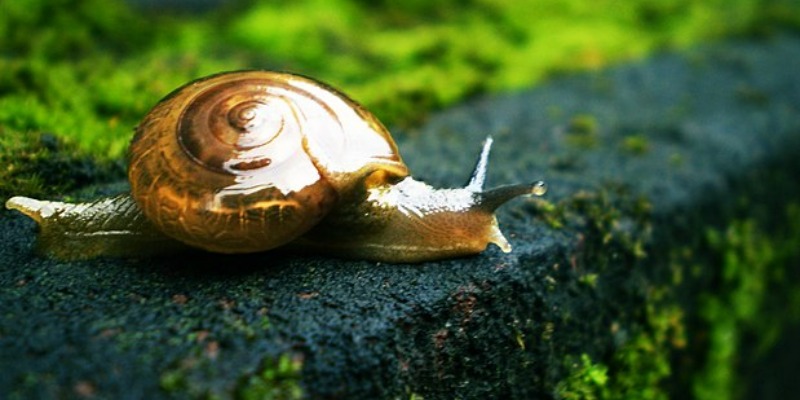 Slow Life: Living Always Projected Towards Desires and Expectations
A life spent reaching material or professional goals without stopping Since the time of the Greek philosophers there he wondered about how to achieve happiness or a balance between disappointments and successes, possibly tipping the scales towards the latter. It is not at all regrettable that man seeks to improve himself, achieve material well-being commensurate with his inclinations, have a satisfying relational life and, to do everything this, you commit yourself every day. This effort must then be repaid with the pleasure of taking advantage of the successes achieved, that is, it means taking the time to enjoy, quietly, what we have achieved. Create a balance between effort and satisfaction, which must mix in such a way that one eliminates the other, in order to be able to start having goals commensurate with the desired satisfactions . Another aspect concerns the exclusive centrality of the effort to achieve one's goals, as if that were the result of the effort itself, as if it were the one to determine the only reason to accomplish it. The continuous search for goals and the sacrifices to reach them can leave bitterness once conquered, discovering that the longed-for desire is not enough to satisfy the search for satisfaction. We live in a constant desire to have something ambitious, to be in some position of prestige but, once reached, we find ourselves not very interested in enjoying of what has been painstakingly sought. Projecting one's life into a continuous, exhausting future, spending the time of one's life, which will never return, neglecting the everyday, as if time does not had an end. There are ambitions and desires that never end and can keep you tied up forever, like an ox on a yoke to pump water from a well. The ambition of wealth, expressed in the form of money or symbolic goods to be exhibited, the ambition of politics that makes one's figure important in the media, the ambition to exist on social networks through which infinite goals of followers are set, the ambition of sex that consumes relationships for people without having a limit, the ambition of work that expresses a search for affirmation along a scale that does not it never ends. A race, most of the time, that always starts all over again, goal after goal, with a load of increasing dissatisfaction on the shoulders, until one day this could crush you. Life, however, could be seen in an even different way, starting to understand that it itself has a limit and that wasting time to produce illusions and dissatisfaction is not the best way to go through it. Living it satisfied or dissatisfied is always followed in the same way, perhaps with a different intimate result, avoiding that in our old age our mind presents us with an account looking back . Considering what is useful for us and for our family is a fundamental fact, I would add useful and necessary, as everything that is not will be avoided, reducing our efforts and protecting us from future dissatisfaction. What will be necessary and useful, to share, we will reach to enjoy it, using the necessary time without thinking about anything else. Automatic translation. We apologize for any inaccuracies. Original article in Italian.
SEE MORE Respect for Cultures and All Peoples according to Gandhi
Respect for Cultures and all Peoples according to Gandhi I don't want my house surrounded by walls and my windows sealed. I want the cultures of all countries to be able to blow through my house with maximum freedom. But I refuse to be chased away by anyone. Gandhi
SEE MORE Unburdening Yourself of Expectations: The Courage to Find Yourself
When the burdens that don’t belong to us keep us from flying, it’s time to rediscover our wings and reclaim our inner freedomThere are moments in life when we feel a weight — one we didn’t choose, one that doesn’t belong on our path, yet somehow has ended up on our shoulders. This weight is nothing more than the reflection of other people’s expectations, unsolicited judgments, and responsibilities that someone assigned to us without ever asking if we truly wanted them.Over time, carrying these burdens becomes second nature, a part of us that, in truth, isn’t ours. And in the end, we find ourselves walking under their pressure, increasingly bent over, further and further away from who we really are.But what does it really mean to “lighten our shoulders”? It’s not just a physical gesture, but an act of inner liberation. It’s a conscious choice to look within, to recognize the burdens that aren’t ours — and to let them go.Lightening ourselves is not an act of selfishness, but an act of self-love. It’s the realization that we are not responsible for every expectation others place upon us. And more importantly, we are not responsible for the weights handed to us without our consent.This awareness leads us to rediscover a part of ourselves we had forgotten: our wings. Wings are those inner resources, that innate capacity to be free, to rise above difficulties, to see things from a new and more authentic perspective. They are a symbol of hope and potential — something waiting only to be rediscovered and used in our journey toward self-realization.And yet, shedding the weights that aren’t ours is not easy. It takes courage — the courage to admit to ourselves that some responsibilities and expectations don’t belong to us and never should have. It takes the courage to disappoint others, to say “no” when we no longer have the strength to fight battles that aren’t ours.And, above all, it takes the courage to accept our own vulnerability. To recognize that beneath all that weight, there is an authentic self that needs to fly, that longs to express itself freely and to live in harmony with its true nature.When we manage to free ourselves from what crushes us, we discover a lightness we didn’t even know was possible. Every step becomes easier, every breath deeper. Life fills with new possibilities, and our wings — finally free — allow us to explore a world of opportunities.This journey toward lightness and inner freedom may seem long and difficult, but it is a path worth walking. It leads us to rediscover an identity that was hidden beneath layers of externally imposed “duties.” It allows us to reclaim our existence and live more authentically, without fear of judgment and without the burden of others’ expectations.Ultimately, freeing ourselves from these weights means finding the courage to fly. It means recognizing our intrinsic worth and accepting that beneath all those burdens lie the wings of our true essence, ready to lift us toward a life lived fully — by our own rules, dreams, and our deepest, most authentic desire to be free.© Reproduction Prohibited
SEE MORE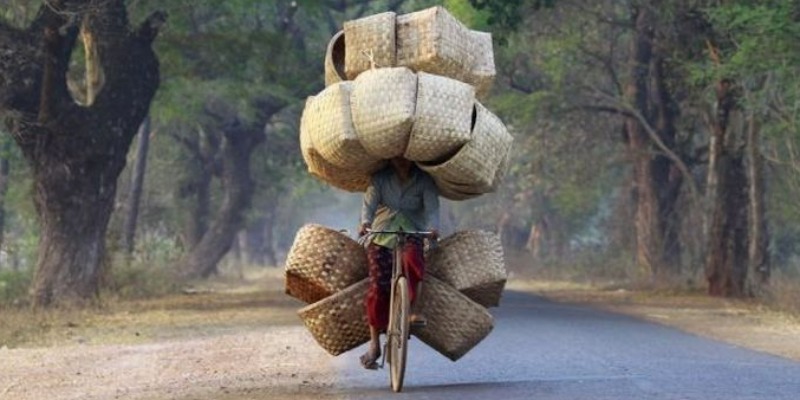 Slow Life: Taking on Commitments to Feel Accepted. How to get out?
At work, at home, with friends, always be available so as not to feel excluded Stay in a social context, be it work, your family or friends, always involves building a relationship that should satisfy both parties. In the relationships between people and their groups, however, the character of each one comes into play and has the power to modify a direct relationship or the spirit of the group. Sometimes it can happen that in the daily context, a growing increase of commitments are carried out by a few or the only people who feel invested in the duty to do so. It is not always a question of pressure or oppression of one individual over the other that direct continuous commitments on some subjects, but more often it is these people who make themselves excessively available by taking on excessive burdens. Within the work teams, especially the hierarchical ones, in a short time we can see the subjects who, willy-nilly, are recipients of activities and employment of working time longer than others. In the family it often happens that, especially women, are overwhelmed by jobs, commissions, commitments and responsibilities, creating themselves an imbalance of forces that penalizes them, consuming their time and not appreciating their life. Even in a context of friendships, whether there is a large group or a few friends, hierarchies are created in which there is almost always an element that is made available to others, he sacrifices himself to make the relationship fluid and takes on more or less important commitments. These people are generally victims of themselves, they are hardly forced to spend their time for others, but they feel they have to do it mainly to be accepted, to believe that they are useful and therefore necessary for the group, without which they think they would be alone. Sometimes the underestimation of oneself leads to making sure that the increase of efforts and commitments can fill that insecurity that one has, thinking that what has been done for others it is understood as a quality of the person himself. We always return in order to be accepted, to be inside a system, not to be alone and to think that, only through an extra effort, we can mask the inadequacy you feel. It is a form of personal cancellation that is exchanged for a place in a group of people, be it work, family or friends, a dead end in which you are unable to go out or do not want to go out for fear that the fragile equilibrium achieved will fall apart. How to get out? First of all, it is necessary to evaluate whether the time spent on continuous commitments can give sufficient personal returns with respect to the effort made. If this is not the case, it must be remembered that time stolen from someone, even unintentionally, is lost forever. Every human being invests his time to do something that can make him feel good or can satisfy his needs, material or emotional and it is precisely for this reason that this satisfaction must have a balance otherwise it is not worth it. If you go to work 8 hours a day you will get a salary, with this you satisfy your material needs, but if at the same salary you have to work 16 hours a day, perhaps it would be better to think of a different job. So, in relationships with people more or less the same rule applies, the time spent should have a satisfying return for you, whether in the form of an emotional relationship , maternal, of friendship and also in a working forum. Furthermore it is necessary to break the chain that binds your relationships with others with the evaluation you make of yourself, thinking that every living being has strengths and weaknesses and , very often, there is a tendency to mask the frailties and enhance the merits, never knowing people for who they are. Create a balance between what you do and what you receive considering that you must have the right to seek the satisfaction of your life, without putting yourself at the full service of others unilaterally. Automatic translation. We apologize for any inaccuracies. Original article in Italian. Photo: Corriere della Sera
SEE MORE The Influence Women Can Have on Men's Issues
In the company, in the family and in social life, the figure of the woman is seen with different facets, for the use of the beholderIn a macho world, even today, even though public denials are made on the condition of disparity between men and women, they tend to be considered a fragile, if not weak, fearful and submissive figure.Considered necessary for human life but without officially prestigious roles, taken into consideration enough to delimit its path, impress influence on it through the need , money and children.You make her talk and participate in social life, in Western nations, but just enough, not too much and work is done to load it with commitments that generate feelings of guilt if it cannot carry them out, a silent psychological weapon that does not leave signs.But the woman is something else, even men are unable to understand her nature, if not the one that suits them, although they dominate her they do not understand that they could be the dominated in the future.I would like to recall Gandhi's words about women: If only women forgot that they belonged to the weaker sex,I have no doubt they could oppose the warinfinitely better than men.You say what your great generals and soldiers would do, if their wives, daughters,and mothers refused to approve their participation or type of militarism.If by strength we mean moral strength, then woman is infinitely superior to man.Hasn't he greater intuition, greater self-sacrifice, greater endurance, greater courage?Without her man could not be.If non-violence is the law of our existence, the future is with women.Who can appeal to the heart more effectively than a woman?
SEE MORE What would Margaret Thatcher think about immigration today?
An analysis of the potential policies of the "Iron Lady" to address contemporary immigrationBy Marco ArezioWhat would Margaret Thatcher think of the immigration issue today, with the flows from Africa, South America, and Southeast Asia? What policies would she implement to combat illegal immigration and regulate the flows?Margaret Thatcher, known as the "Iron Lady," was an iconic political figure of the 20th century, leaving an indelible mark on British and global politics. Born on October 13, 1925, in Grantham, England, to a family of shopkeepers and local politicians, she received a rigorous upbringing that instilled in her the values of hard work, determination, and self-reliance.Education and Early CareerThatcher studied chemistry at Somerville College, Oxford, where she distinguished herself not only for her academic achievements but also for her active involvement in politics, becoming president of the Oxford University Conservative Association. After graduation, she worked as a chemist for a few years before deciding to switch to law, qualifying as a barrister in 1953.Political RiseHer political career began in 1959 when she was elected Member of Parliament for Finchley, a position she held for over three decades. During the 1960s and 1970s, Thatcher held various roles in the Conservative shadow cabinet and the government, including Secretary of State for Education and Science, where her decision to abolish free milk in schools earned her the unfortunate nickname "Margaret Thatcher, Milk Snatcher."Prime MinisterHer true rise to power came in 1979 when the Conservatives won the general election, and Thatcher became the first female Prime Minister in the United Kingdom. During her eleven-year tenure, until 1990, she implemented a series of radical reforms that transformed the British economy and society.Key PoliciesThatcher is best known for her policies of financial deregulation, privatization of state-owned industries, and reduction of union power. Her tight monetary policy aimed to combat inflation but also led to significantly high unemployment rates and periods of recession. These measures, although controversial, were credited by many for revitalizing the British economy.On the World StageInternationally, Thatcher was known for her close relationship with US President Ronald Reagan, sharing anti-communist views and strong support for the free market. She was a fierce critic of the Soviet Union but also one of the first Western leaders to recognize the signs of change, establishing a rapport with Mikhail Gorbachev.Her government played a crucial role in the 1982 Falklands War, a conflict between the United Kingdom and Argentina over the control of the Falkland Islands. The British victory in the conflict bolstered her political position at home.End of TenureHer uncompromising approach to issues such as the poll tax and growing resistance within her party led to her resignation in 1990. After leaving office, Thatcher remained an influential, albeit divisive, figure in British and international politics.LegacyMargaret Thatcher passed away on April 8, 2013. Her legacy is complex; she was a transformative figure who changed the British economy but also accentuated social divisions. She remains one of the most influential and controversial figures in modern politics, whose life and career continue to inspire admiration and debate.Imaginary Interview with Margaret ThatcherInterviewer: Mrs. Thatcher, how do you assess the impact of African immigration on the European economy?Margaret Thatcher: Immigration, when properly managed, can positively impact the economy by bringing in new labor and stimulating growth. However, effective integration into the labor market is essential to avoid social tensions and exploitation.Interviewer: And what about the European welfare system?Margaret Thatcher: Welfare must be sustainable. Uncontrolled immigration can put pressure on national welfare systems. It is vital to balance the generosity of welfare with the need to maintain fiscal balance and encourage the labor integration of immigrants.Interviewer: What is your view on the role of NGOs in the Mediterranean?Margaret Thatcher: NGOs play a crucial role in saving lives. However, their actions must be coordinated with the policies of sovereign states to ensure they do not inadvertently encourage further dangerous journeys across the Mediterranean.Interviewer: Some argue that African immigration is an undervalued resource for Europe. Do you agree?Margaret Thatcher: Absolutely. Many African immigrants bring skills, dynamism, and a willingness to contribute to our societies which, if properly channeled, represent an invaluable resource. We must be open to recognizing and valuing these contributions.Interviewer: What is your opinion on the policy of "safe countries" to limit the right of asylum?Margaret Thatcher: It is important to distinguish between those fleeing persecution and those seeking better economic opportunities. However, this distinction must not become a pretext to deny protection to those genuinely in need of asylum.Interviewer: Do you believe the European Union should renegotiate the Dublin Agreements?Margaret Thatcher: The Dublin Agreements have shown significant limitations, especially during crises. A renegotiation leading to greater solidarity among member states and a more equitable distribution of responsibilities is essential.Interviewer: How would you tackle the problem of human trafficking?Margaret Thatcher: Human trafficking is an abhorrent crime. It should be countered with severe penalties for traffickers and intensified international cooperation, including collaboration with countries of origin and transit.Interviewer: What is the role of education in the integration of immigrants?Margaret Thatcher: Education is fundamental. It not only facilitates the labor integration of immigrants but also promotes mutual understanding and respect between different cultures, which are the foundation for building cohesive societies.Interviewer: Finally, how can Europe better collaborate with African countries to manage immigration?Margaret Thatcher: Collaboration must be based on mutual respect and joint development. Encouraging investments in Africa that create job opportunities and improve living conditions can reduce the need to emigrate.
SEE MORE The Desperate Search for the Ephemeral in One's Life
Five things you should do before you get old Our life is a raging torrent where those who swim the fastest can float, can show how competitive, strong, enterprising and ambitious we are, even and above all to the detriment of others. Those who are on the shore observe us and, perhaps, admire us , because they did not have the courage to throw themselves into the whirlwind of the waves to reach their coveted goals, wealth, prestige, fame and admiration before others. The others walk, in single file, slowly, on the river bank, just trying to stay alive. But many of those who have laboriously tamed the river, upon arrival, think back to the route taken, the effort, the danger, the time spent, often making these considerations: In the eyes of others, my life is the essence of success, but apart from work I have felt little joy. Ultimately my wealth is just a part of my life that I have become accustomed to. In this very sick moment and on the bed near death I understand that all my wealth is insignificant. You can hire someone to drive your car, you can hire people to make you more money but you can't hire someone to give your illness to. We can have many things but we cannot have one thing, life when you are about to lose it. Treat yourself well and reward others. The older we get the wiser we become, a watch worth $30 is the same as one worth $300, they both keep time, a car worth $30,000 or one worth $300,000 have the same purpose, they bring you at your destination, if you have a house 300 meters away or 3000 meters if you are alone, the loneliness is identical. So in the end I hope you understand that having real friends to talk to is true joy. There are 5 things you should do: don't educate your children to necessarily be rich so that when they grow up it won't matter the price of things but their value. eat your food like medicine otherwise you will have to eat medicine as if it were your food. give value to your spouse, your family, your friends. treat yourself well, reward others. love the people God has sent you. Steve
SEE MORE How it was born in 990 A.D. the Modern Slow Trekking at Opera di Sigerico
How Modern Slow Trekking was born in 990 AD thanks to Sigeric At the turn of the year 1000 , the movement of the population was limited to the areas in which they lived and worked, there was no habit, nor probably the economic possibilities, to visit cities or places distant from one's residence. Furthermore, the roads were unsafe due to brigandage and the long distances between one town and another, leaving travelers without the possibility of asking for help for a long time. Life revolved around long hours of work in the fields or in some artisan shop or local market and, at the end of the day, the people had no other entertainment than visiting some tavern to drink wine and attending mass on Sundays. When a person had to travel it was out of extreme necessity, knowing the dangers they faced and the long period of absence that would result. The religious component was one of the reasons why people who could decided to move from their own countries, with the aim of making a pilgrimage to the sacred places that were identified as Rome, the Holy Land and Santiago de Compostela. The journey was experienced, from a spiritual point of view, as a purification of the sins committed previously, in which one participated after having undergone a journey of repentance, such as making peace with the enemy, paying debts contracted and making offerings to the church. The pilgrimage was felt to be not only a physical and geographical journey, but above all an internal one, in which fatigue was part of the path of redemption and where time had no value. Based on the economic availability, the pilgrim decided his destination and the roads to reach the three cult destinations of the Christian faith. Starting from the 10th century AD, Italy was crossed, for hundreds of years, by pilgrims from all over Europe who moved towards Rome to visit the tomb of St. Peter. Furthermore, the city acquired greater importance when Pope Boniface VIII declared the first jubilee , with the Bull Antiquorum habet trust relatio , issued on 22 February 1300. On that occasion the Pope established a Plenary Indulgence for all pilgrims who visited, a certain number of times a year, the Basilicas of St. Peter and St. Paul Outside the Walls. Other pilgrims continued, always on foot, towards the Apulian ports to embark towards the Holy Land, with the aim of visiting the places linked to the life of Jesus, namely Bethlehem, Nazareth and Jerusalem. At that time the Arabs held control of the areas of interest to Christianity, but being tolerant the pilgrims did not have major problems. When the Turks, considered rude and combative, settled in, armed escorts were decided to protect the pilgrims. In fact, in 1095 Pope Urban II organized the first crusade to liberate Jerusalem from the Turkish invaders. This first crusade was simply an armed pilgrimage, and those who set out did not call themselves crusaders, but pilgrims. The precursor of what we now call "slow trekking", of which many of the reasons why pilgrims set out on the journey are still shared today, was the archbishop of Canterbury Sigeric , who in 990 AD set off on foot from Canterbury, England , crossing France and Italy, arriving in Rome to receive from the hands of the Pope the Pallium , the liturgical vestment symbolizing the pastoral task reserved for some of the high ecclesiastical figures. The archbishop, during his return journey to Canterbury, wrote a detailed diary, stage by stage, in which he wrote down his impressions, the inns where he rested and the route he took. A historical document of exceptional importance was born which even today is a milestone for today's pilgrims. Today the religious component of slow trekking is no longer the only reason, but the essence, secular or spiritual, for which one sets out on the journey, has a common value. Leaving means above all being on a journey, not arriving quickly and at all costs, but enjoying the time you invest in this experience to be with yourself. The importance of an introspective journey , in nature, without the distractions of modern life, takes you back to a dimension that you don't experience normally, in search of peace and without any necessity. The motivations that push one to live this journey are the most diverse, but they have a common denominator which is the search for the best part of oneself, which cannot be searched for with the worry of time, because no one is in competition and everyone is looking for search for one's own balance, like the pilgrims of the Middle Ages.
SEE MORE Il Giardino dei Ricordi: La Vita nei Silenzi delle Piante
An Intimate Journey Between the Roots of the Past and the Promises of the Future, Through Dialogue with Natureby Marco ArezioI find myself addressing the plants I tend to and thus know well. I owe this habit to my mother, who nurtured her vegetable garden with the same care she gave to the people around her.In these months, the longest conversations I have are with the shiny leaves of my ferns and the promising buds of my geraniums. There is something profoundly therapeutic in talking to these silent creatures, feeling almost as if they respond with their vivid green and patient growth.The house I live in is modest, but the garden surrounding it is a miniature paradise, a corner of peace that seems to hold the secrets of life itself.Every plant has a story, a memory tied to my mother. I still remember when she taught me to recognize the different varieties of roses, each with its unique scent and vibrant color. “Plants are living beings, just like us,” she used to say. “They need love, attention, and respect.”Growing up, I internalized those words, and now, in the silence of my days, I find myself talking to the plants as she did. I sit next to the old oak tree, its leaves rustling gently in the wind, and it almost feels like I can hear my mother’s voice among the branches. “Everything is alright,” the oak reassures me. “Keep nurturing, keep hoping.”In moments of solitude, when the world feels too vast and frightening, I find comfort in the rough touch of the bark, the bright green of the new leaves. It is as if the garden were a secret refuge, a place where worries dissolve in the fragrant air of flowers and moist soil.I often recall the summers of my childhood, spent running barefoot on the grass, picking daisies to make crowns. My mother would watch with a smile, her hands dirty from planting new flowers. “Every plant you nurture is a small miracle,” she said. “A reminder that life always finds a way to go on.”And so, in my garden, I find the strength to move forward too. Every budding shoot, every flower that opens to the sun is a symbol of hope, a sign that, despite everything, life continues to bloom. I talk to the plants, caress them gently, and they respond by growing lush, filling the air with life and color.In this silent exchange, I find peace. I realize that perhaps my mother was right: plants teach us to be patient, to endure, to find beauty even in the most challenging moments.And as the sun sets, tinting the garden in gold and amber, I feel part of an eternal cycle, an invisible bond that connects me to nature and the memory of those I have loved.And so, in my garden, I continue to nurture, to talk, to hope. And every blooming flower is a promise, a sign that life, with all its challenges and beauties, always finds a way to blossom again.
SEE MORE