






- Progress and Counterfeits
- Examples of Harmful Substances
- Chemical industry in the 19th century
- Production of matches with White Phosphorus
- Toxicity and Impact on Workers
- Health Consequences
- Regulatory change


Chemistry in history: use of white phosphorus in the production of matches
Throughout history, all forms of progress have been punctuated by victories and defeats, by deeds of technical-scientific glory and by the desire for money, in short, by the eternal struggle between those who commanded and those who suffered.
The literature tells us about episodes referring to successes, resulting from the discovery of new materials and their industrialization, and negative, sometimes fatal, implications for those who worked in factories or in their vicinity.
We can remember the history of the pollution of dioxin, eternit, teflon, PFSA, lead, pesticides and many others chemical discoveries which, on the one hand have made industries great, but on the other have caused damage to human health, the environment and often the death of many workers.
History gives us anecdotes on how the new chemistry, during the 19th century, had created an industry greedy for money and not at all respectful of the health of those who procured these profits to entrepreneurs through their work.
An article, apparently small and harmless like matches, whose diffusion was maximum in that period by virtue of the needs in the kitchen, in companies, for heating and for smokers, it was produced with chemical compounds highly harmful to human health and, despite this, its production continued for years trying to cover up the real harmful effects.
Starting from 1840, when the technique of manufacturing matches was refined, the production it was done by immersing small pieces of wood in a smoky mass of white phosphorus, then letting them dry in the air.
White phosphorus, raw material for incendiary heads, was composed of mineral phosphates and bone ashes which contained calcium phosphate. The resulting mixture was then treated with sulfuric acid, another product of the nascent chemical industry, thus obtaining phosphoric acid which was then treated with charcoal and transformed into phosphorus.
The white phosphorus made in this way was used for the manufacture of matches, but it was highly toxic for those who handled it or breathed in the fumes.
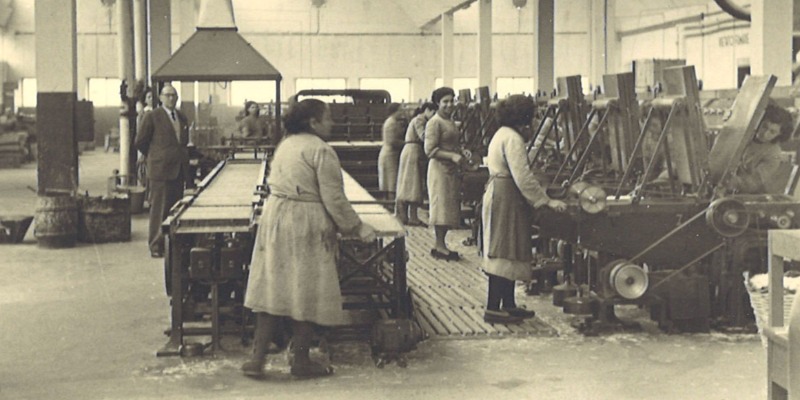
The work of preparing matches, often performed by women and children, exposed them to the fumes of white phosphorus , also because, often, they were made in narrow spaces or the rooms did not have the necessary air exchange and circulation.
For many years the deaths and serious illnesses of workers in factories followed one another due to white phosphorus, despite the fact that the industrialists knew perfectly well about the toxicity of the product that served for flammable heads.
A strong action among entrepreneurs, some professors and some parliamentarians, managed to block a proposed law, dated 1905, which would prevented use, forcing companies to switch to more expensive red phosphorus.
But in 1924, despite the monopoly association of match manufacturers trying in every way to prolong the legislative block, there was the approval that put an end to the chemistry of death.
Automatic translation. We apologize for any inaccuracies. Original article in Italian.
Photo Tecnomatch