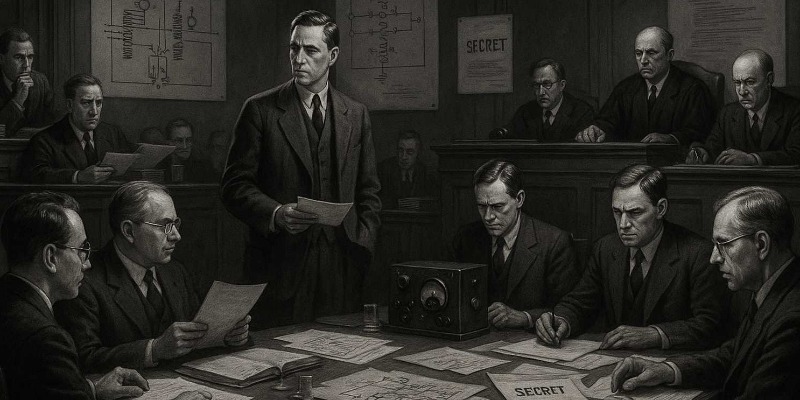







- Tesla and the Electric Revolution: Why It's a Target for Hackers and Cyberspies
- Ransomware Attacks Against Tesla: The Gigafactory Nevada Case
- How Tesla Hackers Operate: Techniques and Goals
- Cryptojacking and Cloud Vulnerabilities: Tesla Servers Under Target
- Insider Threat at Tesla: Stories of Sabotage and Data Leaks
- Industrial espionage in the electric car industry: the Asian front and competition
- Tesla Car Data: What Risks to Privacy and National Security?
- Tesla's cyber defense strategies
- The Role of Employees in Tesla's Digital Security
- Lessons for the auto industry from the Tesla case
An analysis of the cyber attacks and internal infiltrations that hit Tesla, the iconic electric car company, including digital threats, public dossiers, and risks for the global automotive industry
by Marco Arezio
Tesla, founded in 2003 by a group of visionary engineers and led by Elon Musk since 2008, today represents much more than a car company: it is an emblem of the energy transition, a symbol of innovation, and a living laboratory for 21st-century technology. In addition to revolutionizing the way we think about mobility, Tesla has set new standards in the integration of software, hardware, and cloud services, redefining the concept of the "intelligent car."
However, this centrality to technological innovation has made Tesla a prime target not only for industrial competitors, but above all for hackers , insiders, and cyber-espionage groups. The Tesla affair offers a privileged window into the new forms of threat characterizing the digital industry: from ransomware to state-sponsored attacks, from data theft to internally orchestrated sabotage attempts.
Tesla Hacking: An Overview of Key Incidents
The Gigafactory Nevada Ransomware Attempt (2020)
One of the most high-profile incidents in Tesla's recent history concerns the foiled attack on the Gigafactory in Sparks, Nevada. In August 2020, employee Egor Igorevich Kriuchkov, a Russian citizen, was arrested by the FBI on charges of attempting, along with a network of international accomplices, to install malware on Tesla's systems by bribing an internal technician. The plan, revealed by Musk on Twitter and reported by sources including the BBC, Reuters, and Wired, involved injecting ransomware capable of blocking the Gigafactory's IT systems, demanding a multimillion-dollar ransom.
The operation was foiled thanks to the quick thinking of the employee approached by the hacker, who immediately notified internal security and US federal authorities. The timely intervention allowed crucial evidence to be gathered through the use of undercover audio devices, leading to Kriuchkov's arrest and the launch of a vast international investigation that, according to FBI sources, identified links to criminal organizations specializing in cyberattacks against high-tech companies worldwide.
Advanced attacks and unauthorized access attempts
Tesla, as documented by Bloomberg, The Verge, and SecurityWeek, has repeatedly been targeted by sophisticated hacker groups. The main targets are the cloud infrastructure that manages vehicle fleet data, the Autopilot software, OTA (over-the-air) systems, and patents on batteries and motors. In particular, in 2018, the company declared that it had faced repeated server intrusion attempts from IP addresses linked to countries known for cyber espionage, including China and Russia.
Attacks have used increasingly sophisticated vectors: phishing targeting employees, malware designed to bypass traditional defenses, and exploits of vulnerabilities in third-party systems connected to the supply chain. In some cases, access to inadequately protected Internet of Things (IoT) devices used within factories to monitor production was exploited.
The question of “cryptojacking”
In February 2018, a joint investigation between RedLock and CNBC revealed that a Tesla cloud server cluster had been breached by hackers who had installed cryptomining software. In essence, the attackers had exploited a misconfiguration of Amazon Web Services to mine cryptocurrencies at the expense of the company's computing resources. The incident was quickly resolved, but it raised global concerns about the risks associated with managing cloud infrastructure in automotive companies.
Insider threat: internal sabotage and the risk of "moles"
The case of the “unfaithful” employee and industrial sabotage (2018)
The topic of insider threats exploded in June 2018, when Elon Musk wrote a lengthy email to employees—reported by CNBC and the Wall Street Journal—alleging malicious acts by a production line technician. The internal investigation revealed that the employee had modified portions of the industrial automation software's source code and transmitted gigabytes of confidential data to third parties. The motivations? A mix of personal resentment and the lure of financial rewards promised by outsiders interested in Tesla's technologies.
The damage was limited thanks to the timely intervention of internal cybersecurity, but the episode revealed the vulnerability of any highly digitalized company to the actions of "disloyal" employees. Subsequently, Tesla strengthened its internal access control procedures, investing in behavioral monitoring systems and "zero trust" policies aimed at minimizing user privileges.
Industrial espionage and unfair competition
Insider threat incidents aren't limited to sabotage, but also include the illicit transfer of trade secrets to competing companies. In 2019, Tesla filed a lawsuit (source: Reuters, public court documents) against a former engineer accused of stealing source code for its Autopilot software and providing it to a Chinese startup. These cases illustrate the new front on which the innovation war is being fought: no longer just in laboratories, but also in courtrooms, where companies seek to defend their intangible assets.
International Cyberespionage: Tesla Targeted by State-Owned Groups
Attacks sponsored by foreign governments
Tesla isn't just prey for common criminals: its technological leadership makes it a high-value target for nation-state cyberespionage operations. In 2021, reports from CISA (Cybersecurity and Infrastructure Security Agency) and investigations by Wired and the Financial Times linked various spear-phishing and compromise attempts on Tesla systems to groups linked to intelligence services in Asian and Eastern European countries.
These groups are primarily focused on acquiring expertise in autonomous driving, software and hardware architectures for lithium-ion batteries, and predictive vehicle energy management models. The goal is not only commercial, but also strategic: leadership in electric vehicle technology and artificial intelligence is now key to the economic competitiveness and national security of many countries.
The value of data collected by cars
An often overlooked aspect is the amount of sensitive data collected by every single Tesla on the road: maps, camera footage, usage data, information on driving styles and charging infrastructure. A 2022 Bloomberg report highlighted how this data, if stolen, could be used not only for industrial purposes, but also to track the movements of individuals of interest, study a nation's critical infrastructure, or even orchestrate disinformation campaigns.
Tesla's Response: Defense Strategies and Safety Culture
Investments in cybersecurity and cooperation with authorities
Faced with evolving threats, Tesla has progressively strengthened its defense infrastructure. Since 2020, the company has expanded its cybersecurity teams, bringing in leading figures from U.S. government agencies and the private sector. Artificial intelligence systems capable of detecting anomalous patterns in data flows in real time have been implemented, and cyber emergency management protocols have been strengthened.
Collaboration with the FBI, CISA, and other federal agencies has played a key role: this synergy has allowed us to promptly neutralize certain threats and build an effective information network against global malicious actors.
Employee training and zero trust procedures
Experience in recent years has shown that technology alone is not enough. Tesla has launched mandatory cybersecurity training and refresher courses for all employees, including attack simulations, controlled phishing tests, and awareness campaigns. The company has also adopted a "zero trust" model, whereby all access to systems is subject to multi-level controls and strong authentication.
Bug bounty and openness to the ethical hacker community
To continuously improve its defenses, Tesla launched a bug bounty program—as reported by The Verge and ZDNet—that rewards cybersecurity experts who report vulnerabilities in its onboard and cloud software systems. Thanks to this initiative, hundreds of flaws have been discovered and fixed, often before they could be exploited by malicious actors.
Implications for the automotive industry and the future of digital security
An exemplary case for the entire sector
The Tesla case has a reach that extends beyond a single company: it has become a benchmark for the entire automotive and technology sectors. As cars, infrastructure, and services become increasingly connected and digitalized, the potential attack surface is growing exponentially. Cyber threats today no longer only jeopardize data or intellectual property, but also user safety itself: the possibility of remote attacks on autonomous driving systems poses a concrete risk to road safety.
The lesson: prevent, monitor, react
Tesla's experience shows that no organization, no matter how advanced, can consider itself immune to internal and external threats. The key to success lies in the ability to learn from incidents, invest in a safety culture, and quickly adapt defensive strategies. This isn't just a technical issue, but a management and cultural challenge that affects the entire organization.
Conclusions: The uncertain future of digital security in the automotive industry
The future of electric and autonomous mobility will increasingly be shaped by the balance between innovation and security. Tesla finds itself—unwillingly—at the center of a global battle involving data protection, intellectual property protection, and defense against threats evolving at an unprecedented rate.
Cases of hacker attacks, internal sabotage, and industrial espionage are just the tip of the iceberg of a phenomenon affecting the entire automotive and technology industry. Tesla's recent history demonstrates that cybersecurity is now a strategic component, just as important as the ability to innovate or produce efficient vehicles. Only by investing in training, technology, and global collaboration will it be possible to ensure a secure future for electric and smart cars.
© Reproduction Prohibited
Sources:
- FBI, Department of Justice, CISA, US court documents 2018-2024
- BBC, Reuters, Bloomberg, Wired, Financial Times, CNBC, The Verge, SecurityWeek, ZDNet
- Official Statements from Tesla and Elon Musk, Internal (Public) Emails 2018-2024
- RedLock Report, Tesla Bug Bounty, AWS Cloud Documentation
- US court decisions and public court documents
- University studies and surveys on automotive digital security 2020-2024