






- The Extraordinary Life of Wangari Maathai
- Early Years and Education
- Green Belt Movement Founded
- Social and Political Commitment
- Awards and Nobel Prize
- Legacy and Lasting Influence
- Wangari Maathai's Impact on the World
From Reforestation in Kenya to the Nobel Peace Prize: The Extraordinary Life and Lasting Legacy of a Global Leader
by Marco Arezio
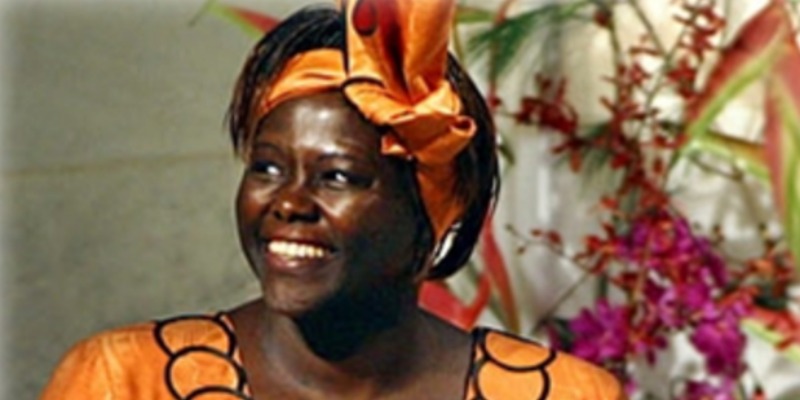
Wangari Maathai, an eminent figure on the world stage for her ecological and social commitment, left a lasting legacy through her passion, dedication, and courage. Born in Kenya in 1940, Maathai was the first African woman to receive the Nobel Peace Prize in 2004, recognized for her exceptional contribution to environmental sustainability, human rights, and democracy. This article explores the life, work, and legacy of Wangari Maathai, highlighting her extraordinary contribution to humanity.
Early Years and Education
Wangari Muta Maathai was born on April 1, 1940, in the village of Ihithe, in the Nyeri region of Kenya. Growing up in a rural environment, she was deeply influenced by the surrounding nature, developing a love for the environment from an early age. After completing primary and secondary school in Kenya, Wangari received a scholarship to study in the United States through the Airlift Africa program, promoted by U.S. Senator John F. Kennedy.
In 1964, she earned a bachelor's degree in biology from Mount St. Scholastica College in Kansas. She then obtained a master's degree in biology from the University of Pittsburgh, where she began to develop a deep awareness of environmental issues. Upon her return to Kenya, she became the first woman in East and Central Africa to earn a Ph.D., specializing in zoology at the University of Nairobi.
Foundation of the Green Belt Movement
In the 1970s, Wangari Maathai became increasingly concerned about deforestation in Kenya and its devastating impact on ecosystems and local communities. In 1977, she decided to take action by founding the Green Belt Movement (GBM), a non-governmental organization that promoted tree planting to combat deforestation, improve rural quality of life, and raise environmental awareness.
The GBM was not just a reforestation project; it was also a movement of empowerment for rural women. Through tree planting, women earned a small income, improved their food security, and promoted sustainable management of natural resources. The movement, initially confined to Kenya, quickly grew, planting over 30 million trees across Africa and inspiring similar initiatives around the world.
Social and Political Engagement
Maathai's work was not limited to reforestation. She was a critical voice against corruption, mismanagement, and human rights abuses in Kenya.
Throughout the 1980s and 1990s, she actively participated in campaigns for democracy and social justice, often facing government repression. Her activism led her to clash with President Daniel arap Moi, resulting in arrests and intimidation.In 1999, Maathai led a protest against a government project that planned to build a skyscraper in Uhuru Park in Nairobi, one of the few remaining green spaces in the capital. Her campaign was successful, preventing the destruction of the park and solidifying her reputation as a defender of the environment and civil rights.
Awards and the Nobel Peace Prize
In 2004, Wangari Maathai was awarded the Nobel Peace Prize, in recognition of her extraordinary contribution to environmental sustainability, democracy, and peace. The Norwegian Nobel Committee praised her holistic approach to sustainable development that "embraces democracy, human rights, and particularly women's rights."
This international recognition further solidified her position as a global leader in the fight for the environment and human rights. After receiving the Nobel Prize, Maathai continued to travel, speak, and inspire millions of people around the world. In 2005, she was appointed as a United Nations Ambassador for the Decade of Education for Sustainable Development.
Legacy and Lasting Influence
Wangari Maathai passed away on September 25, 2011, but her legacy continues to live on through the Green Belt Movement and the many lives she touched. Her work demonstrated that environmental protection can be a powerful tool to promote peace, social justice, and community empowerment.
Maathai's influence extends far beyond Kenya's borders. The Green Belt Movement has become a model for environmental initiatives worldwide, and her philosophy of interconnectedness between environment, democracy, and human rights continues to inspire global movements. Her life is a testament to the power of a single individual to make a significant difference, combining passion, knowledge, and courage to tackle global challenges.
Conclusion
Wangari Maathai was a pioneer in the truest sense of the word. Her life and work show how commitment to the environment can transcend national and cultural boundaries, uniting people in a common cause for a sustainable future. Her legacy continues to inspire new generations of environmentalists, activists, and global citizens to strive for a better world, proving that even a single tree can make a difference.
© Reproduction Prohibited