- Air pollution in Lombardy: a general overview
- The role of intensive farming in the production of fine dust
- Ammonia emissions: an invisible but dangerous threat
- Comparison of pollution sources: transport, industry and agriculture
- The health effects of fine dust in the Po Valley
- Sustainable technologies and practices for reducing emissions from livestock
- Policies and regulations to combat air pollution
- The future of air quality in Lombardy: prospects and challenges
Intensive Livestock Farming Responsible for One-Third of Fine Particulate Matter in the Po Valley: An Analysis of Data and Pollution Sources in the Region
By Marco Arezio
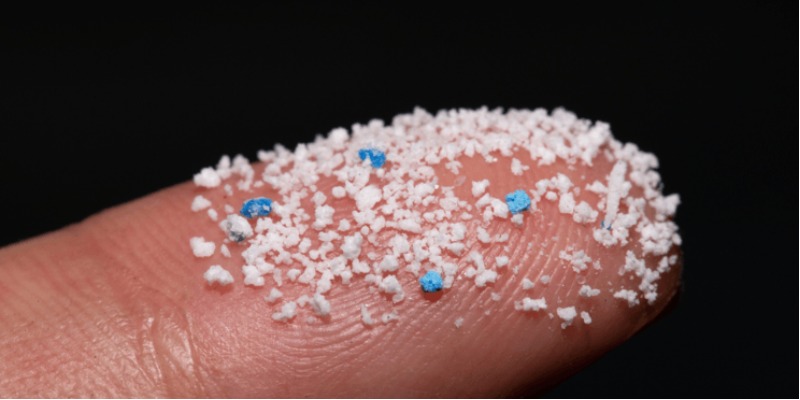
The Po Valley is one of the most polluted areas in Europe, with levels of fine particulate matter (PM10 and PM2.5) often exceeding the safety limits set by the European Union.
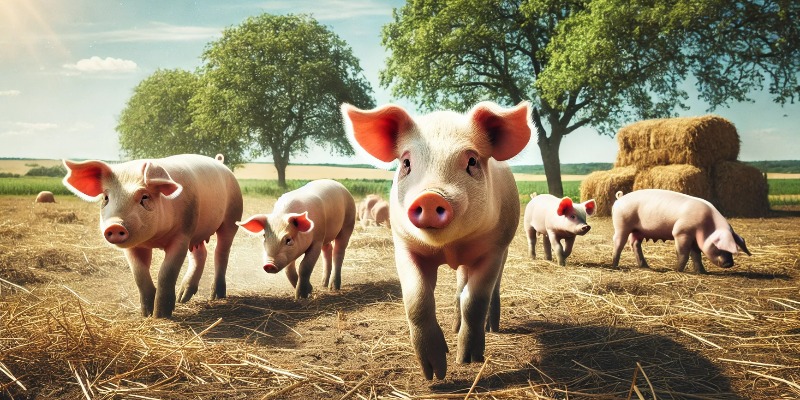
Among the sources of pollution, intensive livestock farming plays a significant role. According to a study by the Euro-Mediterranean Center on Climate Change, one-third of the fine particulate matter in the air of the Po Valley comes from livestock farming.
This article analyzes current data on air pollution caused by intensive livestock farming and compares this contribution with other sources of pollution in Lombardy.
Data on Air Pollution from Livestock Farming
Intensive livestock farms are responsible for the production of ammonia (NH3), a gas that, once released into the atmosphere, contributes to the formation of secondary particulate matter (PM2.5) through chemical reactions.
Data from the Inhale project, carried out in collaboration with Legambiente Lombardia, indicate that intensive livestock farms emit about 94% of the total ammonia produced in Lombardy.
According to ISPRA (Italian Institute for Environmental Protection and Research), approximately 100,000 tons of ammonia are emitted annually in Lombardy.
Of these, about 94,000 tons come from intensive livestock farming, mainly cattle and pigs. This high contribution is due to the large quantities of manure produced and its storage and management in confined environments, which favor the evaporation of ammonia.
Share of Pollution from Livestock Farming
Fine particulate matter PM2.5, derived from the conversion of ammonia, represents one of the most dangerous components of air pollution for human health, as it can penetrate deeply into the lungs and circulatory system.
The Euro-Mediterranean Center study estimated that 30-35% of the PM2.5 in the air of the Po Valley is directly related to ammonia emissions from intensive livestock farming.
Analysis of Pollutants Compared to Other Sources
In Lombardy, the other main sources of pollution include road transport, industry, and domestic heating. According to ARPAL (Regional Environmental Protection Agency of Lombardy), the distribution of PM10 and PM2.5 emissions by source is as follows:
- Road transport: 45%
- Industry: 20%
- Domestic heating: 15%
- Agriculture and Livestock Farming: 20% (of which 15% is attributable to livestock farming)
These data highlight how intensive livestock farming represents a significant share of air pollution, comparable to that of industry and higher than that of domestic heating.
Impact on Health and Environment
Prolonged exposure to fine particulate matter can cause serious health problems, including respiratory diseases, cardiovascular diseases, and an increase in premature mortality.
Ammonia and fine particulate pollution not only negatively affect air quality but also contribute to the acidification of soil and water, with negative impacts on ecosystems.
Conclusions
Intensive livestock farming in Lombardy is one of the main sources of air pollution, significantly contributing to the formation of fine particulate matter (PM2.5) through ammonia emissions.
Efforts to mitigate this impact must include the adoption of more sustainable technologies for manure management, improvement of storage practices, and implementation of emission control measures.
Combating air pollution requires an integrated approach involving all productive sectors and promoting greater environmental awareness and responsibility. Only through joint efforts will it be possible to improve air quality and protect public health and the environment.