






- The Cold War and the Aeronautics Industry: An Invisible Battleground
- Dassault and Boeing: Two giants in global competition
- The shadow of industrial espionage in the 1960s and 1970s
- The Mirage and Phantom fighters: symbols of power and contested secrets
- The network of agents, informants, and intermediaries in the Dassault-Boeing affair
- Political and diplomatic reactions to the scandal
- The role of the French and American secret services
- Legacy of Aeronautical Espionage in Today's Technological Competition
Industrial espionage between France and the United States during the Cold War in the 1960s and 1970s
by Marco Arezio
At the heart of the Cold War, while the world's attention was focused on the nuclear arms race and space, another, less visible but equally fierce battle was being waged in the laboratories, design offices, and assembly lines of the major aeronautical industries. France and the United States, both intent on consolidating their military and industrial prestige, found themselves locked in a veritable silent war for control of the skies. Not just missiles and aircraft carriers: aviation became the symbolic platform for a technological and political primacy that neither bloc was willing to cede.
Dassault and Boeing: Two Giants in Global Competition
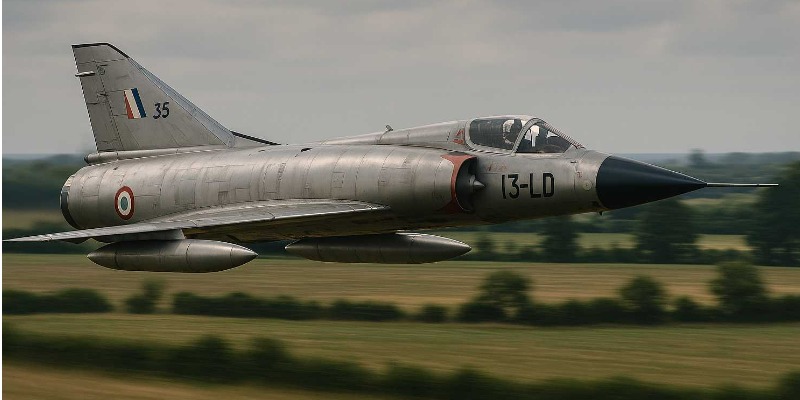
France, through Dassault Aviation, built a reputation for excellence in the 1960s and 1970s thanks to its Mirage fighters, maneuverable and feared aircraft capable of competing with American aircraft. Across the Atlantic, Boeing—along with McDonnell Douglas, later absorbed—represented the epicenter of American aeronautical power, with the famous Phantoms and the subsequent F-15s. The competition wasn't just military: it was about demonstrating which political-economic system was capable of producing the most advanced technologies.
Behind the windows of international airshows and export negotiations, an invisible network of secret dossiers, infiltration attempts, and counterespionage maneuvers moved, which ended up under the name of the Dassault-Boeing affair.
The shadow of industrial espionage in the 1960s and 1970s
The first signs of a secret conflict between Dassault and Boeing emerged as early as the 1960s, when French intelligence agencies reported the presence of American agents gathering information on projects such as the Mirage III and the Mirage F1. At the same time, reports circulated in Washington of French attempts to steal sensitive data on US fighter radar systems and avionics.
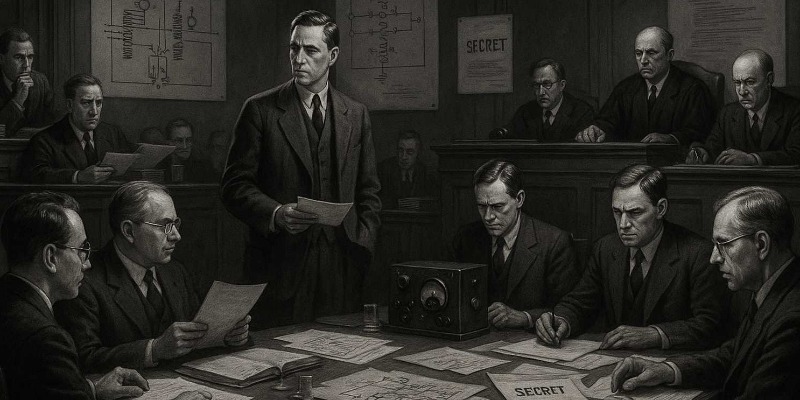
It was a war waged through hidden microfilm, tampered diplomatic briefcases, and clandestine meetings in hotels in Geneva and Brussels, neutral venues where officials became pawns in a much larger game. Industrial espionage was not a marginal incident: it was part of a broader strategy of containment and geopolitical influence.
The Mirage and Phantom fighters: symbols of power and contested secrets
The French Mirage and the American Phantom were not simple fighter aircraft: they embodied opposing philosophies of design and warfare. The former, compact and versatile, was designed for export and for countries seeking military autonomy; the latter, more imposing, equipped with sophisticated electronics and a symbol of America's global reach.
Making the conflict even more bitter was the race for international orders: the Middle East, Africa, and South America became theaters of a trade war where winning a tender meant gaining political influence. It's no surprise, then, that the technological secrets of the two models were mutually coveted.
The network of agents, informants, and intermediaries in the Dassault-Boeing affair
Journalistic investigations and subsequent declassifications have revealed that a veritable international intrigue lay behind the Dassault-Boeing affair.
On the one hand, American agents close to the CIA attempted to infiltrate Dassault's European subcontractors, aiming to intercept technical drawings and test reports. On the other hand, networks linked to French counterintelligence and industry contacts managed to obtain fragments of documentation regarding the Phantoms' radar systems and radar signature reduction techniques.The preferred venues were the aeronautical fairs, particularly Le Bourget and Farnborough, where, alongside official smiles, information exchanges and discreet contacts took place. Often, the key figures were not film-style agents, but technicians, translators, and commercial consultants who had privileged access to internal documents.
Political and diplomatic reactions to the scandal
Despite the secrecy, some incidents leaked out. In 1975, a French investigation revealed the presence of a "mole" who was passing information to American contacts, while in the same years the US Congress was discussing European infiltration into sensitive defense sectors. Publicly, Paris and Washington always denied the existence of a real "scandal," knowing that making it public would damage cooperation within NATO. However, mistrust reigned in the corridors of diplomacy: every new technology became a source of mutual suspicion.
The role of the French and American secret services
French counterintelligence (DST) and American counterintelligence (CIA and FBI) viewed this affair as a test. For France, protecting Dassault meant defending not just a company but an entire strategy of national independence in the military sector, championed by De Gaulle. For the United States, preventing technological secrets from being leaked was part of the broader struggle to maintain military superiority.
The methods ranged from monitoring communications to wiretapping, to the use of fake commercial contracts as bait. Documents emerging in the 1990s show that the French even developed an internal list of suspected foreign "collaborators," constantly monitored to prevent information leaks.
Legacy of Aeronautical Espionage in Today's Technological Competition
With the end of the Cold War, the Dassault-Boeing affair receded into the shadows of memory, considered a minor episode compared to major international crises. Yet its legacy is far from marginal. Today, intellectual property protection, cybersecurity, and supply chain control are direct legacies of those practices.
The conflict between Dassault and Boeing proved that, ideologies aside, true strategic wealth was technical knowledge. This lesson remains relevant in the current competition between the aeronautics and space industries, where espionage has moved from microfilm to digital networks, but it retains the same logic: without secrets, there is no supremacy.
© Reproduction Prohibited