- The Boneyard in Arizona: the largest airplane graveyard in the world
- The Origins of the Boneyard and the Second World War
- The role of desert climate in aircraft preservation
- The Cold War and the growth of the deposit
- Historic and modern aircraft preserved in the Boneyard
- Circular economy and recycling of aeronautical materials
- Size and strategic importance of the Tucson site
- The Boneyard as a symbol between the past and the future of aviation
From military history to aeronautical recycling: the hidden heart of the circular economy of flight
by Marco Arezio
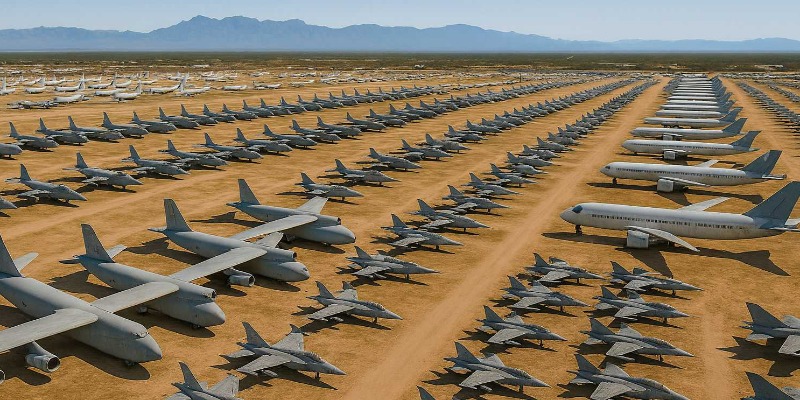
In the heart of Arizona, not far from the city of Tucson, lies a place seemingly suspended between memory and the future: The Boneyard, the world's largest aircraft graveyard. Thousands of military and civilian aircraft, motionless and silent under the scorching desert sun, line up in an impressive display. At first glance, it might seem like a post-apocalyptic landscape, a wasteland of rusted and forgotten wreckage. In reality, it is one of the world's most strategic and sophisticated aviation infrastructures, where military history meets the circular economy and the management of high-tech materials.
The origins: from the post-war period to the atomic age
The Boneyard was born in 1946, in the aftermath of World War II. The US Air Force found itself with an immense fleet, the result of the arms race that had characterized the conflict. Thousands of bombers, fighters, and transport planes, essential to victory, were now useless in peacetime. But what to do with these gigantic machines, built from precious materials like aluminum and titanium?
Destroying them would have been a strategic mistake, not just an economic one: those planes represented an industrial asset, a reservoir of spare parts, but also a military reserve in case of new conflicts. It was therefore decided to preserve them, and the choice fell on the Arizona for specific reasons:
- the arid climate and minimal humidity reduced the corrosion of metal structures
- the compact terrain allowed the giants of the air to be parked without expensive paving
- the proximity to operational bases and logistics centers guaranteed maintenance
Thus was born the 309th Aerospace Maintenance and Regeneration Group (AMARG), the unit responsible for aircraft management. An institution that has continued to evolve ever since.
The Cold War and the Growth of the Boneyard
With the onset of the Cold War, the Tucson depot took on an even greater dimension. Each new generation of aircraft brought with it the retirement of the previous one. The B-29 and B-50 bombers gave way to the colossal B-52 Stratofortresses, the F-86 Sabre fighters were replaced by the F-4 Phantoms, and so on, up to the F-14 Tomcats and F-16 Fighting Falcons.
The Boneyard thus became a strategic reserve, a sort of "insurance policy" for the US Air Force. Some aircraft were sealed and maintained in such condition that they could return to flight within weeks. Others were dismantled to provide unobtainable components, keeping entire fleets scattered around the world afloat. In this sense, the Boneyard was and still is a pioneering laboratory of the circular economy, where nothing goes to waste.
An open-air museum
Walking among the neat rows of aircraft is like walking through a giant aeronautical history textbook of the 20th and 21st centuries. Here, bombers that flew over Vietnam, fighters used during the Cold War, transport helicopters, reconnaissance planes, and intercontinental cargo planes coexist. Some remain there as open-air museum pieces, others still awaiting a new use.
Each aircraft is a fragment of memory: a B-52 can tell the story of nuclear deterrence, an F-14 recalls the tensions of the Cold War in the skies of the Mediterranean, while the gigantic C-5 Galaxy cargo planes bear witness to the logistical missions that changed geopolitics.
The strategic and industrial value
Despite its evocative appearance, the Boneyard is far from an abandoned depot. It is a strategic infrastructure of enormous economic and military value. In an emergency, many aircraft can be reactivated by simply removing their protective seals, replacing some components, and updating their systems.
For those who can no longer fly, their fate is not sealed: they become technological organ donors, providing spare parts that keep entire fleets still in service operational. This system allows for enormous savings, reducing the need to produce new, complex and expensive parts.
Circular economy and recycling of air giants
When an aircraft enters the Boneyard, its history doesn't necessarily end. On the contrary, it marks the beginning of a complex and crucial phase: that of recovering and recycling materials. This is where the logic of the circular economy finds application in one of the world's most advanced and expensive industries: aeronautics.
A medium-to-large aircraft can weigh hundreds of tons and is made of a combination of materials that are difficult to source, work with, and replace. High-strength aluminum, titanium alloys, special steels, copper and wiring, carbon fiber composites: every single element represents a precious resource that cannot be wasted.
High security dismantling
The first phase of recycling is the removal of sensitive components. Military navigation systems, advanced electronics, radar, communications equipment, and, above all, weapons-related components are dismantled under the strictest security protocols. Nothing can leave the base untraced: many systems are classified as military secrets and are deactivated or destroyed before the materials enter the industrial chain.
At the same time, hazardous fluids are removed: residual fuel, oils, hydraulic fluids, and chemicals that cannot contaminate the soil or the atmosphere. This also makes the Boneyard an environmental hub, capable of minimizing the impact in a traditionally high-risk sector.
Recovery of valuable materials
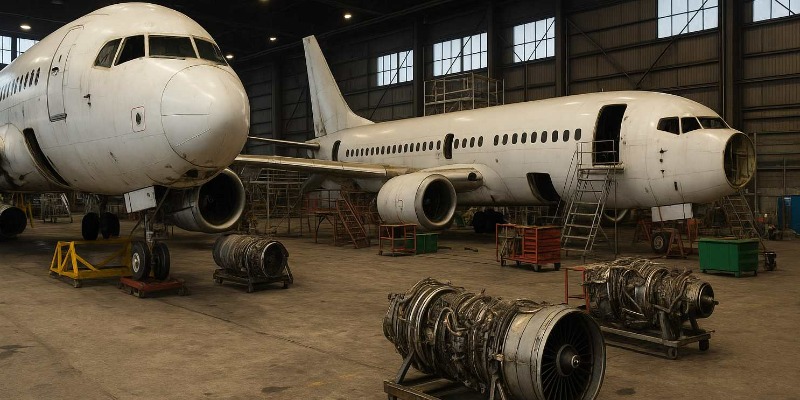
Once the dangerous parts have been neutralized, the actual structural disassembly phase begins. The fuselages are opened, the wings separated, and the engines extracted. Each piece is selected: those suitable for use as spare parts for other aircraft are stored and catalogued, while the remainder is destined for metallurgical recycling.
The process is an example of industrial upcycling:
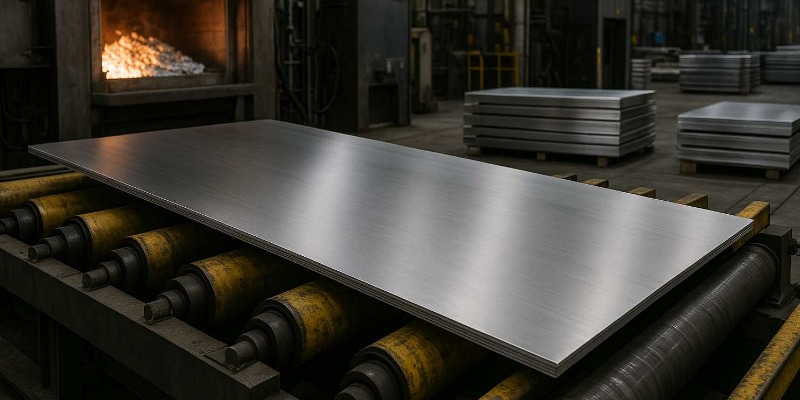
- aeronautical aluminum, extremely light and resistant, is remelted and reintroduced into production cycles ranging from construction to civil transport;
- titanium, a rare and expensive material, is recovered for high-tech applications such as turbines, medical implants and the space industry
- copper wiring finds new life in consumer electronics and energy infrastructure
- Carbon fiber composites, difficult to dispose of, are ground and transformed into reinforced materials for the automotive and marine industries
A large bomber can deliver over 100 tons of reusable materials, dramatically reducing the need to mine new resources.
From the desert to civil industry
The paradox is fascinating: what was once designed for war can become raw material for peace. A decommissioned fighter can provide titanium for orthopedic implants, copper for electrical networks, or carbon fiber for sports boats.
This logic, typical of the circular economy, closes the life cycle of materials. Airplanes, among the most complex machines ever built by man, end up not as waste but as regenerated resources. This approach reduces costs, limits emissions from mining, and offers new opportunities for industry.
A model for other sectors
The Boneyard system has become a reference model for other industrial sectors. The automotive, shipbuilding, and even construction industries view this experience as a large-scale laboratory. The idea that every product, even the most complex, should have a "circular end-of-life" is no longer just a theoretical principle: in Tucson, it has been a reality for over seventy years.
In this sense, the Boneyard is not just an airplane graveyard: it is a center of environmental and industrial innovation, a place where one learns that the value of an artifact does not end with its primary use, but continues in unexpected forms.
The extent of the phenomenon
Today, the Boneyard covers an area of over 10 square kilometers and houses more than 4,000 aircraft, including fighters, bombers, helicopters, and civilian aircraft. There is no other comparable facility in the world. Other aircraft graveyards are located in California, the Mojave Desert, and parts of Europe, but none are as large or as organized as Tucson.
It's even become a tourist destination: guided tours allow you to admire this surreal spectacle up close. The sight of thousands of planes lined up in endless rows under the desert sun is a breathtaking experience.
A symbol of modernity and sustainability
The Boneyard is more than just a military depot: it's a symbol of industrial and technological modernity, but also a metaphor for the transition to sustainability. It embodies the idea that even the giants of the air, built for war and power, can have a brighter future thanks to recycling and intelligent reuse.
In a world facing increasingly pressing environmental challenges, the Boneyard is a concrete example of how even the most complex industries can embrace a circular economy. An open-air laboratory that unites the past, present, and future of flight.
© Reproduction Prohibited