- Origin of Metal Waste: The Main Sources and Their Impact
- Why Do Metal Recycling Rates Vary So Much?
- Metal Recycling Methods: From Chemical to Mechanical Technologies
- The Importance of Gold and Other Precious Metals in Recycling
- Aluminum and Copper Recycling: Efficient Techniques and Applications
- Technological Challenges in the Recovery of Lithium, Cobalt and Rare Earths
- Geography of Metal Recycling: Where It Happens and Who Are the Leaders
- Recycled Metals and Their Applications: From Electronic Circuits to Batteries
- Global Challenges and Future Opportunities for Metal Recycling
- How to Increase Metal Recycling Rates for a Circular Economy
Discover the Origin of Metal Waste, Recovery Technologies, and How Recycled Metals Can Be Reused for a Circular Economy
By Marco Arezio
Metal recycling is one of the most effective solutions to reduce the environmental impact of mining and ensure the sustainable use of natural resources. However, not all metals are recycled with the same efficiency. Recovery rates range from an impressive 86% for gold to less than 0.5% for lithium, raising questions about the management of metal waste and future opportunities. To understand the reasons behind these disparities, we need to explore the origin of metal waste, recovery technologies, and their subsequent uses.
Where Does Metal Waste Come From?
Metals used in modern industries originate from complex and widely distributed products, often at the end of their lifecycle. In the electronics sector, for example, smartphones, computers, and televisions contain a wide variety of metals, including gold, silver, platinum, and rare earth elements. These devices, once discarded, become a valuable source of recyclable materials, although their recovery requires technologically advanced processes.
The automotive industry is another major producer of metal waste. End-of-life vehicles contain copper, aluminum, steel, and lithium-ion batteries, which are essential resources for recovering strategic metals like lithium and cobalt. Construction also plays a significant role, providing materials such as zinc, copper, and steel from demolished infrastructure and buildings. Lastly, aluminum packaging, such as cans and food wraps, constitutes an important source of recyclable materials when properly collected.
Why Are Recycling Rates So Different?
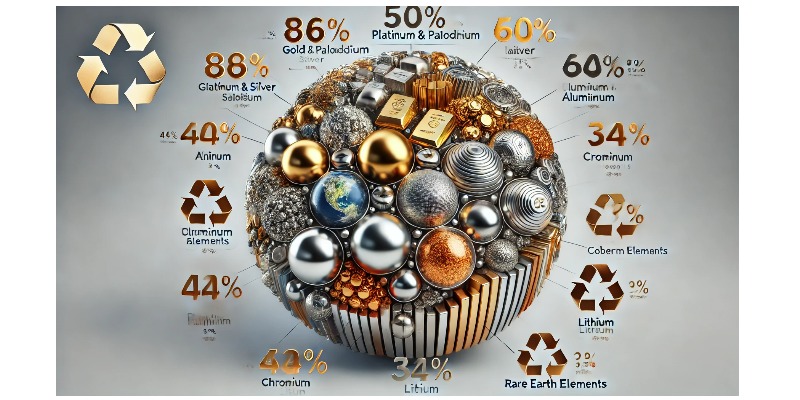
The differences in metal recycling rates depend on several factors, including the economic value of the material, the availability of recovery technologies, and the efficiency of collection systems. Precious metals like gold, with a recycling rate of 86%, benefit from high economic value that incentivizes investment in advanced technologies. Similarly, platinum and palladium achieve a 60% recycling rate due to their importance in the automotive and electronics industries.
On the other hand, metals like lithium (0.5%) and rare earth elements (0.2%) suffer from extremely low recycling rates. This is due to the technical complexity of their recovery, often integrated into small and hard-to-separate devices. Even more common metals, such as aluminum (42%) and copper (33%), have limited recycling rates despite their widespread availability, due to inefficient waste management in many regions of the world.
How Does Metal Recycling Work?
Metal recycling requires technologically advanced processes that vary depending on the material to be recovered. Precious metals such as gold, silver, and platinum are recovered through chemical methods, such as acid leaching, or physical methods, such as electrolysis. These processes allow the separation of pure metals from waste materials, making them ready for new uses.
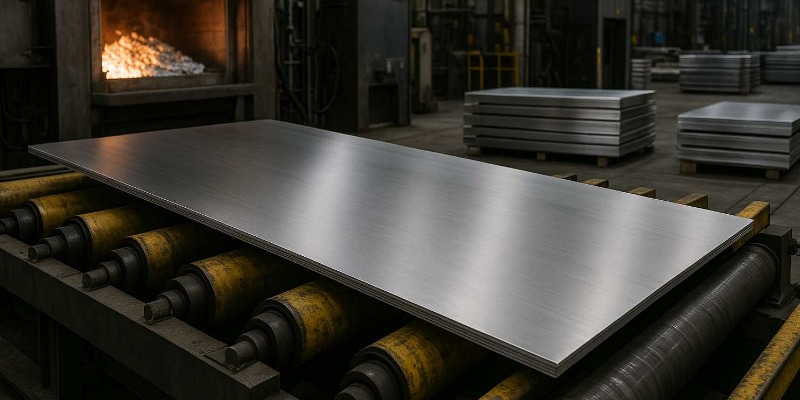
For base metals, such as aluminum and copper, the process is often simpler. For example, aluminum is melted and reformed, saving up to 95% of the energy compared to primary production. Copper, extracted from cables and pipes, follows a similar process, involving shredding and melting to obtain high-quality recycled material.
The recycling of strategic metals, such as lithium and cobalt, is still under development. These materials, often recovered from spent batteries, require innovative technologies such as hydrometallurgy, which uses solvents to separate metals, or high-temperature pyrometallurgical processes.
Where Does Metal Recycling Take Place?
The geography of metal recycling is closely tied to the availability of advanced infrastructure and the demand for recycled materials. In Europe, countries like Germany and Belgium are leaders in recycling precious and strategic metals, thanks to strict regulations and cutting-edge technologies. Italy stands out in aluminum recycling, with consortia like CIAL promoting sustainable management of packaging.
In Asia, China dominates the recycling of rare earth elements, while Japan and South Korea lead efforts in battery recycling. The United States focuses primarily on recovering copper, aluminum, and steel, but is increasing investments in the treatment of batteries and rare earth elements.
What Are the Uses of Recycled Metals?
Recycled metals find applications in many key sectors of the global economy. Gold and silver are reused for electronic circuits, jewelry, and electrical contacts, while aluminum is employed in packaging, automotive components, and lightweight construction. Recycled copper is essential for electrical wiring and plumbing, and strategic metals like lithium and cobalt are reintegrated into new batteries for electric vehicles and energy storage systems.
Rare earth elements, despite their low recycling rates, are crucial for producing permanent magnets used in wind turbines, electric motors, and advanced electronic devices, contributing to a sustainable energy transition.
Challenges and Opportunities for the Future of Metal Recycling
Despite progress, metal recycling presents significant challenges. High costs and technical complexity of recovery, especially for strategic metals, represent major obstacles. Additionally, the lack of adequate infrastructure in developing countries limits the collection and treatment of metal waste.
However, the opportunities are vast. Technological innovation can reduce recovery costs and improve process efficiency, while incentive policies can promote the creation of a more robust global recycling supply chain. Raising awareness among consumers and companies is crucial to increase the amount of materials sent for recycling, transforming current rates into a virtuous model for the circular economy.
Conclusions: Toward a Sustainable Future
Metal recycling is an essential component of a sustainable economy. Increasing recovery rates, developing more efficient technologies, and improving collection systems are critical steps to reduce environmental impact and ensure the responsible use of natural resources. The future of metal recycling depends on our ability to invest in innovation and adopt a systematic approach that values every available resource.
© Reproduction Prohibited