- Introduction to the Bhopal disaster in India
- The historical and industrial context of pesticide production
- The dynamics of events
- The victims and the human impact
- Investigations and causes of the disaster
- The legal and social consequences
- The environmental legacy
An Unprecedented Disaster: The Causes of the Tragedy and Its Global Impact
By Marco Arezio
The night between 2 and 3 December 1984 marks one of the most tragic pages in modern industrial history: the Bhopal disaster in India. tragedy, which occurred at a pesticide production facility in Bhopal, Central India, caused the immediate death of thousands of people and left a legacy of suffering that continues to this day.
The Context and the Union Carbide Factory
The facility involved was owned by Union Carbide India Limited (UCIL), a subsidiary of the American multinational Union Carbide Corporation (UCC). The plant produced pesticides using a highly toxic chemical compound: methyl isocyanate (MIC). MIC is an unstable, highly flammable substance that is deadly even in small doses. The factory, opened in the 1970s, aimed to meet the growing demand for pesticides in Indian agriculture, but by the early 1980s, operations were declining, leading to cost-cutting measures that significantly impacted maintenance and safety protocols.
The Events of the Night of December 3, 1984
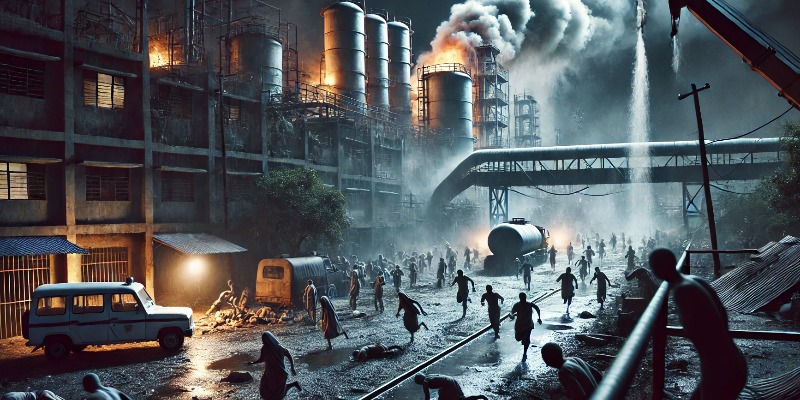
On that fateful night, approximately 40 tons of MIC leaked from a storage tank due to an uncontrolled chemical reaction. The accumulation of water in the tank, caused by failures in safety systems, triggered a rapid increase in temperature and pressure, resulting in the release of the substance as a toxic cloud.
The cloud, primarily composed of MIC and other toxic compounds, quickly spread to the densely populated areas surrounding the plant. Thousands of people died in their sleep or shortly after being exposed to the cloud, suffocating or suffering severe internal injuries. Hospitals were overwhelmed by the sheer number of victims and injured, many of whom suffered permanent damage to their eyes, lungs, and internal organs.
The Death Toll
Official estimates place the immediate death toll at 3,787, but independent studies suggest the actual number may exceed 20,000 when considering subsequent deaths from complications. Furthermore, over half a million people are estimated to have experienced long-term health effects, including partial blindness, chronic respiratory diseases, and neurological issues. Entire generations were affected, with high rates of congenital disabilities and chronic illnesses among the local population.
The Causes of the Disaster
The causes of the Bhopal disaster lie in a combination of corporate negligence and a critical socio-economic context. Investigations have revealed a series of structural issues, risky operational decisions, and the absence of a safety culture, all of which together created the conditions for the tragedy:
Insufficient maintenance: Critical systems such as safety valves, refrigeration units, and alarm systems were either non-operational or poorly maintained.
Cost-cutting measures: Reductions in skilled personnel and safety protocols to save operational costs left the plant vulnerable to accidents.
Inadequate design: The facility was not equipped with proper safety measures to handle a large-scale MIC release.
Human error: Lack of staff training and an absence of a safety-first culture contributed to the inability to prevent or mitigate the incident.
Legal and Political Consequences
The Bhopal disaster raised global questions about the accountability of multinational corporations. In 1989, Union Carbide agreed to pay $470 million as compensation, a sum considered inadequate by victims and human rights organizations. The multinational declared bankruptcy in 2001 and was later acquired by Dow Chemical Company, which has denied any responsibility for the disaster.
Warren Anderson, the CEO of Union Carbide at the time of the incident, was charged with culpable homicide in India but never faced trial, sparking international outrage and protests.
Environmental and Health Legacy
The area surrounding the plant remains contaminated, with soil and groundwater tainted by toxic chemicals. Many residents continue to use contaminated water, worsening health problems. Despite promises of remediation, interventions have been slow and often ineffective.
From a health perspective, local clinics still face a high number of cases linked to the disaster. Victims and their families continue to demand justice, medical support, and adequate compensation.
The Bhopal disaster serves as a tragic reminder of the importance of industrial safety and corporate accountability. It led to significant changes in chemical safety regulations, including the adoption of the Bhopal Convention on Hazardous Chemicals and stricter environmental laws in many countries.
However, questions about the adequacy of regulations and the responsibility of multinational corporations remain relevant. The Bhopal case is a reminder that industrial progress cannot come at the expense of human life and the environment.
Conclusion
Nearly 40 years later, the Bhopal disaster remains the worst industrial accident in history.
The tragedy is not just a dark chapter of the past but a constant reminder of the need to prevent future disasters through rigorous regulation, responsible management, and fair justice for the victims.
© Reproduction Prohibited