- The impact of REACH on the management of recycled engineering plastics
- How to build waste streams compliant with European restrictions
- Regulatory risks in recycled compounds and prevention strategies
- RoHS and flame retardants: implications for the recycling of technical materials
- XRF screening and control of critical elements in WEEE streams
- Recycled engineering plastics for electrical and electronic applications
- End of Waste and requirements for the transition from waste to product
- Certifications and traceability as tools of industrial trust
From flow mapping to advanced traceability: the regulatory framework that ensures chemical safety, industrial quality and reliability of regenerated technopolymers in the most demanding sectors
Essay. Regulations, Restrictions and Compliance: How REACH, RoHS and End of Waste Redefine the Future of Recycled Technopolymers
10.1. REACH as the “load-bearing structure” of technical recycling
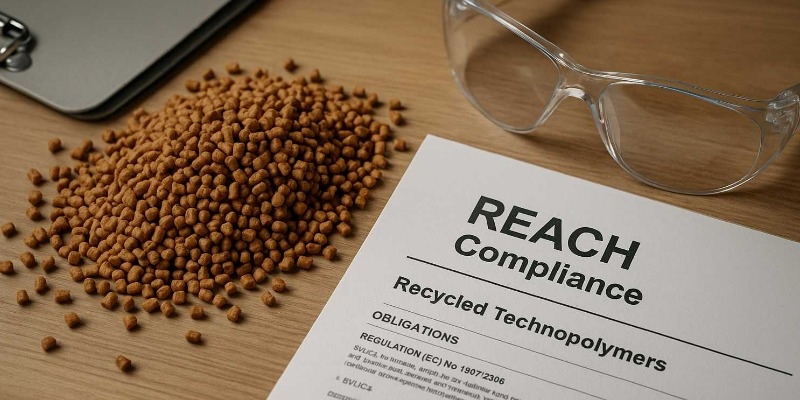
In the everyday language of the plastics industry, people often talk about flowability in moulding, elastic modulus, and impact resistance. But the moment you step into the European perimeter, one dimension comes before all the others: chemical compliance. It is not an accessory element; it is a condition for market existence. For recycled technopolymers, this topic materialises primarily through the REACH Regulation, which is not “one more protocol”, but a true load-bearing structure within which technical recycling must find its place.
REACH was created with a clear logic: whoever places chemical substances on the market must know them, assess their risks, and manage them. In the case of virgin resins, the pathway is linear: the polymer producer knows which monomers have been used, which additives have been incorporated, which impurities are present; they build dossiers, safety data sheets, use restrictions, and the downstream converter inherits a relatively transparent picture. In recycling, the scenario is different: the compounder does not start from individually selected monomers and additives, but from waste streams that have already gone through a prior industrial history.

A lot of post-industrial technical ABS may come from an automotive plant producing dashboards in line with recent specifications, perfectly aligned with current restrictions.
But another lot, visually similar, may originate from electrical components produced ten or fifteen years ago, when the list of substances of very high concern (SVHC) was shorter and certain flame retardants or pigments were still allowed. The regrind arriving at the extruder inlet therefore carries a chemical memory that the recycler did not create, but for which they must take responsibility....© Reproduction prohibited