- The sustainable evolution of textiles: the strategic role of recycled fibres
- Mechanical properties of recycled fibres: performance compared to virgin fibres
- Textile recycling technologies: mechanical vs chemical
- Environmental benefits of recycled fibres: saving resources and reducing emissions
- Economic opportunities and innovation in the circular textile supply chain
- Application fields of recycled fibres: fashion, furniture and technical sectors
- Integration of textile recycling into production processes and logistics
- Future scenarios and perspectives for a truly circular textile industry
How to Optimize the Textile Industry Through Recycling: Characteristics, Challenges, and Development Prospects
by Marco Arezio
In recent years, the textile sector has taken significant steps forward toward sustainable production, driven by growing environmental awareness and a rising demand for eco-friendly products. Among the most promising initiatives is the use of recycled fibers, conceived to reduce dependence on virgin raw materials and foster a transition toward the circular economy. In the textile industry, using recycled fibers not only cuts down on landfill waste but also helps contain the consumption of natural resources such as water and energy, while simultaneously creating new market and innovation opportunities.
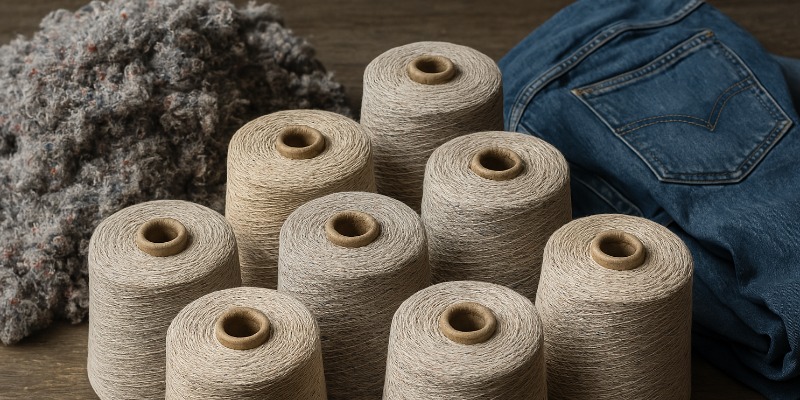
Within the production landscape, recycled fibers can be sourced from various origins. Waste materials may come from the post-consumer phase (discarded clothing, household linens, worn-out upholstery) as well as from post-industrial operations (fabric scraps, cutting leftovers, and spinning waste).
Once collected and sorted, these textile wastes are sent to recycling processes, which can be mechanical (shredding and transforming materials into flocks or yarns) or chemical (depolymerizing the material and subsequently repolymerizing it). If well-designed, these techniques can produce fibers that retain high-level physical and mechanical properties, suitable for a variety of applications in clothing, home textiles, and even technical fields like automotive and geotextiles.
This article aims to provide a comprehensive overview of the mechanical properties of recycled fibers, their most significant applications within the textile industry, and the benefits that recycling offers—both from an environmental and economic standpoint, and in terms of a strategic rethinking of the supply chain. The goal is to illustrate how textile production can effectively integrate recycled fibers, ensuring high-quality standards while also addressing the urgency of sustainability and the circular economy.
The Emergence of a New Textile Paradigm: The Importance of Recycled Fibers
Traditional textile manufacturing is based on a linear model, centered on extracting natural resources (cotton, wool, silk) or using raw materials of petrochemical origin (polyester, polyamide, acrylic). Although this system has so far ensured a wide and economically accessible range of products, it also has a substantial environmental impact: large volumes of water for cotton cultivation, land use and pesticides, and carbon dioxide emissions resulting from transportation and fossil-fuel consumption.
In light of these critical issues, the idea of recovering textile scraps and transforming them back into yarns or fabrics constitutes a paradigm shift. Instead of feeding landfills and incinerators with mountains of waste, a circular economy is proposed, giving a second life to resources that already exist.
According to numerous studies (Ellen MacArthur Foundation, 2020; Textile Exchange, 2021), the use of recycled fibers in place of virgin fibers can yield tangible environmental benefits. Among the most significant are the reduction of CO₂ emissions and a decrease in water consumption.
If we consider, for example, cotton, it is estimated that its global cultivation uses a considerable share of the available irrigation water, with critical consequences in the most arid areas of the planet. Recovering and processing cotton scraps allows for utilizing an already existing raw material, eliminating the need for new intensive crops.
A similar logic applies to synthetic fibers such as polyester, recycled from post-consumer PET bottles or industrial scraps: each efficiently produced batch of rPET (recycled polyester) can prevent the consumption of oil and reduce the pollution generated by petrochemical processes.
The Mechanics of Recycled Fibers: What Performance Can We Expect?
When discussing the mechanical properties of a textile fiber, we refer to characteristics such as tensile strength, elongation at break, elastic modulus, and toughness. In the context of recycled fibers, these parameters can be influenced by the type of recycling process and by the chemical nature of the source polymer.
Mechanical Recycling and Natural Fibers
Mechanical recycling, often applied to cotton or wool fabrics, involves shredding and fragmentation of the waste material. This step can damage the fibers, shortening their length and reducing the evenness of the final yarn. Consequently, compared to virgin fibers, mechanically recycled products generally exhibit lower strength and, in some cases, less elongation. However, by blending recycled fibers with a certain percentage of virgin fibers, it is possible to maintain performance suitable for producing high-quality garments, such as T-shirts, sweatshirts, or household linens.
Chemical Recycling and Synthetic Fibers
The situation is different for synthetic fibers (polyester, polyamide), which can be regenerated through chemical recycling processes, in which the polymer is depolymerized into its constituent monomers, then repolymerized to recreate a fiber almost identical to the virgin one. This process makes it possible to preserve—or even improve—the original mechanical qualities, as the “age” of the polymer chain is reset.
The main drawback of chemical recycling lies in its high operational costs and required technological investments, as well as energy consumption that must be carefully managed so as not to negate the sustainability benefits.
Optimizing Performance
In both cases, fine-tuning subsequent treatments can improve the stability of recycled fibers. For recycled polyester (rPET), applying stretching and heat-setting processes helps increase strength and dimensional stability. Similarly, for recycled cotton, certain surface finishes or the addition of natural resins and anti-pilling additives can prolong the fabric’s useful life and enhance its softness to the touch.
Tangible Benefits: Environmental, Economic, and Social Reasons
Opting for recycled fibers is not solely an “ethical” or image-based choice; there are concrete advantages affecting various strategic areas.
Resource Savings and Waste Reduction
The first benefit comes from using existing raw materials that would otherwise be lost. This results in water savings—which, as mentioned, is particularly important in the case of cotton—and a marked reduction in fossil fuel consumption for synthetic fibers. At the same time, the volume of textile waste sent to landfills or incinerators decreases, counteracting microfiber pollution in the oceans and the emission of harmful substances.
Containment of CO₂ Emissions
Along its production and distribution chain, the textile system accounts for a significant portion of carbon dioxide emissions. Reusing textile scraps from local circuits instead of sourcing virgin raw materials from the other side of the world enables less impactful logistics and reduces extractive activities. Thus, the supply chain can contribute to combatting climate change, establishing itself as a cutting-edge sector in the shift toward “green” business models.
Market Opportunities and Innovation
Incorporating recycled fibers allows companies to differentiate themselves and develop product lines with added sustainable value. The growing consumer focus on environmental and social issues has created new market niches that reward brands capable of transparently disclosing the origin of their textiles. From a technological standpoint, the drive to innovate recycling machinery and finishing processes paves the way for partnerships and investments, with positive effects on the entire supply chain.
Applications of Recycled Fibers: From Fashion to Geotextiles
The versatility of recycled fibers allows them to be used in a wide array of textile products. Apparel and home textiles remain the primary fields of application, but they are not the only ones: sectors such as automotive and civil engineering are increasingly interested in materials that combine strong technical performance with a reduced environmental impact.
Casual, Sports, and Outdoor Clothing
- Recycled Cotton: often used in combination with virgin fibers to produce T-shirts, sweatshirts, and jeans. This approach maintains a high level of comfort while reducing the amount of new cotton needed.
- Recycled Polyester (rPET): extensively used in sportswear, thanks to its light weight and abrasion resistance. Its final performance can be comparable to that of virgin polyester, especially when treatments that optimize fabric stability and breathability are applied.
- Blends for Outdoor Wear: for windbreakers, fleece jackets, and technical fabrics, it is possible to adopt recycled synthetic fibers in combination with waterproof or windproof membranes. Using recycled materials helps lower the carbon footprint of garments designed for extreme environments, while ensuring functionality and durability.
Home Textiles and Furnishings
- Bedding and Towels: employing recycled cotton in sheets and towels is an eco-friendly choice that unites softness with waste reduction. In these products, the importance of fiber length is offset by specific weaving and finishing techniques that ensure comfort and durability.
- Upholstery Fabrics: recycled textiles lend themselves to making sofa covers, curtains, cushions, and rugs. Often, the synthetic component (polyester, polyamide) provides strength and stability, while natural fibers like cotton or wool contribute to a more comfortable look and feel.
Technical and Industrial Applications
- Geotextiles: recycled polyester and polyamide can form the basis of nonwoven fabrics used in civil engineering projects, such as drainage membranes, anti-erosion barriers, or embankment reinforcements.
- Automotive: an increasing number of car manufacturers are employing recycled textile materials for interior coverings, floor mats, and other components that, though not in plain sight, can enhance vehicle comfort and acoustic insulation.
- Protective Clothing: research is exploring the integration of recycled fibers with high-performance fibers (aramid or carbon) to produce garments resistant to cutting, heat, and other specific hazards.
Integrating Recycled Fibers into the Textile Supply Chain
To ensure the widespread and lasting adoption of recycled fibers, it is essential to integrate this practice at every level of the production chain, from the collection and sorting of textile waste to spinning, weaving, and finishing.
Sorting and Managing Textile Waste
One of the most critical steps is the collection and sorting phase for post-consumer materials, as the quality of the final product largely depends on the quality of the incoming raw material. Companies that efficiently organize recycling logistics—establishing partnerships with collection agencies and specialized platforms—can obtain a feedstock homogeneous in composition and color. Consequently, subsequent processing steps become more efficient, and costs are reduced.
Spinning and Weaving Techniques
Depending on the fiber type, various spinning methods may be adopted. The most common solutions include ring spinning for higher-quality yarns and open-end spinning for bulkier, faster production. Recycled fibers often require careful preparation, including opening, carding, and removal of impurities. Air-jet spinning technology is an attractive alternative, particularly for blends of recycled cotton and synthetic fibers, thanks to its speed and efficiency.
Sustainability Certifications and Standards
Many companies wish to certify their use of recycled fibers, both for internal traceability and to satisfy market and regulatory requirements. Among the most recognized certifications are:
Global Recycled Standard (GRS), promoted by Textile Exchange, verifying at least 20% recycled content in a product and ensuring compliance with environmental and social criteria throughout the supply chain.
Recycled Claim Standard (RCS), also by Textile Exchange, guaranteeing a minimum (5%) of recycled fibers in a product and ensuring traceability to the end consumer.
Oeko-Tex Standard 100, which, while not specific to recycled materials, certifies the absence of harmful substances in the finished fabric.
Future Prospects: Toward a Truly Circular Textile Industry
Looking at the challenges and opportunities on the horizon, it becomes clear that the use of recycled fibers can serve as a genuine driving force for textile innovation. First and foremost, research is focusing on new chemical recycling processes that are more energy-efficient, able to recover synthetic fibers of high quality without creating excessive environmental impact. At the same time, investments are being made in developing mechanical recycling machinery capable of preserving fiber length, limiting breakage, and improving yarn regularity.
On the policy front, more measures are being introduced to encourage extended producer responsibility, shifting some of the burden and disposal costs onto the same brands that market textile products. If well-structured, these initiatives promote the design of more easily recyclable garments (design for recycling) and the development of more widespread post-consumer collection networks.
Additionally, the gradual establishment of environmental standards and traceability requirements reinforces consumer confidence, as people increasingly seek truly sustainable garments rather than superficial greenwashing efforts. Another rising trend is new business models based on renting, sharing, and reselling used clothing.
These approaches can complement recycling by extending product lifespans and creating a virtuous cycle in which recycled and renewed textiles remain in circulation longer before reaching end-of-life. All these initiatives are helping to fundamentally reshape the textile supply chain, narrowing the gap between traditional industrial production and the principles of the circular economy.
Conclusions
Choosing to adopt recycled fibers in textile production is a crucial turning point in reconciling market demands with the need to protect the environment. Although there are technical and logistical challenges—chief among them ensuring adequate mechanical properties and a reliable feedstock—the advantages are apparent on multiple fronts: reducing environmental impact, saving natural resources, lowering waste, and creating new business opportunities.
From a technological perspective, innovation is already providing concrete answers, both on the mechanical recycling front, which is becoming increasingly efficient and less invasive, and on the chemical recycling front, capable of producing fibers with properties almost identical to the virgin material. This is supplemented by the adoption of environmental certifications that safeguard the consumer and encourage corporate transparency.
Finally, it should be emphasized that the use of recycled fibers is part of a broader ecological transition process, involving production sectors and civil society in embracing more responsible consumption models. From garment design to waste management, and throughout spinning and weaving, every link in the textile chain can actively contribute to building a more sustainable and circular future. Recycled fibers thus represent not just a technical solution but also a symbol of change, capable of triggering deep transformations in an industry with strong traditions but one that is also constantly evolving.
© Reproduction Prohibited
Bibliographical References
Ellen MacArthur Foundation (2020). Vision of a Circular Economy for Textiles.
Fontell, P., & Heikkilä, P. (2021). “Recycling and Circular Economy in Textiles and Clothing.” Textiles and Clothing Sustainability.
Haslinger, S., et al. (2021). “Life Cycle Analysis of Textile Waste Management.” Resources, Conservation and Recycling, 170, 105613.
Hawkins, L. et al. (2020). “Chemical Recycling of Polymers: Techniques and Future Perspectives.” Chemical Engineering Journal, 389, 124401.
Langer, R., Stevens, C. & Yan, J. (2022). “Advanced Polymers and High-Performance Fibres from Recycled Sources.” Journal of Polymer Science, 60(12), 1332-1348.
Sarija, S., et al. (2020). “Enhancing Mechanical Properties of Recycled PET Filaments.” Polymer Testing, 86, 106481.
Shen, M., Li, G., & Chen, F. (2019). “Depolymerization and Repolymerization of Polyester: State of the Art.” Polymer Degradation and Stability, 167, 16-28.
Textile Exchange (2021). Preferred Fiber & Materials Market Report.